Reaction equation
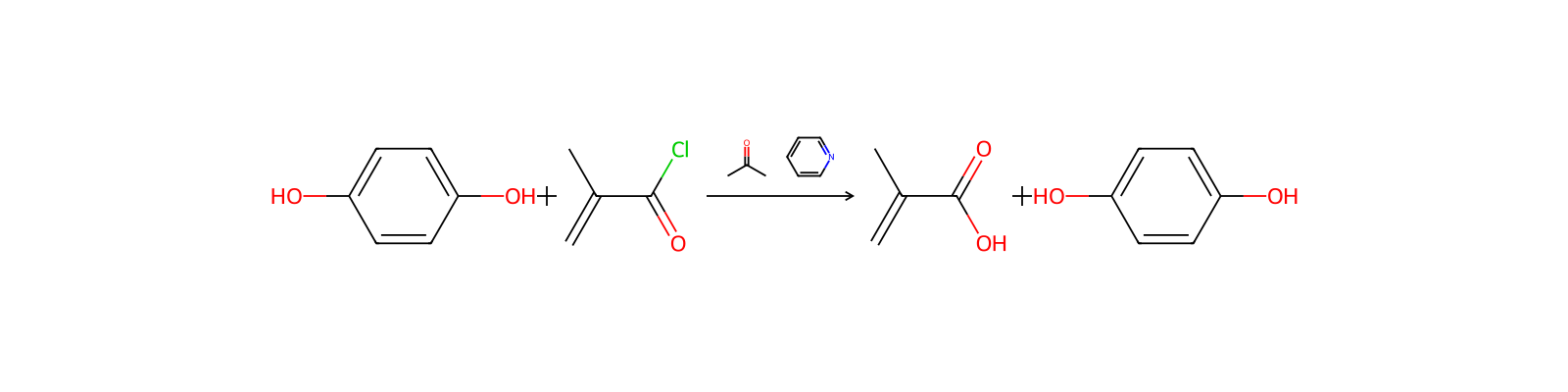
[C:1]1([CH:8]=[CH:7][C:5]([OH:6])=[CH:4][CH:3]=1)[OH:2].[C:9](Cl)(=[O:13])[C:10]([CH3:12])=[CH2:11]>CC(C)=O.N1C=CC=CC=1>[C:9]([OH:13])(=[O:2])[C:10]([CH3:12])=[CH2:11].[C:1]1([CH:8]=[CH:7][C:5]([OH:6])=[CH:4][CH:3]=1)[OH:2]Participants
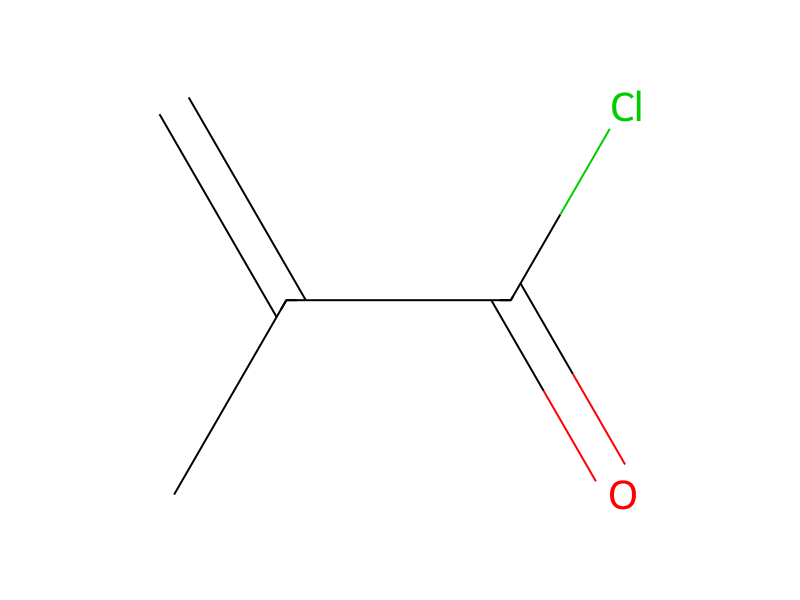
Reactant 2

Product 1

Reagents, catalysts & solvents 2


Conditions
- Temperature
- 0 °C
Procedure
350 g of hydroquinone was dissolved in 2.5 kg of acetone and 500 ml of pyridine. After cooling to 0° C., 313.5 g of methacryloyl chloride was added dropwise, with the reaction temperature maintained at 0° to 5° C. Stirring was then carried out for 3 hours at the same temperature. After stirring for one more hour at room temperature, the acetone was evaporated. Water was then added, and hydrochloric acid was used to adjust the solution to an acidic pH (pH 4), with ether extraction then performed. After washing this ether layer with a 5% aqueous solution of sodium hydrogencarbonate, the solution was then washed with water and dried (anhydrous sodium carbonate). The ether was then evaporated out, with a white solid being obtained. This was recrystallized from water, to obtain 420 g of colorless, needle crystals of hydroquinone monomethacrylate having a melting point of 120.5° to 121.5° C.
Workup
- temperaturemaintained at 0° to 5° C
- stirringAfter stirring for one more hour at room temperature
- customthe acetone was evaporated
- additionWater was then added
- extractionwith ether extraction
- washAfter washing this ether layer with a 5% aqueous solution of sodium hydrogencarbonate
- washthe solution was then washed with water
- dry with materialdried (anhydrous sodium carbonate)
- customThe ether was then evaporated out, with a white solid being
- customobtained
- customThis was recrystallized from water
Sources & evidence
- ORD record
- ord-57f6a6d0eb6f4093927d8288234b69ac
- Source dataset
- uspto-grants-1998_03
- Patent number
- US05731127
Linked notes
Loading…