

Basic information
- Standard SMILES
C=Cc1ccccc1O- InChIKey
JESXATFQYMPTNL-UHFFFAOYSA-N- Molecular formula
- C8H8O
- Average molar mass
- 120.15 g/mol
- Monoisotopic mass
- 120.05751487
Names & identifiers
- Preferred name
- 2-Ethenylphenol
- IUPAC
- 2-ethenylphenol
- English name
- vinylphenol
- Molecular formula
- C8H8O
- Molecular weight
- 120.14852
Names & synonyms
2-Ethenylphenol695-84-1Phenol, 2-ethenyl-I4M2EJN11WDTXSID50873443RefChem:471380DTXCID6038324857-581-62-vinylphenol2-HYDROXYSTYRENEVinylphenolo-Hydroxystyrene
Show more names
Ethenylphenol
Phenol, ethenyl-31257-96-2MFCD19300723o-Vinylphenol2-ethenyl-phenolUNII-I4M2EJN11W2-vinyl-phenol2-ethenyl phenol
Database identifiers
- CAS
31257-96-2、695-84-1- PubChem CID
- 135442
- DTXSID
DTXSID50873443- UNII
- I4M2EJN11W
- EC Number
- 250-539-2、857-581-6
- Nikkaji
- J134.600H
Properties
Computed structural properties
- XLogP
- 2.3
- Topological polar surface area
- 20.2 Ų
- Hydrogen bond donors
- 1
- Hydrogen bond acceptors
- 1
- Rotatable bonds
- 1
- Heavy atoms
- 9
- Formal charge
- 0
- Complexity
- 98
Experimental & physicochemical properties
Kovats Retention Index
1141
2203
Physicochemical properties
- EPA Substance Registry System
- Phenol, ethenyl- (31257-96-2)
Safety & regulation
GHS classification
GHS Classification
Danger
H301 (50%): Toxic if swallowed [Danger Acute toxicity, oral];H314 (50%): Causes severe skin burns and eye damage [Danger Skin corrosion/irritation];H315 (50%): Causes skin irritation [Warning Skin corrosion/irritation];H317 (50%): May cause an allergic skin reaction [Warning Sensitization, Skin];H319 (50%): Causes serious eye irritation [Warning Serious eye damage/eye irritation];H334 (50%): May cause allergy or asthma symptoms or breathing difficulties if inhaled [Danger Sensitization, respiratory]
P233, P260, P261, P264, P264+P265, P270, P271, P272, P280, P284, P301+P316, P301+P330+P331, P302+P352, P302+P361+P354, P304+P340, P305+P351+P338, P305+P354+P338, P316, P321, P330, P332+P317, P333+P317, P337+P317, P342+P316, P362+P364, P363, P403, P405, and P501 (click each P-code to see the statement)
Aggregated GHS information provided per 2 reports by companies from 2 notifications to the ECHA C&L Inventory. Each notification may be associated with multiple companies.;Information may vary between notifications depending on impurities, additives, and other factors. The percentage value in parenthesis indicates the notified classification ratio from companies that provide hazard codes. Only hazard codes with percentage values above 10% are shown. For more detailed information, please visit ECHA C&L website.
Hazard information
Hazard Classes and CategoriesAcute Tox. 3 (50%);Skin Corr. 1B (50%);Skin Irrit. 2 (50%);Skin Sens. 1 (50%);Eye Irrit. 2 (50%);Resp. Sens. 1 (50%)
Chemistry & industry
Suppliers26 total
山东玖玥生物科技有限公司15553333686
咸宁深蓝生物医药研发有限公司18171815831 · [email protected]
安徽合诺生物科技有限公司0555-2761852
山东玖玥生物科技有限公司18853316981
烟台盛凯伦生物制品有限公司13356901049 · [email protected]
南京代盟化工有限公司02566880956 · [email protected]
凯试(上海)科技有限公司021-50135380 · [email protected]
烟台正信新材料科技有限公司13854547682 13854547682 · [email protected]
上海翱跃化工科技有限公司021-021-64367138 15900495324 · [email protected]
苏州西特罗生物医药科技有限公司2921645477 · [email protected]
Qingdao Dexin Chemical Co., Ltd+86-15553333686 · [email protected]
聊城莱博特生物医药科技有限公司0635-893290 · [email protected]
上海麦克林生化科技股份有限公司50706066 15221275939 · [email protected]
上海鹤成医药科技有限公司13564747822 · [email protected]
河南威梯希化工科技有限公司0371-53370800 18037197114 · [email protected]
烟台博运生物科技有限公司13793517650 13793517650 · [email protected]
Xuzhou B&C Chemical Technology Co., Ltd+86-400-0516-021 +86-15190678838 · [email protected]
北京迈瑞达科技有限公司010-82387566 · [email protected]
深圳聚合生化科技有限公司+86-400-002-6226 · [email protected]
无锡仁一新材料科技有限责任公司13306222239 · [email protected]
北京百灵威科技有限公司18210857532 18210857532 · [email protected]
Guangzhou CATO Research Chemicals Inc.+86-020-81960175-617 18520203721 · [email protected]
DAYANG CHEM (HANGZHOU) CO.,LTD+86-88938639 +86-17705817739 · [email protected]
徐州博康化学科技股份有限公司051686297676 · [email protected]
江苏艾康生物医药研发有限公司025-58859352 18651614124 · [email protected]
山东明德生物技术有限公司15553348166 · [email protected]
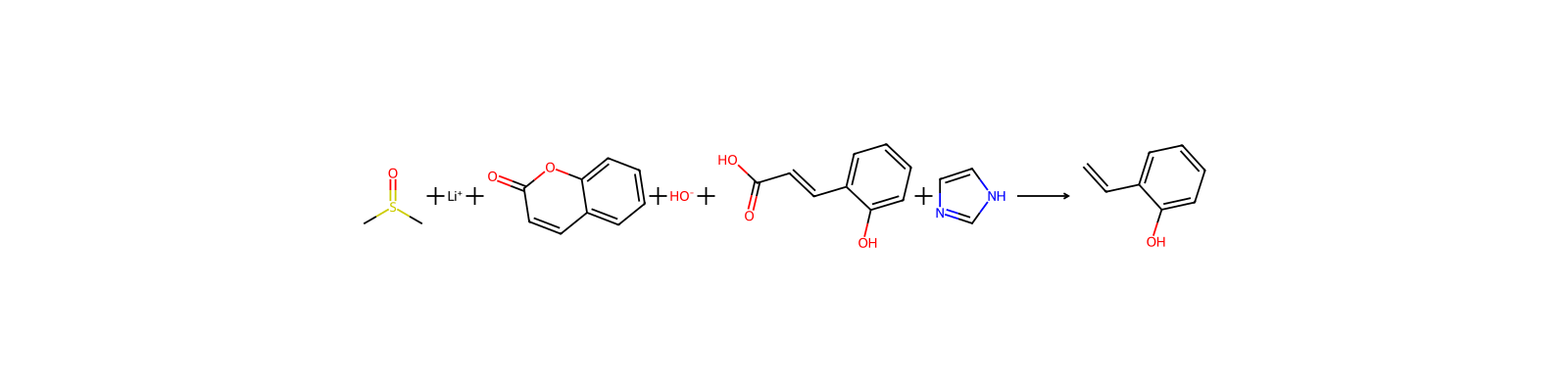
Related reactions
18 records



Linked notes
Loading…