

Basic information
- Standard SMILES
CC(C)[Si](Cl)(C(C)C)C(C)C- InChIKey
KQIADDMXRMTWHZ-UHFFFAOYSA-N- Molecular formula
- C9H21ClSi
- Average molar mass
- 192.8 g/mol
- Monoisotopic mass
- 192.11010488
Names & identifiers
- Preferred name
- Triisopropylsilyl chloride
- IUPAC
- chloro-tri(propan-2-yl)silane
- English name
- Triisopropylsilyl chloride
- Molecular formula
- C9H21ClSi
- Molecular weight
- 192.8
Names & synonyms
Triisopropylsilyl chloride13154-24-0TriisopropylchlorosilaneChlorotriisopropylsilanesilane, chlorotris(1-methylethyl)-chlorotris(propan-2-yl)silaneTIPSClChlorotris(1-methylethyl)silanechloro-tri(propan-2-yl)silanetriisopropyl chlorosilaneC9H21ClSiChloro(triisopropyl)silane
Show more names
TIPSCITriisopropyLTISCTriisopropylchlorosilane (TIPSCl)DK511DKSI049
ClSi(iPr)3MFCD00009656Tris(isopropyl)silyl chlorideS17950Chlorotriisopropylsilane; Chlorotris(1-methylethyl)silaneTriisopropylsilylchloridetips chloridechlortriisopropylsilane
Database identifiers
- CAS
13154-24-0- PubChem CID
- 139400
- DTXSID
DTXSID80157102- UNII
- 4K85L94LCW
- EC Number
- 603-492-0
- Nikkaji
- J209.018J
Properties
Computed structural properties
- Topological polar surface area
- 0 Ų
- Hydrogen bond donors
- 0
- Hydrogen bond acceptors
- 0
- Rotatable bonds
- 3
- Heavy atoms
- 11
- Formal charge
- 0
- Complexity
- 97
Experimental & physicochemical properties
Chemical ClassesToxic Gases & Vapors -> Chlorosilanes
Vapor Pressure1.16 [mmHg]
Physical DescriptionColorless liquid with an acrid odor; [Alfa Aesar MSDS]
Physicochemical properties
- Boiling point
- 198 °C739 · 198 °C739 mm Hg(lit.)
- Density
- 0.901 g/mL · 0.901 g/mL at 25 °C(lit.)
- vapor pressure
- 1.16 mm · 1.16 mm Hg ( 20 °C)
- refractive index
- 20 · n20/D 1.452(lit.)
- Flash point
- 145 °F · 145 °F
- storage temp.
- 2 · Inert atmosphere,2-8°C
- solubility
- 2 Cl2 · Sol THF, DMF, CH2Cl2.
- form
- liquid
- Specific Gravity
- 0.903 · 0.903
- color
- colorless
- Water Solubility
- Miscible with water.
- Sensitive
- Moisture Sensitive
- Hydrolytic Sensitivity
- 8 · 8: reacts rapidly with moisture, water, protic solvents
- BRN
- 1737446 · 1737446
- InChI
- 1S/C9H21ClSi/c1-7(2)11(10,8(3)4)9(5)6/h7-9H,1-6H3
- InChIKey
- KQIADDMXRMTWHZ-UHFFFAOYSA-N
- SMILES
- CC(C)[Si](Cl)(C(C)C)C(C)C
- CAS DataBase Reference
- 13154 · 13154-24-0(CAS DataBase Reference)
- NIST Chemistry Reference
- Triisopropylsilyl chloride(13154-24-0)
- UNSPSC Code
- 12352103 · 12352103
- NACRES
- 22 · NA.22
- Symbol(GHS)
- 5 · GHS05
- Signal word
- Danger
- Hazard statements
- 314 · H314
- Precautionary statements
- 280 · P280-P301+P330+P331-P303+P361+P353-P304+P340+P310-P305+P351+P338-P363
- PPE
- Faceshields, Gloves, Goggles, type ABEK (EN14387) respirator filter
- Hazard Codes
- C
- Risk Statements
- 34 · 34
- Safety Statements
- 26 · 26-27-36/37/39-36/39
- RIDADR
- 2987 · UN 2987 8/PG 2
- WGK Germany
- 3 · 3
- F
- 10 · 10-21
- Hazard Note
- Corrosive
- TSCA
- No
- HazardClass
- 8 · 8
- PackingGroup
- II
- HS Code
- 29319090 · 29319090
- Storage Class
- 8 A · 8A - Combustible corrosive hazardous materials
- Hazard Classifications
- 1 B · Skin Corr. 1B
- REACH Registrations
- Active
- Excepted Quantities
- Not Permitted as Excepted Quantity
Safety & regulation
GHS classification
GHS Classification
Danger
H314 (98.1%): Causes severe skin burns and eye damage [Danger Skin corrosion/irritation]
P260, P264, P280, P301+P330+P331, P302+P361+P354, P304+P340, P305+P354+P338, P316, P321, P363, P405, and P501 (click each P-code to see the statement)
Aggregated GHS information provided per 53 reports by companies from 8 notifications to the ECHA C&L Inventory.
Hazard information
Regulatory Information
Status: Active Update: 16-08-2021 https://echa.europa.eu/registration-dossier/-/registered-dossier/32758
Chlorotriisopropylsilane: Does not have an individual approval but may be used under an appropriate group standard
Hazards SummaryReacts with water evolving hydrochloric acid; Causes burns; Inhalation may cause corrosive injuries to upper respiratory tract and lungs; [Alfa Aesar MSDS] See Chlorotrimethylsilane
Hazard Classes and CategoriesSkin Corr. 1B (98.1%)
Safety & protection
Exposure Control and Personal Protection
TIH (Toxic Inhalation Hazard) - Term used to describe gases and volatile liquids that are toxic when inhaled. Some are TIH materials themselves, e.g., chlorine, and some release TIH gases when spilled in water, e.g., chlorosilanes. [ERG 2016].
Toxicology
Adverse EffectsDermatotoxin - Skin burns.
Safety data
- F
- 10-21
- PPE
- Faceshields, Gloves, Goggles, type ABEK (EN14387) respirator filter
- wgk
- 3
- tsca
- No
- ridadr
- UN 2987 8/PG 2
- hs_code
- 29319090
- risk_code
- 34
- Signal word
- Danger
- Symbol(GHS)
- GHS05
- hazard_code
- C
- hazard_note
- Corrosive
- safety_code
- 26-27-36/37/39-36/39
- hazard_class
- 8
- Storage Class
- 8A - Combustible corrosive hazardous materials
- packing_group
- II
- Hazard statements
- H314
- Excepted Quantities
- Not Permitted as Excepted Quantity
- REACH Registrations
- Active
- Hazard Classifications
- Skin Corr. 1B
- Precautionary statements
- P280-P301+P330+P331-P303+P361+P353-P304+P340+P310-P305+P351+P338-P363
Chemistry & industry
Applications
UsesTriisopropyl chlorosilane has found new applications as a blocking group. It has been utilized to prepare blocked derivatives of hydroxy compounds. Derivatization of substrates is accomplished efficiently in DMF containing a slight molar excess of imidazole. Blocked intermediates exhibited acidic hydrolytic stability intermediate between that of a Tert-butyldimethylchlorosilane and Tert-butyldiphenyl chlorosilane derivatives. Greater stability was obtained with Triisopropylchlorosilane under basic conditions.
DescriptionTriisopropyl chlorosilane is an important sterically hindered organosilicon protective agent, which is mainly used to protect various types of hydroxyl groups, especially in polyfunctional hydroxyl compounds, which can be selectively protected and deprotected. It is very important to synthesize nucleosides, nucleotides and carbohydrates. Triisopropylchlorosilane is a good hydroxyl protecting agent, and its silanization reaction is carried out in a slight excess of imidazole solution. The acid hydrolytic stability of the protected intermediate is between TBDMS and TBDPS and the alkaline hydrolytic stability is higher than the former two.
UsesTriisopropylsilyl chloride is used as a catalyst in the preparation of (silyloxy)cyclobutene derivatives. Also used in the addition of diethylzinc to N-diphenylphosphinoyl imines.
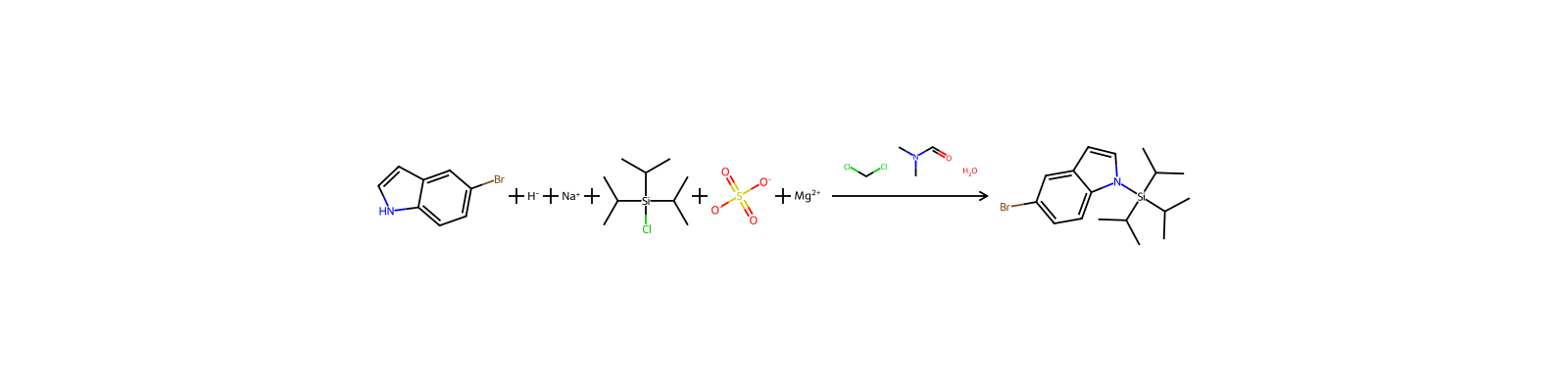
UsesTriisopropylsilyl Chloride is a valuable reagent for hydroxy protecting group; formation of triisopropylsilyl ynol ethers;N-protection of pyrroles; prevents chelation with Grignard reagents, including but not limited to Formation of Silyl Ynol Ethers, N-Protection of Pyrroles, Prevention of Chelation in Grignard Reactions, Protection of Terminal Alkynes, Protection of Pyrroles, Indoles, and Other Heterocycles,Preparation of “Supersilylating” Agents,Reactions with Hydrazine, Reactions with Other Nucleophiles etc.
UsesChlorotriisopropylsilane is used as a silylating agent in neucleotide synthesis. It is used as an intermediate in the manufacture of chemical substances such as pharmaceuticals and in organic synthesis.
Preparation methods
PreparationThere are two main methods for synthesizing triisopropyl chlorosilane. One is to use triisopropyl silane as a raw material, and hydrochloric acid and other reagents are used to chlorinate the hydrogen on the silicon. Another method uses silicon tetrachloride as raw material, and reacts with isopropyl lithium to obtain triisopropyl chlorosilane.
Upstream & downstream products
Upstream raw materials
Downstream products
Suppliers50 total
国药集团化学试剂有限公司86-21-63210123 · [email protected]
梯希爱(上海)化成工业发展有限公司021-67121386 · [email protected]
衢州润东化工有限公司0570-8789886 18892685668 · [email protected]
上海阿拉丁生化科技股份有限公司400-6206333 13167063860 · [email protected]
INTATRADE GmbH+49 3493/605464 · [email protected]
T&W GROUP021-61551611 13296011611 · [email protected]
爱斯特(成都)生物制药股份有限公司+86-28-85122536 85324413 · [email protected]
南京兰亚化工贸易有限公司+86-25-8331-5620 · [email protected]
北京安司莫森技术有限公司010-82954736 13391601435 · [email protected]
韶远科技(上海)有限公司021-50795510 4000665055 · [email protected]
科瑞迪化学400-821-5857 021-64326257 · [email protected]
Syntechem Co.,Ltd[email protected]
上海迈瑞尔生化科技有限公司4006356688 18621169109 · [email protected]
北京华威锐科化工有限公司0757-86329057 18934348241 · [email protected]
阿法埃莎(中国)化学有限公司400-6106006 · [email protected]
太原市瑞和丰科贸有限公司+86 351 7031519 · [email protected]
安耐吉化学&3A(安徽泽升科技股份有限公司)400-0056266 · [email protected]
武汉凯威斯科技有限公司86-027-67849912 · [email protected]
上海瀚鸿科技股份有限公司021-54306202 13764082696 · [email protected]
上海格物致知医药科技有限公司21-21-54301573 13917723525 · [email protected]
上海景颜化工科技有限公司13817811078 · [email protected]
嘉兴市艾森化工有限公司0573-85285100 18627885956 · [email protected]
Pure Chemistry Scientific Inc.001-857-928-2050 or 1-888-588-9418 · [email protected]
孝感深远化工有限公司15527621225; 15527621225 · [email protected]
苏州施亚生物科技有限公司86(512)5235 8471 17715136450 · [email protected]
山东西亚化学有限公司13355009207 13355009207 · [email protected]
玛雅试剂+86 (573) 82222445 (0)18006601000 452520369 · [email protected]
天津希恩思生化科技有限公司400 638 7771 · [email protected]
南京维奥化工有限公司Please Send Email 18652950785 · [email protected]
上海乔木化学科技有限公司021-60451683 15021268886 · [email protected]
河南多贝化工有限公司0370-2785118 17550508557 · [email protected]
艾科试剂4008-755-333 18080918076 · [email protected]
深圳法默科技有限公司0755-86648230 · [email protected]
上海思域化工科技有限公司86-21-34053660 · [email protected]
苏州思变化学技术有限公司0512-65617459 18915409046 · [email protected]
赛默飞世尔科技(中国)有限公司800-810-5118 · [email protected]
北京伊诺凯科技有限公司400-810-7969 010-59572699 · [email protected]
南京诺利斯医药科技有限公司13901585132 · [email protected]
江苏艾康生物医药研发有限公司025-66113011 13913916777 · [email protected]
上海健超生物科技有限公司150-2103-5486 18017383231 · [email protected]
TOKYO CHEMICAL INDUSTRY CO., LTD.03-36680489 · [email protected]
上海贤鼎生物科技有限公司4009209199 · [email protected]
上海楚青新材料科技有限公司021-61530618; 18721685818
上海卓锐化工有限公司021-69180038
Shanghai MOF Chemical Tech Limited13661494087 18964793018 · [email protected]
深圳康特腾科技有限公司86-0755-86635001 · [email protected]
越林试剂021-62960152 · [email protected]
无锡中坤生化科技有限公司+86 0510-85629785
上海泽信化工科技有限公司021-60136491 15901897992
上海将来实业股份有限公司400-0066400 13621662912 · [email protected]
Related reactions
663 records




Linked notes
Loading…