
Quinacridone
Completing data — refresh the page later to see the latest
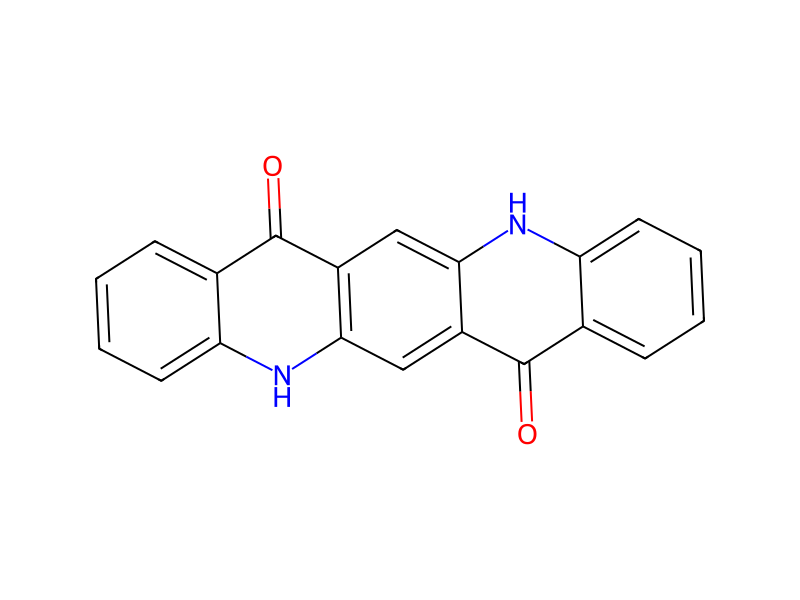
Basic information
- CAS
1047-16-1- Standard SMILES
O=c1c2ccccc2[nH]c2cc3c(=O)c4ccccc4[nH]c3cc12- InChIKey
NRCMAYZCPIVABH-UHFFFAOYSA-N- Molecular formula
- C20H12N2O2
- Average molar mass
- 312.3 g/mol
- Monoisotopic mass
- 312.08987762
Overview
Quinacridone is an organonitrogen heterocyclic compound and an organic heterotetracyclic compound.
Names & identifiers
- Preferred name
- Quinacridone
- IUPAC
- 5,12-dihydroquinolino[2,3-b]acridine-7,14-dione
- English name
- Quinacridone
- Molecular formula
- C20H12N2O2
- Molecular weight
- 312.32
Names & synonyms
Quinacridone1047-16-1CINQUASIA REDMonastral RedQuinacridone violetMonastral Violet RSunfast VioletCinquasia Red BCinquasia Red YMonastral Red BMonastral Red YMonastrol Red Y
Show more names
PIGMENT VIOLET 19Violet 195,12-dihydroquino[2,3-b]acridine-7,14-dione3-b)acridine-7,14-dione,5,12-dihydro-quino(5,12-dihydroquinolino[2,3-b]acridine-7,14-dione5,12-dihydroquinolino[2,3-b]acridine-7,14-quinonee3bredrede3bci46500CI 73900
Permanent MagentaPaliogen Red BGCinquasia Violet RDark violetSunfast Red 19Cinquasia VioletQuinacridone RedQuinacridone Red MC
Database identifiers
- CAS
1047-16-1- PubChem CID
- 13976
- DTXSID
DTXSID5027354- ChEBI
CHEBI:174977- UNII
- 11P487375P
- EC Number
- 213-879-2
- Nikkaji
- J8.584G
Properties
Computed structural propertiesFilling in
- XLogP
- 4
- Topological polar surface area
- 58.2 Ų
- Hydrogen bond donors
- 2
- Hydrogen bond acceptors
- 4
- Rotatable bonds
- 0
- Heavy atoms
- 24
- Formal charge
- 0
- Complexity
- 500
Experimental & physicochemical properties
Chemical ClassesDyes -> Acridine Dyes
Polymers
Plastics -> Polyolefin-I; PUR; Polyolefin-II; PVC (soft); ABS; PVC (rigid); PET; PMMA; PA; PC; (E)PS
Plastics -> Pigments agents
CosmeticsHair dyeing; Cosmetic colorant
SpringerMaterials PropertiesCrystal structure
LogP1.9 (estimated)
Density1.5
Color/Form
Red to violet solid with blueish or yellowish tint depending upon crystalline form.
particle characteristics: thin plates
Solubility
Insoluble in water
Insoluble in organic solvents and dispersion media.
Melting Point390 °C
Safety & regulation
Safety information is for reference only and does not replace the supplier’s Safety Data Sheet (SDS), applicable regulations, or professional assessment.
GHS classification
GHS Classification
This chemical does not meet GHS hazard criteria for 99.6% (760 of 763) of all reports.
Not Classified
Aggregated GHS information provided per 763 reports by companies from 4 notifications to the ECHA C&L Inventory.
Hazard information
Regulatory Information
Chemical: Quino[2,3-b]acridine-7,14-dione, 5,12-dihydro-
Quino[2,3-b]acridine-7,14-dione, 5,12-dihydro- is listed on the EPA's Chemical Data Reporting (CDR) system. Manufacturers and importers of Quino[2,3-b]acridine-7,14-dione, 5,12-dihydro- are required to report information about their production and use of this chemical to the EPA under the Toxic Substances Control Act (TSCA). (40 eCFR Part 711)
Status: Active Update: 23-11-2022 https://echa.europa.eu/registration-dossier/-/registered-dossier/14755
Quino[2,3-b]acridine-7,14-dione, 5,12-dihydro-: Does not have an individual approval but may be used under an appropriate group standard
Hazards Summary
Skin reactions have been reported: inflammation in a tattoo after sun exposure and acne-like changes on the face of a child colored with a red felt-tip pen; Also acne-like reaction on the skin of rabbits after coloring with red felt-tip pen; [HSDB] No known adverse effects on human health; Not an irritant; Not a sensitizer; [MSDSonline] See Acridine.
Special Reports
A BRIEF DESCRIPTION OF THE CHEMICAL PROPERTIES, DEVELOPMENT, & EFFORTS TOWARD GAINING APPROVAL OF THE QUINACRIDONE PIGMENT VIOLET #19 (LINEAR TRANS QUINACRIDONE) BY THE FDA IS PRESENTED.[VIOLET #19--POTENTIAL NEW COSMETIC COLOR; COSMET TOILET 94(MAY) 19 (1979)]
[ITC/USEPA; Information Review #315 (Draft) Cinquasia Red 1982]
TSCA RequirementsSection 8(a) of TSCA requires manufacturers of this chemical substance to report preliminary assessment information concerned with production, use and exposure to EPA.
Chemistry & industry
Pharmacology
Cellular LocationsMembrane
Uses & manufacturing
Uses
Used as pigment (paints, printing inks, plastics, rubber, alkyd resin enamels, textile emulsion inks, textiles, nitrocellulose, vinyl, and acrylic lacquers) and sensitizing dye in color photo electrophoresis; Used to tone and make other pigments; [HSDB]
Painting (Pigments, Binders, and Biocides) [Category: Paint]
PAINTS, PRINTING INKS, PLASTICS, RUBBER
Cinquasia red is used a sensitizing dye in color photoelectrophoresis.
Pigment in textiles
As colorants for plastics, quinacridone pigments may be used in all resins except nylon-66 and polystyrene./Quinacridone Pigments/
U.S. Exports
(1979) No Data
(1981) No Data
U.S. Imports
(1979) 2.49X10+7 GRAMS (PRINCPL CUSTMS DISTS)
(1981) 6.21X10+6 GRAMS (PRINCPL CUSTMS DISTS)
U.S. Production
2023: 1,000,000 - <2,500,000 lb
1.2 million lbs.
(1979) 7.11X10+8 GRAMS
(1981) 6.25X10+8 GRAMS
Consumption Patterns
Quinacridone pigment use in automotive finishes accounts for the majority of the consumption of cinquasia red, with lesser quantities finding end uses in PVC manufacturing and the textile industry.
ESSENTIALLY 100% AS A PIGMENT
Consumer UsesPigment
Industry UsesPigment
Methods of Manufacturing
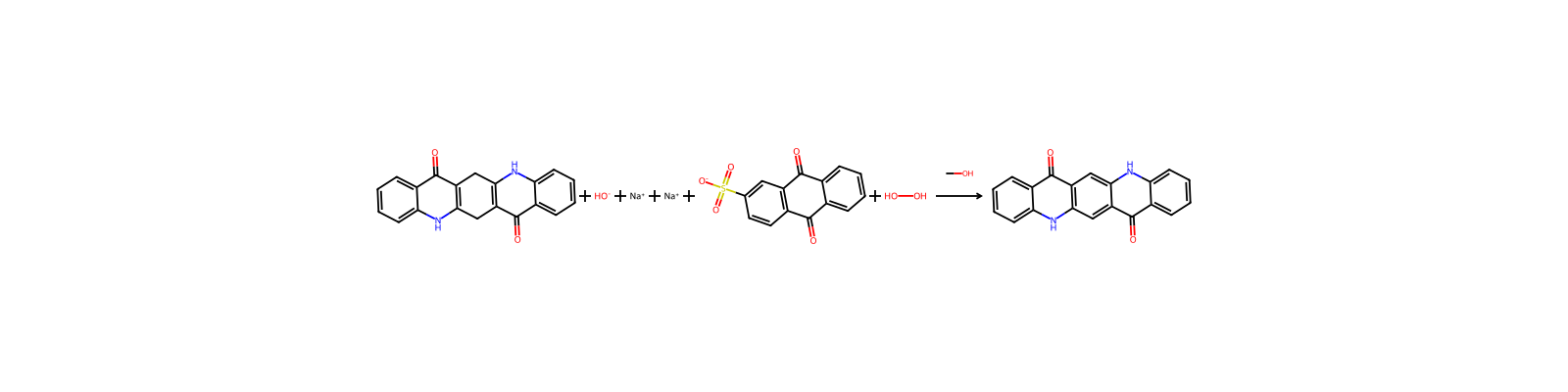
The major commercial production methods involve cyclization of 2,5-di(arylamino)terephthalic acids and esters.
Related reactions
150 records





Compound notes
Loading…