

Basic information
- Standard SMILES
Clc1nccc2ccccc12- InChIKey
MSQCQINLJMEVNJ-UHFFFAOYSA-N- Molecular formula
- C9H6ClN
- Average molar mass
- 163.6 g/mol
- Monoisotopic mass
- 163.01887687
Names & identifiers
- Preferred name
- Isoquinoline, 1-chloro-
- IUPAC
- 1-chloroisoquinoline
- English name
- 1-Chloroisoquinoline
- Molecular formula
- C9H6ClN
- Molecular weight
- 163.6
Names & synonyms
1-chloroisoquinolineIsoquinoline, 1-chloro-DTXSID60173143NSC 170839RefChem:792292DTXCID9095634628-561-2InChI=1/C9H6ClN/c10-9-8-4-2-1-3-7(8)5-6-11-9/h1-619493-44-81-Chloro-isoquinolineMFCD000241341-Chloroisoquinone
Show more names
1-Chloroisoquinoline,95%1-Chloroisoquinoline 95%1-Chloroisoquinoline >1-Chloroisoquinoline, 97+%1-Chloroisoquinoline, 97+% 5GR1-CHLOROISOQUINOLINE, 98.0+%(GC)
chloroisoquinolineNSC170839CS-W002145NSC-170839AB01423BP-10100SY0080711-chloro isoquinoline
Database identifiers
- CAS
19493-44-8- PubChem CID
- 140539
- DTXSID
DTXSID60173143- EC Number
- 628-561-2
- Nikkaji
- J258.423I
Properties
Computed structural properties
- XLogP
- 3.2
- Topological polar surface area
- 12.9 Ų
- Hydrogen bond donors
- 0
- Hydrogen bond acceptors
- 1
- Rotatable bonds
- 0
- Heavy atoms
- 11
- Formal charge
- 0
- Complexity
- 138
Experimental & physicochemical properties
SpringerMaterials PropertiesDensity
Physicochemical properties
- Melting point
- 31 · 31-36 °C (lit.)
- Boiling point
- 274 · 274-275 °C/768 mmHg (lit.)
- Density
- 1.2108 · 1.2108 (rough estimate)
- refractive index
- 1.6342 · 1.6342 (estimate)
- Flash point
- 230 °F · >230 °F
- storage temp.
- 2 · Inert atmosphere,2-8°C
- form
- Low Melting Solid, Crystals and/or Chunks
- pka
- 2.03 · 2.03±0.30(Predicted)
- color
- White to yellow
- Water Solubility
- Insoluble in water.
- BRN
- 2996 · 2996
- InChI
- 1S/C9H6ClN/c10-9-8-4-2-1-3-7(8)5-6-11-9/h1-6H
- InChIKey
- MSQCQINLJMEVNJ-UHFFFAOYSA-N
- SMILES
- Clc1nccc2ccccc12
- CAS DataBase Reference
- 19493 · 19493-44-8(CAS DataBase Reference)
- UNSPSC Code
- 12352100 · 12352100
- NACRES
- 22 · NA.22
- Symbol(GHS)
- 7 · GHS07
- Signal word
- Warning
- Hazard statements
- 315 · H315-H319-H335
- Precautionary statements
- 261 · P261-P264-P271-P280-P302+P352-P305+P351+P338
- target organs
- Respiratory system
- PPE
- 95 · dust mask type N95 (US), Eyeshields, Gloves
- Hazard Codes
- Xi
- Risk Statements
- 36 · 36/37/38
- Safety Statements
- 26 · 26-36
- WGK Germany
- 3 · 3
- HS Code
- 29334900 · 29334900
- Storage Class
- 11 · 11 - Combustible Solids
- Hazard Classifications
- 2 Skin · Eye Irrit. 2Skin Irrit. 2STOT SE 3
Safety & regulation
GHS classification
GHS Classification
Warning
H315 (100%): Causes skin irritation [Warning Skin corrosion/irritation]
P261, P264, P264+P265, P271, P280, P302+P352, P304+P340, P305+P351+P338, P319, P321, P332+P317, P337+P317, P362+P364, P403+P233, P405, and P501 (click each P-code to see the statement)
Aggregated GHS information provided per 48 reports by companies from 7 notifications to the ECHA C&L Inventory. Each notification may be associated with multiple companies.
Hazard information
Hazard Classes and CategoriesSkin Irrit. 2 (100%)
Safety data
- PPE
- dust mask type N95 (US), Eyeshields, Gloves
- wgk
- 3
- hs_code
- 29334900
- risk_code
- 36/37/38
- Signal word
- Warning
- Symbol(GHS)
- GHS07
- hazard_code
- Xi
- safety_code
- 26-36
- Storage Class
- 11 - Combustible Solids
- target organs
- Respiratory system
- Hazard statements
- H315-H319-H335
- Hazard Classifications
- Eye Irrit. 2Skin Irrit. 2STOT SE 3
- Precautionary statements
- P261-P264-P271-P280-P302+P352-P305+P351+P338
Chemistry & industry
Applications
UsesUsed in a Mn-catalyzed cross-coupling with aryl- and alkylmagnesium halides.1 Also used in a Pd-catalyzed cross-coupling with heteroaryl boronic acids and esters.2
Uses1-Chloroisoquinone is used in the preparation of new aminoisoquinolinylurea derivatives which show antiproliferative activity against melanoma cell lines. It can also be applied to the control of stor age and stability of unstable boronic acids.
UsesThe product has been used in a Mn-catalyzed cross-coupling with aryl- and alkylmagnesium halides. It has also been used in a Pd-catalyzed cross-coupling with heteroaryl boronic acids and esters. Furthermore, it has been used in a homocoupling reaction to yield bis-isoquinoline, each enantiomer of which might be very useful as a chiral ligand for asymmetric synthesis. 1-Chloroisoquinone is used in the preparation of new aminoisoquinolinylurea derivatives which show antiproliferative activity against melanoma cell lines. It can also be applied to the control of storage age and stability of unstable boronic acids.
Upstream & downstream products
Upstream raw materials
Downstream products
Suppliers50 total
国药集团化学试剂有限公司86-21-63210123 · [email protected]
梯希爱(上海)化成工业发展有限公司021-67121386 · [email protected]
上海阿拉丁生化科技股份有限公司400-6206333 13167063860 · [email protected]
韶远科技(上海)有限公司021-50795510 4000665055 · [email protected]
科瑞迪化学400-821-5857 021-64326257 · [email protected]
上海迈瑞尔生化科技有限公司4006356688 18621169109 · [email protected]
阿法埃莎(中国)化学有限公司400-6106006 · [email protected]
安耐吉化学&3A(安徽泽升科技股份有限公司)400-0056266 · [email protected]
上海柏卡化学技术有限公司400-026-1533/(021) 6478-0600 · [email protected]
上海瀚鸿科技股份有限公司021-54306202 13764082696 · [email protected]
上海相辉医药科技有限公司13761987713 · [email protected]
嘉兴市艾森化工有限公司0573-85285100 18627885956 · [email protected]
上海隆盛化工有限公司58099637 13585536065 · [email protected]
北京零式京安科技有限责任公司10-61256048 13810278579 · [email protected]
上海攀鸿化工科技有限公司021-56491756 13512199871 · [email protected]
杭州东帆化学有限公司86-0571-85151182
苏州施亚生物科技有限公司86(512)5235 8471 17715136450 · [email protected]
山东西亚化学有限公司13355009207 13355009207 · [email protected]
四川库利南科技有限公司400-1166-196 18981987031 · [email protected]
天津希恩思生化科技有限公司400 638 7771 · [email protected]
上海钰康生物科技有限公司15618758386 15618758386 · [email protected]
南京维奥化工有限公司Please Send Email 18652950785 · [email protected]
武汉华邦化学新材料有限公司027-83229541 13971313286 · [email protected]
河南多贝化工有限公司0370-2785118 17550508557 · [email protected]
北京泰亚杰科技有限公司021-33690831-8001 13552411790;18616022633 · [email protected]
艾科试剂4008-755-333 18080918076 · [email protected]
上海思域化工科技有限公司86-21-34053660 · [email protected]
赛默飞世尔科技(中国)有限公司800-810-5118 · [email protected]
北京伊诺凯科技有限公司400-810-7969 010-59572699 · [email protected]
江苏艾康生物医药研发有限公司025-66113011 13913916777 · [email protected]
TCI AMERICA800-4238616 · [email protected]
TOKYO CHEMICAL INDUSTRY CO., LTD.03-36680489 · [email protected]
TCI Europe320-37350700 · [email protected]
上海贤鼎生物科技有限公司4009209199 · [email protected]
上海偕腾生物科技有限公司+86-021-58975553 · [email protected]
越林试剂021-62960152 · [email protected]
CEG Chemical Science & Technology Co., Ltd.Mobile:13665161512
杭州迈世腾药物科技有限公司0571-82896630 18969958410 · [email protected]
北京环宇世纪化学科技有限公司hysj_bj.com
上海将来实业股份有限公司400-0066400 13621662912 · [email protected]
上海将来实业股份有限公司021-61552785 · [email protected]
安徽科迪达化工有限公司0554-2106669 · [email protected]
杭州杰恒化工有限公司0571-87396432 · [email protected]
上海洽凡生化科技有限公司+86-021-61654350 · [email protected]
上海有朋化工有限公司021-69005955 13701776567 · [email protected]
北京海力扬化学科技有限公司13718199399 · [email protected]
四川海诺威科技有限公司13708085536 13708085536 · [email protected]
上海拓目化工有限公司13391076197 · [email protected]
上海凯赛化工有限公司021-33516722 13701817765 · [email protected]
上海彤源化工有限公司021-021-69182866 13701855675 · [email protected]
Related reactions
124 records
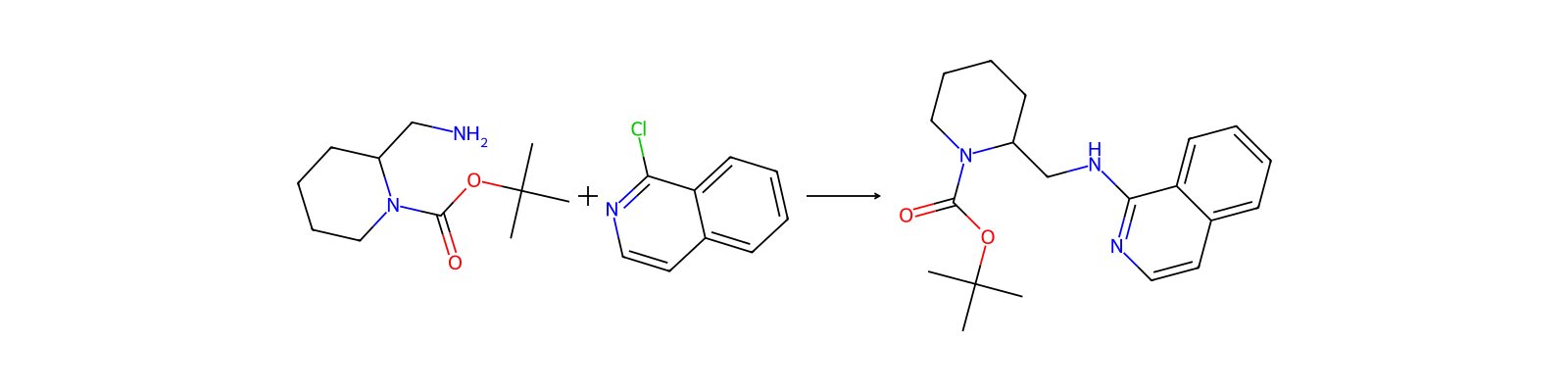


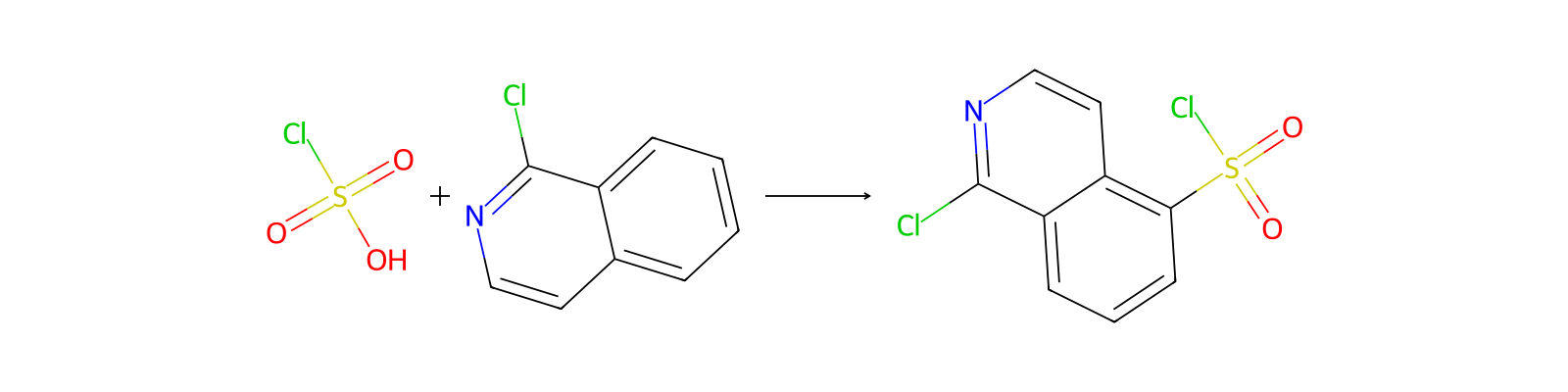
Linked notes
Loading…