Basic information
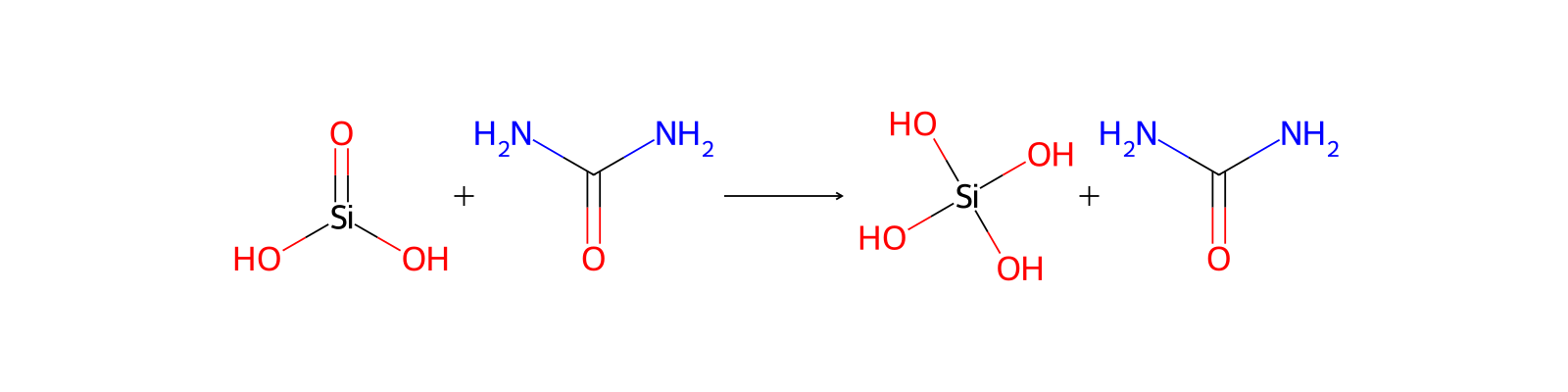
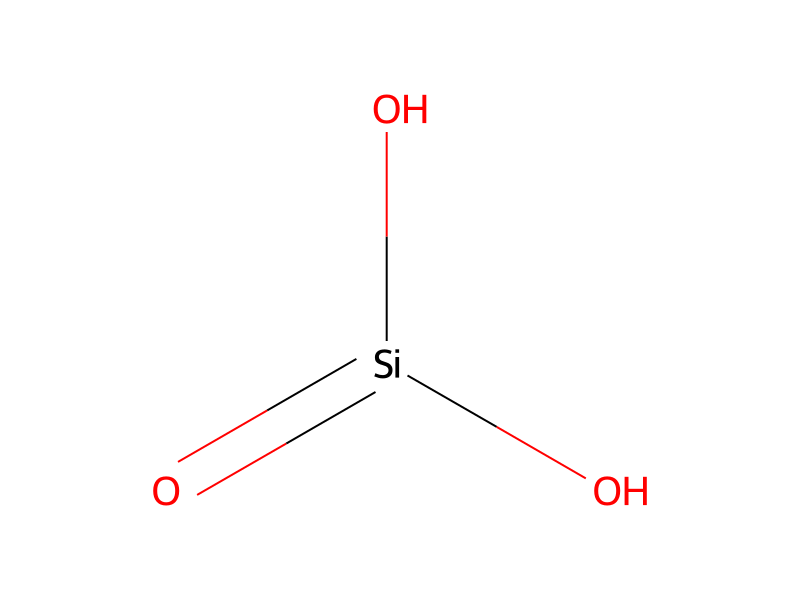
- Standard SMILES
O=[Si](O)O- InChIKey
IJKVHSBPTUYDLN-UHFFFAOYSA-N- Molecular formula
- H2O3Si
- Average molar mass
- 78.099 g/mol
- Monoisotopic mass
- 77.97732045
Overview
See also: Silicate (annotation moved to).
Names & identifiers
- Preferred name
- Metasilicic acid
- IUPAC
- dihydroxy(oxo)silane
- English name
- Silicic acid
- Molecular formula
- H2O3Si
- Molecular weight
- 78.1
Names & synonyms
Metasilicic acid7699-41-4Bio-SilSilicic acid (H2SiO3)Acidum silicicumKieselsaureKieselsaure [German]UNII-4OI8D3YOH1EINECS 231-716-34OI8D3YOH1METASILICIC ACID [MI]DTXSID30872499
Show more names
HYDRATED SILICAPRECIPITATED SILICASilicicSILICA ACIDKieselsremetasilicicKieselsre,E551metasilicicaci
RefChem:156809DTXCID0032362231-716-3(H2SiO3)n-(-Si(OH)2O-)-nCHEBI:29379dihydroxy(oxo)silaneH2O3Si
Database identifiers
- CAS
1343-98-2、7699-41-4- PubChem CID
- 14768
- DTXSID
DTXSID30872499- UNII
- 4OI8D3YOH1
- EC Number
- 231-716-3
- Nikkaji
- J215.993G
Properties
Computed structural properties
- Topological polar surface area
- 57.5 Ų
- Hydrogen bond donors
- 2
- Hydrogen bond acceptors
- 3
- Rotatable bonds
- 0
- Heavy atoms
- 4
- Formal charge
- 0
- Complexity
- 26.3
Physicochemical properties
- Melting point
- 1704 ℃ · 1704℃
- solubility
- 2 O; · insoluble in H2O; soluble in HF
- form
- powder
- color
- White
- PH
- 1 · pKa1= 9.65, pKa2 = 13.09(25℃)
- Dielectric constant
- 2 · 2.0(Ambient)
- InChI
- 1S/H2O3Si/c1-4(2)3/h1-2H
- InChIKey
- IJKVHSBPTUYDLN-UHFFFAOYSA-N
- SMILES
- O[Si](O)=O
- CAS DataBase Reference
- 7699 · 7699-41-4(CAS DataBase Reference)
- EWG's Food Scores
- 1 · 1
- FDA UNII
- 4 OI8D3YOH1 · 4OI8D3YOH1
- EPA Substance Registry System
- Silicic acid (H2SiO3) (7699-41-4)
- Cosmetics Info
- Hydrated Silica
- UNSPSC Code
- 23201100 · 23201100
- NACRES
- 54 · SB.54
- Symbol(GHS)
- 7 · GHS07
- Signal word
- Warning
- Hazard statements
- 319 · H319-H335
- Precautionary statements
- 261 · P261-P264-P271-P280-P304+P340+P312-P305+P351+P338
- target organs
- Respiratory system
- PPE
- 95 · dust mask type N95 (US), Eyeshields, Gloves
- Hazard Codes
- Xi
- Risk Statements
- 36 · 36/37
- Safety Statements
- 22 · 22-26-36
- OEB
- B
- OEL
- 6 mg/m3 · TWA: 6.0 mg/m3
- WGK Germany
- 3 · 3
- RTECS
- 8853000 · VV8853000
- TSCA
- TSCA listed
- Storage Class
- 11 · 11 - Combustible Solids
- Hazard Classifications
- 2 STOT · Eye Irrit. 2STOT SE 3
Safety & regulation
GHS classification
GHS Classification
This chemical does not meet GHS hazard criteria for 4.8% (5 of 105) of reports.
Warning
H319 (90.5%): Causes serious eye irritation [Warning Serious eye damage/eye irritation]
P261, P264+P265, P271, P280, P304+P340, P305+P351+P338, P319, P337+P317, P403+P233, P405, and P501 (click each P-code to see the statement)
Aggregated GHS information provided per 105 reports by companies from 7 notifications to the ECHA C&L Inventory. Each notification may be associated with multiple companies.
Hazard information
Regulatory Information
Chemical: Silicic acid (H2SiO3)
Silicic acid (H2SiO3): Does not have an individual approval but may be used as a component in a product covered by a group standard. It is not approved for use as a chemical in its own right.
Other Safety InformationIMAP assessments - Silicic acid (H2SiO3): Human health tier I assessment
Hazard Classes and CategoriesEye Irrit. 2 (90.5%)
Safety data
- OEB
- B
- OEL
- TWA: 6.0 mg/m3
- PPE
- dust mask type N95 (US), Eyeshields, Gloves
- wgk
- 3
- tsca
- TSCA listed
- rtecs
- VV8853000
- risk_code
- 36/37
- Signal word
- Warning
- Symbol(GHS)
- GHS07
- hazard_code
- Xi
- safety_code
- 22-26-36
- Storage Class
- 11 - Combustible Solids
- target organs
- Respiratory system
- Hazard statements
- H319-H335
- Hazard Classifications
- Eye Irrit. 2STOT SE 3
- Precautionary statements
- P261-P264-P271-P280-P304+P340+P312-P305+P351+P338
Chemistry & industry
Uses & manufacturing
General Manufacturing InformationSilicic acid (H2SiO3): ACTIVE
Applications
DescriptionSilicic acid is the general name that refers to the group of chemical compounds of the element hydrogen, silicon, and oxygen with the formula [SiOx(OH)4-2x]n. H4SiO4 is the most predominant form. Silicic acid is a hydrated form of silicon dioxide. It belongs to the family of Miscellaneous Silicates. These are inorganic compounds in which the largest metallic oxoanion is silicate, to which either no atom or a non metal atom is bonded. Silicic acid is contained in many foods, such as grain, fruit and vegetables (borage). It is commonly used in the manufacture of toothpastes and as a stationary phase for chromatography.It is utilized for the manufacture catalyst and catalyst carrier. It is involved in tungsten filament production as chemical reagent and flux. Further, it is used for oil and wax decoloring.
UsesLaboratory reagent and reinforcing agent in rubber.
UsesSilicic acid is used in protein chromatography. Silicic acid has been used in a study to demonstrate the anti-biofilm potential of a glycolipid surfactant produced by a tropical marine strain of Serratia marcescens. Silicic acid has also been used to study the antioxidant activity of fresh and processed Jalapeno and Serrano peppers.
Upstream & downstream products
Upstream raw materials
Downstream products
Suppliers50 total
湖北永阔科技有限公司027-59223108 15972152991 · [email protected]
湖北万得化工有限公司15377098680 15377098680 · [email protected]
Hebei Chuanghai Biotechnology Co., Ltd+86-17732866630 · [email protected]
天津市光复科技发展有限公司022-85689490 13132141716 · [email protected]
上海光铧科技有限公司13801626616 · [email protected]
上海毕得医药科技股份有限公司400-1647117 13681763483 · [email protected]
陕西缔都化学有限公司029-029-81123119 17391733320 · [email protected]
Hebei Yanxi Chemical Co., Ltd.+86-17531190177 · [email protected]
上海弘顺生物科技有限公司15901914505 · [email protected]
Aladdin Scientific[email protected]
广东百科试剂有限公司13532366769 13686183698 · [email protected]
毕佳索(上海毕得医药科技股份有限公司)400-6005915 · [email protected]
北京索莱宝科技有限公司010-50973130 17801761073 · [email protected]
安耐吉化学&3A(安徽泽升科技股份有限公司)400-0056266 · [email protected]
广东元丰化学试剂有限公司0751-2829979 13318593351 · [email protected]
广东方信生物科技有限公司0751-2838688 13376594225 · [email protected]
上海景颜化工科技有限公司13817811078 · [email protected]
湖北广奥生物科技有限公司027-02702759223056 18162699093 · [email protected]
广东谦进化学试剂有限公司0751-2818792 13435114148 · [email protected]
湖北成海化工有限公司027-59220433 18327245847 · [email protected]
玛雅试剂+86 (573) 82222445 (0)18006601000 452520369 · [email protected]
广东元丰化学试剂有限公司0751-2829979 13376591640 · [email protected]
广东顺奥化学试剂有限公司19928586137 · [email protected]
北京京土恒盛化工科技有限公司00-13911456598 13911456598 · [email protected]
成都零六生物科技有限公司400-1166-196 13458535857 · [email protected]
上海麦克林生化科技股份有限公司15221275939 15221275939 · [email protected]
上海永叶生物科技有限公司86-021-61559134 15921386130 · [email protected]
湖北巨胜科技有限公司027-59599241 18871490274 · [email protected]
池州凯隆进出口贸易有限公司[email protected]
Sigma-Aldrich西格玛奥德里奇(上海)贸易有限公司021-61415566 800-8193336 · [email protected]
广东翁江化学试剂有限公司0751-2815987 13927875076 · [email protected]
湖北军瑞生物科技有限公司13971166412 · [email protected]
上海珈得尔化学技术有限公司021-4007787-550 400-7787-550 · [email protected]
陕西缔都医药化工有限公司+86-29-81139210 +86-17392587031 · [email protected]
南通市苏北化工原料有限公司0513-85290972 18762756250 · [email protected]
北京华威锐科化工科技有限公司89508211 18501085097 · [email protected]
成都标样生物科技有限公司028-81700200 13308200041 · [email protected]
湖北齐飞医药化工有限公司027-59322506 18071128681 · [email protected]
河北贞佳新材料有限公司0319-5925599 13315915972
Apeloa production Co.,Limited+86-19131931000 · [email protected]
广州市金华大化学试剂有限公司020-84383047 · [email protected]
金锦乐(湖南)化学有限公司18001959627(微信同号) 18001959627 · [email protected]
上海泰坦科技股份有限公司18616708014 · [email protected]
湖北诺纳科技有限公司59209883 17386169806 · [email protected]
Capot Chemical Co.,Ltd.+86-(0)57185586718 +86-13336195806 · [email protected]
江苏艾康生物医药研发有限公司025-58859352 15955137747 · [email protected]
上海易恩化学技术有限公司400-400-1332688 18019345275 · [email protected]
河南天孚化工有限公司+86-0371-55170693 +86-19937530512 · [email protected]
厦门盈融达化工有限公司+86-0592-6210733 · [email protected]
career henan chemical co+86-0371-86658258 · [email protected]
Additional notes
DefinitionThe jellylike precipitate obtained when sodium silicate solution is acidified. The proportion of water varies with the conditions of preparation and decreases gradually during drying and ignition, until relatively pure silica remains. During drying the je
Related reactions
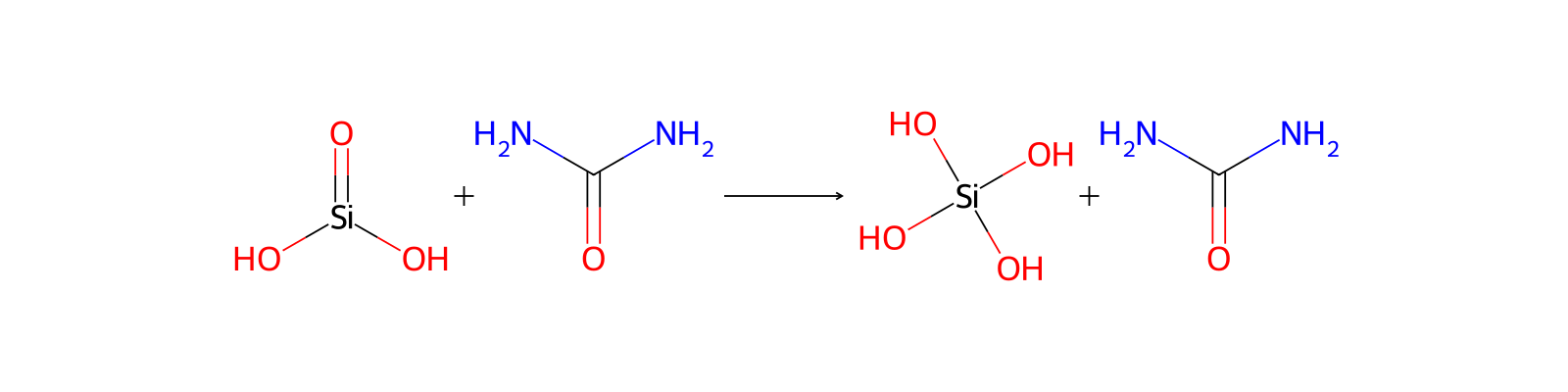
6 records


Linked notes
Loading…