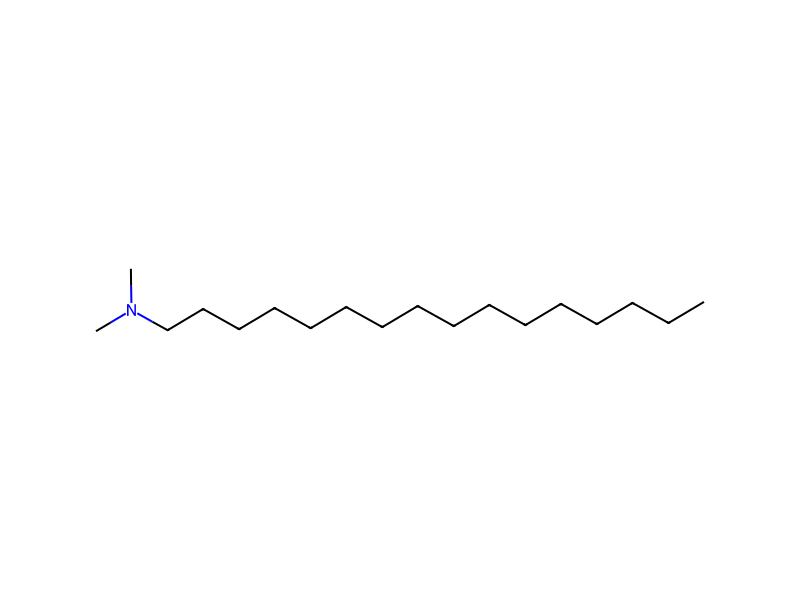
Dimethyl hexadecanamine appears as a clear yellow colored liquid with a fishlike odor. Insoluble in water and less dense than water. Hence floats on water. Contact may irritate skin, eyes and mucous membranes. May be toxic by ingestion, inhalation or skin absorption. Used to make other chemicals.
Dimethyl hexadecanamine appears as a clear yellow colored liquid with a fishlike odor. Insoluble in water and less dense than water. Hence floats on water. Contact may irritate skin, eyes and mucous membranes. May be toxic by ingestion, inhalation or skin absorption. Used to make other chemicals.
Liquid
Clear yellow liquid with a fishy odor; [CAMEO] Clear light yellow liquid; [Sigma-Aldrich MSDS]
Physicochemical properties
Melting point
12 °C · 12°C
Safety & regulation
Safety information is for reference only and does not replace the supplier’s Safety Data Sheet (SDS), applicable regulations, or professional assessment.
GHS classification
GHS Classification · 6 items
This chemical does not meet GHS hazard criteria for 0.5% (4 of 771) of reports.
Danger
H302 (88.2%): Harmful if swallowed [Warning Acute toxicity, oral]
P260, P264, P264+P265, P270, P273, P280, P301+P317, P301+P330+P331, P302+P361+P354, P304+P340, P305+P354+P338, P316, P317, P321, P330, P363, P391, P405, and P501 (click each P-code to see the statement)
Aggregated GHS information provided per 771 reports by companies from 23 notifications to the ECHA C&L Inventory. Each notification may be associated with multiple companies.
Danger
Hazard information
Regulatory Information · 4 items
Chemical: 1-Hexadecanamine, N,N-dimethyl-
1-Hexadecanamine, N,N-dimethyl- is listed on the EPA's Chemical Data Reporting (CDR) system. Manufacturers and importers of 1-Hexadecanamine, N,N-dimethyl- are required to report information about their production and use of this chemical to the EPA under the Toxic Substances Control Act (TSCA). (40 eCFR Part 711)
1-Hexadecanamine, N,N-dimethyl-: Does not have an individual approval but may be used under an appropriate group standard
Other Safety InformationIMAP assessments - Tertiary aliphatic (C12-22) and fatty amines: Human health tier II assessment
DOT LabelCorrosive
Fire HazardsExcerpt from ERG Guide 153 [Substances - Toxic and/or Corrosive (Combustible)]:
Health HazardsExcerpt from ERG Guide 153 [Substances - Toxic and/or Corrosive (Combustible)]:
Chemistry & industry
Uses & manufacturing
Uses · 3 items
CIR ingredient: Dimethyl Palmitamine
Used in chemical manufacture; [CAMEO] Used as a catalyst, laboratory reagent, and to make other products (detergents, hydraulic fluids, lubricants-greases, metalworking fluids, polymers, and heat transfer fluids); [ExPub: ECHA REACH Registrations] Permitted for use as an inert ingredient in non-food pesticide products; [EPA]
Metal Machining [Category: Heat or Machine]
U.S. Production2023: 7,000,000 - <8,500,000 lb
Consumer UsesSurfactant (surface active agent)
Industry UsesSurfactant (surface active agent)
Use ClassificationCosmetics -> Hair conditioning; Emulsifying; Antistatic
General Manufacturing Information · 2 items
Oil and Gas Drilling, Extraction, and Support activities
1-Hexadecanamine, N,N-dimethyl-: ACTIVE
Applications · 3 items
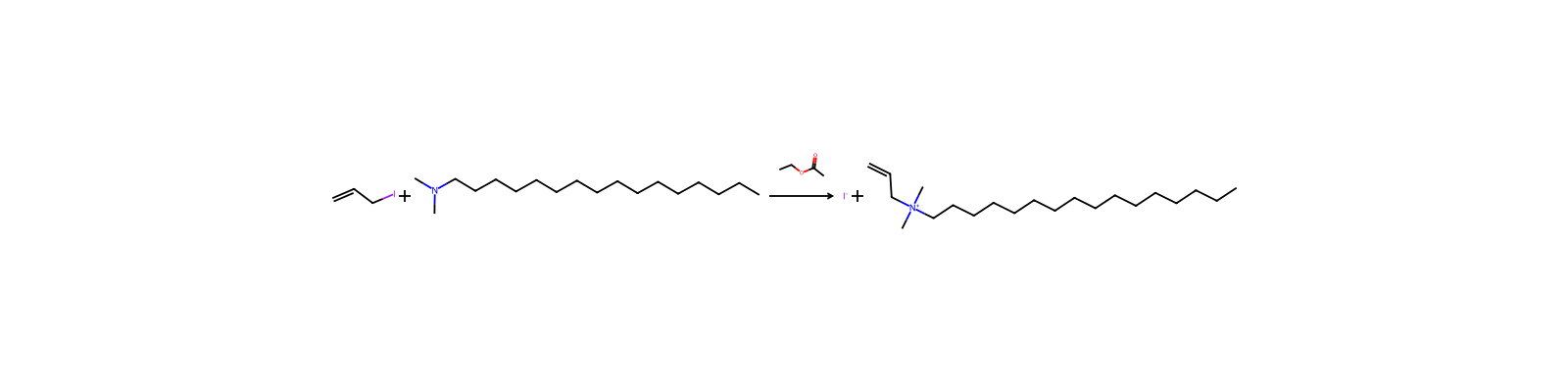
UsesN,N-Dimethylhexadecylamine may be employed in the following studies:As pore size mediator for the synthesis of monodispersed mesoporous silica nanoparticles. As swelling agent in the fabrication of colloidal mesoporous silica nanoparticles of a tunable mesopore size.Preparation of 1,4-bis(N-hexadecyl-N,N-dimethylammonium)butane dibromide, Gemini surfactant.
UsesBarlene(R) tertiary amines are used as chemical intermediates for the manufacture of quaternary ammonium compounds, amine oxide and betaine surfactants
General DescriptionHexadecyldimethylamine is a clear yellow colored liquid with a fishlike odor. Insoluble in water and less dense than water. Hence floats on water. Contact may irritate skin, eyes and mucous membranes. May be toxic by ingestion, inhalation or skin absorption. Used to make other chemicals.
1 L · 1.0 L (0.3 gallons) (liquid) or 1 Kg (2.2 lbs) (solid)
Excepted Quantities
Max Inner Pack (30g or 30ml) and Max Outer Pack (500g or 500ml)
Hazards Summary
Causes burns; Inhalation may cause corrosive injuries to upper respiratory tract; [Sigma-Aldrich MSDS]
Reactive GroupAmines, Phosphines, and Pyridines
Reactivity Profile · 1 item
DIMETHYL HEXADECANAMINE neutralizes acids in exothermic reactions to form salts plus water. May be incompatible with isocyanates, halogenated organics, peroxides, phenols (acidic), epoxides, anhydrides, and acid halides. Flammable gaseous hydrogen may be generated in combination with strong reducing agents, such as hydrides.
Air and Water ReactionsInsoluble in water.
Hazard Classes and Categories · 2 items
Acute Tox. 4 (88.2%)
Acute toxicity - category 4
Safety & protection
Fire FightingExcerpt from ERG Guide 153 [Substances - Toxic and/or Corrosive (Combustible)]:
First AidExcerpt from ERG Guide 153 [Substances - Toxic and/or Corrosive (Combustible)]:
Isolation and EvacuationExcerpt from ERG Guide 153 [Substances - Toxic and/or Corrosive (Combustible)]:
Personal Protective Equipment (PPE)Excerpt from ERG Guide 153 [Substances - Toxic and/or Corrosive (Combustible)]:
Toxicology
Adverse EffectsDermatotoxin - Skin burns.
Toxicity SummarySafe in the present practices of use and concentration. Ingredient, concentration, and use information are available in documents discoverable at https://cir-reports.cir-safety.org
Safety data
F
10-34
PPE
Faceshields, Gloves, Goggles, type ABEK (EN14387) respirator filter
wgk
2
tsca
TSCA listed
rtecs
MM0750000
ridadr
UN 2735 8/PG 3
hs_code
2921199090
risk_code
34
Signal word
Danger
Symbol(GHS)
GHS05
hazard_code
C
safety_code
26-36/37/39-45
hazard_class
8
Storage Class
8A - Combustible corrosive hazardous materials
packing_group
III
Hazard statements
H314
Limited Quantities
1.0 L (0.3 gallons) (liquid) or 1 Kg (2.2 lbs) (solid)
Excepted Quantities
Max Inner Pack (30g or 30ml) and Max Outer Pack (500g or 500ml)