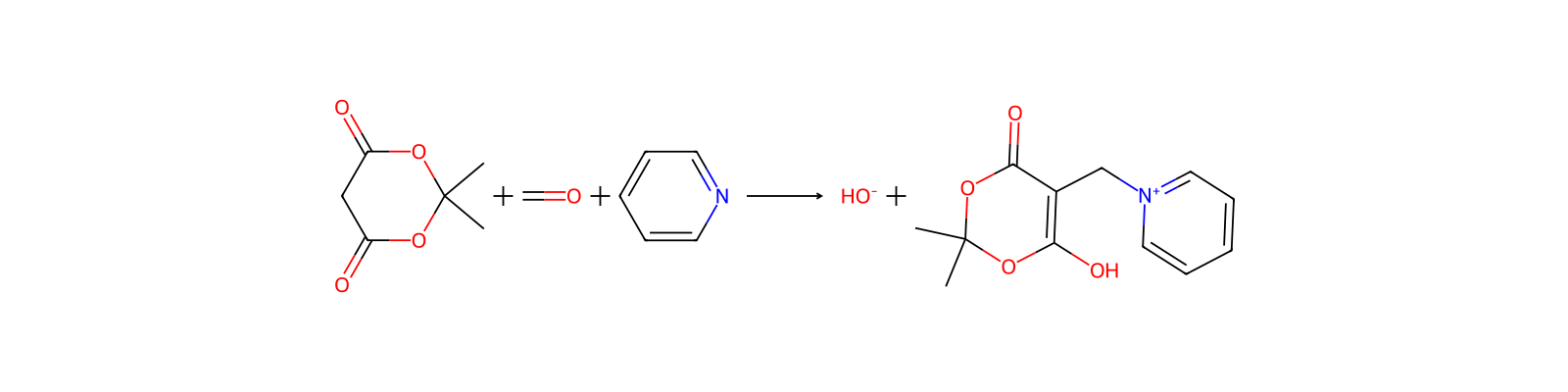
2,2-Dimethyl-1,3-dioxane-4,6-dione
Completing data — refresh the page later to see the latest

Basic information
- CAS
2033-24-1- Standard SMILES
CC1(C)OC(=O)CC(=O)O1- InChIKey
GXHFUVWIGNLZSC-UHFFFAOYSA-N- Molecular formula
- C6H8O4
- Average molar mass
- 144.12 g/mol
- Monoisotopic mass
- 144.04225874
Overview
structure given in first source
Names & identifiers
- Preferred name
- 2,2-Dimethyl-1,3-dioxane-4,6-dione
- IUPAC
- 2,2-dimethyl-1,3-dioxane-4,6-dione
- English name
- 2,2-Dimethyl-1,3-dioxane-4,6-dione
- Molecular formula
- C6H8O4
- Molecular weight
- 144.13
Names & synonyms
2,2-Dimethyl-1,3-dioxane-4,6-dione2033-24-1Meldrum's acid1,3-Dioxane-4,6-dione, 2,2-dimethyl-Isopropylidene malonateCyclic isopropylidene malonateMalonic acid, cyclic isopropylidene ester2,2-Dimethyl-m-dioxane-4,6-dioneDD139RP1SCNSC-71902NSC-688343DTXSID7051846
Show more names
Meldrum’s acidIsopropyl MalonateMie acidNSC 71902Meldrumic acid
RefChem:156318DTXCID5030402217-992-82,2-Dimethyl-1,3-dioxan-4,6-dioneMeldrums acidMFCD00006638Malonic acid cyclic isopropylidene estercycl-Isopropylidene malonate
Database identifiers
- CAS
2033-24-1- PubChem CID
- 16249
- DTXSID
DTXSID7051846- UNII
- DD139RP1SC
- EC Number
- 217-992-8
- Nikkaji
- J7.852B
Properties
Computed structural propertiesFilling in
- XLogP
- 0.6
- Topological polar surface area
- 52.6 Ų
- Hydrogen bond donors
- 0
- Hydrogen bond acceptors
- 4
- Rotatable bonds
- 0
- Heavy atoms
- 10
- Formal charge
- 0
- Complexity
- 164
Experimental & physicochemical properties
Chemical ClassesOther Classes -> Other Organic Compounds
SpringerMaterials PropertiesChemical shift
Physical DescriptionSolid; [Merck Index] White powder; [Alfa Aesar MSDS]
Physicochemical properties
- Melting point
- 92 · 92-96 °C(lit.)
- Boiling point
- 182.71 °C · 182.71°C (rough estimate)
- Density
- 1.1311 · 1.1311 (rough estimate)
- vapor pressure
- 0.044 · 0.044-133Pa at 25℃
- refractive index
- 1.4434 · 1.4434 (estimate)
- storage temp.
- 2 · 2-8°C
- solubility
- 5 %, · dioxane: soluble5%, clear to very slightly hazy, colorless to faintly yellow
- pka
- 5.1 · 5.1(at 25℃)
- form
Safety & regulation
Safety information is for reference only and does not replace the supplier’s Safety Data Sheet (SDS), applicable regulations, or professional assessment.
GHS classification
GHS Classification
This chemical does not meet GHS hazard criteria for 26.1% (12 of 46) of reports.
Warning
H315 (39.1%): Causes skin irritation [Warning Skin corrosion/irritation]
P261, P264, P264+P265, P271, P273, P280, P302+P352, P304+P340, P305+P351+P338, P319, P321, P332+P317, P337+P317, P362+P364, P391, P403+P233, P405, and P501 (click each P-code to see the statement)
Aggregated GHS information provided per 46 reports by companies from 8 notifications to the ECHA C&L Inventory. Each notification may be associated with multiple companies.
Hazard information
Regulatory Information
Chemical: 1,3-Dioxane-4,6-dione, 2,2-dimethyl-
Status: Active Update: 09-08-2019 https://echa.europa.eu/registration-dossier/-/registered-dossier/18635
1,3-Dioxane-4,6-dione, 2,2-dimethyl-: Does not have an individual approval but may be used as a component in a product covered by a group standard. It is not approved for use as a chemical in its own right.
Hazards SummaryA skin and strong eye irritant; [Alfa Aesar MSDS] See 1,3-Dioxane.
Hazard Classes and CategoriesSkin Irrit. 2 (39.1%)
Safety data
- F
- 10-21
- PPE
- Eyeshields, Gloves, type N95 (US)
- wgk
- 3
- tsca
- TSCA listed
- rtecs
- JH0800000
- hs_code
- 29322090
- risk_code
- 36/37/38-45
Chemistry & industry
Uses & manufacturing
UsesUsed in organic synthesis; [Merck Index]
General Manufacturing Information1,3-Dioxane-4,6-dione, 2,2-dimethyl-: ACTIVE
Applications
DescriptionMeldrum's acid, also known as 2,2-dimethyl-1,3-dioxane-4,6-dione, is an organic compound with the formula C6H8O4. The compound was first made in 1908 by Andrew Norman Meldrum by a condensation reaction of malonic acid with acetone in acetic anhydride and sulfuric acid. Meldrum misidentified the structure as a β-lactone of β-hydroxyisopropylmalonic acid. Yet Meldrum's acid has a high acidity with a pKa of 4.97, because like ascorbic acid, deprotonation at the methylene next to the carbonyls produces a stable enolate. Because of this property Meldrum's acid like malonic acid is a reactant in Knoevenagel condensations.
UsesAn antimicrobial agent
UsesMeldrum's acid serves as an intermediate in a variety of organic synthesis reactions. It is commonly used as an alternative to acyclic malonic esters and generally acts as a C3O2 synthon in organic synthesis.
General Description2,2-Dimethyl-1,3-dioxane-4,6-dione (Meldrum′s acid) is widely used in organic synthesis, especially for multiple C-C bond formations due to its adequate acidity (pKa 4.83) and steric rigidity. Knoevenagel condensation reaction between aldehydes and Meldrum′s acid are accelerated in ionic liquids.
Preparation methods
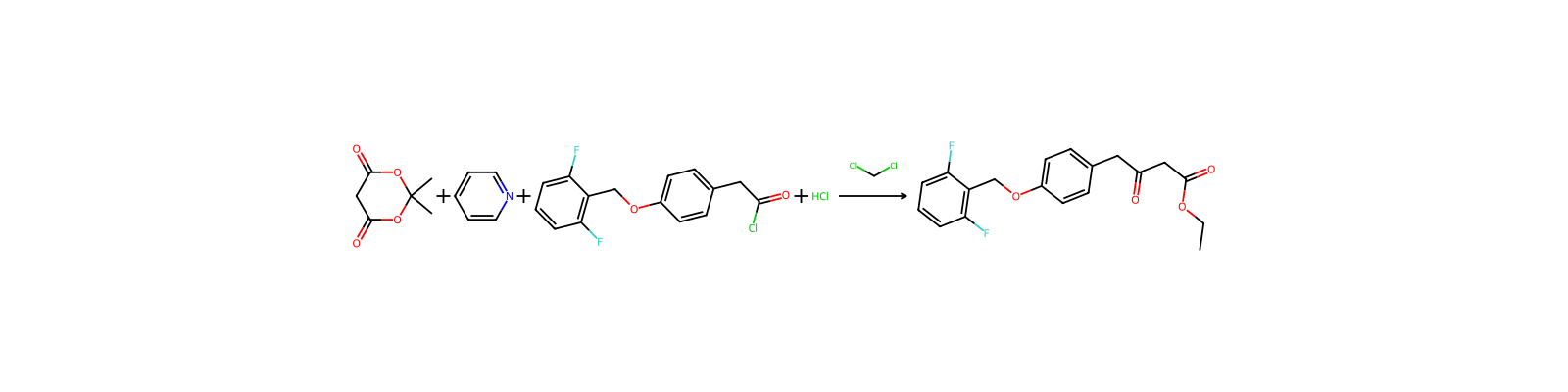
Preparation2,2-Dimethyl-1,3-dioxane-4,6-dione (Meldrum's acid)is usually prepared by condensation of malonic acid with acetone in acetic anhydride in the presence of sulfuric acid. Excellent yield of the product was achieved when acetic anhydride was added in a slow, controlled manner to a mixture of acetone, malonic acid and an acid catalyst.
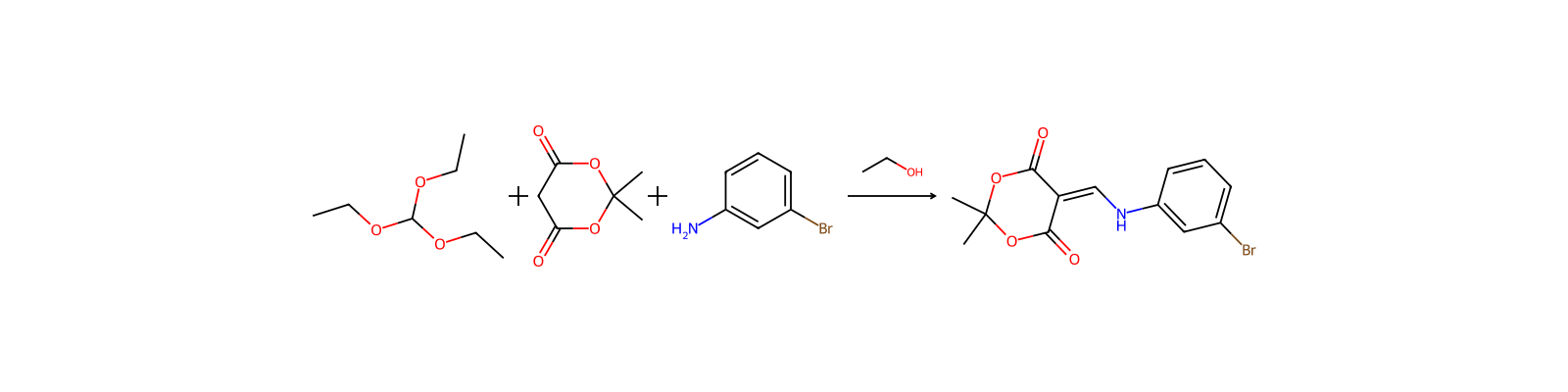
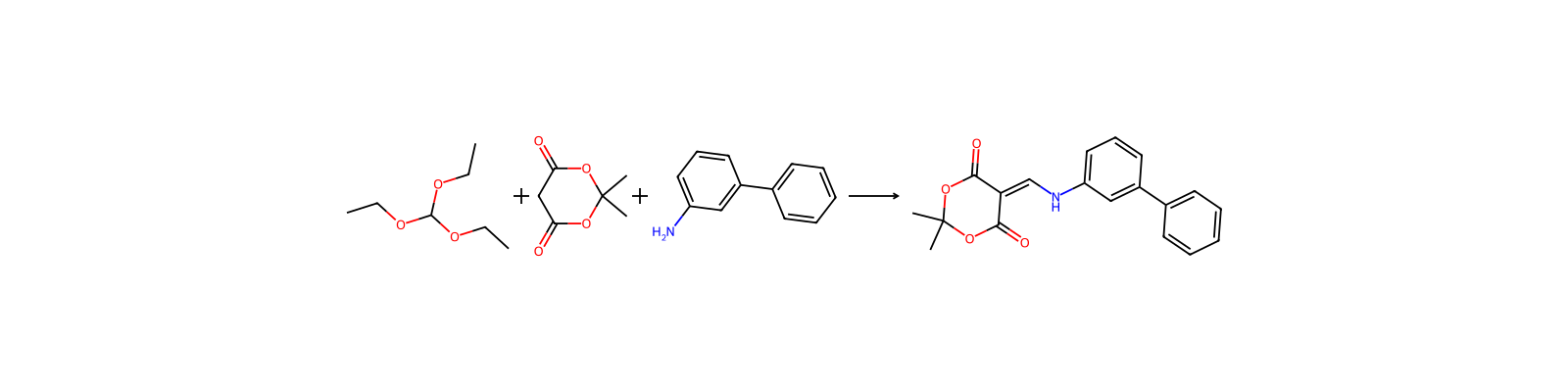
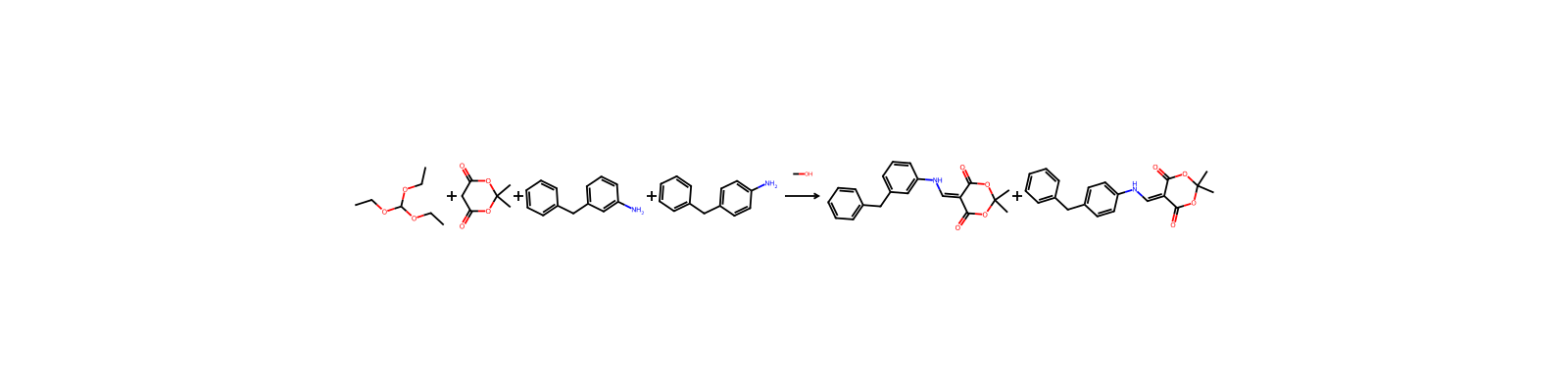
Related reactions
709 records



Compound notes
Loading…