HomeMCPWorkbenchSkills
HomeWorkbenchNotificationsMe
llms.txt · MCP GuidePrivacy Policy · Terms of Service · Supportv1.8.3
  1. Home
  2. /Compound

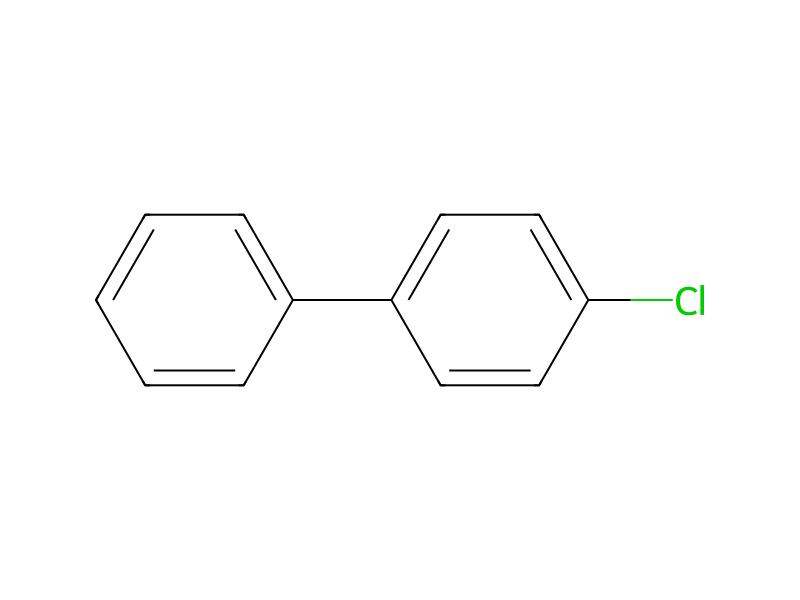
4-Chlorobiphenyl

HCID 16323
New reaction
Print
Basic informationOverviewNames & identifiersPropertiesSafety & regulationChemistry & industryRelated reactionsCompound notes
Substructure searchFind similar structures

Basic information

CAS
2051-62-9
Standard SMILES
Clc1ccc(-c2ccccc2)cc1
InChIKey
FPWNLURCHDRMHC-UHFFFAOYSA-N
Molecular formula
C12H9Cl
Average molar mass
188.65 g/mol
Monoisotopic mass
188.039278

Overview

4-chlorobiphenyl appears as colorless crystals or shiny off-white flakes. (NTP, 1992)

Names & identifiers

Preferred name
4-Chlorobiphenyl
IUPAC
1-chloro-4-phenylbenzene
English name
4-Chlorobiphenyl
Molecular formula
C12H9Cl
Molecular weight
188.65

Names & synonyms

4-CHLOROBIPHENYL4-Chloro-1,1'-biphenyl2051-62-9p-Chlorobiphenylp-Chlorodiphenyl1-Chloro-4-phenylbenzene4-ChlorodiphenylBiphenyl, 4-chloro-4-Monochlorobiphenyl4-ChlorbiphenylPCB 34-Monochloro-biphenyl
Show more names
4-PCBBZNO 3PCB NO 3NSC 370664-PCB, PCB #34-chloro-biphenyρ-Chlorobiphenyl
DTXSID30403001-chloro-4-phenyl benzeneQA22Z3NGLUNSC-37066DTXCID1020300CHEBI:27757RefChem:53601218-127-7

Database identifiers

CAS
2051-62-9
PubChem CID
16323
DTXSID
DTXSID3040300
ChEMBL
CHEMBL276334
ChEBI
CHEBI:27757
UNII
QA22Z3NGLU
EC Number
218-127-7
Nikkaji
J47.611K

Properties

Computed structural properties

XLogP
4.6
Topological polar surface area
0 Ų
Hydrogen bond donors
0
Hydrogen bond acceptors
0
Rotatable bonds
1
Heavy atoms
13
Formal charge
0
Complexity
141

Experimental & physicochemical properties

SpringerMaterials Properties13C nuclear magnetic resonance spectrum
LogP4.63
Solubilityless than 1 mg/mL at 72 °F (NTP, 1992)
Endocrine DisruptorsPotential endocrine disrupting compound
Boiling Point556 °F at 760 mmHg (NTP, 1992)
Melting Point171.9 °F (NTP, 1992)
Vapor Pressure1 mmHg at 205.5 °F ; 10 mmHg at 294.8 °F; 760 mmHg at 559.2 °F (NTP, 1992)
Physical Description4-chlorobiphenyl appears as colorless crystals or shiny off-white flakes. (NTP, 1992)
Collision Cross Section134.1 Ų [M]+ [CCS Type: TIMS, Method: calibration with PAHs]

Physicochemical properties

Safety & regulation

Safety information is for reference only and does not replace the supplier’s Safety Data Sheet (SDS), applicable regulations, or professional assessment.

GHS classification

GHS Classification · 4 items

Warning

H373 (94.1%): May causes damage to organs through prolonged or repeated exposure [Warning Specific target organ toxicity, repeated exposure]

P260, P273, P319, P391, and P501 (click each P-code to see the statement)

Aggregated GHS information provided per 51 reports by companies from 6 notifications to the ECHA C&L Inventory. Each notification may be associated with multiple companies.

Hazard information

Regulatory InformationSubstance: 4-chlorobiphenyl
DOT LabelClass 9
Fire HazardsFlash point data for this chemical are not available. It is probably combustible. (NTP, 1992)
Health HazardsSYMPTOMS: Symptoms of exposure to this chemical include skin, eye, mucous membrane and upper respiratory tract irritation.
Reactive GroupAryl Halides
Reactivity Profile · 1 item

Simple aromatic halogenated organic compounds, such as 4-CHLOROBIPHENYL, are very unreactive. Halogenated organics generally become less reactive as more of their hydrogen atoms are replaced with halogen atoms. Materials in this group may be incompatible with strong oxidizing and reducing agents. Also, they may be incompatible with many amines, nitrides, azo/diazo compounds, alkali metals, and epoxides.

Air and Water ReactionsInsoluble in water.
Hazard Classes and Categories

Chemistry & industry

Pharmacology

Metabolism/Metabolites · 1 item

PCBs are absorbed via inhalation, oral, and dermal routes of exposure. They are trasported in the blood, often bound to albumin. Due to their lipophilic nature they tend to accumulate in lipid-rich tissues, such as the liver, adipose, and skin. Metabolism of PCBs is very slow and varies based on the degree and position of chlorination. PCBs are metabolized by the microsomal monooxygenase system catalyzed by cytochrome P-450 enzymes to polar metabolites that can undergo conjugation with glutathione and glucuronic acid. The major metabolites are hydroxylated products which are excreted in the bile and faeces. The slow metabolism of PCBs means they tend to accumulate in body tissues. (L4, T6)

Uses & manufacturing

Uses · 1 item

PCBs were used as coolants and lubricants in transformers, capacitors, and other electrical devices (such as fluorescent lights and refridgerators) produced before 1977. PCBs may contaminate the air and water near hazardous waste sites. In addition, PCBs bioaccumulate in the environment and may be found in fish, meat, and dairy products. (L4)

Applications

Uses4-Chloro-1,1’-biphenyl (cas# 2051-62-9) is a compound useful in organic synthesis.

General DescriptionColorless crystals or shiny off-white flakes.

Upstream & downstream products

Upstream raw materials

Benzenediazonium, p-chloro-, tetrafluoroborate(1-)Phenyltriethoxysilane4-Chlorophenylhydrazine

Related reactions

48 records
New reaction record
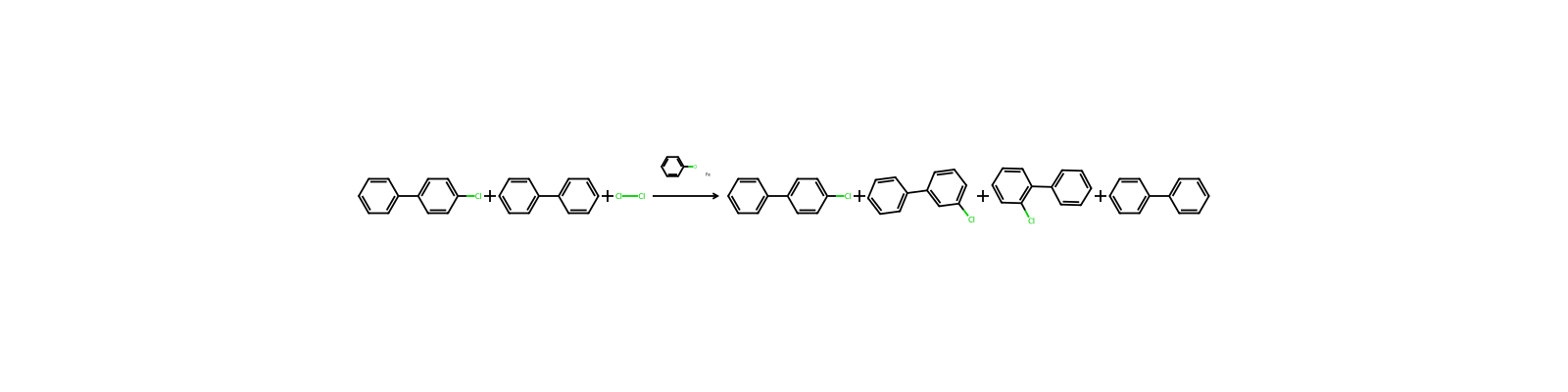
HRID 39606 reaction equation
HRID 39606As reactant
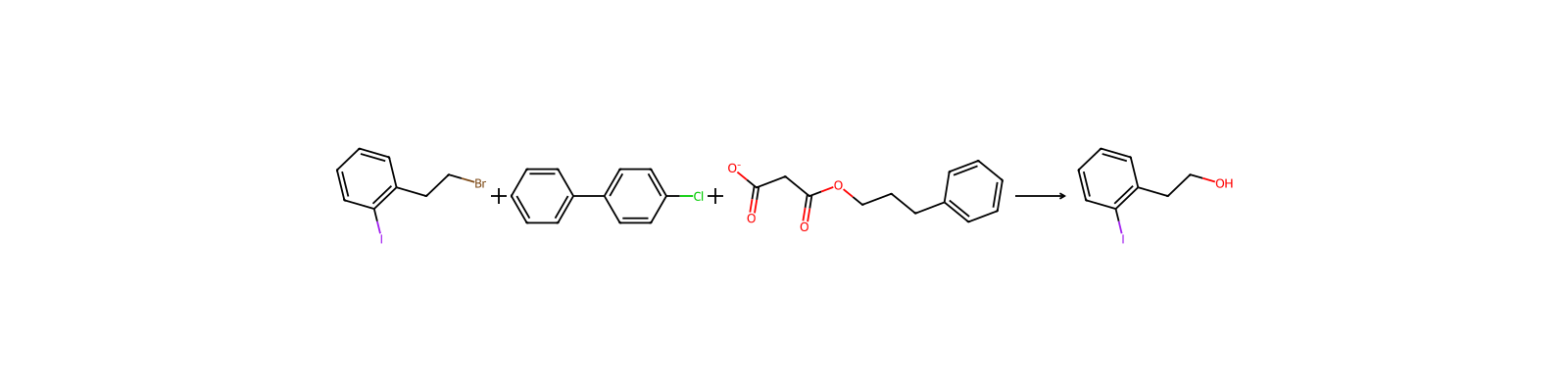
HRID 50152 reaction equation
HRID 50152As productAs reactant
HRID 111433 reaction equation
HRID 111433As reactant
HRID 150732 reaction equation
HRID 150732As reactant
HRID 168091 reaction equation
HRID 168091As reactant
HRID 191269 reaction equation
HRID 191269As reactant
HRID 290209 reaction equation
HRID 290209As reactant
HRID 342735 reaction equation
HRID 342735As reactant
PreviousPage 1 of 6

Compound notes

On this pageBasic informationOverviewNames & identifiersPropertiesSafety & regulationChemistry & industryRelated reactionsCompound notes
Melting point
32 °C · 32 °C(lit.)
Boiling point
130 °C/1mm · 130°C/1mm
Density
1.132 · 1.1320 (estimate)
refractive index
1.583 · 1.5830 (estimate)
storage temp.
Refrigerator
solubility
Chloroform (Slightly), Ethyl Acetate (Slightly), Methanol (Slightly)
form
Solid
color
White to Off-White
Water Solubility
0.1 g/100 · <0.1 g/100 mL at 22 ºC
Henry's Law Constant
2.8 · 2.8×10-2 mol/(m3Pa) at 25℃, Li et al. (2003)
Major Application
environmental
InChI
InChI=1S/C12H9Cl/c13-12-8-6-11(7-9-12)10-4-2-1-3-5-10/h1-9H
InChIKey
FPWNLURCHDRMHC-UHFFFAOYSA-N
SMILES
C1(C2=CC=CC=C2)=CC=C(Cl)C=C1
CAS DataBase Reference
2051 · 2051-62-9(CAS DataBase Reference)
EWG's Food Scores
5 · 5
FDA UNII
22 Z3NGLU · QA22Z3NGLU
NIST Chemistry Reference
1 · 1,1'-Biphenyl, 4-chloro-(2051-62-9)
EPA Substance Registry System
4 · 4-Chlorobiphenyl (2051-62-9)
UNSPSC Code
41116107 · 41116107
NACRES
24 · NA.24
Symbol(GHS)
8 · GHS08,GHS09
Signal word
Warning
Hazard statements
373 · H373-H410
Precautionary statements
260 · P260-P273-P314-P391-P501
PPE
95 · dust mask type N95 (US), Eyeshields, Gloves
Hazard Codes
N,Xi
Risk Statements
33 · 33-50/53-36/37/38
Safety Statements
35 · 35-60-61-36-26
RIDADR
3432 · UN 3432 9/PG 2
WGK Germany
3 · 3
RTECS
2080000 · DV2080000
Hazard Note
Irritant
HazardClass
9 · 9
PackingGroup
III
HS Code
2903999090 · 2903999090
Storage Class
11 · 11 - Combustible Solids
Hazard Classifications
1 Aquatic · Aquatic Acute 1Aquatic Chronic 1STOT RE 2
Toxicity
3500 mg/kg · mammal (species unspecified),LDLo,oral,3500mg/kg (3500mg/kg),Journal of Industrial Hygiene. Vol. 13, Pg. 87, 1931.
STOT RE 2 (94.1%)

Safety & protection

Fire FightingFires involving this material can be controlled with a dry chemical, carbon dioxide or Halon extinguisher. (NTP, 1992)
First Aid · 1 item

EYES: First check the victim for contact lenses and remove if present. Flush victim's eyes with water or normal saline solution for 20 to 30 minutes while simultaneously calling a hospital or poison control center. Do not put any ointments, oils, or medication in the victim's eyes without specific instructions from a physician. IMMEDIATELY transport the victim after flushing eyes to a hospital even if no symptoms (such as redness or irritation) develop.

Nonfire Spill Response · 1 item

SMALL SPILLS AND LEAKAGE: Should a spill occur while you are handling this chemical, FIRST REMOVE ALL SOURCES OF IGNITION, then you should dampen the solid spill material with 60-70% ethanol and transfer the dampened material to a suitable container. Use absorbent paper dampened with 60-70% ethanol to pick up any remaining material. Seal the absorbent paper, and any of your clothes, which may be contaminated, in a vapor-tight plastic bag for eventual disposal. Solvent wash all contaminated surfaces with 60-70% ethanol followed by washing with a soap and water solution. Do not reenter the contaminated area until the Safety Officer (or other responsible person) has verified that the area has been properly cleaned.

Isolation and EvacuationExcerpt from ERG Guide 171 [Substances (Low to Moderate Hazard)]:
Minimum Risk LevelIntermediate Oral: 0.03 ug/kg/day (L134)
Personal Protective Equipment (PPE) · 1 item

RECOMMENDED RESPIRATOR: Where the neat test chemical is weighed and diluted, wear a NIOSH-approved half face respirator equipped with an organic vapor/acid gas cartridge (specific for organic vapors, HCl, acid gas and SO2) with a dust/mist filter. (NTP, 1992)

Toxicology

Treatment · 1 item

There are no specific treatments for PCB poisoning, since it is not usually recognized until after substantial chronic exposure. Only preventing further exposure and treating the observed symptoms can be done. Acute inhalation can be treated by administering oxygen. (L4)

Health Effects · 1 item

The most common health effects of PCBs are skin conditions such as chloracne and rashes. Chronic PCB exposure has also been shown to cause liver, stomach and kidney, damage, jaundice, edema, anemia, changes in the immune system, behavioral alterations, and impaired reproduction. (L4)

Exposure RoutesOral (L4) ; inhalation (L4) ; dermal (L4)
Toxicity Summary · 1 item

The mechanism of action varies with the specific PCB. Dioxin-like PCBs bind to the aryl hydrocarbon receptor, which disrupts cell function by altering the transcription of genes, mainly be inducing the expression of hepatic Phase I and Phase II enzymes, especially of the cytochrome P450 family. Most of the toxic effects of PCBs are believed to be results of Ah receptor binding. Other PBCs are believed to interfere with calcium channels and/or change brain dopamine levels. PCBs can also cause endocrine disurption by altering the production of thyroid hormones and binding to estrogen receptors, which can stimulate the growth of certain cancer cells and produce other estrogenic effects, such as reproductive dysfunction. They will bioaccumulate by binding to receptor proteins such as uteroglobin. (A3, A4, A30, A66)

Signs and SymptomsChronic PCB exposure results in symptoms such as abdominal pain, nausea, vomiting, diarrhea, headache, dizziness, depression, nervousness, dermal and ocular lesions, fatigue, irregular menstrual cycles and a lowered immune response. (A3)
Carcinogen Classification1, carcinogenic to humans. (L135)
Toxicity DataLD50: 1010 mg/kg (Oral, Rat) (T14) LD50: 880 mg/kg (Intraperitoneal, Mouse) (T14)

Safety data

PPE
dust mask type N95 (US), Eyeshields, Gloves
wgk
3
rtecs
DV2080000
ridadr
UN 3432 9/PG 2
hs_code
2903999090
Toxicity
mammal (species unspecified),LDLo,oral,3500mg/kg (3500mg/kg),Journal of Industrial Hygiene. Vol. 13, Pg. 87, 1931.
risk_code
33-50/53-36/37/38
Signal word
Warning
Symbol(GHS)
GHS08,GHS09
hazard_code
N,Xi
hazard_note
Irritant
safety_code
35-60-61-36-26
hazard_class
9
Storage Class
11 - Combustible Solids
packing_group
III
Hazard statements
H373-H410
Hazard Classifications
Aquatic Acute 1Aquatic Chronic 1STOT RE 2
Precautionary statements
P260-P273-P314-P391-P501
1,4-Dichlorobenzene

Downstream products

4-Isopropylbiphenyl4-BiphenylacetonitrileN-4-BiphenylylbenzenesulfonamidePhosphine sulfide, tris([1,1'-biphenyl]-4-yl)-

Additional notes

DefinitionChEBI: A monochlorobiphenyl carrying a chloro substituent at position 4.