

Basic information
- Standard SMILES
Brc1ccccc1-c1ccccc1- InChIKey
KTADSLDAUJLZGL-UHFFFAOYSA-N- Molecular formula
- C12H9Br
- Average molar mass
- 233.1 g/mol
- Monoisotopic mass
- 231.98876239
Overview
2-bromobiphenyl is a clear liquid. Insoluble in water. (NTP, 1992)
Names & identifiers
- Preferred name
- 2-Bromobiphenyl
- IUPAC
- 1-bromo-2-phenylbenzene
- English name
- 2-Bromobiphenyl
- Molecular formula
- C12H9Br
- Molecular weight
- 233.1
Names & synonyms
2-Bromobiphenyl2-Bromo-1,1'-biphenyl1,1'-Biphenyl, 2-bromo-1-bromo-2-phenylbenzeneO-BROMOBIPHENYLBiphenyl, 2-bromo-2-BromodiphenylDTXSID0024638m-biphenyl bromide2-BIPHENYLYL BROMIDEGXS4234YXD2-biphenyl bromide
Show more names
PBB NO 12-Brombiphenyl2- BromobenzeneBROMOBIPHENYL(2-)
CCRIS 5888EINECS 218-141-3NSC 67353NSC-67353BROMOBIPHENYL, 2-UNII-GXS4234YXD2-PHENYLBROMOBENZENEPBB 1
Database identifiers
- CAS
2052-07-5- PubChem CID
- 16329
- DTXSID
DTXSID0024638- ChEMBL
CHEMBL1462584- UNII
- GXS4234YXD
- EC Number
- 218-141-3
- Nikkaji
- J95.603A
Properties
Computed structural properties
- XLogP
- 4.6
- Topological polar surface area
- 0 Ų
- Hydrogen bond donors
- 0
- Hydrogen bond acceptors
- 0
- Rotatable bonds
- 1
- Heavy atoms
- 13
- Formal charge
- 0
- Complexity
- 149
Experimental & physicochemical properties
SpringerMaterials Properties13C nuclear magnetic resonance spectrum
LogP4.59
Density1.2175 (NTP, 1992) - Denser than water; will sink
SolubilityInsoluble (NTP, 1992)
Boiling Point565 to 568 °F at 760 mmHg (NTP, 1992)
Melting Point34.7 to 35.6 °F (NTP, 1992)
Physical Description2-bromobiphenyl is a clear liquid. Insoluble in water. (NTP, 1992)
Physicochemical properties
- Melting point
- 1.5 · 1.5-2 °C(lit.)
- Boiling point
- 297 · 297-298 °C(lit.)
- Density
- 1.352 g/mL · 1.352 g/mL at 25 °C(lit.)
- refractive index
- 20 · n20/D 1.628(lit.)
- Flash point
- 113 °C · 113 °C
- storage temp.
- Sealed in dry,Room Temperature
- solubility
- Chloroform (Sparingly, Heated), Methanol (Slightly)
- form
- Liquid
- Specific Gravity
- 1.352 · 1.352
- color
- Clear colorless
- Water Solubility
- Insoluble
- BRN
- 1863156 · 1863156
- Stability
- Stable, but light sensitive. Incompatible with strong oxidizing agents.
- CAS DataBase Reference
- 2052 · 2052-07-5(CAS DataBase Reference)
- FDA UNII
- 4234 YXD · GXS4234YXD
- NIST Chemistry Reference
- 1 · 1,1'-Biphenyl, 2-bromo-(2052-07-5)
- EPA Substance Registry System
- 2 · 2-Bromobiphenyl (2052-07-5)
- Symbol(GHS)
- 7 · GHS07,GHS08,GHS09
- Signal word
- Danger
- Hazard statements
- 302 · H302-H317-H411-H372
- Precautionary statements
- 273 · P273-P305+P351+P338
- Hazard Codes
- Xi,Xn
- Risk Statements
- 36 · 36/37/38-20/21/22
- Safety Statements
- 23 · 23-24/25-37/39-26-36
- WGK Germany
- 3 · 3
- TSCA
- TSCA listed
- HS Code
- 29036990 · 29036990
- REACH Registrations
- Active
Safety & regulation
GHS classification
GHS Classification
This chemical does not meet GHS hazard criteria for 6.2% (2 of 32) of reports.
Warning
H315 (93.8%): Causes skin irritation [Warning Skin corrosion/irritation]
P261, P264, P264+P265, P271, P273, P280, P302+P352, P304+P340, P305+P351+P338, P319, P321, P332+P317, P337+P317, P362+P364, P391, P403+P233, P405, and P501 (click each P-code to see the statement)
Aggregated GHS information provided per 32 reports by companies from 6 notifications to the ECHA C&L Inventory. Each notification may be associated with multiple companies.
Hazard information
Regulatory Information
S - indicates a substance that is identified in a final Significant New Use Rule.
Status: Active Update: 10-01-2020 https://echa.europa.eu/registration-dossier/-/registered-dossier/30357
Fire HazardsFlash point data for this chemical are not available. It is probably combustible. (NTP, 1992)
Reactive GroupAryl Halides
Reactivity Profile2-BROMOBIPHENYL is sensitive to light. Low reactivity. (NTP, 1992)
Air and Water ReactionsInsoluble in water.
Hazard Classes and CategoriesSkin Irrit. 2 (93.8%)
Safety & protection
Fire FightingFires involving this material should be controlled using a dry chemical carbon dioxide or Halon extinguisher. (NTP, 1992)
First Aid
EYES: First check the victim for contact lenses and remove if present. Flush victim's eyes with water or normal saline solution for 20 to 30 minutes while simultaneously calling a hospital or poison control center. Do not put any ointments, oils, or medication in the victim's eyes without specific instructions from a physician. IMMEDIATELY transport the victim after flushing eyes to a hospital even if no symptoms (such as redness or irritation) develop.
Nonfire Spill Response
SMALL SPILLS AND LEAKAGE: If you spill this chemical, FIRST REMOVE ALL SOURCES OF IGNITION. Then, use absorbent paper to pick up all liquid spill material. Your contaminated clothing and absorbent paper should be sealed in a vapor-tight plastic bag for eventual disposal. Solvent wash all contaminated surfaces with ethanol followed by washing with a soap and water solution. Do not reenter the contaminated area until the Safety Officer (or other responsible person) has verified that the area has been properly cleaned.
Personal Protective Equipment (PPE)
RECOMMENDED RESPIRATOR: Where the neat test chemical is weighed and diluted, wear a NIOSH-approved half face respirator equipped with an organic vapor/acid gas cartridge (specific for organic vapors, HCl, acid gas and SO2) with a dust/mist filter. (NTP, 1992)
Safety data
- wgk
- 3
- tsca
- TSCA listed
- hs_code
- 29036990
- risk_code
- 36/37/38-20/21/22
- Signal word
- Danger
- Symbol(GHS)
- GHS07,GHS08,GHS09
- hazard_code
- Xi,Xn
- safety_code
- 23-24/25-37/39-26-36
- Hazard statements
- H302-H317-H411-H372
- REACH Registrations
- Active
- Precautionary statements
- P273-P305+P351+P338
Chemistry & industry
Uses & manufacturing
General Manufacturing Information1,1'-Biphenyl, 2-bromo-: ACTIVE
Applications
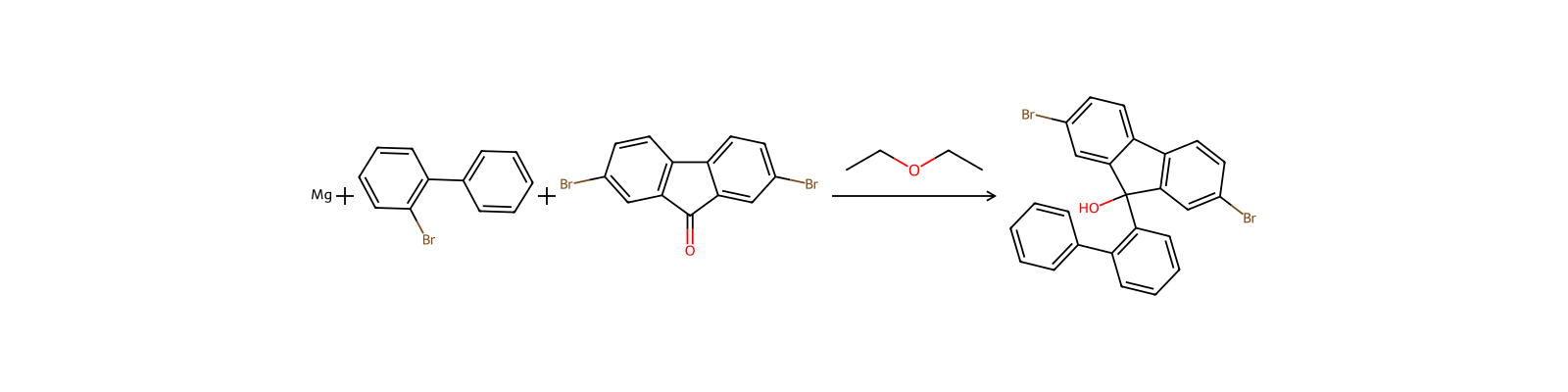
Description2-Bromobiphenyl is an important intermediate, which can be used to synthesize 2,2'-dibromo-9,9'-spirobifluorene, 3-bromo-9-(9-phenylfluoren-9-yl)carbazole and phenanthrene compounds.
Uses2-Bromobiphenyl can be used as reference compound to investigate extraction efficiency of solid-phase microextraction fibers, based on methacrylic acid-trimethylolpropanetrimethacrylate copolymers.
UsesIt is used as an intermediate of organic synthesis and pharmaceutical. It also can react with norborn-2-ene to get 5-phenyl-1,2,3,4,4a,8b-hexahydro-1,4-methanobiphenylene, in synthesis of a novel trispirocyclic hydrocarbon. It is used as a reference compound to investigate extraction efficiency of solid-phase micro extraction fibers, based on methacrylic acid-trimethylolpropanetrimethacrylate copolymers.
General DescriptionClear liquid. Insoluble in water.
Upstream & downstream products
Upstream raw materials
Downstream products
Suppliers50 total
梯希爱(上海)化成工业发展有限公司021-67121386 · [email protected]
衢州润东化工有限公司0570-8789886 18892685668 · [email protected]
上海阿拉丁生化科技股份有限公司400-6206333 13167063860 · [email protected]
INTATRADE GmbH+49 3493/605464 · [email protected]
T&W GROUP021-61551611 13296011611 · [email protected]
爱斯特(成都)生物制药股份有限公司+86-28-85122536 85324413 · [email protected]
科瑞迪化学400-821-5857 021-64326257 · [email protected]
平顶山隆维生物科技有限公司15343756688 · [email protected]
上海迈瑞尔生化科技有限公司4006356688 18621169109 · [email protected]
宇瑞(上海)化学有限公司02150456736 18602143071 · [email protected]
北京华威锐科化工有限公司0757-86329057 18934348241 · [email protected]
武汉易泰科技有限公司上海分公司18930552037 · [email protected]
阿法埃莎(中国)化学有限公司400-6106006 · [email protected]
安耐吉化学&3A(安徽泽升科技股份有限公司)400-0056266 · [email protected]
石家庄斯迪亚诺精细化工有限公司0311-89250318 13582355795 · [email protected]
上海瀚鸿科技股份有限公司021-54306202 13764082696 · [email protected]
上海景颜化工科技有限公司13817811078 · [email protected]
嘉兴市艾森化工有限公司0573-85285100 18627885956 · [email protected]
池州捷峰生物科技有限公司0566-8928158 · [email protected]
上海隆盛化工有限公司58099637 13585536065 · [email protected]
上海攀鸿化工科技有限公司021-56491756 13512199871 · [email protected]
孝感深远化工有限公司15527621225; 15527621225 · [email protected]
唐山默内德贸易有限公司0315-8309571 15633399667 · [email protected]
四川库利南科技有限公司400-1166-196 18981987031 · [email protected]
上海耐士化工科技有限公司400-188-0725 +86 21 34310725 13611771617
天津希恩思生化科技有限公司400 638 7771 · [email protected]
常州创视电子科技有限公司+86 (519) 8829-2061 · [email protected]
河南多贝化工有限公司0370-2785118 17550508557 · [email protected]
上海思域化工科技有限公司86-21-34053660 · [email protected]
赛默飞世尔科技(中国)有限公司800-810-5118 · [email protected]
北京伊诺凯科技有限公司400-810-7969 010-59572699 · [email protected]
上海遐瑞医药科技有限公司+86 21 61551611
江苏艾康生物医药研发有限公司025-66113011 13913916777 · [email protected]
TOKYO CHEMICAL INDUSTRY CO., LTD.03-36680489 · [email protected]
深圳康特腾科技有限公司86-0755-86635001 · [email protected]
越林试剂021-62960152 · [email protected]
无锡中坤生化科技有限公司+86 0510-85629785
北京环宇世纪化学科技有限公司hysj_bj.com
郑州海阔光电材料有限公司0371-67759225 13526468238 · [email protected]
HBCChem, Inc.+1-510-219-6317 · [email protected]
美岚实业(上海)有限公司021-58958189 · [email protected]
上海爱蝶实业有限公司021-58957966 18930537195 · [email protected]
广拓化学(上海)有限公司021-60899189-8001 18918189673 · [email protected]
雷丁试剂0510-85629785 18013409632 · [email protected]
湖南华腾制药有限公司400-8592883 · [email protected]
上海御略医药科技有限公司021-60345187 13671753212 · [email protected]
天津安浩生物科技有限公司[email protected]
杭州杰恒化工有限公司0571-87396432 · [email protected]
上海寰川实业有限公司021-61478794 · [email protected]
上海永叶生物科技有限公司86-021-61559134 15921386130 · [email protected]
Related reactions
260 records


Linked notes
Loading…