Enteropeptidase
RECOMBINANT ENTEROKINASE · EC 3.4.21.9 · ENTEROPEPTIDASE · REK · ENTK · PRSS7 · TMPRSS15 · ENTEROKISE
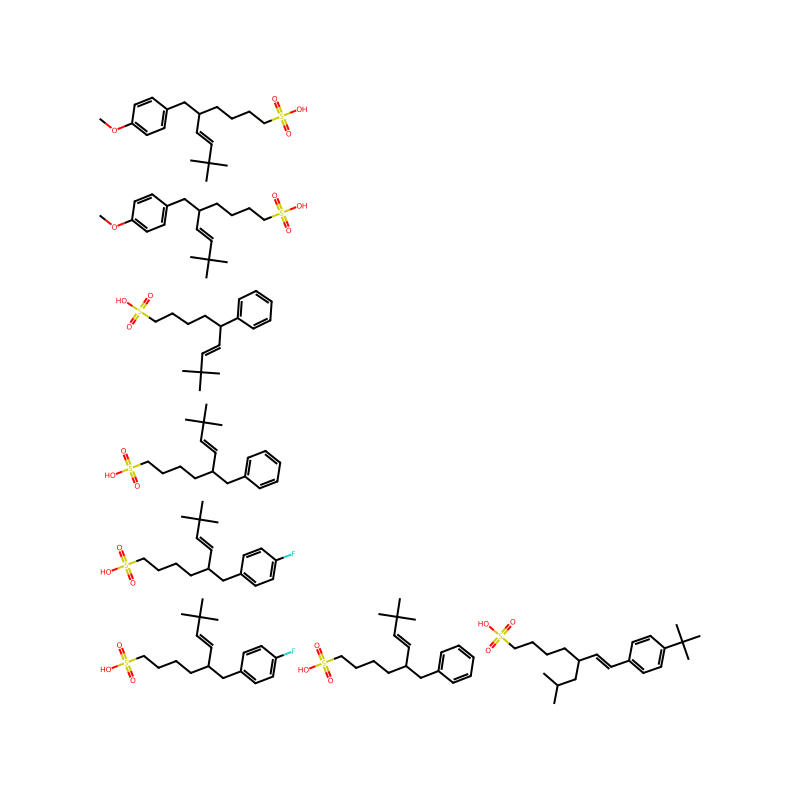
Identifiers & Physical Properties
| CAS No. | 9014-74-8 |
|---|---|
| Molecular formula | C148H230F2O26S8 |
| Average molar mass | 2,719.9 g/mol |
| Monoisotopic mass | 2,717.4409131 g/mol |
| SMILES | CC(C)(C)C=CC(CCCCS(=O)(=O)O)Cc1ccc(F)cc1.CC(C)(C)C=CC(CCCCS(=O)(=O)O)Cc1ccc(F)cc1.CC(C)(C)C=CC(CCCCS(=O)(=O)O)Cc1ccccc1.CC(C)(C)C=CC(CCCCS(=O)(=O)O)Cc1ccccc1.CC(C)(C)C=CC(CCCCS(=O)(=O)O)c1ccccc1.CC(C)CC(C=Cc1ccc(C(C)(C)C)cc1)CCCCS(=O)(=O)O.COc1ccc(CC(C=CC(C)(C)C)CCCCS(=O)(=O)O)cc1.COc1ccc(CC(C=CC(C)(C)C)CCCCS(=O)(=O)O)cc1 |
| InChIKey | VRASXGTWKFQRNS-UHFFFAOYSA-N |
| PubChem CID | 168009870 |
| EC No. | 232-761-1 |
Chemical & Physical Properties
| Topological polar surface area | 520 |
|---|---|
| Hydrogen bond donors | 8 |
| Hydrogen bond acceptors | 28 |
| Rotatable bonds | 74 |
| Heavy atoms | 184 |
| Formal charge | 0 |
| Complexity | 2,230 |
| Storage conditions | -20°C |
| Physical state | salt-free, lyophilized powder |
| Color | white |
| Biological source | bovine intestine |
| Specific Activity | ≥20units/mg protein |
| CAS DataBase Reference | 9014-74-8 |
| FDA UNII | ENTEROPEPTIDASE (PORCINE) (1N6UU71ZTI)ENTEROPEPTIDASE (HUMAN) (228MAT8QUT)ENTEROPEPTIDASE (BOVINE) (7QBB4Y898A) |
| EPA Substance Registry System | Peptidase, entero- (9014-74-8) |
| UNSPSC Code | 41116107 |
| NACRES | NA.56 |
| GHS pictogram | GHS07,GHS08 |
| Signal word | Danger |
| GHS hazard statements | H315-H319-H334-H335 |
| GHS precautionary statements | P261-P284-P304+P340-P305+P351+P338-P342+P311 |
| Personal protective equipment (PPE) | Eyeshields, Gloves, type N95 (US) |
| Water hazard class (WGK) | 3 |
| TSCA inventory status | TSCA listed |
| Storage class | 11 - Combustible Solids |
Safety & Regulations
| GHS classification | DangerH315 (100%): Causes skin irritation [Warning Skin corrosion/irritation]P233, P260, P261, P264, P264+P265, P271, P280, P284, P302+P352, P304+P340, P305+P351+P338, P319, P321, P332+P317, P337+P317, P342+P316, P362+P364, P403, P403+P233, P405, and P501 (click each P-code to see the statement)Aggregated GHS information provided per 40 reports by companies from 3 notifications to the ECHA C&L Inventory. Each notification may be associated with multiple companies. |
|---|---|
| Regulatory information | XU - indicates a substance exempt from reporting under the Chemical Data Reporting Rule, (40 CFR 711). |
| Hazard Classes and Categories | Skin Irrit. 2 (100%) |
| Personal protective equipment (PPE) | Eyeshields, Gloves, type N95 (US) |
| Water hazard class (WGK) | 3 |
| TSCA inventory status | TSCA listed |
| Signal word | Danger |
| GHS pictogram | GHS07,GHS08 |
| Storage class | 11 - Combustible Solids |
| GHS hazard statements | H315-H319-H334-H335 |
| GHS precautionary statements | P261-P284-P304+P340-P305+P351+P338-P342+P311 |
Applications & Uses
Uses
Typical conditions for fusion protein cleavage:Adjust the concentration of the fusion protein to 1.5 mg/ml and a pH between 7.0-8.0 with 500 mM Tris-HCl, pH 8.0, 2.0 mM CaCl2, and 1% Tween 20 Add enterokinase to fusion protein solution at a ratio of ~ 0.02 units per 1 mg fusion protein and mixIncubate reaction mixture at ~25 °C for 16 hours
General Description
Enterokinase is a highly specific serine protease that is used for the removal of the FLAG peptide from N-terminal and Met-N-terminal fusion proteins. It does not remove the C-terminal FLAG.
Description
Enterokinase (rEK) Bovine Recombinant is the catalytic subunit of bovine enterokinase, which is expressed by E. Coli and purified to yield a high enzyme activity preparation. EK recognizes the sequence Asp-Asp-Asp-Asp-Lys and cleaves the peptide bond after the lysine residue. The enzyme can be used to cleave any fusion protein that carries this sequence. Recombinant Bovine Enterokinase is a single glycosylated polypeptide chain containing 235 amino acids and having an MW of ~28kDa.