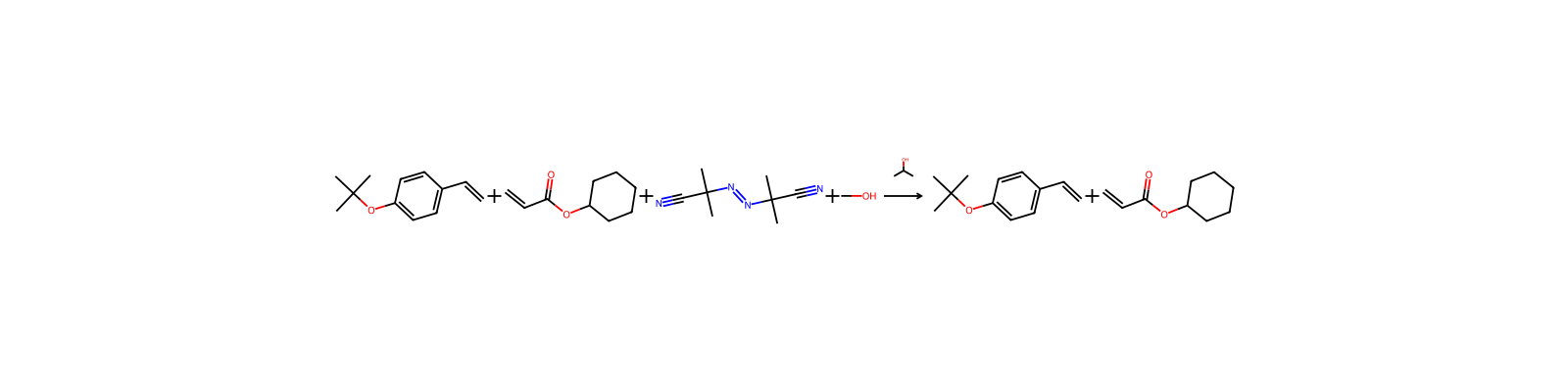

Basic information
- CAS
3066-71-5- Standard SMILES
C=CC(=O)OC1CCCCC1- InChIKey
KBLWLMPSVYBVDK-UHFFFAOYSA-N- Molecular formula
- C9H14O2
- Average molar mass
- 154.21 g/mol
- Monoisotopic mass
- 154.09937969
Names & identifiers
- Preferred name
- Cyclohexyl acrylate
- IUPAC
- cyclohexyl prop-2-enoate
- English name
- Cyclohexyl acrylate
- Molecular formula
- C9H14O2
- Molecular weight
- 154.21
Names & synonyms
Cyclohexyl acrylate3066-71-52-Propenoic acid, cyclohexyl esterSartomer SR 220ACRYLIC ACID, CYCLOHEXYL ESTERSR 220EINECS 221-319-3NSC 18612BRN 1937528AI3-03839NSC-1861225B347Q26U
Show more names
ACRYLIC ACID CYCLOHEXYL ESTERsr220sartomersr2202-Cyclohexyl acrylateCHLUMICRYI CHA MonomerAcrylic acid cyclohexyl
CYCLOHEXYL 2-PROPENOATEDTXSID20222044-06-00-00038 (Beilstein Handbook Reference)RefChem:580804DTXCID2022042Propenoic acid, cyclohexyl ester221-319-3cyclohexyl prop-2-enoate
Database identifiers
- CAS
3066-71-5- PubChem CID
- 18298
- DTXSID
DTXSID2022204- UNII
- 25B347Q26U
- EC Number
- 221-319-3
- Nikkaji
- J12.881C
Properties
Computed structural properties
- XLogP
- 2.5
- Topological polar surface area
- 26.3 Ų
- Hydrogen bond donors
- 0
- Hydrogen bond acceptors
- 2
- Rotatable bonds
- 3
- Heavy atoms
- 11
- Formal charge
- 0
- Complexity
- 146
Experimental & physicochemical properties
PolymersPlastics & Rubber -> (Meth)acrylates
SpringerMaterials PropertiesOptical coefficient
Physical DescriptionLiquid; [Alfa Aesar MSDS]
Physicochemical properties
- Boiling point
- 182 · 182-184°C
- Density
- 0 · 0,975 g/cm3
- refractive index
- 1.46 · 1.4600
- Flash point
- 68 °C · 68°C
- storage temp.
- 2 · 2-8°C, stored under nitrogen
- form
- clear liquid
- color
- Colorless to Almost colorless
- Viscosity
- 8 cp · 8cp (25C)
- BRN
- 1937528 · 1937528
- InChI
- InChI=1S/C9H14O2/c1-2-9(10)11-8-6-4-3-5-7-8/h2,8H,1,3-7H2
- InChIKey
Safety & regulation
GHS classification
GHS Classification
Warning
H315: Causes skin irritation [Warning Skin corrosion/irritation]
P261, P264, P271, P273, P280, P302+P352, P304+P340, P319, P321, P332+P317, P362+P364, P391, P403+P233, P405, and P501 (click each P-code to see the statement)
Warning
H315 (100%): Causes skin irritation [Warning Skin corrosion/irritation]
P261, P264, P271, P273, P280, P302+P352, P304+P340, P319, P321, P332+P317, P362+P364, P391, P403+P233, P405, and P501 (click each P-code to see the statement)
Hazard information
Regulatory Information
Chemical: 2-Propenoic acid, cyclohexyl ester
2-Propenoic acid, cyclohexyl ester is listed on the EPA's Chemical Data Reporting (CDR) system. Manufacturers and importers of 2-Propenoic acid, cyclohexyl ester are required to report information about their production and use of this chemical to the EPA under the Toxic Substances Control Act (TSCA). (40 eCFR Part 711)
Hazards SummaryOral LD50 (rat) = 8,980 uL/kg; Dermal LD50 (rabbit) = 2,520 uL/kg; [RTECS] Stabilized with 4-methoxyphenol (CAS# 150-76-5); An irritant; [Alfa Aesar MSDS] See Cyclohexyl methacrylate.
Hazard Classes and Categories
Skin Irrit. 2 (100%)
Specific target organ toxicity (single exposure) - category 3
STOT SE 3
Toxicology
Adverse EffectsSkin Sensitizer - An agent that can induce an allergic reaction in the skin.
Safety data
- tsca
- TSCA listed
- rtecs
- AS7350000
Chemistry & industry
Uses & manufacturing
U.S. Production2023: <50,000 lb
Industry UsesMonomers
General Manufacturing Information
Paint and Coating Manufacturing
2-Propenoic acid, cyclohexyl ester: ACTIVE
Applications
UsesCyclohexyl acrylate is commonly used in industrial and scientific laboratory research. Examples include phase behaviour studies of binary and ternary mixtures of poly(cyclohexyl acrylate) and poly(cyclohexyl methacrylate) in supercritical CO2[1]. As well as kinetic modelling studies of the ester exchange reaction between cyclohexyl acrylate and n-butanol[2], and so on.
Suppliers100 total
梯希爱(上海)化成工业发展有限公司021-67121386 · [email protected]
毕佳索(上海毕得医药科技股份有限公司)400-6005915 · [email protected]
河南赢创生物科技有限公司16650615803 · [email protected]
武汉欣扬瑞和化学科技有限公司153-07155313 15307155313 · [email protected]
湖北海克斯生化有限公司17362916295; 17362916295 · [email protected]
湖北云镁科技有限公司027-59206672 18995657604 · [email protected]
爱斯特(成都)生物制药股份有限公司+86-28-85122536 85324413 · [email protected]
Related reactions
5 records


Compound notes
Loading…