HRID 46727As product

3481-09-2O=C1c2ccccc2C(=O)N1ClWDRFYIPWHMGQPN-UHFFFAOYSA-N3481-09-2DTXSID90188346Safety information is for reference only and does not replace the supplier’s Safety Data Sheet (SDS), applicable regulations, or professional assessment.
Warning
H315 (97.5%): Causes skin irritation [Warning Skin corrosion/irritation]
P261, P264, P264+P265, P271, P280, P302+P352, P304+P340, P305+P351+P338, P319, P321, P332+P317, P337+P317, P362+P364, P403+P233, P405, and P501 (click each P-code to see the statement)
Aggregated GHS information provided per 40 reports by companies from 3 notifications to the ECHA C&L Inventory. Each notification may be associated with multiple companies.
UsesN-Chlorophthalimide may be employed in the synthesis of:α-amino acetalα-amino nitro compoundsvicinal diamineα,β-unsaturated vicinal haloamino nitro compoundIt may also be used as a chlorination reagent for the synthesis of 3-(methylthio)oxindoles.
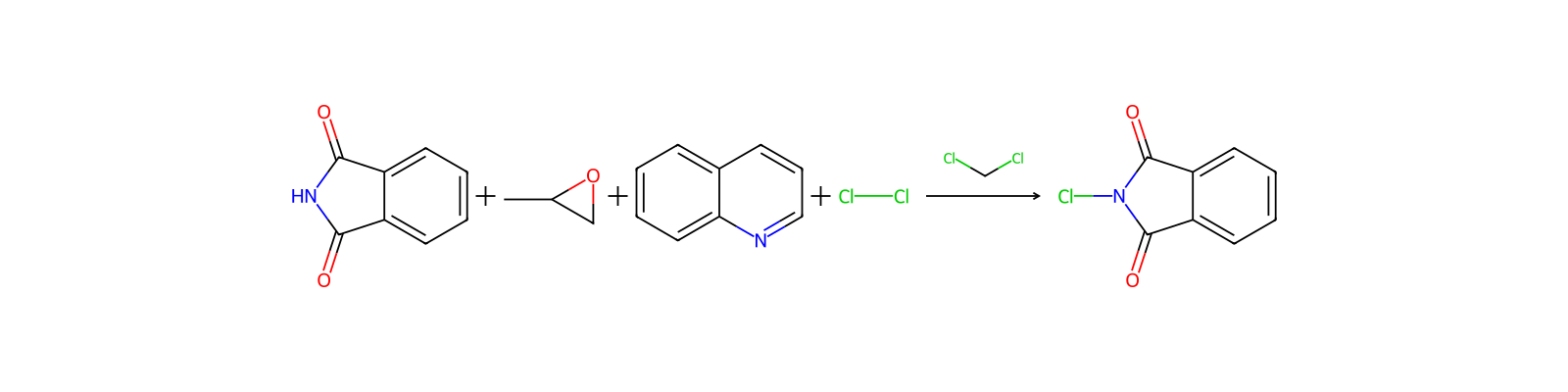
General DescriptionN-Chlorophthalimide in anhydrous acetic acid serves as a useful oxidizing reagent for use in various direct titrimetric analyses. N-Chlorophthalimide can be synthesized by reacting phthalimide, t-butyl hypochlorite, water and t-butyl alcohol. It participates in the synthesis of 2-amino-3-benzoyl-α-(methylthio)phenylacetamide.