Trichloroacetic anhydride
Completing data — refresh the page later to see the latest

Basic information
- CAS
4124-31-6- Standard SMILES
O=C(OC(=O)C(Cl)(Cl)Cl)C(Cl)(Cl)Cl- InChIKey
MEFKFJOEVLUFAY-UHFFFAOYSA-N- Molecular formula
- C4Cl6O3
- Average molar mass
- 308.7 g/mol
- Monoisotopic mass
- 305.79785994
Names & identifiers
- Preferred name
- Trichloroacetic anhydride
- IUPAC
- (2,2,2-trichloroacetyl) 2,2,2-trichloroacetate
- English name
- TRICHLOROACETIC ANHYDRIDE
- Molecular formula
- C4Cl6O3
- Molecular weight
- 308.74
Names & synonyms
TRICHLOROACETIC ANHYDRIDE4124-31-6DTXSID00871055RefChem:191000DTXCID60818729223-925-3trichloroaceticanhydrideAcetic acid, trichloro-, anhydride(2,2,2-trichloroacetyl) 2,2,2-trichloroacetatetrichloracetic anhydrideMFCD00000793EINECS 223-925-3
Show more names
TCAA2,2,2-trichloroacetic anhydrideTrichloroaceticanhyrideTrichloroaceticAnhydride97%trichloro-aceticacianhydrideTrichloroacetic Anhydride 97%Bis(trichloroacetic)anhydride
Trichloroacetyl 2,2,2-trichloroacetatetrichloroacetic acid anhydrideAcetic acid, 2,2,2-trichloro-, 1,1'-anhydrideAcetic acid, trichloro-, anhydride; Trichloracetic anhydride; Trichloroacetic acid anhydridePerchloroacetic AnhydrideC4Cl6O32,?2,?2-Trichloro-?acetic Acid 1,?1'-?Anhydride; Trichloracetic Anhydride; Trichloroacetic acid anhydrideSCHEMBL150679
Database identifiers
- CAS
4124-31-6- PubChem CID
- 20079
- DTXSID
DTXSID00871055- EC Number
- 223-925-3
- Nikkaji
- J150.161E
Properties
Computed structural propertiesFilling in
- XLogP
- 3.6
- Topological polar surface area
- 43.4 Ų
- Hydrogen bond donors
- 0
- Hydrogen bond acceptors
- 3
- Rotatable bonds
- 2
- Heavy atoms
- 13
- Formal charge
- 0
- Complexity
- 201
Experimental & physicochemical properties
Chemical ClassesOther Classes -> Acid Anhydrides, Other
SpringerMaterials PropertiesBoiling point
Physical DescriptionColorless liquid; [Alfa Aesar MSDS]
Physicochemical properties
- Boiling point
- 139 · 139-141 °C/60 mmHg (lit.)
- Density
- 1.69 g/mL · 1.69 g/mL at 25 °C (lit.)
- refractive index
- 20 · n20/D 1.484(lit.)
- Flash point
- 98 · 98-100°C/11mm
- solubility
- Miscible with ether and acetic acid.
- form
- clear liquid
- color
- Colorless to Almost colorless
- Sensitive
- Moisture Sensitive
- BRN
- 980355 · 980355
- Dielectric constant
Safety & regulation
Safety information is for reference only and does not replace the supplier’s Safety Data Sheet (SDS), applicable regulations, or professional assessment.
GHS classification
GHS Classification
Danger
H302 (88.9%): Harmful if swallowed [Warning Acute toxicity, oral]
P260, P264, P270, P280, P301+P317, P301+P330+P331, P302+P361+P354, P304+P340, P305+P354+P338, P316, P321, P330, P363, P405, and P501 (click each P-code to see the statement)
Aggregated GHS information provided per 45 reports by companies from 3 notifications to the ECHA C&L Inventory. Each notification may be associated with multiple companies.
Hazard information
Regulatory InformationAcetic acid, trichloro-, anhydride: Does not have an individual approval but may be used as a component in a product covered by a group standard. It is not approved for use as a chemical in its own right.
Hazards SummaryHydrolyzed by water; Causes burns; Inhalation may cause corrosive injuries to upper respiratory tract and lungs; [Alfa Aesar MSDS] See Pentafluoropropionic anhydride.
Hazard Classes and CategoriesAcute Tox. 4 (88.9%)
Toxicology
Adverse EffectsDermatotoxin - Skin burns.
Safety data
- F
- 10-21
- wgk
- 3
- tsca
- TSCA listed
- ridadr
- UN 3265 8/PG 2
- hs_code
- 2915907098
- risk_code
- 22-35
Chemistry & industry
Uses & manufacturing
General Manufacturing InformationAcetic acid, 2,2,2-trichloro-, 1,1'-anhydride: ACTIVE
Applications
UsesTrichloroacetic Anhydride is used in organometallic reactions as well as oxadiazole containing 5-lipoxygenase activating protein inhibitors.
General DescriptionTrichloroacetic anhydride is reported to be an efficient derivatization reagent, since it produces stable derivatives having both a higher mass fragmentation pattern and lesser volatility than derivatives of trifluoroacetic anhydride (TFAA) or heptafluorobutyric anhydride (HFBA). The interaction of thymidine 5′-phosphate with trichloroacetic anhydride in dimethylformamide and acetonitrile in the presence of tertiary amines hs been studied.
Upstream & downstream products
Downstream products
Related reactions
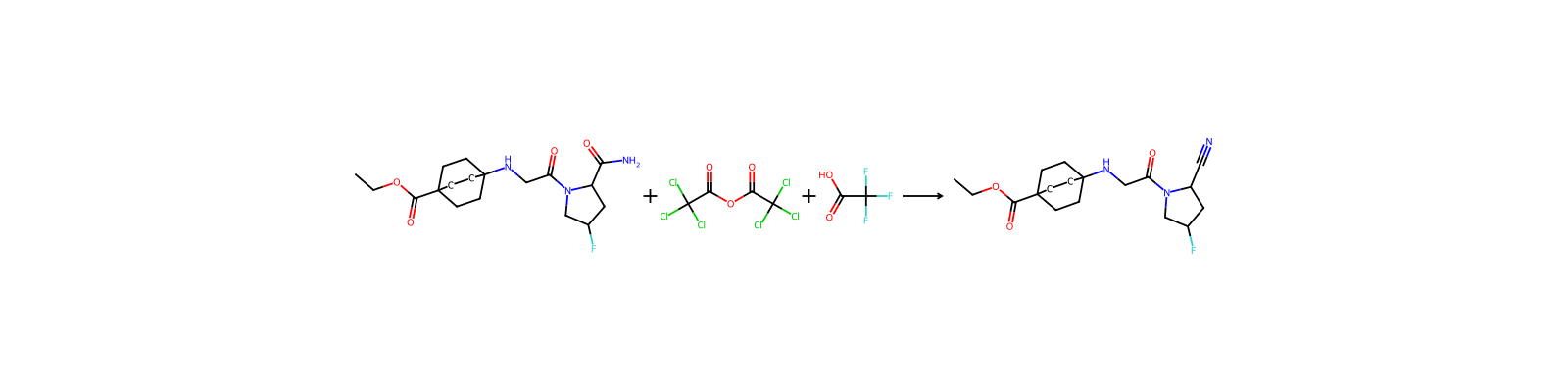
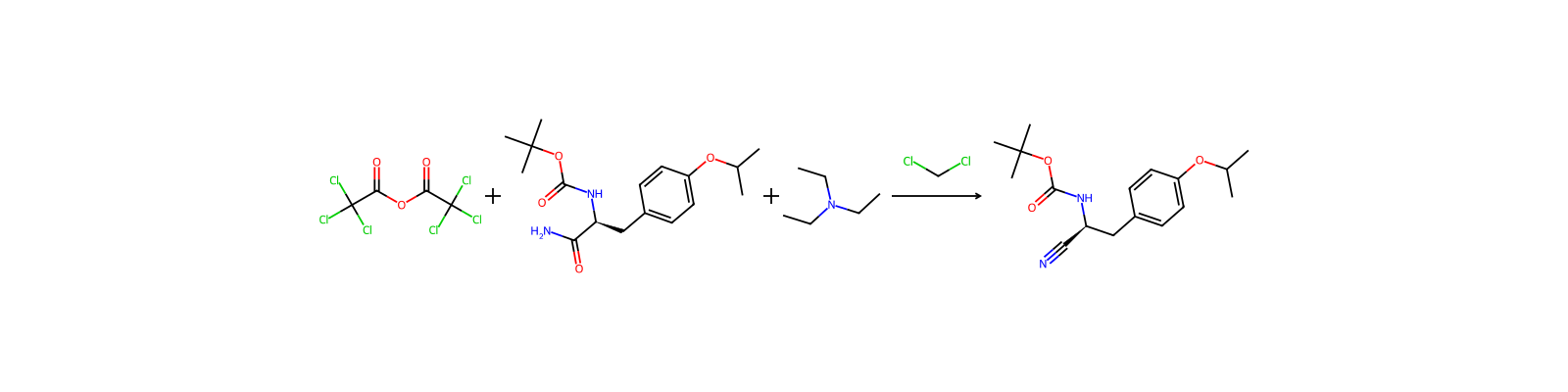
17 records





Compound notes
Loading…