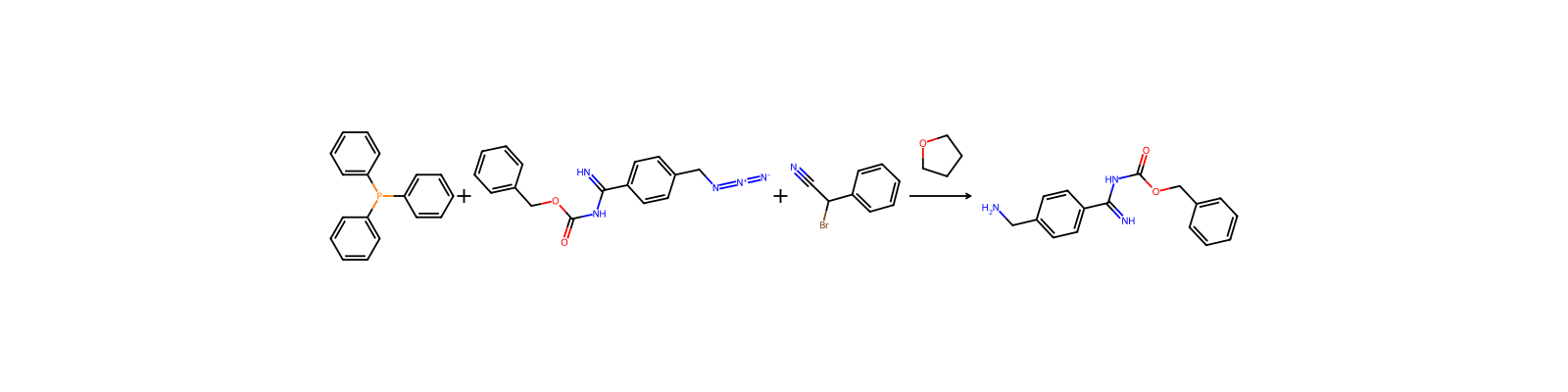
HRID 857As reactant

19472-74-3N#CC(Br)c1ccccc1XUHFBOUSHUEAQZ-UHFFFAOYSA-NBromobenzyl cyanides appears as a chemical warfare tear gas agent. A mixture of isomers: 2-bromobenzyl cyanide is a liquid (melting point 34 °F); 3-bromobenzyl cyanide is a pale yellow crystalline solid melting at 77 °F to give a colorless liquid; 4-bromobenzyl cyanide is a solid melting at 118 °F. All are denser than water and insoluble in water. Hence sink in water. Lachrymator: the vapors are irritating to the eyes and mucous membranes. Exposure to high concentrations may be fatal. Produces toxic oxides of nitrogen during combustion.
19472-74-3、5798-79-877 °F
29 °C
0.00465 [mmHg]
0.012 MM HG @ 20 °C
Safety information is for reference only and does not replace the supplier’s Safety Data Sheet (SDS), applicable regulations, or professional assessment.
Warning
H302 (100%): Harmful if swallowed [Warning Acute toxicity, oral]
P261, P264, P264+P265, P270, P271, P280, P301+P317, P302+P352, P304+P340, P305+P351+P338, P319, P321, P330, P332+P317, P337+P317, P362+P364, P403+P233, P405, and P501 (click each P-code to see the statement)
Aggregated GHS information provided per 39 reports by companies from 2 notifications to the ECHA C&L Inventory. Each notification may be associated with multiple companies.
For information on chemical warfare tear gas agents see the ERG Criminal or Terrorist Use of CBR Agents. (ERG, 2024)
· Some of these materials may burn, but none ignite readily.
· Some of these materials may burn, but none ignite readily.
For information on chemical warfare tear gas agents see the ERG Criminal or Terrorist Use of CBR Agents. (ERG, 2024)
· Inhalation of vapors or dust is extremely irritating.
· Inhalation of vapors or dust is extremely irritating.
Bromobenzyl cyanide is metabolized into bromobenzoic acid and thiocyanate, probably via hydroxylation to mandelonitrile. Hydrolysis of the cyanide group to give phenylacetic acid or bromophenylacetic occurs as minor pathway. Any liberated cyanide is mainly metabolized into thiocyanate by either rhodanese or 3-mercaptopyruvate sulfur transferase. Cyanide metabolites are excreted in the urine. Organic nitriles are converted into cyanide ions through the action of cytochrome P450 enzymes in the liver. Cyanide is rapidly absorbed and distributed throughout the body. Cyanide is mainly metabolized into thiocyanate by either rhodanese or 3-mercaptopyruvate sulfur transferase. Cyanide metabolites are excreted in the urine. (L96)
Used as a war gas and irritant gas for law enforcement; [HSDB]
WAR GAS
IRRITANT GAS USED BY LAW ENFORCEMENT AGENCIES.
Bromobenzyl cyanide is an industrial and laboratory chemical. Occupational exposure to Bromobenzyl cyanide may occur through inhalation and dermal contact with this compound at workplaces where Bromobenzyl cyanide is produced or used.
PRACTICAL INDUSTRIAL PREPARATION CONSISTS OF 3 STEPS: (1) CHLORINATION OF TOLUENE TO FORM BENZYL CHLORIDE, (2) CONVERSION OF BENZYL CHLORIDE TO BENZYL CYANIDE BY ACTION OF SODIUM CYANIDE IN ALCOHOLIC SOLN... (3) BROMINATION OF BENZYL CYANIDE WITH BROMIDE VAPOR IN PRESENCE OF SUNLIGHT. STEINKOPF ET AL, BER 53, 1146 (1920); NEKRASSOV, J PRAKT CHEM 119, 108 (1928).
UsesTear gas in riot control and a war gas, and agri- cultural fungicide to control certain fungal diseases of stone fruit.


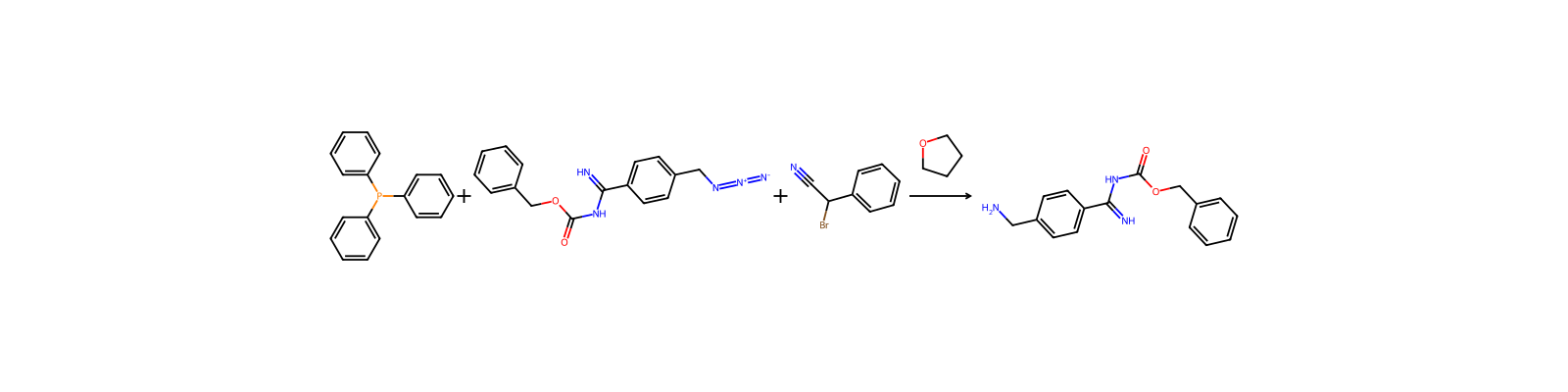


DTXSID50871146CHEMBL1085832Bromobenzyl cyanides appears as a chemical warfare tear gas agent. A mixture of isomers: 2-bromobenzyl cyanide is a liquid (melting point 34 °F); 3-bromobenzyl cyanide is a pale yellow crystalline solid melting at 77 °F to give a colorless liquid; 4-bromobenzyl cyanide is a solid melting at 118 °F. All are denser than water and insoluble in water. Hence sink in water. Lachrymator: the vapors are irritating to the eyes and mucous membranes. Exposure to high concentrations may be fatal. Produces toxic oxides of nitrogen during combustion.
Pale yellow crystals; [CAMEO] Yellowish solid with an odor of soured fruit; mp = 29 deg C; [HSDB] Pure: Yellow to white solid; Impure: Oily brown liquid; [EPA OHM/TADS]
MELTS TO AN OILY LIQ JUST ABOVE ROOM TEMP
BROWN, OILY LIQUID /TECHNICAL PRODUCT/
3449 159
1694 159
BROMOBENZYL CYANIDES may polymerize in the presence of metals and some metal compounds. Incompatible with acids. Mixing with strong oxidizing acids can lead to extremely violent reactions. Generally incompatible with other oxidizing agents such as peroxides and epoxides (peroxides convert nitriles to amides). Combination with bases can produce hydrogen cyanide. Hydrolyzed in both aqueous acid and base to give carboxylic acids (or salts of carboxylic acids). These reactions generate heat. Can react vigorously with reducing agents.
/GUIDE 159: SUBSTANCES (IRRITATING)/ Health: Inhalation of vapors or dust is extremely irritating. May cause burning of eyes and flow of tears. May cause coughing, difficult breathing and nausea. Brief exposure effects last only a few minutes. Exposure in an enclosed area may be very harmful. Fire will produce irritating, corrosive and/or toxic gases. Runoff from fire control or dilution water may cause pollution. /Bromobenzyl cyanides; Bromobenzyl cyanides, liquid; Bromobenzyl cyanides, solid/
/GUIDE 159: SUBSTANCES (IRRITATING)/ Fire or Explosion: Some of these materials may burn, but none ignite readily. Containers may explode when heated. /Bromobenzyl cyanides; Bromobenzyl cyanides, liquid; Bromobenzyl cyanides, solid/
/GUIDE 159: SUBSTANCES (IRRITATING)/ Public Safety: CALL Emergency Response Telephone Number ... . As an immediate precautionary measure, isolate spill or leak area in all directions for at least 50 meters (150 feet) for liquids and at least 25 meters (75 feet) for solids. Keep unauthorized personnel away. Stay upwind. Keep out of low areas. Ventilate closed spaces before entering. /Bromobenzyl cyanides; Bromobenzyl cyanides, liquid; Bromobenzyl cyanides, solid/
/GUIDE 159: SUBSTANCES (IRRITATING)/ Protective Clothing: Wear positive pressure self-contained breathing apparatus (SCBA). Wear chemical protective clothing that is specifically recommended by the manufacturer. It may provide little or no thermal protection. Structural firefighters' protective clothing provides limited protection in fire situations ONLY; it is not effective in spill situations where direct contact with the substance is possible. /Bromobenzyl cyanides; Bromobenzyl cyanides, liquid; Bromobenzyl cyanides, solid/
For more DOT Emergency Guidelines (Complete) data for ALPHA-BROMOBENZYL CYANIDE (8 total), please visit the HSDB record page.
Bromobenzyl cyanides, liquid
UN1694
Div 6.1 Poisonous materials (49 eCFR § 173.132)
PG I: the degree of danger presented by the material is great
Bromobenzyl cyanides, solid
UN3449
· CALL 911. Then call emergency response telephone number on shipping paper. If shipping paper not available or no answer, refer to appropriate telephone number listed on the inside back cover.
· Do not touch or walk through spilled material.
· CALL 911. Then call emergency response telephone number on shipping paper. If shipping paper not available or no answer, refer to appropriate telephone number listed on the inside back cover.
· Do not touch or walk through spilled material.
For information on chemical warfare tear gas agents see the ERG Criminal or Terrorist Use of CBR Agents. (ERG, 2024)
General First Aid:
General First Aid:
· Wear positive pressure self-contained breathing apparatus (SCBA).
· Wear positive pressure self-contained breathing apparatus (SCBA).
2.0 [mg/m3], inhalable fraction, as CN[German Research Foundation (DFG)]
For initial isolation and protective action distances for chemical warfare tear gas agents see the Chemical Warfare Agents table in the ERG Criminal or Terrorist Use of CBR Agents. (ERG, 2024)
Immediate precautionary measure
Immediate precautionary measure
Small Fire
Small Fire
EYES: irrigate opened eyes for several minutes under running water. INGESTION: do not induce vomiting. Rinse mouth with water (never give anything by mouth to an unconscious person). Seek immediate medical advice. SKIN: should be treated immediately by rinsing the affected parts in cold running water for at least 15 minutes, followed by thorough washing with soap and water. If necessary, the person should shower and change contaminated clothing and shoes, and then must seek medical attention. INHALATION: supply fresh air. If required provide artificial respiration.
Strong lachrymator. On exposure to eyes, corneal corpuscles become swollen and brownish during first 24 hr. This is followed by infiltration of cornea by macrophages, loss of normal endothelial reflex and appearance of fine irregularity in endothelium. Harmful if inhaled, swallowed or absorbed through skin. Target organs: central nervous system, blood, lungs, cardiovascular system, thyroid.
Organic nitriles decompose into cyanide ions both in vivo and in vitro. Consequently the primary mechanism of toxicity for organic nitriles is their production of toxic cyanide ions or hydrogen cyanide. Cyanide is an inhibitor of cytochrome c oxidase in the fourth complex of the electron transport chain (found in the membrane of the mitochondria of eukaryotic cells). It complexes with the ferric iron atom in this enzyme. The binding of cyanide to this cytochrome prevents transport of electrons from cytochrome c oxidase to oxygen. As a result, the electron transport chain is disrupted and the cell can no longer aerobically produce ATP for energy. Tissues that mainly depend on aerobic respiration, such as the central nervous system and the heart, are particularly affected. Cyanide is also known produce some of its toxic effects by binding to catalase, glutathione peroxidase, methemoglobin, hydroxocobalamin, phosphatase, tyrosinase, ascorbic acid oxidase, xanthine oxidase, succinic dehydrogenase, and Cu/Zn superoxide dismutase. Cyanide binds to the ferric ion of methemoglobin to form inactive cyanmethemoglobin. (L97)
Causes severe eye and skin burns. Irritating to eyes, skin, and respiratory system. Acute exposure (ingestion or inhalation) can lead to coma, seizures, palpitations, dilated pupils, hypoventilation, shock, cyanosis, initial tachycardia and hypertension, and hypotension may be seen. Nausea, vomiting, and metabolic acidosis may occur.
STRONG LACRIMATOR.
CHANGES INDUCED IN ONE HUMAN EYE... CORNEAL CORPUSCLES BECOME SWOLLEN & BROWNISH DURING FIRST 24 HR. THIS IS FOLLOWED BY INFILTRATION OF CORNEA BY MACROPHAGES, LOSS OF NORMAL ENDOTHELIAL REFLEX, & APPEARANCE OF FINE IRREGULARITY IN ENDOTHELIUM.
UNLIKELY TO LIBERATE MUCH CYANIDE, BUT IF CYANIDE TOXICITY IS PRESENT THEN TREAT FOR CYANIDE POISONING.
LETHAL CONCN: 0.90 MG/LITER (30 MIN)...
CHANGES INDUCED IN RABBIT EYES EXPERIMENTALLY... CORNEAL CORPUSCLES BECOME SWOLLEN & BROWNISH DURING FIRST 24 HR. ...FOLLOWED BY INFILTRATION OF CORNEA BY MACROPHAGES, LOSS OF NORMAL ENDOTHELIAL REFLEX, & APPEARANCE OF FINE IRREGULARITY IN ENDOTHELIUM.
SEE CYANIDES. WORKERS...WHO ARE DAILY EXPOSED TO CYANIDE SOLN MAY DEVELOP 'CYANIDE' RASH, CHARACTERIZED BY ITCHING, AND BY MACULAR, PAPULAR, AND VESICULAR ERUPTIONS. FREQUENTLY THERE IS SECONDARY INFECTION. /CYANIDES/
...EFFECTS OF VARIOUS LEVELS IN AIR... LOWEST DETECTABLE LEVEL: 0.09 MG/CU M; LOWEST IRRITANT CONCN: 0.15 MG/CU M; INTOLERABLE CONCN: 0.8 MG/CU M (10 MIN).
LC (mouse) > 1,160 mg/m3
Insupportable at 5 mg/m3.