Reaction equation
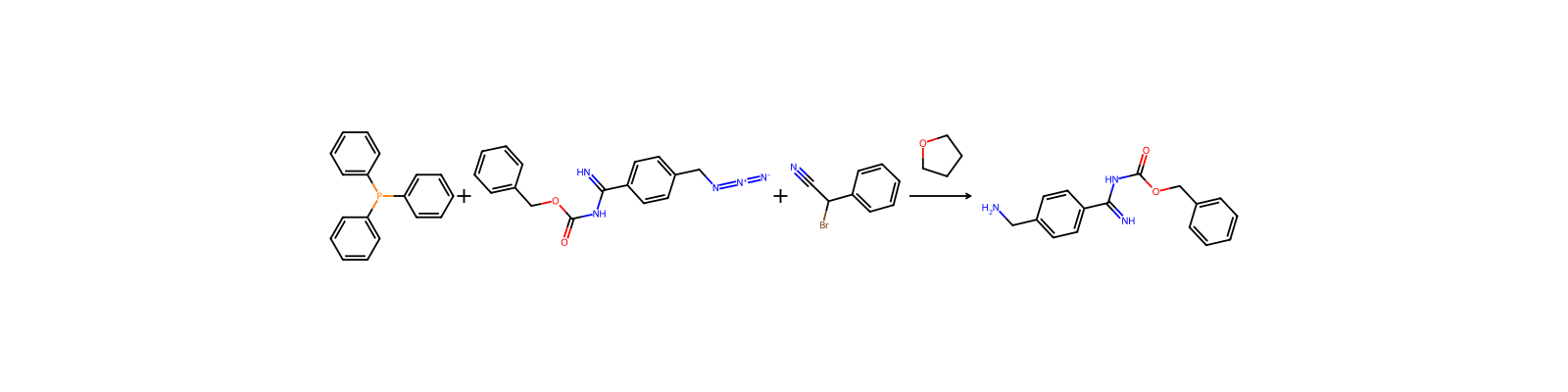
C1(P(C2C=CC=CC=2)C2C=CC=CC=2)C=CC=CC=1.[CH2:20]([O:27][C:28]([NH:30][C:31]([C:33]1[CH:42]=[CH:41][C:36]([CH2:37][N:38]=[N+]=[N-])=[CH:35][CH:34]=1)=[NH:32])=[O:29])[C:21]1[CH:26]=[CH:25][CH:24]=[CH:23][CH:22]=1.C(C(Br)C1C=CC=CC=1)#N>C1COCC1>[NH2:38][CH2:37][C:36]1[CH:41]=[CH:42][C:33]([C:31](=[NH:32])[NH:30][C:28]([O:27][CH2:20][C:21]2[CH:26]=[CH:25][CH:24]=[CH:23][CH:22]=2)=[O:29])=[CH:34][CH:35]=1Participants
5



Procedure
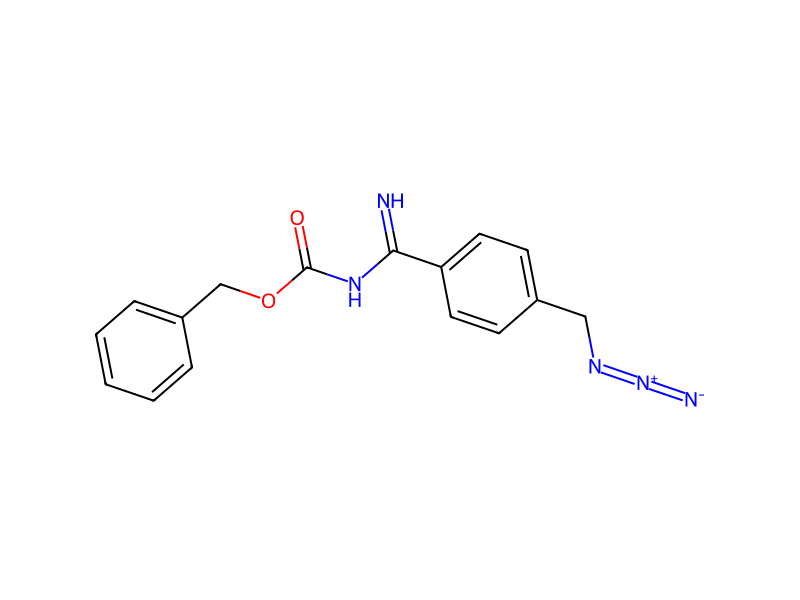
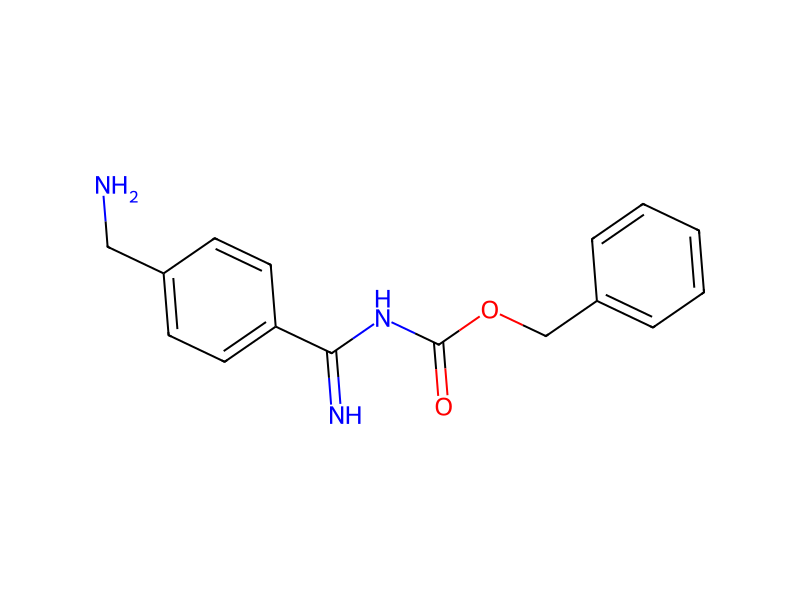
26.3 g (100 mmol) triphenylphosphine was added at room temperature to the 4-(benzyloxycarbonylamidino) benzyl azide from (iii) above dissolved in 160 ml THF. After 16 h an additional 6.6 g (25 mmol) triphenylphosphine was added and the solution was allowed to stand for 4 h before removal of the solvent in vacuo. The residue was dissolved in methylene chloride and extracted with 2M HCl. The aqueous phase was washed with methylene chloride and ether and was subsequently made alcaline with 3.75M sodium hydroxide solution. Extraction with methylene chloride followed by drying (K2CO3) and removal of the solvent in vacuo gave 20 g (The total yield starting from cyanobenzyl bromide is 28%) of a yellow oil which solidified on standing.
Workup
- customto stand for 4 h before removal of the solvent in vacuo
- dissolutionThe residue was dissolved in methylene chloride
- extractionextracted with 2M HCl
- washThe aqueous phase was washed with methylene chloride and ether
- extractionExtraction with methylene chloride
- customby drying
- custom(K2CO3) and removal of the solvent in vacuo
- customgave 20 g (The total
- customyield
Sources & evidence
- ORD record
- ord-91be128b9742407397cb2ab366a4130b
- Source dataset
- uspto-grants-1998_03
- Patent number
- US05723444
Linked notes
Loading…