
4-Pentynoic acid
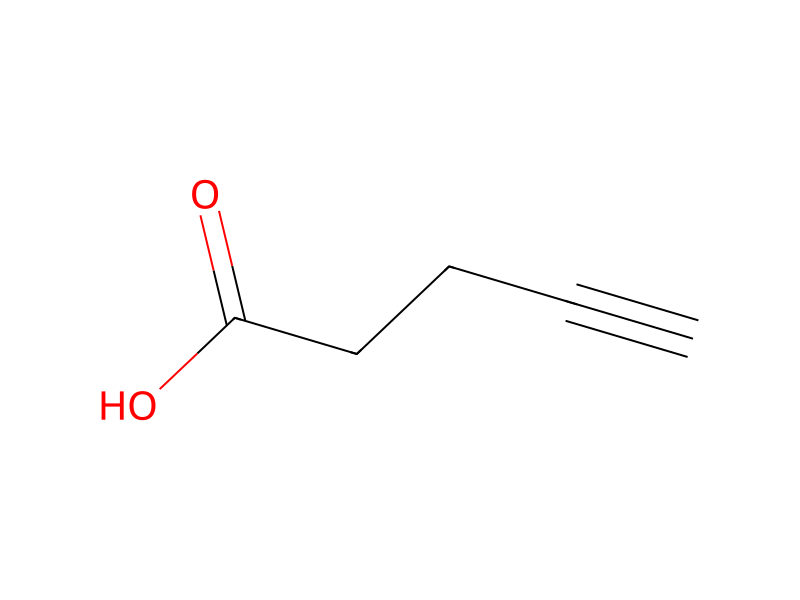
Basic information
- CAS
6089-09-4- Standard SMILES
C#CCCC(=O)O- InChIKey
MLBYLEUJXUBIJJ-UHFFFAOYSA-N- Molecular formula
- C5H6O2
- Average molar mass
- 98.1 g/mol
- Monoisotopic mass
- 98.03677943
Overview
structure
Names & identifiers
- Preferred name
- 4-Pentynoic acid
- IUPAC
- pent-4-ynoic acid
- English name
- 4-Pentynoic acid
- Molecular formula
- C5H6O2
- Molecular weight
- 98.1
Names & synonyms
4-PENTYNOIC ACID6089-09-4DTXSID20209730RefChem:100316DTXCID70132221228-028-0Pent-4-ynoic acidPropargylacetic acid4-pentynoicacidPent-4-yn-1-oic acidMFCD00004407EINECS 228-028-0
Show more names
4-Pentynoicacid,98%TIMTEC-BB SBB009121Pentane-4-ynoic acid4-Pentynoic acid ,95%4-Pentynoic acid, 95&percnt:4-Pentynoic acid, 10 mM in DMSO
BRN 17420474-02-00-01693 (Beilstein Handbook Reference)EN300-115626pent4-ynoic acid4-Pentynoic aPent-4-yn-1-oicacidBB 0260835FT-0619364
Database identifiers
- CAS
6089-09-4- PubChem CID
- 22464
- DTXSID
DTXSID20209730- UNII
- 2WV768V33F
- EC Number
- 228-028-0
- Nikkaji
- J69.139I
Properties
Computed structural properties
- XLogP
- 0.3
- Topological polar surface area
- 37.3 Ų
- Hydrogen bond donors
- 1
- Hydrogen bond acceptors
- 2
- Rotatable bonds
- 2
- Heavy atoms
- 7
- Formal charge
- 0
- Complexity
- 106
Physicochemical properties
- Melting point
- 54 · 54-57 °C(lit.)
- Boiling point
- 110 °C30 · 110 °C30 mm Hg(lit.)
- Density
- 1.1133 · 1.1133 (rough estimate)
- refractive index
- 1.393 · 1.3930 (estimate)
- Flash point
- 75 °C · 75 °C
- storage temp.
- 2 · 2-8°C
- pka
- 4.3 · 4.30±0.10(Predicted)
- form
- Crystalline Powder or Flakes
- color
- White to beige
- Water Solubility
- Soluble in low polarity organic solvents. Soluble in water.
- Sensitive
- Light & Air Sensitive & Hygroscopic
- BRN
- 1742047 · 1742047
- InChI
- 1S/C5H6O2/c1-2-3-4-5(6)7/h1H,3-4H2,(H,6,7)
- InChIKey
- MLBYLEUJXUBIJJ-UHFFFAOYSA-N
- SMILES
- OC(=O)CCC#C
- LogP
- 0.402 · 0.402 (est)
Safety & regulation
Safety information is for reference only and does not replace the supplier’s Safety Data Sheet (SDS), applicable regulations, or professional assessment.
GHS classification
GHS Classification
Danger
H314 (100%): Causes severe skin burns and eye damage [Danger Skin corrosion/irritation]
P260, P264, P280, P301+P330+P331, P302+P361+P354, P304+P340, P305+P354+P338, P316, P321, P363, P405, and P501 (click each P-code to see the statement)
Aggregated GHS information provided per 53 reports by companies from 4 notifications to the ECHA C&L Inventory.
Hazard information
Regulatory Information4-Pentynoic acid: Does not have an individual approval but may be used under an appropriate group standard
Hazard Classes and CategoriesSkin Corr. 1B (100%)
Safety data
- F
- 8-10-23
- PPE
- Eyeshields, Faceshields, Gloves, type P3 (EN 143) respirator cartridges
- wgk
- 3
- rtecs
- SC4751000
- ridadr
- UN 3261 8/PG 2
- hs_code
- 29161900
- risk_code
- 34
- Signal word
- Danger
- Symbol(GHS)
- GHS05
- hazard_code
- C
- hazard_note
- Corrosive
- safety_code
- 26-36/37/39-45
- hazard_class
- 8
- Storage Class
- 8A - Combustible corrosive hazardous materials
Chemistry & industry
Applications
Uses4-Pentynoic Acid is a hypoglycemic agent shown to increase liver tyrosine aminotransferase and plasma corticosterone while decreasing blood sugar in rats.
Uses4-Pentynoic acid was used:as building block for the synthesis of library of eight sequence-defined model oligomersin one-pot synthesis of the complex polycyclic heterocycles benzo[4,5]imidazo[1,2-c]pyrrolo[1,2-a]quinazolinone derivativesin the synthesis of various allenenols lactones [5(E)-(2-allenylidene)-tetrahydro-2-furanones]in the synthesis of a cyctotoxic macrolide by ring-closing metathesis of a bis acetylene
General Description4-Pentynoic acid undergoes copper-catalyzed intramolecular cyclizations to form enol lactones. It also reacts with 1-bromo-1-alkynes in the presence of a Pd catalyst to yield biologically active ynenol lactones.
Upstream & downstream products
Upstream raw materials
Downstream products
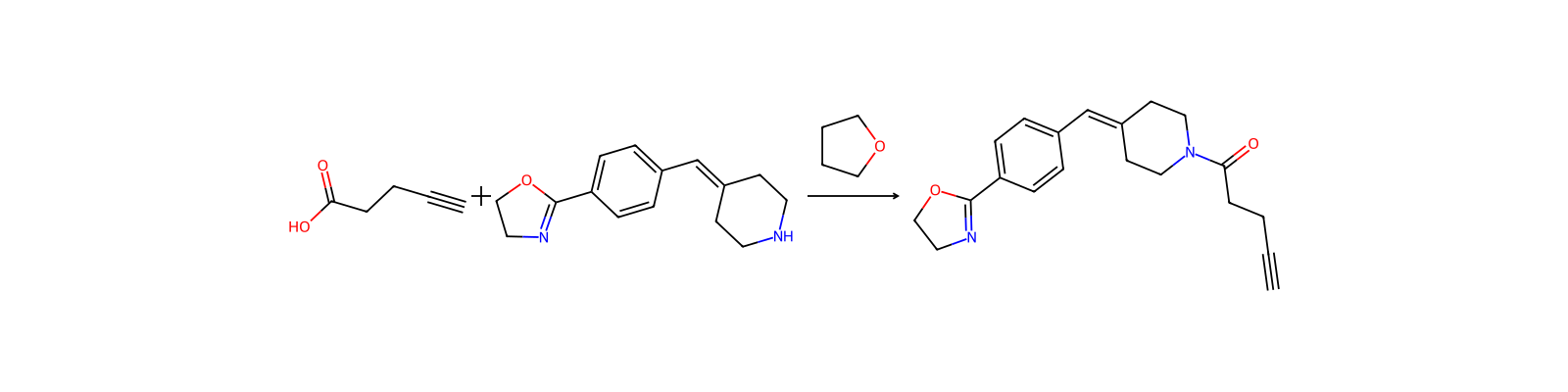
Related reactions
121 records



Compound notes
Loading…