
Iodic acid
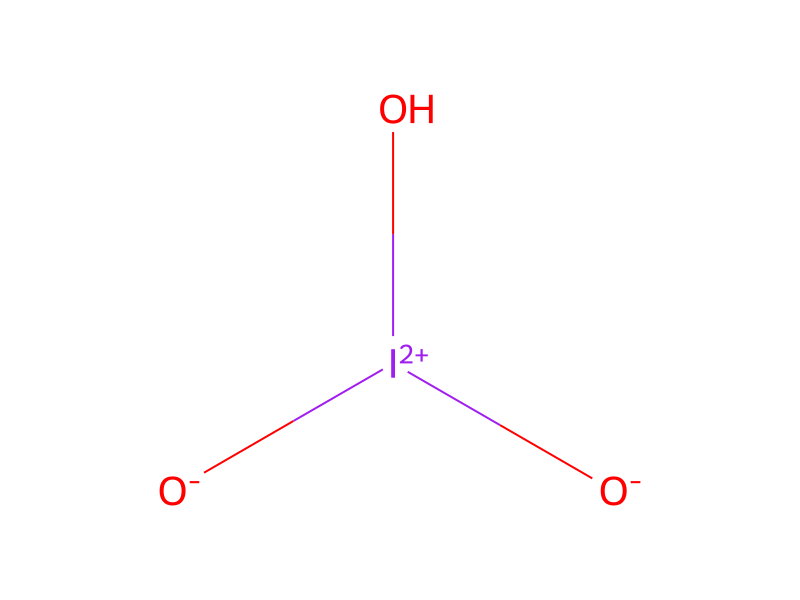
Basic information
- CAS
25659-31-8- Standard SMILES
[O-][I+2]([O-])O- InChIKey
ICIWUVCWSCSTAQ-UHFFFAOYSA-N- Molecular formula
- HIO3
- Average molar mass
- 175.911 g/mol
- Monoisotopic mass
- 175.89704
Overview
Iodic acid is an iodine oxoacid. It has a role as an astringent. It is a conjugate acid of an iodate.
Names & identifiers
- Preferred name
- Iodic acid
- IUPAC
- iodic acid
- English name
- LEAD IODATE
- Molecular formula
- H3IO3Pb
- Molecular weight
- 385.13
Names & synonyms
Iodic acid7782-68-5Monoiodic acidIodic acid (HIO3)6U8J18JSBMCHEBI:24857DTXSID2064812RefChem:923486DTXCID9048013231-962-1HIO3Iodsaeure
Show more names
LEAD IODATELead(Ⅱ)iodatelead diiodateLEAD(II) IODATElead(2+),diiodateLEAD(II) IODATE, 99.99%Bisiodic acid lead(II) saltiodicacid(hio3),lead(2++)saltLEAD IODATE ISO 9001:2015 REACHIodicacid (HIO3), lead(2+) salt (2:1)
trioxoiodic acidtrioxidoiodine(.)hydrogen trioxoiodatehydroxidodioxidoiodineHOIO2MFCD00011348hydroxy-lambda(5)-iodanedione[IO2(OH)]
Database identifiers
- CAS
25659-31-8、7782-68-5- PubChem CID
- 24345
- DTXSID
DTXSID2064812- ChEMBL
CHEMBL1161636- ChEBI
CHEBI:24857- UNII
- 6U8J18JSBM
- EC Number
- 231-962-1
- Nikkaji
- J43.589I
Properties
Computed structural properties
- XLogP
- -0.3
- Topological polar surface area
- 54.4 Ų
- Hydrogen bond donors
- 1
- Hydrogen bond acceptors
- 3
- Rotatable bonds
- 0
- Heavy atoms
- 4
- Formal charge
- 0
- Complexity
- 46.2
Experimental & physicochemical properties
Chemical ClassesToxic Gases & Vapors -> Acids, Inorganic
SpringerMaterials Propertiesdielectric constant
Density4.629 @25 °C
Physical Description
Dry Powder
Colorless solid; [Hawley] Colorless or light yellow powder; [MSDSonline] Forms rhombohedral crystals--decompose at 110 deg C; [Ullmann]
Physicochemical properties
- Melting point
- 300 °C · 300 °C (dec.)(lit.)
- Density
- 6.5 g/mL · 6.5 g/mL at 25 °C(lit.)
- form
- white orthorhombic crystals
- color
- white orthorhombic crystals, crystalline
- Water Solubility
- 2 O: · g/L solution H2O: 0.0254 (25°C) [KRU93]
- Solubility Product Constant (Ksp)
- 12.43 · pKsp: 12.43
Safety & regulation
Safety information is for reference only and does not replace the supplier’s Safety Data Sheet (SDS), applicable regulations, or professional assessment.
GHS classification
GHS Classification
Danger
H272 (100%): May intensify fire; oxidizer [Danger Oxidizing liquids; Oxidizing solids]
P210, P220, P260, P264, P280, P301+P330+P331, P302+P361+P354, P304+P340, P305+P354+P338, P316, P321, P363, P370+P378, P405, and P501 (click each P-code to see the statement)
Aggregated GHS information provided per 50 reports by companies from 5 notifications to the ECHA C&L Inventory. Each notification may be associated with multiple companies.
Danger
H302: Harmful if swallowed [Warning Acute toxicity, oral]
Hazard information
Regulatory Information
Chemical: Iodic acid (HIO3)
Iodic acid (HIO3) is listed on the EPA's Chemical Data Reporting (CDR) system. Manufacturers and importers of Iodic acid (HIO3) are required to report information about their production and use of this chemical to the EPA under the Toxic Substances Control Act (TSCA). (40 eCFR Part 711)
REACH registered substance: Iodic acid (EC: 231-962-1)
Iodic acid: Does not have an individual approval but may be used under an appropriate group standard
Other Safety InformationIMAP assessments - Iodic acid and selected salts: Human health tier II assessment
Hazards Summary
Reacts vigorously with organic matter; Oxidizes iodide to iodine, sulfite to sulfate, and hydrogen sulfide to sulfur; [Ullmann] Corrosive to skin and eyes; [eChemPortal: ERMA] May cause fire on contact with combustible materials; A corrosive substance that can cause injury to the skin, eyes, and respiratory tract; Inhalation may cause chemical pneumonitis; [MSDSonline]
Hazard Classes and Categories
Ox. Sol. 2 (100%)
Acute toxicity (ingestion) - category 4
Chemistry & industry
Uses & manufacturing
Uses
Used as an astringent and disinfectant; [Merck Index] Used in analytical chemistry and in medicine (as 1-3% solution); [Hawley]
Using Disinfectants or Biocides [Category: Clean]
U.S. Production2023: 327,135 lb
Industry UsesFlavoring and nutrient
General Manufacturing Information
Food, beverage, and tobacco product manufacturing
Iodic acid (HIO3): ACTIVE
Applications
UsesLEAD IODATE is used in for the preparation of fireworks.
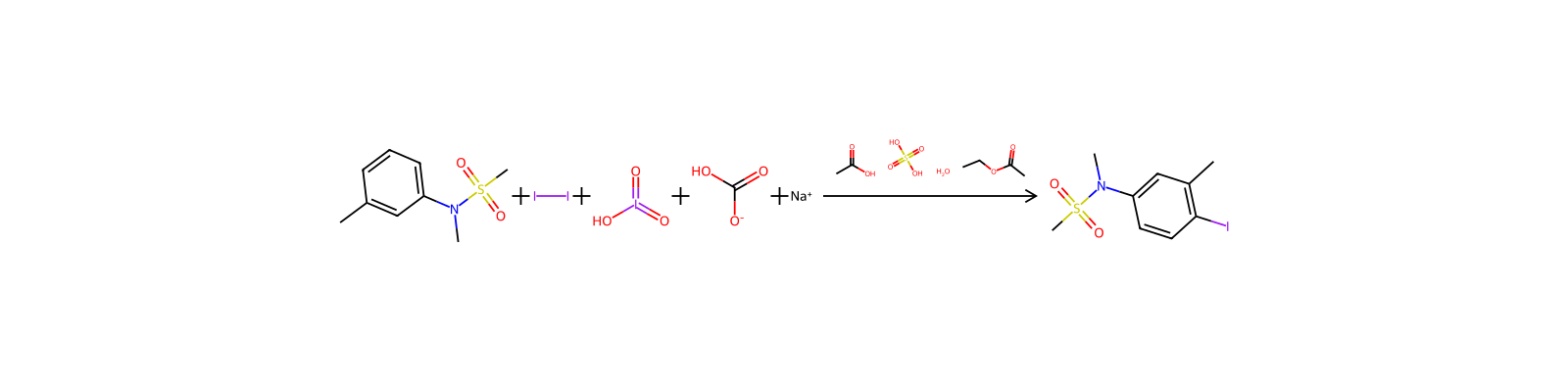
Related reactions
81 records




Compound notes
Loading…