HomeMCPWorkbenchSkills
HomeWorkbenchNotificationsMe
llms.txt · MCP GuidePrivacy Policy · Terms of Service · Supportv1.8.3
  1. Home
  2. /Compound

Copper(1+) iodide; Copper(I) iodide; Cuprous iodide; Cuprous iodide (CuI)

HCID 24350
New reaction
Print
Basic informationOverviewNames & identifiersPropertiesSafety & regulationChemistry & industryRelated reactionsCompound notes
Substructure searchFind similar structures

Basic information

CAS
7681-65-4
Standard SMILES
[Cu][I]
InChIKey
LSXDOTMGLUJQCM-UHFFFAOYSA-M
Molecular formula
CuI
Average molar mass
190.45 g/mol
Monoisotopic mass
189.83407

Overview

See also: Cuprous iodide (preferred).

Names & identifiers

Preferred name
Copper(1+) iodide; Copper(I) iodide; Cuprous iodide; Cuprous iodide (CuI)
IUPAC
iodocopper
English name
Cuprous iodide
Molecular formula
CuI
Molecular weight
190.45

Names & synonyms

Copper(1+) iodide; Copper(I) iodide; Cuprous iodide; Cuprous iodide (CuI)copper(1)iodidecopper (I)iodidecopper(I)-iodidecopper-(I)iodidecopper(1) iodidecopper (I)-iodidecopper(I)- iodidecopper-(I) iodidecopper-(I)-iodideiodide copper (I)cop-per(1) iodide
Show more names
CuICOPPER IODIDECOPPER(I) IODIDEIodocopperCopper iodide (CuI)MarshiteCooper IodideCoprous iodideHydro-gieneIodocopper(I)
copper (1) iodidecopper (1+) iodideCopper(I) iodide, 98%SCHEMBL2388orb2900887SCHEMBL38809028HY-Y0961AKOS015902661

Database identifiers

CAS
7681-65-4
PubChem CID
24350

Properties

Computed structural properties

Topological polar surface area
0 Ų
Hydrogen bond donors
0
Hydrogen bond acceptors
0
Rotatable bonds
0
Heavy atoms
2
Formal charge
0
Complexity
2

Physicochemical properties

Melting point
605 °C · 605 °C (lit.)
Boiling point
1290 °C/1 · 1290 °C/1 atm (decomp)(lit.)
Density
5.62 g/mL · 5.62 g/mL at 25 °C (lit.)
bulk density
1400 kg/m3 · 1400kg/m3
vapor pressure
10 mm · 10 mm Hg ( 656 °C)
refractive index
2.346 · 2.346
Flash point
1290 °C · 1290°C
storage temp.
30 °C · Store below +30°C.
solubility
dilute aqueous acid: insoluble(lit.)
form
Powder
Specific Gravity
5.62 · 5.62
color
White to Pale Brown
Water Solubility
INSOLUBLE
Specific Heat Capacity
0.28 J/ · Cp(crystal): 0.28 J/(g·K), at 25℃
Crystal Structure
Cubic, Sphalerite Structure - Space Group F(-4)3m
Sensitive
Air & Moisture Sensitive
Merck
14 · 14,2662
Solubility Product Constant (Ksp)
11.9 · pKsp: 11.9
Exposure limits
1 mg/m3; · ACGIH: TWA 1 mg/m3; TWA 0.01 ppmNIOSH: IDLH 100 mg/m3; TWA 1 mg/m3
Cosmetics Ingredients Functions
DEODORANTANTIMICROBIAL
InChI
1S/Cu.HI/h;1H/q+1;/p-1
InChIKey
LSXDOTMGLUJQCM-UHFFFAOYSA-M
SMILES
[Cu+].[I-]
Hardness, Mohs
2.5 · 2.5
Knoop Microhardness
192 · 192, N/mm2
SCOGS (Select Committee on GRAS Substances)
Cuprous iodide
Substances Added to Food (formerly EAFUS)
CUPROUS IODIDE
FDA 21 CFR
177.247 · 177.2470; 178.2010
CAS DataBase Reference
7681 · 7681-65-4(CAS DataBase Reference)
FDA UNII
7 DE9CA6IL2 · 7DE9CA6IL2
NIST Chemistry Reference
Copper(I) iodide(7681-65-4)
EPA Substance Registry System
Cuprous iodide (7681-65-4)
UNSPSC Code
12352302 · 12352302
NACRES
23 · NA.23
Symbol(GHS)
5 · GHS05,GHS07,GHS09
Signal word
Danger
Hazard statements
302 · H302-H315-H317-H318-H410
Precautionary statements
273 · P273-P280-P301+P312+P330-P302+P352-P305+P351+P338+P310
target organs
Thyroid
PPE
95 · dust mask type N95 (US), Eyeshields, Gloves
Hazard Codes
Xn,N,Xi
Risk Statements
22 · 22-36/37/38-50/53
Safety Statements
22 · 22-24/25-26-61-57-37/39-29
RIDADR
3077 · UN 3077 9/PG 3
WGK Germany
3 · 3
F
8 · 8
TSCA
TSCA listed
HazardClass
9 · 9
HS Code
28276000 · 28276000
Storage Class
6.1 D · 6.1D - Non-combustible acute toxic Cat.3toxic hazardous materials or hazardous materials causing chronic effects
Hazard Classifications
4 OralAquatic · Acute Tox. 4 OralAquatic Acute 1Aquatic Chronic 1Eye Dam. 1Skin Irrit. 2Skin Sens. 1ASTOT RE 1 Oral
Hazardous Substances Data
7681 · 7681-65-4(Hazardous Substances Data)
REACH Registrations
Active
Limited Quantities
5 kg · 5.0 kg (11 lbs) (solid)
Excepted Quantities
Max Inner Pack (30g or 30ml) and Max Outer Pack (1Kg or 1L)

Safety & regulation

Safety information is for reference only and does not replace the supplier’s Safety Data Sheet (SDS), applicable regulations, or professional assessment.

Hazard information

CSL Reaction Information · 6 items

CSL00139

CUPROUS IODIDE + 4-AZIDO-L-PHENYLALANINE

Explosion hazard

Explosive

AZIDE

User-Reported

Safety data

F
8
PPE
dust mask type N95 (US), Eyeshields, Gloves
wgk
3
tsca
TSCA listed
ridadr
UN 3077 9/PG 3
hs_code
28276000
risk_code
22-36/37/38-50/53
Signal word
Danger
Symbol(GHS)
GHS05,GHS07,GHS09
hazard_code
Xn,N,Xi
safety_code
22-24/25-26-61-57-37/39-29
hazard_class
9
Storage Class
6.1D - Non-combustible acute toxic Cat.3toxic hazardous materials or hazardous materials causing chronic effects
target organs
Thyroid
Hazard statements
H302-H315-H317-H318-H410
Limited Quantities
5.0 kg (11 lbs) (solid)
Excepted Quantities
Max Inner Pack (30g or 30ml) and Max Outer Pack (1Kg or 1L)
REACH Registrations
Active
Hazard Classifications
Acute Tox. 4 OralAquatic Acute 1Aquatic Chronic 1Eye Dam. 1Skin Irrit. 2Skin Sens. 1ASTOT RE 1 Oral
Precautionary statements
P273-P280-P301+P312+P330-P302+P352-P305+P351+P338+P310
Hazardous Substances Data
7681-65-4(Hazardous Substances Data)

Chemistry & industry

Applications · 3 items

Uses1. Cuprous iodide is so widely used as catalyst in organic synthesis, resin modifier, artificial rainfall agents, cathode ray tube cover, as well as sources of iodine in iodized salt. In the presence of 1,2-or 1,3-diamine ligand, cuprous iodide can catalyze reaction of aryl bromide, vinyl bromide and brominated heterocyclic compound converting to the corresponding iodide. The reaction is generally in dioxane solvent, and sodium iodide is used as iodide reagents. Aromatic iodide general is more lively than the corresponding chloride and iodide, therefore, iodide can catalyze a series of reactions involved in coupling a halogenated hydrocarbon, for example, Heck reaction, Stille reaction, Suzuki reaction and the Ullmann reaction. In the present of dichloro bis (triphenylphosphine) palladium (II), cuprous chloride and diethylamine, 2-bromo-1-octen-3-ol with 1-Nonyl acetylene coupling reaction to produce 7-sub-8-hexadecene-6-ol. 2. used as a catalyst for organic reactions, cathode ray tube covering, also used as animal feed additives, etc. copper iodide and mercuric iodide may also be used together as the indicator of measuring rising temperature of mechanical bearing. 3. as a catalyst in many reactions involved in the Grignard reagent, the cuprous iodide can also be in dry Wiff rearrangement reaction.

UsesCuprous iodide is used in the preparation of alkynyl imines, which are crucial intermediates for the synthesis of pyrroles and pyrrole heterocycles. It plays a role in the synthesis of BTBT derivatives, specifically benzothieno[3,2-b]benzothiophene, which are semiconductors used in transistors. Beyond its synthetic utility, copper (I) iodide serves as a catalyst for N-arylation of amines and amino acids, facilitating organic reactions. It also has practical applications as an ice-nucleating chemical, a coating in cathode-ray tubes, and as a source of iodine in animal feeds.

General DescriptionOdorless tan or off-white solid. Sinks in water. Marshite, CuI, octahedral crystals to 4 mm

Upstream & downstream products

Upstream raw materials

Potassium iodideCopper(II) sulfate

Downstream products

5-(2-Phenyleth-1-ynyl)thiophene-2-carbaldehyde4-(Trifluoromethyl)nicotinic acid4-Ethynylaniline(Trifluoromethyl)trimethylsilane4-(Imidazol-1-yl)phenol6-Morpholinonicotinoyl chloride6-Morpholinonicotinic acidMethyl 4-amino-6-indolecarboxylate4-Azaindole4-Nitrophenylboronic acid1-phenyl-3-(trifluoromethyl)pyrazole-4-carboxylic acid3-Iodo-2-nitropyridine4-Phenylpyridine2-Chloro-4-nitrobenzotrifluoride3-Phenoxyphenylacetic acid1-[6-(Trifluoromethyl)pyridin-2-yl]piperazine2-Fluoro-4-(methylsulfonyl)anilineN,N-Diphenylquinacridone4-Phenylethynylphthalic anhydride(+)-DISPARLUREDiphenylacetylene2-Chloro-6-trifluoromethylnicotinic acid1-(3-Amino-pyridin-2-yl)-ethanone2-Trifluoromethyl-5-bromopyridine4-Amino-2-chlorobenzotrifluoride2-(Trifluoromethyl)-4-isocyanatopyridine2-Trifluoromethyl-6-pyridinecarboxylic acid6-(Trifluoromethyl)pyridine-3-carboxaldehyde2-(Trifluoromethyl)-pyridine-4-carboxaldehyde

Related reactions

22,774 records
New reaction record
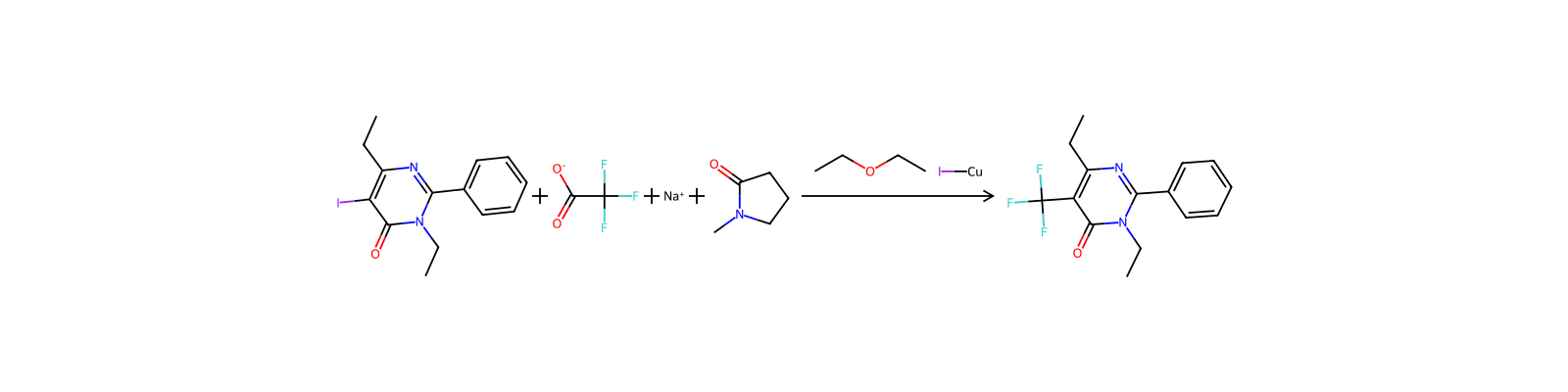
HRID 1041 reaction equation
HRID 1041As catalyst

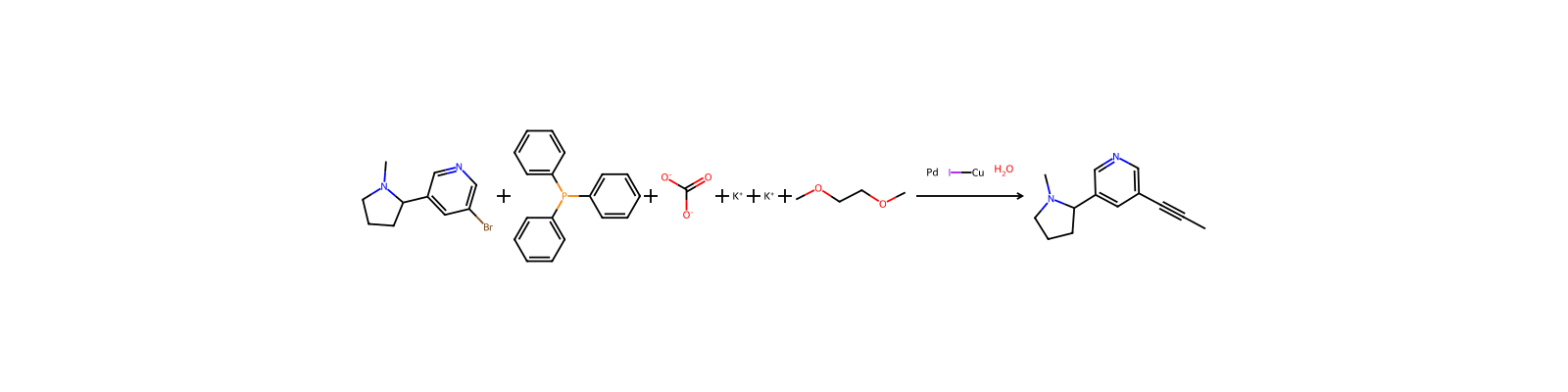
HRID 1042 reaction equation
HRID 1042As catalyst
HRID 1456 reaction equation
HRID 1456As catalyst
HRID 1458 reaction equation
HRID 1458As catalyst
HRID 2252 reaction equation
HRID 2252As catalyst
HRID 2297 reaction equation
HRID 2297As catalyst
HRID 2742 reaction equation
HRID 2742As catalyst
HRID 4739 reaction equation
HRID 4739As catalyst
PreviousPage 1 of 2847

Compound notes

On this pageBasic informationOverviewNames & identifiersPropertiesSafety & regulationChemistry & industryRelated reactionsCompound notes