HomeMCPWorkbenchSkills
HomeWorkbenchNotificationsMe
llms.txt · MCP GuidePrivacy Policy · Terms of Service · Supportv1.8.0
  1. Home
  2. /Reaction

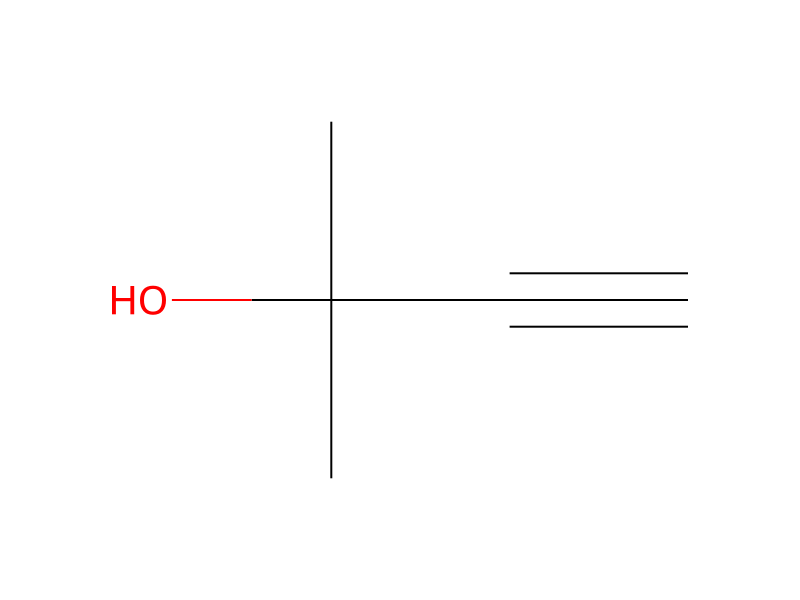
2-Methyl-3-butyn-2-ol → 5-(2-Hydroxy-2-methyl-3-butynyl)-3-(1-tert-butyloxycarbonyl-2-pyrrolidinyl)pyridine

HRID 1042
Notes
Print preview

Reaction equation

HRID 1042 reaction equation
Br[C:2]1[CH:3]=[C:4]([CH:8]2[CH2:12][CH2:11][CH2:10][N:9]2[C:13]([O:15][C:16]([CH3:19])([CH3:18])[CH3:17])=[O:14])[CH:5]=[N:6][CH:7]=1.C1(P(C2C=CC=CC=2)C2C=CC=CC=2)C=CC=CC=1.C(=O)([O-])[O-].[K+].[K+].[CH3:45][C:46]([OH:50])([C:48]#[CH:49])[CH3:47]>[Pd].COCCOC.O.[Cu]I.C(OCC)(=O)C>[OH:50][C:46]([CH3:47])([C:48]#[CH:49])[CH2:45][C:2]1[CH:3]=[C:4]([CH:8]2[CH2:12][CH2:11][CH2:10][N:9]2[C:13]([O:15][C:16]([CH3:19])([CH3:18])[CH3:17])=[O:14])[CH:5]=[N:6][CH:7]=1
ParticipantsConditionsProcedureWorkupSources & evidenceReaction notes

Participants

10

Reactant 4

HCID 82582-Methyl-3-butyn-2-olHCID 11430Potassium CarbonateHCID 11776TriphenylphosphineHCID 19694337Tert-butyl 2-(5-bromopyridin-3-yl)pyrrolidine-1-carboxylate

Product 1

HCID 196943235-(2-Hydroxy-2-methyl-3-butynyl)-3-(1-tert-butyloxycarbonyl-2-pyrrolidinyl)pyridineYield 76.4%

Reagents, catalysts & solvents

5
HCID 23938PalladiumCatalystHCID 24350Copper(1+) iodide; Copper(I) iodide; Cuprous iodide; Cuprous iodide (CuI)CatalystHCID 962WaterSolvent2×HCID 80711,2-DimethoxyethaneSolventHCID 8857Ethyl AcetateSolvent

Conditions

Temperature
25 °C

Procedure

A mixture of 5-bromo-3-(1-tert-butyloxycarbonyl-2-pyrrolidinyl)pyridine (1 g, 3.06 mmol), 10% palladium on charcoal (80 mg, 0.077 mmol), copper(I)iodide (58 mg, 0.30 mmol), triphenylphosphine (80 mg, 0.30 mmol) and potassium carbonate (1.06 g, 7.65 mmol) in DME (5 mL) and water (5 mL) was stirred at 25° C. After 0.75 h 2-methyl-3-butyn-2-ol (0.74 mL, 7.65 mmol) was added and the reaction flask was heated at 80° C. for 18 h. Water (30 mL) and ethyl acetate (30 mL) were added to the cooled mixture and this was filtered through celite. The organic phase was separated and the aqueous layer extracted with ethyl acetate (3×20 mL) and the combined ethyl acetate extracts were washed with brine (20 mL), dried (MgSO4) and concentrated in vacuo. The crude product was purified by silica gel column chromatography with ethyl acetate:hexane (1:3 to 1:1) as eluants to afford 5-(2-hydroxy-2-methyl-3-butynyl)-3-(1-tert-butyloxycarbonyl-2-pyrrolidinyl)pyridine as an oil (772 mg, 76%). LRMS (EI) m/e 231 (M+ +H --CO2 and isobutylene), 230 (M+ --CO2 and isobutylene), 229 (M+ --CO2 tBu); 1H NMR (CDCl3, 300 MHz): δ 8.56 (b-s, 1H), 8.37 (b-d, J=1.5 Hz, 1H), 7.53 (m, 1H), 4.93 (b-m, 0.5H), 4.76 (b-m, 0.5H), 3.5-3.7 (b-m, 2H), 2.36 (m, 1H), 1.75-2.0 (b-m, 3H), 1.72 (b-s, 1H), 1.63 (s, 6H), 1.45 (b-s, 3H), 1.21 (b-s, 6H).

Workup

  1. temperaturethe reaction flask was heated at 80° C. for 18 h
  2. filtrationthis was filtered through celite
  3. customThe organic phase was separated
  4. extractionthe aqueous layer extracted with ethyl acetate (3×20 mL)
  5. washthe combined ethyl acetate extracts were washed with brine (20 mL)
  6. dry with materialdried (MgSO4)
  7. concentrationconcentrated in vacuo
  8. customThe crude product was purified by silica gel column chromatography with ethyl acetate:hexane (1:3 to 1:1) as eluants

Sources & evidence

ORD record
ord-9501c188203f4630b6447cbfdf010c16
Source dataset
uspto-grants-1998_03
DOI
10.6084/m9.figshare.5104873.v1
Patent number
US05723477

Reaction notes

Loading…

On this pageParticipantsConditionsProcedureWorkupSources & evidenceReaction notes






