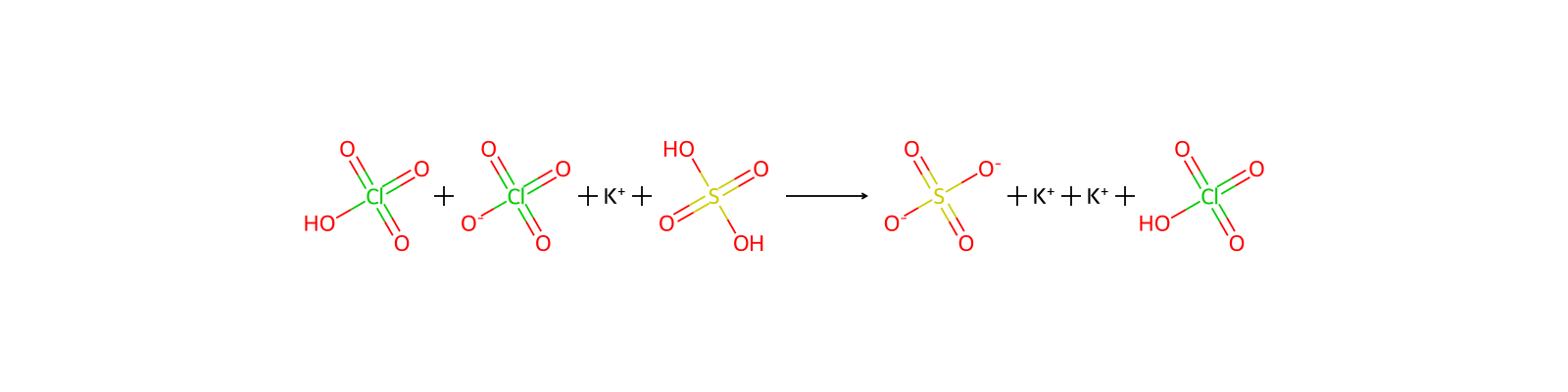
HRID 5973As reactant

10233-01-9O=S(=O)([O-])[O-].[K+].[K+]OTYBMLCTZGSZBG-UHFFFAOYSA-LPotassium sulfate is an inorganic potassium salt and a potassium salt.
10233-01-9、7778-80-5DTXSID6029701CHEMBL2021424CHEBI:32036Between 5,5 and 8,5 (5 % solution)
AQ SOLN IS NEUTRAL; PH ABOUT 7
2.66
2.66 g/cm³
2.66 @25 °C
COLORLESS OR WHITE CRYSTALS, OR WHITE GRANULES OR POWDER
COLORLESS, RHOMBIC OR HEXAGONAL CRYSTALS
Freely soluble in water, insoluble in ethanol
Safety information is for reference only and does not replace the supplier’s Safety Data Sheet (SDS), applicable regulations, or professional assessment.
This chemical does not meet GHS hazard criteria for 89% (517 of 581) of all reports.
Danger
H318 (10.2%): Causes serious eye damage [Danger Serious eye damage/eye irritation]
P264+P265, P280, P305+P354+P338, and P317 (click each P-code to see the statement)
Aggregated GHS information provided per 581 reports by companies from 9 notifications to the ECHA C&L Inventory.
Chemical: Sulfuric acid, dipotassium salt
Regulation (EC) No 1333/2008 (amended)
Sulfuric acid potassium salt (1:2) is listed on the EPA's Chemical Data Reporting (CDR) system. Manufacturers and importers of Sulfuric acid potassium salt (1:2) are required to report information about their production and use of this chemical to the EPA under the Toxic Substances Control Act (TSCA). (40 eCFR Part 711)
REACH registered substance: Potassium sulfate (EC: 231-915-5)
Dipotassium sulphate: Non hazardous
Potassium is the major cation (positive ion) inside animal cells, while sodium is the major cation outside animal cells. The concentration differences of these charged particles causes a difference in electric potential between the inside and outside of cells, known as the membrane potential. The balance between potassium and sodium is maintained by ion pumps in the cell membrane. The cell membrane potential created by potassium and sodium ions allows the cell generate an action potential—a "spike" of electrical discharge. The ability of cells to produce electrical discharge is critical for body functions such as neurotransmission, muscle contraction, and heart function. Potassium is also an essential mineral needed to regulate water balance, blood pressure and levels of acidity.
KALI SULPHURICUM
Osmotic Laxative [EPC]; Osmotic Activity [MoA]; Increased Large Intestinal Motility [PE]; Potassium Salt [EPC]; Inhibition Large Intestine Fluid/Electrolyte Absorption [PE]; Potassium Compounds [CS]
POTASSIUM SULFATE
Osmotic Laxative [EPC]; Osmotic Activity [MoA]; Increased Large Intestinal Motility [PE]; Potassium Salt [EPC]; Inhibition Large Intestine Fluid/Electrolyte Absorption [PE]; Potassium Compounds [CS]
KALIUM SULPHURICUM
Osmotic Laxative [EPC]; Potassium Compounds [CS]; Inhibition Large Intestine Fluid/Electrolyte Absorption [PE]; Potassium Salt [EPC]; Increased Large Intestinal Motility [PE]; Osmotic Activity [MoA]
Used in gypsum cements, to make alum and glass, as a food additive, in fertilizers, as an accelerator in wallboard, as an expansion control agent for dental materials, as a medical and veterinary cathartic, and as a veterinary sulfate source; [HSDB]
Cement Producing [Category: Industry]
REAGENT IN ANALYTICAL CHEMISTRY; MEDICINE; GYPSUM CEMENTS; ALUM MFR; FOOD ADDITIVE
ITS SOLUBILITY IN WATER IS DECR BY KCL OR (NH4)2SO4
1 G DISSOLVES IN: 8.3 ML WATER, 4 ML BOILING WATER, 75 ML GLYCEROL; PRACTICALLY INSOL IN SATURATED SOLN OF AMMONIUM SULFATE; INSOL IN ALC
INSOL IN ACETATE, CARBON DISULFIDE
Solubility in water, g/100ml at 25 °C: 12
FDA approved drugs -> Active ingredient
FDA approved drugs -> Active ingredient
1689 °C
1689 °C
1689 °C @760 [mm Hg]
(AL) ALABAMA 500,000 ug/l /Sulfate ion/
(UT) UTAH 1,000,000 ug/l /Sulfate ion/
(CA) CALIFORNIA 250 ug/l (Recommended); 500 ug/l (Upper); Short-term 600 ug/l /Sulfate ion/
(UT) UTAH 500,000 ug/l /Sulfate ion/
Fresh air, rest.
Rinse and then wash skin with water and soap.
First rinse with plenty of water for several minutes (remove contact lenses if easily possible), then refer for medical attention.
Give one or two glasses of water to drink.
30 [mg/m3]
220 [mg/m3]
1300 [mg/m3]
Cough. Sore throat.
Redness.
Redness. Pain.
Abdominal pain. Diarrhoea. Nausea. Vomiting.
CATTLE WHICH BROKE INTO FIELD WHICH HAD BEEN TREATED WITH POTASSIUM SULFATE DIED WITHIN 2 DAYS, SHOWING SYMPTOMS OF PROSTRATION, PARESIS, HYPOTHERMIA, CESSATION OF RUMINATION & CONSTIPATION. ONLY LESION SEEN @ POST MORTEM WAS CONGESTION OF MUCOUS MEMBRANE OF ABOMASUM & INTESTINES...
(AL) ALABAMA 500,000 ug/l /Sulfate ion/
(UT) UTAH 1,000,000 ug/l /Sulfate ion/
(CA) CALIFORNIA 250 ug/l (Recommended); 500 ug/l (Upper); Short-term 600 ug/l /Sulfate ion/
(UT) UTAH 500,000 ug/l /Sulfate ion/
(VET): CATHARTIC, SULFATE SOURCE
FERTILIZER FOR CHLORIDE-SENSITIVE CROPS (EG, TOBACCO); ACCELERATOR IN WALLBOARD (CONSTRUCTION INDUSTRY); AGENT IN MFR OF GLASS; CATHARTIC IN HUMAN MEDICINE; WATER-CORRECTIVE AGENT FOR FOODS (EG, BREWERY WATER); SETTING-EXPANSION CONTROL AGENT FOR DENTAL MATERIALS
(1978) 2.30X10+10 GRAMS
(1979) 2.24X10+10 GRAMS
(1985) 5.53x10+10 g
(1977) 6.90X10+10 GRAMS
(1979) 2.02X10+10 GRAMS
(1985) 4.88X10+10 g
2023: 100,000,000 - <250,000,000 lb
(1977) 4.64X10+10 GRAMS (CONSUMPTION)
(1979) 4.11X10+10 GRAMS (CONSUMPTION)
(1985) 2.10X10+11 g
Agriculture, 63%; exports, 36%; other, 1% (1984)
CHEMICAL PROFILE: Potassium Sulfates. Fertilizer (mainly for non-grain or specialty crops), 56%; exports, 41%; other, 3%. /Potassium sulfates/
CHEMICAL PROFILE: Potassium sulfates. Demand: 1987: 227,600 tons K2O; 1988: 235,000 tons K2O; 1992 /projected/: 280,000 tons K2O. (Does not include imports, which totaled 30,000 tons K2O in 1987.) /Potassium sulfates/
REACTION OF POTASSIUM CHLORIDE WITH LANGBEINITE ORE, SCHOENITE OBTAINED FROM KAINITE ORE, OR SODIUM SULFATE (GLASERITE IS AN ISOLATED INTERMEDIATE); REACTION OF POTASSIUM CHLORIDE WITH SULFURIC ACID OR SULFUR DIOXIDE, WATER AND OXYGEN; RECOVERY FROM SUGAR WASTES
(A) BY TREATMENT OF POTASSIUM CHLORIDE EITHER WITH SULFURIC ACID OR WITH SULFUR DIOXIDE, AIR, & WATER (HARGREAVES PROCESS). (B) BY FRACTIONAL CRYSTALLIZATION OF NATURAL SULFATE ORE; (C) FROM SALT LAKE BRINES.
THE POTASSIUM SALT OF SULFURIC ACID. ...FIRST POTASH SALT PRODUCED COMMERCIALLY IN US FROM ANYTHING OTHER THAN WOOD ASHES. IT WAS PRODUCED FROM ALUNITE. SULFATE HAS ALSO BEEN MADE FROM CEMENT MILL DUST, LANGBEINITE, & FROM MURIATE BY TREATMENT WITH SODIUM OR MAGNESIUM SULFATE OR WITH SULFURIC ACID.
GRADES: HIGHEST PURITY MEDICINAL; COMMERCIAL; CRUDE; CP; AGRICULTURAL
Commercial potassium sulfate contains not less than 48% soluble potash (K2O) chiefly as sulfate, and not more than 2.5% chlorine
EPA Safer Chemical Functional Use Classes -> Processing Aids and Additives
Safer Chemical Classes -> Green circle - The chemical has been verified to be of low concern
Food additives
Food Additives -> FLAVOUR_ENHANCER; SALT_SUBSTITUTE -> JECFA Functional Classes
Cosmetics -> Bulking; Viscosity controlling
Not Known or Reasonably Ascertainable
Sulfuric acid potassium salt (1:2): ACTIVE
Sulfuric acid, potassium salt (1:?): ACTIVE
TECHNICAL GRADES ARE USED IN FERTILIZERS FOR MFR OF POTASSIUM ALUM, POTASSIUM CARBONATE & GLASS; THE REAGENT GRADE IS USED IN THE KJELDAHL DETERMINATION OF NITROGEN.
VET: RARE, AS LAXATIVE, AS IT IS MORE IRRITANT THAN SODIUM OR MAGNESIUM SULFATES. OCCASIONALLY USED IN WATER SOL TRACE MINERAL MIXES AS SOURCE OF POTASSIUM (44.8%) & AS AN ORAL SULFATE SOURCE IN RUMINANT EXPT.
VET: IT IS OF POTENTIAL VALUE AS SULFATE SOURCE, WHICH MAY REDUCE METHIONINE REQUIREMENTS OF POULTRY. A 0.1% LEVEL IN FEED OF LAYING HENS WAS ASSOCIATED WITH A 5% INCR IN EGG PRODUCTION.
DescriptionPotassium sulfate (K2SO4) is a kind of chemical compounds that is commonly used in agriculture. The dominant application of potassium sulfate is as a fertilizer, which is commonly applied to offer both potassium and sulfur, thus improving the quality and yield of crops growing in soils that lack an adequate supply of this essential elements. Besides, the crude potassium sulfate is sometimes employed in the production of glass. It also has applications in other industries, which is used as a flash reducer in artillery propellant charges and as an alternative blast media similar to soda in the process of soda blasting. potassium sulfate powder
OccurrencePotassium and sodium sulfates and their double sulfates with calcium and magnesium occur naturally in various salt lakes. Potassium sulfate also occurs in certain volcanic lava. Its double salt with magnesium occurs in nature, as the mineral langbeinite.Potassium sulfate is used in fertilizers as a source of potassium and sulfur, both of which are essential elements for plant growth. Either in sim-ple form or as a double salt with magnesium sulfate, potassium sulfate is one of the most widely consumed potassium salts in agricultural applications. It is preferred over potassium chloride for certain types of crops; such as, tobac-co, citrus, and other chloride-sensitive crops. Some other applications include making gypsum cements; to make potassium alum; in the analysis of Kjeldahl nitrogen; and in medicine.
HistoryPotassium sulfate has been known since the early 14th century. It was studied by Glauber, Boyle, and Tachenius. In the 17th century, it was named arcanuni or sal duplicatum, as it was a combination of an acid salt with an alkaline salt. It was also known as vitriolic tartar and Glaser's salt or sal polychrestum Glaseri after the pharmaceutical chemist Christopher Glaser, who prepared and used it medicinally. From the early to mid-19th century, as understanding of plant nutritional requirements deepened and the fertilizer industry emerged, potassium sulphate began to be produced on a large scale as a vital potash fertiliser.
UsesPotassium Sulfate is a flavoring agent that occurs naturally, consisting of colorless or white crystals or crystalline powder having a bitter, saline taste. it is prepared by the neutralization of sulfuric acid with potassium hydroxide or potassium carbonate.
UsesTechnical grades are used in fertilizers for manufacture of potassium alum, potassium carbonate and glass; the reagent grade is used in the Kjeldahl determination of nitrogen.
Usespotassium sulfate is a reagent in cosmetics. Potassium sulfate is an inorganic salt with a primary function as a viscosity-increasing agent.
General DescriptionPotassium sulfate is an inorganic salt that can be prepared by reacting phosphogypsum and potassium chloride. It forms needlelike mullite particles on heating with aluminum sulfate (Al2(SO4)3) and silicon dioxide (SiO2). Its application to the soil has been reported to minimize the bronzing of rice plants. Its surface integration growth kinetics has been obtained in the temperature range of 20-50°C. The theoretical heat capacity curve of potassium sulfate in vapor phase has been obtained.
DefinitionPotassium sulfate is a potassium salt and an inorganic potassium salt. It is a white crystalline powder, K2SO4, soluble inwater and insoluble in ethanol;rhombic or hexagonal; r.d. 2.66; m.p.1069°C. It occurs naturally assch nite (Strassfurt deposits) and inlake brines, from which it is separatedby fractional crystallization. Ithas also been produced by the Hargreavesprocess, which involves theoxidation of potassium chloride withsulphuric acid. In the laboratory itmay be obtained by the reaction ofeither potassium hydroxide or potassiumcarbonate with sulphuric acid.Potassium sulphate is used in cements,in glass manufacture, as a food additive, and as a fertilizer(source of K+) for chloride-sensitiveplants, such as tobacco and citrus.