Basic information
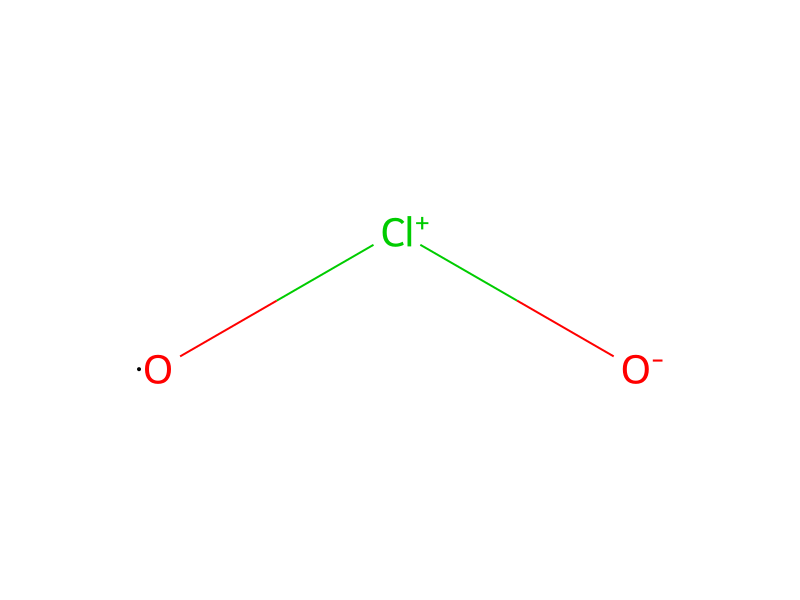
- Standard SMILES
[O][Cl+][O-]- InChIKey
OSVXSBDYLRYLIG-UHFFFAOYSA-N- Molecular formula
- ClO2
- Average molar mass
- 67.45 g/mol
- Monoisotopic mass
- 66.95868192
Overview
Chlorine dioxide is a yellow to reddish-yellow manufactured gas. It does not occur naturally in the environment. When added to water, chlorine dioxide forms chlorite ion, which is also a very reactive chemical. Chlorine dioxide is used as a bleaching agent at paper manufacturing plants, and in public water treatment facilities to make water safe to drink. In 2001, chlorine dioxide and chlorite were used to decontaminate a number of public buildings following the release of anthrax spores in the United States.
Names & identifiers
- Preferred name
- Chlorine Dioxide
- IUPAC
- Chlorosyloxidanyl
- English name
- Chlorine dioxide
- Molecular formula
- ClO2
- Molecular weight
- 67.45
Names & synonyms
CHLORINE DIOXIDEAlcide10049-04-4Chlorine oxide (ClO2)Chlorine(IV) oxideDTXSID5023958PuriteJoydenJoyden plusNobda disinfectantBlueMAX Pre-PostGladiator Super Dry
Show more names
ClO2Chlorine oxideChlorine Dioxide solutiono2Cl(.)doxcide50(Oclo)(.)JUN-CLAREDoxcide 50alcide[qr]
BlueMAX Premium EURefChem:5668SKIN N CLEANVIRUS ZERO-FProVtect Hand SanitizerChlorine Dioxide(ClO2)SANI-HEALTH SanitizerPURE O2 S
Database identifiers
- CAS
10049-04-4- PubChem CID
- 24870
- DTXSID
DTXSID5023958- ChEMBL
CHEMBL4297725- ChEBI
CHEBI:29415- EC Number
- 233-162-8
- Nikkaji
- J342.197J
Properties
Computed structural properties
- XLogP
- 1.4
- Topological polar surface area
- 18.1 Ų
- Hydrogen bond donors
- 0
- Hydrogen bond acceptors
- 1
- Rotatable bonds
- 0
- Heavy atoms
- 3
- Formal charge
- 0
- Complexity
- 7.5
Experimental & physicochemical properties
Chemical Classes
Toxic Gases & Vapors -> Oxidizers
Flammable agents - 4th degree
CosmeticsCosmetics ingredient -> Base
Pesticides
Pesticide -> EPA IRIS
Fungicides
Active substance -> EU Pesticides database: Not approved
Odor... Unpleasant odor similar to chlorine and nitric acid.
Food AdditivesANTIMICROBIAL AGENT, FLOUR TREATING AGENT, FUMIGANT -> FDA Substance added to food
Density
1.6 (Liquid at 32 °F) (NIOSH, 2024) - Denser than water; will sink
1.77 g/cu cm
Density: 1.642 at 0 °C (liq)
Relative density (water = 1): 1.6 (liquid, 0 °C)
1.6 (liquid at 32 °F)
3.09 @ 11°C
Color/Form
Yellowish-brown gas
Yellow to reddish-yellow gas at room temperature
Solid chlorine dioxide is a yellowish-red crystalline mass; liquid is reddish-brown
Yellow to red gas or a red-brown liquid (below 52 degrees F) ...
For more Color/Form (Complete) data for Chlorine dioxide (6 total), please visit the HSDB record page.
Solubility
0.3 % at 77 °F (NIOSH, 2024)
In water, 3.01 g/L at 25 °C and 34.5 mm Hg
2000 cc (gas) in 100 cc cold water
In water, 1.823X10⁻² at 298.15 K
Soluble in water
Soluble in alkaline and sulfuric acid solutions
Flash PointNA (Gas) ? (Liquid)
Endocrine DisruptorsPotential endocrine disrupting compound
Boiling Point
52 °F at 760 mmHg (NIOSH, 2024)
11 °C
11 °C
52 °F
11 °C @760 [mm Hg]
52 °F
Decomposition
When heated to decomposition it emits toxic fumes of /chloride/.
Decomposition by sparking begins to become hazardous at concentrations of 7-8% in air.
The major chlorine dioxide /disinfectant by-products/ (DBPs) include chlorite (ClO2 -) and chlorate ions, with no direct formation of organohalogen DBPs. Unlike the other disinfectants, the major chlorine dioxide DBPs are derived from decomposition of the disinfectant as opposed to reaction with precursors.
Physicochemical properties
- Melting point
- -59 °C · -59°C
- Boiling point
- 11 °C · 11°C
- Density
- 3.09 g/L · 3.09g/L
- vapor pressure
- 0 · 0-22900Pa at 20-25℃
- solubility
- 2 O · slightly soluble in H2O
- form
- orange-green gas
- color
- orange-green
- Water Solubility
- Soluble ºC
- Specific Heat Capacity
- 0.62 J/ · Cp(gas): 0.62 J/(g·K), at 25℃
- Henry's Law Constant
- 1 · 1.0×10-2 mol/(m3Pa) at 25℃, Burkholder et al. (2019)
- Exposure limits
- 0.1 ppm · ACGIH:TLV-CEILING 0.1 ppm (0.28 mg/m3)OSHA:PEL-TWA 0.1 ppm (0.3 mg/m3)NIOSH:REL-TWA 0.1 ppm; REL-STEL 0.3 ppm
- Dielectric constant
- 1.7 · 1.7(77.0℃)
- Stability
- May decompose explosively on shock, friction or concussion, or on heating rapidly. Strong oxidant - reacts violently with combustible and reducing materials, and with mercury, ammonia, sulphur and many organic compounds.
- Cosmetics Ingredients Functions
- ANTIMICROBIALDEODORANT
- EPA Primary Drinking Water Standard
- 0.81 · MCL:MRDL=0.81,MCLG:MRDLG=0.81
- LogP
- -3.22 · -3.22--2.9 at 20℃
- CAS DataBase Reference
- 10049 · 10049-04-4(CAS DataBase Reference)
- Substances Added to Food (formerly EAFUS)
- CHLORINE DIOXIDE
- FDA 21 CFR
- 173.3 · 173.300; 178.1010
- EWG's Food Scores
- 3 · 3
- FDA UNII
- 8061 YMS4RM · 8061YMS4RM
- NIST Chemistry Reference
- Chlorine dioxide(10049-04-4)
- EPA Substance Registry System
- Chlorine dioxide (10049-04-4)
- Pesticides Freedom of Information Act (FOIA)
- Chlorine dioxide
- Toxicological Profile|ATSDR
- Chlorine dioxide |Toxicological Profile|ATSDR
- Symbol(GHS)
- 6 · GHS06,GHS05,GHS09
- Signal word
- Danger
- Hazard statements
- 301 · H301-H314-H400
- Precautionary statements
- 264 · P264-P270-P301+P310-P321-P330-P405-P501-P260-P264-P280-P301+P330+P331-P303+P361+P353-P363-P304+P340-P310-P321-P305+P351+P338-P405-P501-P273-P391-P501
- Hazard Codes
- O,T+,N
- Risk Statements
- 6 · 6-8-26-34-50
- Safety Statements
- 23 · 23-26-28-36/37/39-38-45-61
- RIDADR
- 9191 · UN 9191
- OEB
- C
- OEL
- 0.1 ppm · TWA: 0.1 ppm (0.3 mg/m3), STEL: 0.3 ppm (0.9 mg/m3)
- TSCA
- TSCA listed
- Hazardous Substances Data
- 10049 · 10049-04-4(Hazardous Substances Data)
- IDLA
- 5 ppm · 5 ppm
- REACH Registrations
- Active
Safety & regulation
GHS classification
GHS Classification
Danger
H270: May cause or intensify fire; oxidizer [Danger Oxidizing gases]
P220, P244, P260, P264, P271, P273, P280, P284, P301+P330+P331, P302+P361+P354, P304+P340, P305+P354+P338, P316, P320, P321, P363, P370+P376, P391, P403, P403+P233, P405, and P501 (click each P-code to see the statement)
Danger
H301: Toxic if swallowed [Danger Acute toxicity, oral]
P260, P264, P270, P273, P280, P301+P316, P301+P330+P331, P302+P361+P354, P304+P340, P305+P354+P338, P316, P321, P330, P363, P391, P405, and P501 (click each P-code to see the statement)
Hazard information
Regulatory Information
Chemical: Chlorine oxide, (ClO2)
Hazard Traits - Neurotoxicity; Respiratory Toxicity
Regulation (EC) No 1331/2008
Chlorine oxide (ClO2) is listed on the EPA's Chemical Data Reporting (CDR) system. Manufacturers and importers of Chlorine oxide (ClO2) are required to report information about their production and use of this chemical to the EPA under the Toxic Substances Control Act (TSCA). (40 eCFR Part 711)
Status: Active Update: 15-05-2023 https://echa.europa.eu/registration-dossier/-/registered-dossier/15450
Chlorine dioxide: Does not have an individual approval but may be used as a component in a product covered by a group standard. It is not approved for use as a chemical in its own right.
Other Safety InformationIMAP assessments - Chlorine oxide, (ClO2): Human health tier I assessment
DOT LabelOxidizer Poison
Fire Hazards
Excerpt from ERG Guide 143 [Oxidizers (Unstable)]:
Not combustible but enhances combustion of other substances. Many reactions may cause fire or explosion. Risk of fire and explosion. See Chemical Dangers.
Health HazardsExcerpt from ERG Guide 143 [Oxidizers (Unstable)]:
Hazards Summary
Chlorine dioxide is a yellow to reddish-yellow manufactured gas. It does not occur naturally in the environment. When added to water, chlorine dioxide forms chlorite ion, which is also a very reactive chemical. Chlorine dioxide is used as a bleaching agent at paper manufacturing plants, and in public water treatment facilities to make water safe to drink. In 2001, chlorine dioxide and chlorite were used to decontaminate a number of public buildings following the release of anthrax spores in the United States.
Corrosive--can cause serious skin burns; [ICSC] Rats exposed to 0.1 ppm for 5 hours/day for 45 days had no adverse effects while exposures to 2.5 ppm for 7 hours/day for 30 days caused severe lung inflammation; [ACGIH]
DOT ID and Guide9191 143(hydrate, frozen)
FDA Requirements
Chlorine dioxide (CAS Reg. No. 10049-04-4) may be safely used in food in accordance with the following prescribed conditions: (a)(1) The additive is generated by one of the following methods: (i) Treating an aqueous solution of sodium chlorite with either chlorine gas or a mixture of sodium hypochlorite and hydrochloric acid. (ii) Treating an aqueous solution of sodium chlorate with hydrogen peroxide in the presence of sulfuric acid. (iii) Treating an aqueous solution of sodium chlorite by electrolysis. (2) The generator effluent contains at least 90 percent (by weight) of chlorine dioxide with respect to all chlorine species as determined by Method 4500-ClO2 E in the "Standard Methods for the Examination of Water and Wastewater," 20th ed., 1998, or an equivalent method. ... (b)(1) The additive may be used as an antimicrobial agent in water used in poultry processing in an amount not to exceed 3 parts per million (ppm) residual chlorine dioxide as determined by Method 4500-ClO2 E, referenced in paragraph (a)(2) of this section, or an equivalent method. (2) The additive may be used as an antimicrobial agent in water used to wash fruits and vegetables that are not raw agricultural commodities in an amount not to exceed 3 ppm residual chlorine dioxide as determined by Method 4500-ClO2 E, referenced in paragraph (a)(2) of this section, or an equivalent method. Treatment of the fruits and vegetables with chlorine dioxide shall be followed by a potable water rinse or by blanching, cooking, or canning.
Reactive GroupOxidizing Agents, Strong
EC ClassificationSymbol: O, T+, N; R: 6-8-26-34-50; S: (1/2)-23-26-28-36/37/39-38-45-61
Special Reports
USEPA/Office of Prevention, Pesticides and Toxic Substances; Reregistration Eligibility Decision Document for Chlorine Dioxide and Sodium Chlorite EPA 738-R-06-007 (August 2006). The RED summarizes the risk assessment conclusions and outlines any risk reduction measures necessary for the pesticide to continue to be registered in the USA.[Available from, as of December 13, 2017: http://www.epa.gov/pesticides/reregistration/status.htm]
HHS/ATSDR; Toxicological Profile for Chlorine dioxide and Chlorite (PB 2004-107332) (September 2004).[Available from, as of December 13, 2017: https://www.atsdr.cdc.gov/toxprofiles/index.asp#C]
WHO; Environmental Health Criteria 216: Disinfectants and Disinfectant By-Products (2000).[Available from, as of December 12, 2017: http://www.inchem.org/documents/ehc/ehc/ehc216.htm]
Calabrese EJ et al; The Health Effects of Chlorine Dioxide as A Disinfectant in Potable Water: A Literature Survey; J Environ Health 41 (1): 26-31 (1978). A review with 43 references on the health effects of chlorine dioxide as a disinfectant in potable water.
For more Special Reports (Complete) data for Chlorine dioxide (7 total), please visit the HSDB record page.
FIFRA Requirements
Residues of the following chemical substances are exempted from the requirement of a tolerance when used in accordance with good manufacturing practice as ingredients in an antimicrobial pesticide formulation, provided that the substance is applied on a semi-permanent or permanent food-contact surface (other than being applied on food packaging) with adequate draining before contact with food. ... (b) The following chemical substances when used as ingredients in an antimicrobial pesticide formulation may be applied to: Dairy processing equipment, and food-processing equipment and utensils. ... Pesticide Chemical: Oxychloro species (including chlorine dioxide) generated by acidification of an aqueous solution of sodium chlorite. Limit: When ready for use, the end-use concentration is not to exceed 200 ppm of chlorine dioxide as determined by the method titled, Iodometric Method for the Determination of Available Chlorine Dioxide (50-250 ppm available chlorine dioxide)
Residues of the following chemical substances are exempted from the requirement of a tolerance when used in accordance with good manufacturing practice as ingredients in an antimicrobial pesticide formulation, provided that the substance is applied on a semi-permanent or permanent food-contact surface (other than being applied on food packaging) with adequate draining before contact with food. ... (c) The following chemical substances when used as ingredients in an antimicrobial pesticide formulation may be applied to: Food-processing equipment and utensils. ... Pesticide Chemical: Oxychloro species (including chlorine dioxide) generated by acidification of an aqueous solution of sodium chlorite. Limit: When ready for use, the end-use concentration is not to exceed 200 ppm of chlorine dioxide as determined by the method titled, "Iodometric Method for the Determination of Available Chlorine Dioxide (50-250 ppm available chlorine dioxide)"
Residues of the following chemical substances are exempted from the requirement of a tolerance when used in accordance with good manufacturing practice as ingredients in an antimicrobial pesticide formulation, provided that the substance is applied on a semi-permanent or permanent food-contact surface (other than being applied on food packaging) with adequate draining before contact with food. ... (c) The following chemical substances when used as ingredients in an antimicrobial pesticide formulation may be applied to: Food-processing equipment and utensils. ... Pesticide Chemical: Oxychloro species (predominantly chlorite, chlorate and chlorine dioxide in an equilibrium mixture) generated either (i) by directly metering a concentrated chlorine dioxide solution prepared just prior to use, into potable water, or (ii) by acidification of an aqueous alkaline solution of oxychloro species (predominately chlorite and chlorate) followed by dilution with potable water. Limit: When ready for use, the end-use concentration is not to exceed 200 ppm of chlorine dioxide as determined by the method titled, "Iodometric Method for the Determination of Available Chlorine Dioxide (50-250 ppm available chlorine dioxide)"
The Agency has completed its assessment of the dietary, occupational, drinking water, and ecological risks associated with the use of pesticide products containing the active ingredient chlorine dioxide and sodium chlorite. Based on a review of these data and on public comments on the Agency's assessments for the active ingredient chlorine dioxide and sodium chlorite, the Agency has sufficient information on the human health and ecological effects of chlorine dioxide and sodium chlorite to make decisions as part of the tolerance reassessment process under FFDCA and reregistration process under FIFRA, as amended by FQPA. The Agency has determined that all chlorine dioxide and sodium chlorite pesticide-containing products are eligible for reregistration provided that: (i) current data gaps and confirmatory data needs are addressed; (ii) the risk mitigation measures outlined in this document are adopted; and (iii) label amendments are made to reflect these measures. ... Based on its evaluation of chlorine dioxide and sodium chlorite, the Agency has determined that chlorine dioxide and sodium chlorite products, unless labeled and used as specified in this document, would present risks inconsistent with FIFRA. Accordingly, should a registrant fail to implement any of the risk mitigation measures identified in this document, the Agency may take regulatory action to address the risk concerns from the use of chlorine dioxide and sodium chlorite. If all changes outlined in this document are incorporated into the product labels, then all current risks for chlorine dioxide and sodium chlorite will be substantially mitigated for the purposes of this determination.
As the federal pesticide law FIFRA directs, EPA is conducting a comprehensive review of older pesticides to consider their health and environmental effects and make decisions about their continued use. Under this pesticide reregistration program, EPA examines newer health and safety data for pesticide active ingredients initially registered before November 1, 1984, and determines whether the use of the pesticide does not pose unreasonable risk in accordance to newer safety standards, such as those described in the Food Quality Protection Act of 1996. Pesticides for which EPA had not issued Registration Standards prior to the effective date of FIFRA '88 were divided into three lists based upon their potential for human exposure and other factors, with List B containing pesticides of greater concern than those on List C, and with List C containing pesticides of greater concern than those on List D. Chlorine dioxide is found on List D. Case No: 4023; Pesticide type: insecticide, fungicide, herbicide, antimicrobial; Case Status: RED Approved 09/94; OPP has made a decision that some/all uses of the pesticide are eligible for reregistration, as reflected in a Reregistration Eligibility Decision (RED) document.; Active ingredient (AI): chlorine dioxide; Data Call-in (DCI) Date(s): 09/07/93; AI Status: The producers of the pesticide have made commitments to conduct the studies and pay the fees required for reregistration, and are meeting those commitments in a timely manner.
Safety & protection
Fire Fighting
Excerpt from ERG Guide 143 [Oxidizers (Unstable)]:
In case of fire in the surroundings, use appropriate extinguishing media. In case of fire: keep drums, etc., cool by spraying with water. Combat fire from a sheltered position.
First Aid Measures
Fresh air, rest. Half-upright position. Refer for medical attention.
First rinse with plenty of water for at least 15 minutes, then remove contaminated clothes and rinse again. Refer for medical attention .
First rinse with plenty of water for several minutes (remove contact lenses if easily possible), then refer for medical attention.
First Aid
Excerpt from NIOSH Pocket Guide for Chlorine dioxide:
(General first aid procedures)
Safe StorageFireproof if in building. Separated from combustible substances and reducing agents. Cool. Keep in the dark. Ventilation along the floor.
Firefighting Hazards
A powerful oxidizer, this chemical will increase the intensity of a fire, and can cause fire upon contact with combustibles. ... Vapors are heavier than air and will collect in low areas. Containers may explode in fire. Storage containers and parts of containers may rocket great distances, in many directions.
Exposure Control and Personal Protection
TIH (Toxic Inhalation Hazard) - Term used to describe gases and volatile liquids that are toxic when inhaled. Some are TIH materials themselves, e.g., chlorine, and some release TIH gases when spilled in water, e.g., chlorosilanes. [ERG 2016].
0.1 [ppm]
Fire Fighting Procedures
If material on fire or involved in fire: Use water in flooding quantities as fog. Cool all affected containers with flooding quantities of water. Extinguish fire using agent suitable for type of surrounding fire. (Material itself does not burn or burns with difficulty.) /Chlorine dioxide hydrate, frozen/
If fire becomes uncontrollable, consider evacuation of one-third mile radius. /Chlorine dioxide hydrate, frozen/
Firefighting gear (including SCBA) may not provide adequate protection. If exposure occurs, remove and isolate gear immediately and thoroughly decontaminate personnel. ... Use water only. Do not use dry chemical or carbon dioxide extinguishers. Use water with caution as chlorine dioxide reacts with water, forming hydrogen chloride gas. ... If material or contaminated runoff enters waterways, notify downstream users of potentially contaminated waters. Notify local health and fire officials and pollution control agencies. From a secure, explosion-proof location, use water spray to cool exposed containers. If cooling streams are ineffective (venting sound increases in volume and pitch, tank discolors, or shows any signs of deforming), withdraw immediately to a secure position. The only respirators recommended for firefighting are self-contained breathing apparatuses that have full face-pieces and are operated in a pressure-demand or other positive-pressure mode.
Small fire: Use water. Do not use dry chemicals or foams. CO2 or Halon may provide limited control. Large fire: Flood fire area with water from a distance. Do not move cargo or vehicle if cargo has been exposed to heat. Move containers from fire area if you can do it without risk. Do not get water inside containers: a violent reaction may occur. Fire involving tanks or car/trailer loads: Cool containers with flooding quantities of water until well after fire is out. Dike fire-control water for later disposal. ALWAYS stay away from tanks engulfed in fire. For massive fire, use unmanned hose holders or monitor nozzles; if this is impossible, withdraw from area and let fire burn.
Storage Conditions
Store separately from all other flammable materials. Prior to working with chlorine dioxide you should be trained on its proper handling and storage. This chemical is a powerful oxidizer, and is shock-, light- and heat sensitive. It is violently explosive in air at concentrations over 10%. Keep frozen when not in use. Store in tightly closed containers in a cool, dark, well-ventilated area at temperatures well below 130 °C. Gas explosions may occur above 130 °C. Use only nonsparking tools and equipment, especially when opening and closing containers of this chemical. Sources of ignition, such as smoking and open flames, are prohibited where this chemical is used, handled, or stored in a manner that could create a potential fire or explosion hazard. Use explosion-proof electrical equipment and fittings in storage area.
Cleanup Methods
Evacuate and restrict persons not wearing protective equipment from area of spill or leak until cleanup is complete. Remove all ignition sources. Ventilate area of leak or spill. If the gas is leaked, stop the flow of gas if it can be done safely. If the source of the leak is a cylinder and the leak cannot be stopped in place, remove the leaking cylinder to a safe place in the open air and repair the leak or alow the cylinder to empty. If the leak can be stopped in place, bubble chlorine dioxide through a solution made up of reducing agent sodium bisulfide and sodium bicarbonate with a trap in the line. For liquid spills, allow chlorine dioxide to evaporate with all available ventilation. Keep chlorine dioxide out of a confined space, such as a sewer, because of the possibility of an explosion, unless the sewer is designed to prevent the buildup of explosive concentrations. It may be necessary to contain and dispose of this chemical as a hazardous waste. If material or contaminated runoff enters waterways, notify downstream users of potentially contaminated waters.
Chlorine dioxide, hydrate, frozen, when spilled in water. Small spills (from a small package or a small leak from a large package): First: Isolate in all directions 100 ft/30 m. Then: Protect persons downwind: Day 0.1 mi/0.2 km, Night 0.1 mi/0.2 km. Large spills (from a large package or many small packages): First: Isolate in all directions 100 ft/30 m. Then: Protect persons downwind: Day 0.2 mi/0.3 km, Night 0.4 mi/0.6 km. /Chlorine dioxide, hydrate, frozen/
1) Remove all ignition sources. 2) Ventilate area of spill or leak. 3) If in gaseous form, stop flow of gas. If source of leak is a cylinder and leak cannot be stopped in place, remove leaking cylinder to safe place in open air, and repair leak or allow cylinder to empty. 4) If in liquid form, evacuate persons not wearing protective equipment. ... Allow ... to evaporate while providing all available ventilation.
Nonfire Spill ResponseExcerpt from ERG Guide 143 [Oxidizers (Unstable)]:
Disposal Methods
SRP: Recycle any unused portion of the material for its approved use or return it to the manufacturer or supplier. Ultimate disposal of the chemical must consider: the material's impact on air quality; potential migration in air, soil or water; effects on animal, aquatic and plant life; and conformance with environmental and public health regulations. If it is possible or reasonable use an alternative chemical product with less inherent propensity for occupational harm/injury/toxicity or environmental contamination.
SRP: Wastewater from contaminant suppression, cleaning of protective clothing/equipment, or contaminated sites should be contained and evaluated for subject chemical or decomposition product concentrations. Concentrations shall be lower than applicable environmental discharge or disposal criteria. Alternatively, pretreatment and/or discharge to a permitted wastewater treatment facility is acceptable only after review by the governing authority and assurance that "pass through" violations will not occur. Due consideration shall be given to remediation worker exposure (inhalation, dermal and ingestion) as well as fate during treatment, transfer and disposal. If it is not practicable to manage the chemical in this fashion, it must be evaluated in accordance with EPA 40 CFR Part 261, specifically Subpart B, in order to determine the appropriate local, state and federal requirements for disposal.
Use large volume of concentrated solution of ferrous salt or bisulfite solution as reducing agent. Then neutralize and flush to sewer with abundant water.
Spillage DisposalEvacuate danger area! Consult an expert! Personal protection: complete protective clothing including self-contained breathing apparatus. Ventilation. Remove gas with fine water spray.
Toxicology
Toxicological InformationCDC-ATSDR Toxicological Profile
Target Organs
Developmental (effects while organs are developing), Gastrointestinal (Stomach and Intestines, part of the digestive system), Respiratory (From the Nose to the Lungs)
Cardiovascular
Eyes, respiratory system
Ecotoxicity Values
LC50; Species: Pimephales promelas (Fathead minnow) juvenile; Conditions: flow through; Concentration: 0.02 mg/L for 96 hr
LC50; Species: Pimephales promelas (Fathead minnow) adult- 1 yr old; Conditions: flow through; Concentration: 0.17 mg/L for 96 hr
LC50; Species: Lepomis macrochirus (Bluegill) young of the year; Conditions: flow through; Concentration: 0.15 mg/L for 96 hr
LC50; Species: Carcinus maenas (Green or Europeon shore crab); Conditions: renewal; Concentration: 500 mg/L for 48 hr /technical product/
For more Ecotoxicity Values (Complete) data for Chlorine dioxide (16 total), please visit the HSDB record page.
Environmental Fate
Hydrogen peroxide (H2O2), chlorite, chlorate, Cl2O3, oxygen (O2), and chlorine have all been reported as intermediates or products /of chlorine dioxide breakdown/. Presumably chlorine dioxide will not persist in open basins or reservoirs, although it can remain for days in clean distribution systems.
It is generally accepted that the predominant reaction product of chlorine dioxide in water treatment is chlorite and that chlorate and other ions are produced in minor amounts ... an approximately 50% conversion of chlorine dioxide to chlorite was reported ... /in/ water containing natural humic acids.
Chlorine dioxide does not cause formation of trihalomethanes, does not react with ammonia, and does not cause formation of chloramines. It can ... disproportionate to chlorate and chlorite ... by raising pH to 11 or 12 ... this is not believed to be an important reaction in water undergoing treatment.
/Products formed during oxidative treatment of water/: both oxygenated and chlorinated products may be formed, the latter being found most prominently in connection with reactions of phenolic substances. Other products that might affect health are quinones and 1,2-epoxy compounds.
Adverse EffectsDermatotoxin - Skin burns.
Exposure Routes
The substance can be absorbed into the body by inhalation.
inhalation, ingestion (liquid), skin and/or eye contact
Toxicity Summary
IDENTIFICATION AND USE: Chlorine dioxide is a yellowish-brown gas with unpleasant odor similar to chlorine and nitric acid. Its uses include bleaching cellulose, paper-pulp, flour, leather, fats and oils, textiles, and beeswax. It is also used for purification of water, taste and odor control of water, cleaning and detanning leather, in the manufacture of chloride salts, and as an oxidizing agent, bactericide, antiseptic and deodorizer. Chlorine dioxide was found to be highly effective against various microorganisms tested at very low concentrations in a minimum contact time of 30 to 60 seconds. HUMAN STUDIES: Potential symptoms of overexposure are irritation of eyes, nose, and throat, as well as coughing, wheezing, bronchitis, and pulmonary edema. Workers industrially exposed to low concentrations of the gas in air have been noted occasionally to suffer from irritation of the eyes and to see haloes about lights, but these effects have been minor compared to respiratory irritation. Bronchoscopy and biopsy revealed slight chronic bronchitis in 7 of 12 workers. Only two workers who had been exposed just prior to examination showed physical signs of respiratory effects. Workers acutely exposed to chlorine dioxide developed both reactive airways dysfunction syndrome (RADS), a form of occupational asthma, and an upper airways reactive disorder that was called reactive upper airways disfunction syndrome (RUDS). A positive association was found between exposure of the mother to chlorine dioxide-treated water during pregnancy and prematurity of the newborn. Children born of mothers who drank disinfected water treated with either chlorine dioxide or hypochlorite were noted to have an increased incidence of small cranial circumference, small body length, and neonatal jaundice. Chlorine dioxide was found to be weakly genotoxic in human leukocytes. ANIMAL STUDIES: Chlorine dioxide is very toxic by inhalation in rats. Clinical signs of toxicity included respiratory distress. Macroscopically, pulmonary edema and emphysema were seen in all groups of chlorine dioxide-exposed animals, with the incidence increasing in a dose-related manner. Chlorine dioxide is toxic when administered in solution by the oral route to rats. Two males and two females receiving 80 mg chlorine dioxide/kg body weight died, and a further two males at 40 mg/kg body weight also died within 48 hr of administration. There were no deaths at 20 mg/kg body weight. A developmental study in rats did not demonstrate any impairment of reproductive function, and there were no signs of developmental effects among rats receiving up to 10 mg aqueous chlorine dioxide/kg body weight per day. A negative result was obtained for micronucleus formation, and there were no increases in the number of structural or numerical chromosome aberrations in mice treated with chlorine dioxide. However, chlorine dioxide increased water genotoxicity in assays with E. coli and with S. cerevisiae. In Chinese hamster ovary cells at 2.5-15 ug/mL, there was a marked dose-related, statistically significant increase in the number of metaphases with chromosome aberrations. In the presence of metabolic activation, cell toxicity and an absence of mitotic cells were observed at 75 ug/mL. An increase in the number of metaphases with chromosome aberrations was noted at 50 ug/mL. ECOTOXICITY STUDIES: Developmental abnormalities in the sea urchin were evident at exposure to the chlorine dioxide concentration 250 mg/L. Compared with the control, pre-hatch malformations were 6% higher; retarded development, 2%; post-hatch malformations, 20%; skeletal malformations, 21%; and gut malformations, 11%. Survival of larval kelp bass was not significantly affected by chlorine dioxide. In Fathead minnows (Pimephales promelas) chlorine dioxide exposure produced dose-dependent gill pathology including epithelial lifting, hypertrophy, hyperplasia, lamellar fusion, and necrosis. Complete recovery, even in fish with severe hypertrophy and lamellar fusion, was achieved within 4 days. Chlorine dioxide concentrations ranging from 0.1 to 0.5 mg/L induced micronuclei in Vicia faba at acid pH, while 1-2 mg/L chlorine dioxide gave positive responses at neutral pH. Chlorine dioxide produced positive responses in the Tradescantia micronucleus test.
Ecotoxicity Excerpts
/AQUATIC SPECIES/ Antifouling biocides are commonly used in coastal electric power stations to prevent biofouling in their condenser cooling systems. However, the environmental impact of the chemical biocides is less understood than the thermal stress effects caused by the condenser effluents. In this study, Chaetoceros lorenzianus, a representative marine diatom, was used to analyze the toxicity of two antifouling biocides, chlorine and chlorine dioxide. The diatom cells were subjected to a range of concentrations of the biocides (from 0.05 to 2 mg/L, as total residual oxidants, TRO) for contact time of 30min. They were analyzed for viability, genotoxicity, chlorophyll a and cell density endpoints. The cells were affected at all concentrations of the biocides (0.05-2 mg/L), showing dose-dependent decrease in viability and increase in DNA damage. The treated cells were later incubated in filtered seawater devoid of biocide to check for recovery. The cells were able to recover in terms of overall viability and DNA damage, when they had been initially treated with low concentrations of the biocides (0.5 mg/L of Cl2 or 0.2 mg/L of ClO2). Chlorophyll a analysis showed irreparable damage at all concentrations, while cell density showed increasing trend of reduction, if treated above 0.5 mg/L of Cl2 and 0.2 mg/L of ClO2. The data indicated that in C. lorenzianus, cumulative toxic effects and recovery potential of ClO2 up to 0.2 mg/L were comparable with those of Cl2, up to 0.5 mg/L concentration in terms of the studied endpoints. The results indicate that at the biocide levels currently being used at power stations, recovery of the organism is feasible upon return to ambient environment. Similar studies should be carried out on other planktonic and benthic organisms, which will be helpful in the formulation of future guidelines for discharge of upcoming antifouling biocides such as chlorine dioxide.
/AQUATIC SPECIES/ Environmental effect evaluation of disinfection of combined sewer overflow events with alternative chemical disinfectants requires that the environmental toxicity of the disinfectants and the main by-products of their use are known. Many disinfectants degrade quickly in water which should be included in the evaluation of both their toxicity as determined in standardized tests and their possible negative effect in the water environment. Here we evaluated according to the standardized ISO 8692 test the toxicity towards the green microalgae, Pseudokirchneriella subcapitata, of three disinfectants: performic acid (PFA), peracetic acid (PAA) and chlorine dioxide (ClO2) as well as two by-products of their use: hydrogen peroxide (H2O2) and chlorite. All of the five chemicals investigated showed clear toxicity to the algae with well-defined dose response curves. The EC50 values ranged from 0.16 to 2.9 mg/L based on nominal concentrations leading to the labeling of the chemicals as either toxic or very toxic. The five investigated chemicals decreased in toxicity in the order chlorine dioxide, performic acid, peracetic acid, chlorite and hydrogen peroxide. The stability of the chemicals increased in the same order as the toxicity decrease. This indicates that even though ClO2 has the highest environmental hazard potential, it may still be suitable as an alternative disinfectant due to its rapid degradation in water.
/AQUATIC SPECIES/ Whether the implementation of additional treatments for the removal of estrogens from wastewater treatment works (WwTWs) effluents will eliminate their feminizing effects in exposed wildlife has yet to be established, and this information is crucial for future decisions on investment into WwTWs. Here, granular activated carbon (GAC), ozone (O(3)), and chlorine dioxide (ClO(2)) were investigated for their effectiveness in reducing steroidal estrogen levels in a WwTW effluent and assessments made on the associated estrogenic and reproductive responses in fathead minnows (Pimephales promelas) exposed for 21 days. All treatments reduced the estrogenicity of the standard-treated (STD) effluent, but with different efficacies; ranging between 70-100% for total estrogenicity and 53-100% for individual steroid estrogens. In fish exposed to the GAC- and ClO(2)- (but not O(3)-) treated effluents, there was no induction of plasma vitellogenin (VTG) or reduction in the weight of the fatpad, a secondary sex character in males, as occurred for fish exposed to STD effluent. This finding suggests likely benefits of employing these treatment processes for the reproductive health in wild fish populations living in rivers receiving WwTW discharges. Exposure of pair-breeding minnows to the GAC-treated effluent, however, resulted in a similar inhibition of egg production to that occurring for exposure to the STD effluent (34-40%). These data, together with a lack of effect on egg production of the estrogen, ethinylestradiol (10 ng/L), alone, suggest that chemical/physical properties of the effluents rather than their estrogenicity were responsible for the reproductive effect and that these factor(s) were not remediated for through GAC treatment. Collectively, our findings illustrate the importance of assessing integrative biological responses, rather than biomarkers alone, in the assessment and improvement of WwTW technologies for the protection of wild fish populations.
/AQUATIC SPECIES/ Epidemiological evidence suggests a link between consumption of chlorinated drinking water and various cancers. Chlorination of water rich in organic chemicals produces carcinogenic organochlorine by-products (OBPs) such as trihalomethanes and haloacetic acids. Since the discovery of the first OBP in the 1970s, there have been several investigations designed to determine the biological effects of single chemicals or small artificial OBP combinations. However, there is still insufficient information regarding the general biological response to these compounds, and further studies are still needed to evaluate their potential genotoxic effects. In the current study, we evaluated the effect of three drinking water disinfectants on the activity of cytochrome P450 (CYP)-linked metabolizing enzymes and on the generation of oxidative stress in the livers of male and female Cyprinus carpio fish (carp). The fish were exposed in situ for up 20 days to surface water obtained from the Trasmene lake in Italy. The water was treated with 1-2 mg/L of either sodium hypochlorite (NaClO) or chlorine dioxide (ClO2) as traditional disinfectants or with a relatively new disinfectant product, peracetic acid (PAA). Micronucleus (MN) frequencies in circulating erythrocytes from the fish were also analyzed as a biomarker of genotoxic effect. In the CYP-linked enzyme assays, a significant induction (up to a 57-fold increase in the deethylation of ethoxyresorufin with PAA treatment) and a notable inactivation (up to almost a 90% loss in hydroxylation of p-nitrophenol with all disinfectants, and of testosterone 2beta-hydroxylation with NaClO) was observed in subcellular liver preparations from exposed fish. Using the electron paramagnetic resonance (EPR) spectroscopy radical-probe technique, we also observed that CYP-modulation was associated with the production of reactive oxygen species (ROS). In addition, we found a significant increase in MN frequency in circulating erythrocytes after 10 days of exposure of fish to water treated with ClO2, while a non-significant six-fold increase in MN frequency was observed with NaClO, but not with PAA. Our data suggest that the use of ClO2 and NaClO to disinfect drinking water could generate harmful OBP mixtures that are able to perturb CYP-mediated reactions, generate oxidative stress and induce genetic damage. These data may provide a mechanistic explanation for epidemiological studies linking consumption of chlorinated drinking water to increased risk of urinary, gastrointestinal and bladder cancers.
For more Ecotoxicity Excerpts (Complete) data for Chlorine dioxide (14 total), please visit the HSDB record page.
Signs and Symptoms
Cough. Headache. Laboured breathing. Nausea. Shortness of breath. Sore throat. Symptoms may be delayed.
Redness. Pain.
Redness. Pain.
irritation eyes, nose, throat; cough, wheezing, bronchitis, pulmonary edema; chronic bronchitis
ICSC Environmental DataThis substance may be hazardous to the environment. Special attention should be given to aquatic organisms.
EPA IRIS Information
Chlorine dioxide
Cardiovascular
3 x 10 ^-2 mg/kg-day
2 x 10 ^-4 mg/m^3
Human Toxicity Excerpts
/HUMAN EXPOSURE STUDIES/ An assessment of the safety of chronically administered chlorine water disinfectants in man was conducted in 3 phases. Phase I, a rising dose tolerance investigation, examined the effects of single dose incr concn admin of disinfectants to normal healthy adult male volunteers. Phase II considered the impact on normal subjects of 12 wk daily ingestion of the disinfectants at a concn of 5 mg/L. In phase III, chlorite, at a concn of 5 mg/L, was administered daily to glucose 6-phosphate dehydrogenase (G-6-PD)-deficient subjects. The study affirmed the relative safety and tolerance of normal healthy adult males and normal healthy adult male G-6-PD-deficient individuals to daily 12 wk ingestion of 500 mL of chlorine disinfectants at a concentration of 5 mg/L. /Disinfection byproducts/
/HUMAN EXPOSURE STUDIES/ In a series of extensive human volunteer studies on water disinfectants, groups of 10 males received aqueous chlorine dioxide in drinking-water by a range of different protocols (a sequence of rising concentrations of up to around 0.34 mg/kg body weight over a 16-day period, approximately 0.035 mg/kg body weight on every third day for 12 weeks, or approximately 3.6 x 10⁻⁵ mg aqueous chlorine dioxide/kg body weight per day daily for 12 weeks). Observations included physical examination (blood pressure, respiration rate, pulse, oral temperature, and electrocardiography), extensive blood biochemistry, hematology, and urinalysis, and the subjective recording of taste. There were no significant adverse effects recorded for any of the parameters measured.
/SIGNS AND SYMPTOMS/ Potential symptoms of overexposure are irritation of eyes, nose, and throat; coughing, wheezing, bronchitis, pulmonary edema; chronic bronchitis.
/SIGNS AND SYMPTOMS/ ... A 5 ppm concentration of chlorine dioxide was definitely irritating and ... 19 ppm of the gas inside a bleach tank was more than sufficient to cause the death of one worker (time of exposure not specified) ... . Based on these findings, /investigators/ suggested in 1950 a maximal acceptable concentration of 1 ppm.
For more Human Toxicity Excerpts (Complete) data for Chlorine dioxide (26 total), please visit the HSDB record page.
Regulatory information
FDA Requirements
Chlorine dioxide (CAS Reg. No. 10049-04-4) may be safely used in food in accordance with the following prescribed conditions: (a)(1) The additive is generated by one of the following methods: (i) Treating an aqueous solution of sodium chlorite with either chlorine gas or a mixture of sodium hypochlorite and hydrochloric acid. (ii) Treating an aqueous solution of sodium chlorate with hydrogen peroxide in the presence of sulfuric acid. (iii) Treating an aqueous solution of sodium chlorite by electrolysis. (2) The generator effluent contains at least 90 percent (by weight) of chlorine dioxide with respect to all chlorine species as determined by Method 4500-ClO2 E in the "Standard Methods for the Examination of Water and Wastewater," 20th ed., 1998, or an equivalent method. ... (b)(1) The additive may be used as an antimicrobial agent in water used in poultry processing in an amount not to exceed 3 parts per million (ppm) residual chlorine dioxide as determined by Method 4500-ClO2 E, referenced in paragraph (a)(2) of this section, or an equivalent method. (2) The additive may be used as an antimicrobial agent in water used to wash fruits and vegetables that are not raw agricultural commodities in an amount not to exceed 3 ppm residual chlorine dioxide as determined by Method 4500-ClO2 E, referenced in paragraph (a)(2) of this section, or an equivalent method. Treatment of the fruits and vegetables with chlorine dioxide shall be followed by a potable water rinse or by blanching, cooking, or canning.
FIFRA Requirements
Residues of the following chemical substances are exempted from the requirement of a tolerance when used in accordance with good manufacturing practice as ingredients in an antimicrobial pesticide formulation, provided that the substance is applied on a semi-permanent or permanent food-contact surface (other than being applied on food packaging) with adequate draining before contact with food. ... (b) The following chemical substances when used as ingredients in an antimicrobial pesticide formulation may be applied to: Dairy processing equipment, and food-processing equipment and utensils. ... Pesticide Chemical: Oxychloro species (including chlorine dioxide) generated by acidification of an aqueous solution of sodium chlorite. Limit: When ready for use, the end-use concentration is not to exceed 200 ppm of chlorine dioxide as determined by the method titled, Iodometric Method for the Determination of Available Chlorine Dioxide (50-250 ppm available chlorine dioxide)
Residues of the following chemical substances are exempted from the requirement of a tolerance when used in accordance with good manufacturing practice as ingredients in an antimicrobial pesticide formulation, provided that the substance is applied on a semi-permanent or permanent food-contact surface (other than being applied on food packaging) with adequate draining before contact with food. ... (c) The following chemical substances when used as ingredients in an antimicrobial pesticide formulation may be applied to: Food-processing equipment and utensils. ... Pesticide Chemical: Oxychloro species (including chlorine dioxide) generated by acidification of an aqueous solution of sodium chlorite. Limit: When ready for use, the end-use concentration is not to exceed 200 ppm of chlorine dioxide as determined by the method titled, "Iodometric Method for the Determination of Available Chlorine Dioxide (50-250 ppm available chlorine dioxide)"
Residues of the following chemical substances are exempted from the requirement of a tolerance when used in accordance with good manufacturing practice as ingredients in an antimicrobial pesticide formulation, provided that the substance is applied on a semi-permanent or permanent food-contact surface (other than being applied on food packaging) with adequate draining before contact with food. ... (c) The following chemical substances when used as ingredients in an antimicrobial pesticide formulation may be applied to: Food-processing equipment and utensils. ... Pesticide Chemical: Oxychloro species (predominantly chlorite, chlorate and chlorine dioxide in an equilibrium mixture) generated either (i) by directly metering a concentrated chlorine dioxide solution prepared just prior to use, into potable water, or (ii) by acidification of an aqueous alkaline solution of oxychloro species (predominately chlorite and chlorate) followed by dilution with potable water. Limit: When ready for use, the end-use concentration is not to exceed 200 ppm of chlorine dioxide as determined by the method titled, "Iodometric Method for the Determination of Available Chlorine Dioxide (50-250 ppm available chlorine dioxide)"
The Agency has completed its assessment of the dietary, occupational, drinking water, and ecological risks associated with the use of pesticide products containing the active ingredient chlorine dioxide and sodium chlorite. Based on a review of these data and on public comments on the Agency's assessments for the active ingredient chlorine dioxide and sodium chlorite, the Agency has sufficient information on the human health and ecological effects of chlorine dioxide and sodium chlorite to make decisions as part of the tolerance reassessment process under FFDCA and reregistration process under FIFRA, as amended by FQPA. The Agency has determined that all chlorine dioxide and sodium chlorite pesticide-containing products are eligible for reregistration provided that: (i) current data gaps and confirmatory data needs are addressed; (ii) the risk mitigation measures outlined in this document are adopted; and (iii) label amendments are made to reflect these measures. ... Based on its evaluation of chlorine dioxide and sodium chlorite, the Agency has determined that chlorine dioxide and sodium chlorite products, unless labeled and used as specified in this document, would present risks inconsistent with FIFRA. Accordingly, should a registrant fail to implement any of the risk mitigation measures identified in this document, the Agency may take regulatory action to address the risk concerns from the use of chlorine dioxide and sodium chlorite. If all changes outlined in this document are incorporated into the product labels, then all current risks for chlorine dioxide and sodium chlorite will be substantially mitigated for the purposes of this determination.
As the federal pesticide law FIFRA directs, EPA is conducting a comprehensive review of older pesticides to consider their health and environmental effects and make decisions about their continued use. Under this pesticide reregistration program, EPA examines newer health and safety data for pesticide active ingredients initially registered before November 1, 1984, and determines whether the use of the pesticide does not pose unreasonable risk in accordance to newer safety standards, such as those described in the Food Quality Protection Act of 1996. Pesticides for which EPA had not issued Registration Standards prior to the effective date of FIFRA '88 were divided into three lists based upon their potential for human exposure and other factors, with List B containing pesticides of greater concern than those on List C, and with List C containing pesticides of greater concern than those on List D. Chlorine dioxide is found on List D. Case No: 4023; Pesticide type: insecticide, fungicide, herbicide, antimicrobial; Case Status: RED Approved 09/94; OPP has made a decision that some/all uses of the pesticide are eligible for reregistration, as reflected in a Reregistration Eligibility Decision (RED) document.; Active ingredient (AI): chlorine dioxide; Data Call-in (DCI) Date(s): 09/07/93; AI Status: The producers of the pesticide have made commitments to conduct the studies and pay the fees required for reregistration, and are meeting those commitments in a timely manner.
DHS Chemicals of Interest (COI)
Chlorine dioxide
1
1000
A Commercial Grade
A Placarded Amount
Toxic chemical that can be released at a facility.
State Drinking Water Guidelines(ME) MAINE 210 ug/L
Federal Drinking Water StandardsEPA 800 ug/L
Federal Drinking Water GuidelinesEPA 800 ug/L
Safety data
- OEB
- C
- OEL
- TWA: 0.1 ppm (0.3 mg/m3), STEL: 0.3 ppm (0.9 mg/m3)
- IDLA
- 5 ppm
- tsca
- TSCA listed
- ridadr
- UN 9191
- risk_code
- 6-8-26-34-50
- Signal word
- Danger
- Symbol(GHS)
- GHS06,GHS05,GHS09
- hazard_code
- O,T+,N
- safety_code
- 23-26-28-36/37/39-38-45-61
- Hazard statements
- H301-H314-H400
- REACH Registrations
- Active
- Precautionary statements
- P264-P270-P301+P310-P321-P330-P405-P501-P260-P264-P280-P301+P330+P331-P303+P361+P353-P363-P304+P340-P310-P321-P305+P351+P338-P405-P501-P273-P391-P501
- Hazardous Substances Data
- 10049-04-4(Hazardous Substances Data)
Chemistry & industry
Pharmacology
Biological Half-Life
After oral administration of Alcide (sodium chlorite and lactic acid) in rats, the peak plasma level was obtained in 8 hr. The half-life for (36)Cl absorption from plasma was 8.03 hr, while the half life for (36)Cl elimination from plasma was 48.02 hr.
Following single gavage dosing of rats with (36)ClO2 ... peak plasma levels of (36)Cl were reached within 2 hours following dosing ... the absorption rate constant and half-time were 0.198/hour and 3.5 hours, respectively.
Metabolism/Metabolites
Both chlorine dioxide and chlorite are primarily metabolized to chloride ion. At 72 hours following single oral (gavage) administration of radiolabeled chlorine dioxide in rats, chloride ion accounted for approximately 87% of the radioactivity that had been collected in the urine and 80% of the radioactivity in a plasma sample. Chlorite was the other major metabolite, accounting for approximately 11 and 21% of the radioactivity in the urine and plasma samples, respectively. Chlorate was a minor component of the radioactivity in the urine. Similarly, chloride ion accounted for approximately 85% of the radioactivity in the 72-hour urine collection of rats that had been orally administered radiolabeled chlorite; the remainder in the form of chlorite.
MeSH Pharmacological ClassificationChemicals especially for use on instruments to destroy pathogenic organisms. (Boucher, Clinical Dental Terminology, 4th ed)
Absorption, Distribution and Excretion
The distribution and chemical fate of (36)Cl-ClO2 gas subsequent to fumigation of tomatoes or cantaloupe was investigated as were major factors that affect the formation of chloroxyanion byproducts. Approximately 22% of the generated (36)Cl-ClO2 was present on fumigated tomatoes after a 2 hr exposure to approximately 5 mg of (36)Cl-ClO2. A water rinse removed 14% of the radiochlorine while tomato homogenate contained approximately 63% of the tomato radioactivity; 24% of the radiochlorine was present in the tomato stem scar area. Radioactivity in tomato homogenate consisted of (36)Cl-chloride (>/= 80%), (36)Cl-chlorate (5 to 19%), and perchlorate (0.5 to 1.4%). In cantaloupe, 55% of the generated (36)Cl-ClO2 was present on melons fumigated with 100 mg of (36)Cl-ClO2 for a 2 hr period. Edible cantaloupe flesh contained no detectable radioactive residue (LOQ = 0.3 to 0.4 ug/g); >99.9% of radioactivity associated with cantaloupe was on the inedible rind, with <0.1% associated with the seed bed. Rind radioactivity was present as (36)Cl-chloride (approximately 86%), chlorate (approximately 13%), and perchlorate (approximately 0.6%). Absent from tomatoes and cantaloupe were (36)Cl-chlorite residues. Follow-up studies have shown that chlorate and perchlorate formation can be completely eliminated by protecting fumigation chambers from light sources.
After oral administration of Alcide (sodium chlorite and lactic acid) in rats, the peak plasma level was obtained in 8 hr. At 144 hr, radioactivity was highest in plasma followed by lung, kidney, skin, bone marrow, stomach, ovary, duodenum, ileum, spleen, fat, brain, liver, and carcass. Subcellular distribution revealed that 85% of the activity in the liver homogenate resided in the cytosol. 70% of total activity in plasma was located in the trichloroacetic acid supernatant, with 30% bound to the precipitated protein fraction. Urinary excretion accounted for most of the (36)chlorine eliminated.
One study shows that "chlorine" (chemical form not characterized) derived from aqueous chlorine dioxide is absorbed by the oral route, with a wide distribution and rapid and extensive elimination. In this study, groups of four rats received a single oral gavage dose of approximately 1.5 or 4.5 mg 36ClO2/kg body weight. Blood samples were collected for up to 48 hr post-administration, and at 72 hr, animals were killed, with samples taken from kidneys, lungs, small intestine, liver, spleen, thymus, bone marrow, and testes. 36Cl was found in all tissues except testes, skin, and the remaining carcass, although levels in these tissues each accounted for less than 1% of the administered dose.
About 40% of /a single dose of/ 36Cl was recovered in urine, expired air, and feces, although the urine accounted for most (about 30%).
For more Absorption, Distribution and Excretion (Complete) data for Chlorine dioxide (6 total), please visit the HSDB record page.
Uses & manufacturing
Uses
Used in bleaching wood pulp (95% of use); Also used in bleaching textiles; disinfecting hospital equipment; disinfecting fruits, vegetables, and meats; and treating municipal water; [ACGIH]
Pulp and Paper Processing [Category: Industry]
For chlorine dioxide (USEPA/OPP Pesticide Code: 020503) ACTIVE products with label matches. /SRP: Registered for use in the U.S. but approved pesticide uses may change periodically and so federal, state and local authorities must be consulted for currently approved uses./
Bleaching cellulose, paper-pulp, flour, leather, fats and oils, textiles, beeswax; purification of water; taste and odor control of water; cleaning and detanning leather; manufacture of chloride salts; oxidizing agent; bactericide, antiseptic and deodorizer.
The agricultural premises and equipment uses include the disinfection of hard surfaces and equipment (such as hatching facilities and mushroom houses) and water systems (such as chiller water and humidification water in poultry houses).
Commercial, industrial, and medical uses include disinfection of ventilation systems, hard surfaces (e.g., floors, walls, and laboratory equipment), water systems, pulp/paper mills, and food rinses.
U.S. Production
2023: 850,000,000 - <1,000,000,000 lb
(1970) 79x10+3 metric tons
(1975) 81x10+3 metric tons
(1980) 146x10+3 metric tons
(1985) 226x10+3 metric tons
For more U.S. Production (Complete) data for Chlorine dioxide (9 total), please visit the HSDB record page.
Industry UsesProcessing aids not otherwise specified
Methods of Manufacturing
... From chlorine and sodium chlorite; ... From potassium chlorate and sulfuric acid; ... By passing nitrogen dioxide through a column of sodium chlorate.
Usually made at point of consumption from sodium chlorate, sulfuric acid, and methanol or from sodium chlorate and sulfur dioxide. Concentration of gas is limited to 10% to reduce explosion hazard.
Its industrial production is based on the reduction of chlorate. Undesirable byproducts are chlorine and chloride. ... The basic reaction mechanism of chlorine dioxide formation is the same for all known processes. All processes use chlorate as the raw material; in all processes chlorine dioxide formation takes place in strong acidic solutions; and byproduct chloride is found in all generator solutions
Reaction of sodium chlorate and sulfuric acid with sulfur dioxide or reaction of chloric acid with methanol
Formulations/Preparations
Soluble concentrates and ready-to-use liquid solutions.
Grade: Sold as hydrate in frozen form.
Alcide is a germicidal prepn which has been shown to kill a wide range of common pathogenic bacteria as well as fungi, in vitro. It contains sodium chlorite and lactic acid as the active ingredients. The 2 parts are combined in equal vol immediately prior to application resulting in the formation of chlorine dioxide.
AFCO QX (Alex C. Fergusson LLC): Active ingredient: chlorine dioxide 0.2%; alkyl* dimethyl benzyl ammonium chloride *(50%C14, 40%C12, 10%C16) 0.099%; 1-decanaminium, N-decyl-N,N-dimethyl-, chloride 0.045%; 1-decanaminium, N,N-dimethyl-N-octyl-, chloride 0.074%; and 1-octanaminium, N,N-dimethyl-N-octyl-, chloride 0.03%.
For more Formulations/Preparations (Complete) data for Chlorine dioxide (24 total), please visit the HSDB record page.
Household ProductsCosmetics product ingredient: Chlorine dioxide
Use Classification
Food Additives -> FLOUR_TREATMENT_AGENT -> JECFA Functional Classes
Food Additives -> FLOUR_TREATMENT_AGENT -> JECFA Functional Classes
Food Additives -> FLOUR_TREATMENT_AGENT -> JECFA Functional Classes
General Manufacturing Information
Agriculture, Forestry, Fishing and Hunting
Chlorine oxide (ClO2): ACTIVE
The major chlorine dioxide by-products of concern are chlorite and chlorate. Chlorine dioxide reacts generally as an electron acceptor, and hydrogen atoms present in activated organic C-H or N-H structures are thereby not substituted by chlorine. Moreover, in contrast to chlorine, chlorine dioxide's efficiency for disinfection does not vary with pH or in the presence of ammonia, and it does not oxidize bromide. As opposed to chlorine, which reacts via oxidation and electrophilic substitution, chlorine dioxide reacts only by oxidation; this explains why it does not produce organochlorine compounds. In addition to this, chlorine dioxide is more selective in typical water treatment applications, as evidenced by its somewhat lower disinfectant demand as compared with chlorine.
Because of its nature, chlorine dioxide must be produced at the place of use, for which several different technologies exist, each having special features.
Applications
DescriptionChlorine dioxide is a yellow to reddish-yellow gas that can decompose rapidly in air. Because it is a hazardous gas, chlorine dioxide is always made at the location where it is used. Chlorine dioxide is used as a bleach at pulp mills, which make paper and paper products, and in public water-treatment facilities, to make water safe for drinking. It has also been used to decontaminate public buildings. Chlorine dioxide is soluble in water and will react rapidly with other compounds. When it reacts in water, chlorine dioxide forms chlorite ion, which is also a very reactive chemical. Because chlorine dioxide is very reactive, it is able to kill bacteria and microorganisms in water. About 5% of large water-treatment facilities (serving more than 100,000 persons) in the United States use chlorine dioxide to treat drinking water. An estimated 12 million persons may be exposed in this way to chlorine dioxide and chlorite ions. In communities that use chlorine dioxide to treat drinking water, chlorine dioxide and its byproduct, chlorite ions, may be present at low levels in tap water. chlorine dioxide tablets
UsesWood-pulp bleaching is the largest use of chlorine dioxide, which is a uniquely selective oxidizer for lignin. In general, the trend in the pulp industry has been to eliminate chlorine and hypochochlorite as bleaching agents and replace them with chlorine dioxide. Since chlorine dioxide functions via an oxidative reaction rather than a chlorinating reaction, the formation of chlorinated organic compounds is limited. Also, unlike other oxidizing agents, chlorine dioxide does not attack cellulose, and thus preserves the mechanical properties of bleached pulp. In the final stages of the pulp-bleaching processes, chlorine dioxide is the most frequently used bleaching chemical. A unique whiteness can be achieved using chlorine dioxide in kraft pulp, sulfite pulp, and soda pulp processes. In the United States, the firststage of the pulp-bleaching process makes use of mixtures of chlorine and chlorine dioxide to reduce the formation of organic chlorine compounds (EPA 2002c; Kaczur and Cawlfield 1993; Vogt et al. 1986). In the textile industry, chlorine dioxide is used as a bleaching agent and produces high-quality textile fibers with additional qualities. For example, “shrinkproof” wool owes its qualities to the reaction of chlorine dioxide with the cross-linking sulfur atoms of the wool.
DescriptionChlorine dioxide is a flammable, reddish-yellow gas or reddish-brown liquid (below 11℃/52°F) with anirritating odor like chlorine or nitric acid. Molecularweight=67.46; Specific gravity (H2O:1)=1.6 (liquid at0℃); Boiling point=11℃; Freezing/Meltingpoint=259℃; Relative vapor density (air=1)=2.3;Vapor pressure=.1 atm at 20℃. Explosive Limits in air:.10%. Hazard Identification (based on NFPA 704 MRating System): Health 3, Flammability 3, Reactivity 3(Shock; Oxidizer). Soluble in water (reactive);solubility=0.3% at 25℃.
UsesBleaching cellulose, paper-pulp, flour, leather, fats and oils, textiles, beeswax; purification of water; taste and odor control of water; cleaning and detanning leather; manufacture of chlorite salts; oxidizing agent; bactericide, antiseptic and deodorizer.
UsesChlorine dioxide is used for several purposes,including its applications as a bleachingagent to bleach fats, oils, textiles, cellulose,paper pulp, flour, and leather. It is also usedfor purifying water; as an oxidizing agent;as an antiseptic; and in the manufacture ofmany chlorite salts.
UsesChlorine Dioxide is a gas used in bleaching and aging flour. it acts on the flour almost instantly, resulting in improved color and dough properties. because usage levels are low, the bleaching action is limited.
Preparation methods
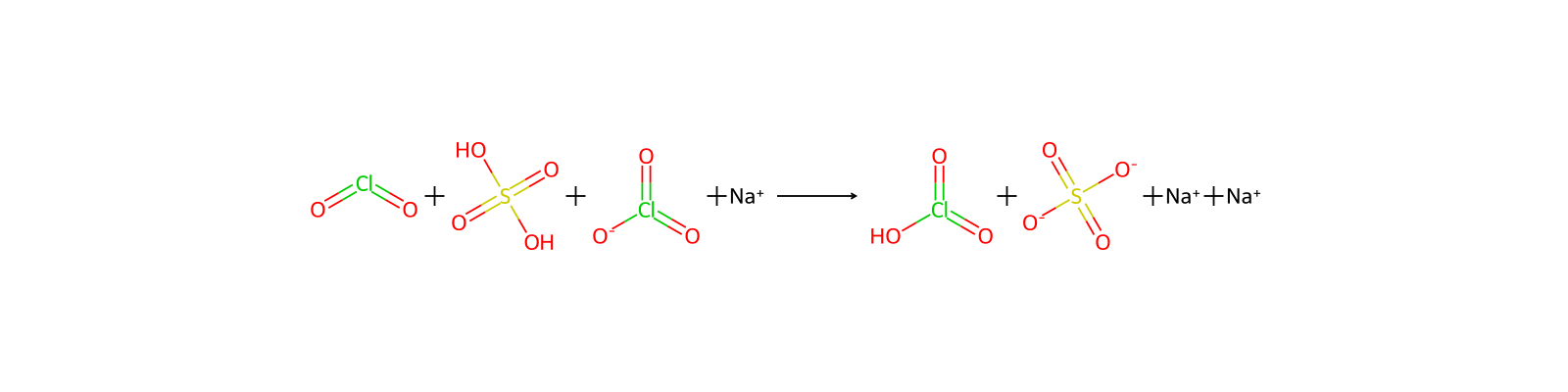
PreparationChlorine dioxide is prepared by passing nitrogen dioxide through sodium chlorate packed in a column: NaClO3 + NO2 → NaNO3 + ClO2 Also, it may be prepared by the reaction of chlorine with sodium chlorite: 2NaClO2 + Cl2 → 2ClO2 + 2NaClAlternatively, it may be obtained by the treatment of sodium chlorate or potassium chlorate with sulfur dioxide and sulfuric acid: 2NaClO3 + SO2 + H2SO4 → 2ClO2 + 2 NaHSO4.
Upstream & downstream products
Upstream raw materials
Downstream products
Suppliers50 total
Shandong chuangyingchemical Co., Ltd.18853181302 · [email protected]
南通润丰石油化工有限公司66017690 19952660367 · [email protected]
广州纳珑化工有限公司13192879270; 13192879270 · [email protected]
上海毕合生物化学技术有限公司13816464724 · [email protected]
武汉欣扬瑞和化学科技有限公司153-07155313 15307155313 · [email protected]
杭州品高化工有限公司0571-87658025 · [email protected]
济南榕鑫化工科技有限公司13365316808 15215418789 · [email protected]
武汉楚江浩宇化工科技发展有限公司027-85881289; 15871235046 · [email protected]
武汉零加一化工有限公司15972036926 15972036926 · [email protected]
武汉吉业升化工有限公司027-83360216 18040558719 · [email protected]
Hebei Yanxi Chemical Co., Ltd.+86-17531190177 · [email protected]
泰安市江舟生物科技有限公司0538-5948888 13854830759 · [email protected]
济南源茂化工有限公司15665725027 18854103888 · [email protected]
武汉吉业升化工有限公司15387013945 · [email protected]
江苏普乐司生物科技有限公司0513-66017706 18551496367 · [email protected]
武汉吉业升化工有限公司13545274181 · [email protected]
广东云星生物技术有限公司0751-18902340975/189023400307 18902340307 · [email protected]
山东晟腾化工有限公司13688633386 15866781319 · [email protected]
池州捷峰生物科技有限公司0566-8928158 · [email protected]
沈阳依莱普克斯化工有限公司024-31124838 15840046119
河北茹麒科技有限公司176-03256889 17603256889 · [email protected]
广东大小化工有限公司1866-171603 18666171603 · [email protected]
天津希恩思生化科技有限公司400 638 7771 · [email protected]
Xiamen AmoyChem Co., Ltd+86-86-5926051114 · [email protected]
Hebei Qige Biological Technology Co. Ltd+86 +8618733132031
艾科试剂4008-755-333 18080918076 · [email protected]
Shanghai Scibiotron Pharmaceutical Co., Ltd+86-16621589600 · [email protected]
上海遐瑞医药科技有限公司+86 21 61551611
北京京土恒盛化工科技有限公司00-13911456598 13911456598 · [email protected]
武汉吉业升化工有限公司15927657268 · [email protected]
北京环宇世纪化学科技有限公司hysj_bj.com
成都零六生物科技有限公司400-1166-196 13458535857 · [email protected]
康迪斯化工(湖北)有限公司13125172151 · [email protected]
成都润泽本土化工有限公司13096311329 028-88469284 616445927 · [email protected]
池州凯隆进出口贸易有限公司[email protected]
石家庄通洋进出口有限公司[email protected]
海南瀚海致远生物科技有限公司18171012772 · [email protected]
厦门志信化学有限公司+86-5922680277 +86-13806087780 · [email protected]
山东朴石新材料有限公司13105464419 13105464419 · [email protected]
武汉吉业升化工有限公司13343438917 · [email protected]
武汉吉业升化工有限公司15927120776 · [email protected]
湖北辰心化工有限公司17362916295
武汉吉业升化工有限公司15307169873 · [email protected]
湖北兴银河化工有限公司13437271305 · [email protected]
济南巨鑫邦仕新材料有限公司15154159039 15154159039 · [email protected]
河北克拉维尔生物科技有限公司19930503252 · [email protected]
河北克拉维尔生物科技有限公司19930508148 · [email protected]
山东西亚化学有限公司4009903999 13395398332 · [email protected]
深圳市森迪生物科技有限公司18126413629 0755-23311925 2355327053 · [email protected]
广东翁江化学试剂有限公司0751-2886750 13927877953 · [email protected]
Additional notes
DefinitionAn orange gas formed by the action of concentrated sulfuric acid on potassium chlorate. It is a powerful oxidizing agent and its explosive properties in the presence of a reducing agent were used to make one of the first matches. It is widely used in the purification of water and as a bleach in the flour and wood-pulp industry. On an industrial scale an aqueous solution of chlorine dioxide is made by passing nitrogen dioxide up a tower packed with a fused mixture of aluminum oxide and clay, down which a solution of sodium chlorate flows.
Definitionchlorine dioxide: A yellowish-redexplosive gas, ClO2; d. 3.09 g dm–3;m.p. –59.5°C; b.p. 9.9°C. It is solublein cold water but decomposed by hotwater to give chloric(VII) acid, chlorine,and oxygen. Because of its highreactivity, chlorine dioxide is bestprepared by the reaction of sodiumchlorate and moist oxalic acid at90°–100°C, as the product is then dilutedby liberated carbon dioxide.Commercially the gas is produced bythe reaction of sulphuric acid containingchloride ions with sulphurdioxide. Chlorine dioxide is widelyused as a bleach in flour milling andin wood pulping and also finds applicationin water purification.
Related reactions
3 records


Linked notes
Loading…