HomeMCPWorkbenchSkills
HomeWorkbenchNotificationsMe
llms.txt · MCP GuidePrivacy Policy · Terms of Service · Supportv1.8.3
  1. Home
  2. /Compound

4-Hydroxyphenylboronic acid

HCID 2734360
New reaction
Print
Basic informationNames & identifiersPropertiesSafety & regulationChemistry & industryRelated reactionsCompound notes
Substructure searchFind similar structures

Basic information

CAS
71597-85-8
Standard SMILES
OB(O)c1ccc(O)cc1
InChIKey
COIQUVGFTILYGA-UHFFFAOYSA-N
Molecular formula
C6H7BO3
Average molar mass
137.93 g/mol
Monoisotopic mass
138.0488242

Names & identifiers

Preferred name
4-Hydroxyphenylboronic acid
IUPAC
(4-hydroxyphenyl)boronic acid
English name
4-Hydroxyphenylboronic acid
Molecular formula
C6H7BO3
Molecular weight
137.93

Names & synonyms

4-Hydroxyphenylboronic acid71597-85-8(4-HYDROXYPHENYL)BORONIC ACIDDTXSID00370250RefChem:524064DTXCID40321286615-307-04-Hydroxybenzeneboronic Acid4-HydroxyphenylboronicacidMFCD01074628(P-HYDROXYPHENYL)BORONIC ACIDSCHEMBL8912
Show more names
ACF2AKOS BRN-0188RARECHEM AH PB 02224-Hydroxybenzeneboronic4-DIHYDROXYBORANYL-PHENOL4-Hydroxyphenylboronicaci
4-hydroxy phenyl boronic acid(4-hydroxyphenyl) boronic acid(4-hydroxyphenyl)-boronic acidCHEMBL3218996AKOS000285078Z3360800064-BoronophenolBoronic acid, (4-hydroxyphenyl)-

Database identifiers

CAS
71597-85-8
PubChem CID
2734360
DTXSID
DTXSID00370250
ChEMBL
CHEMBL3218996
UNII
U8AX2ASL53
EC Number
615-307-0
Nikkaji
J1.751.106H

Properties

Computed structural properties

Topological polar surface area
60.7 Ų
Hydrogen bond donors
3
Hydrogen bond acceptors
3
Rotatable bonds
1
Heavy atoms
10
Formal charge
0
Complexity
99.2

Physicochemical properties

Melting point
230 °C · >230 °C (lit.)
Boiling point
351.4 · 351.4±44.0 °C(Predicted)
Density
1.32 · 1.32±0.1 g/cm3(Predicted)
storage temp.
Inert atmosphere,Room Temperature
solubility
soluble in Acetonitrile, DMSO, Methanol
form
Powder
pka
9.09 · 9.09±0.10(Predicted)
color
Off-white to light brown
Water Solubility
25 g/L · 25 g/L
BRN
2963491 · 2963491
InChI
InChI=1S/C6H7BO3/c8-6-3-1-5(2-4-6)7(9)10/h1-4,8-10H
InChIKey
COIQUVGFTILYGA-UHFFFAOYSA-N
SMILES
B(C1=CC=C(O)C=C1)(O)O
CAS DataBase Reference
71597 · 71597-85-8(CAS DataBase Reference)
Comptox DTXSID
370250 · DTXSID00370250
UNSPSC Code
12352301 · 12352301
NACRES
22 · NA.22
Symbol(GHS)
7 · GHS07
Signal word
Warning
Hazard statements
315 · H315-H319
Precautionary statements
264 · P264-P280-P302+P352-P305+P351+P338-P332+P313-P337+P313
PPE
95 · dust mask type N95 (US), Eyeshields, Gloves
Hazard Codes
Xi,C
Risk Statements
36 · 36/37/38-34
Safety Statements
26 · 26-36-37/39-45-36/37/39-27
WGK Germany
3 · 3
TSCA
No
HS Code
2931900090 · 2931900090
HazardClass
IRRITANT
Storage Class
11 · 11 - Combustible Solids
Hazard Classifications
2 Skin · Eye Irrit. 2Skin Irrit. 2

Safety & regulation

Safety information is for reference only and does not replace the supplier’s Safety Data Sheet (SDS), applicable regulations, or professional assessment.

GHS classification

GHS Classification · 4 items

Warning

H315 (96.2%): Causes skin irritation [Warning Skin corrosion/irritation]

P261, P264, P264+P265, P271, P280, P302+P352, P304+P340, P305+P351+P338, P319, P321, P332+P317, P337+P317, P362+P364, P403+P233, P405, and P501 (click each P-code to see the statement)

Aggregated GHS information provided per 52 reports by companies from 9 notifications to the ECHA C&L Inventory. Each notification may be associated with multiple companies.

Hazard information

Hazard Classes and CategoriesSkin Irrit. 2 (96.2%)

Safety data

PPE
dust mask type N95 (US), Eyeshields, Gloves
wgk
3
tsca
No
hs_code
2931900090
risk_code
36/37/38-34
Signal word
Warning
Symbol(GHS)
GHS07
hazard_code
Xi,C
safety_code
26-36-37/39-45-36/37/39-27
hazard_class
IRRITANT
Storage Class
11 - Combustible Solids
Hazard statements
H315-H319
Hazard Classifications
Eye Irrit. 2Skin Irrit. 2
Precautionary statements
P264-P280-P302+P352-P305+P351+P338-P332+P313-P337+P313

Chemistry & industry

Applications · 2 items

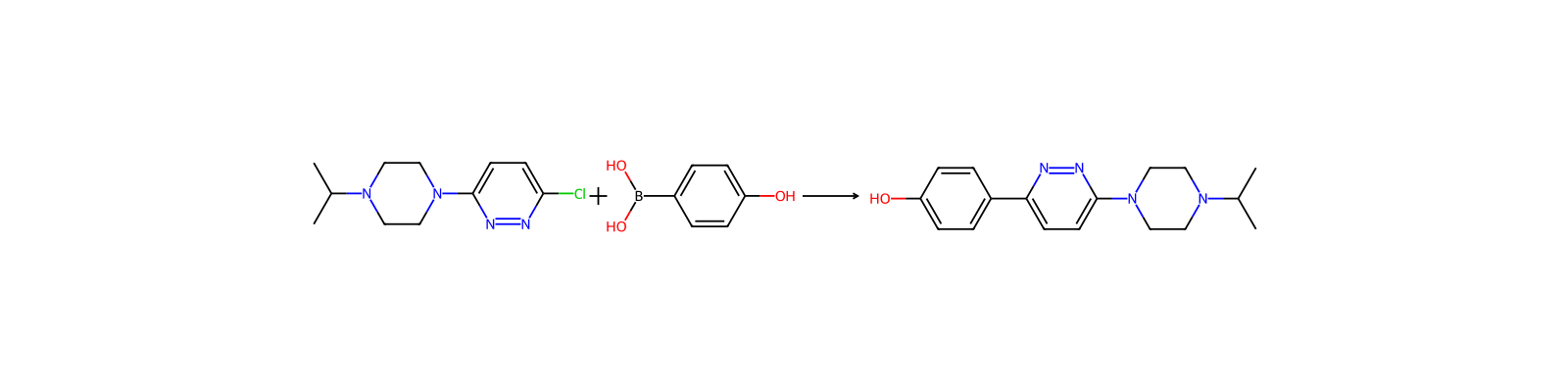
Uses4-Hydroxybenzeneboronic acid is used for Suzuki-Miyaura coupling and Stille coupling and potential for introducing different alkyl groups, palladium-catalyzed aminocarbonylation and cross-coupling reactions, bio-supported palladium nanoparticles as phosphine-free catalyst for Suzuki reaction in water and Cu2O-catalyzed aerobic oxidative cross-coupling of tetrazoles. It is also used in preparation of rod-like dendronized polymers.

Uses4-Hydroxyphenylboronic acid can be used as a reactant in:Suzuki-Miyaura coupling and Stille coupling reactions.Palladium-catalyzed aminocarbonylation and cross-coupling reactions. Suzuki reaction for preparation of bio-supported palladium nanoparticles as phosphine-free catalysts. Cu2O-catalyzed aerobic oxidative cross-coupling of tetrazoles. It can also be used to prepare/promote:PDK1 inhibitory activity (cancer cell growth, survival, and tumorigenesis inhibitor). Rod-like dendronized polymers containing G4 and G5 ester dendrons via macromonomer approach by living ROMP. Estrone-derived cyclopamine analogs as Sonic Hedgehog signaling inhibitors for anti-cancer chemotherapeutics. Enzymatic inhibitors for the treatment of Gram-negative bacterial infections. Oligoarenes by Suzuki-Miyaura palladium-catalyzed cross-coupling.

Upstream & downstream products

Upstream raw materials

Tetrahydrofuran4-BromophenolTriisopropyl boraten-ButyllithiumBoronic acid, B-[4-[[(4-methylphenyl)sulfonyl]oxy]phenyl]-4-Ethoxyphenylboronic acid4-Benzyloxybenzeneboronic acid1,4-Phenylenebisboronic acid(4-Bromophenoxy)trimethylsilane4-Acetoxyphenylboronic acid(4-Bromophenoxy)-tert-butyldimethylsilane

Downstream products

4-Hydroxyphenylboronic acid pinacol esterMethyl 4'-hydroxy[1,1'-biphenyl]-4-carboxylate4,4′-dihydroxydiphenyl disulfide4-(tert-Butyldimethylsilyloxy)phenylboronic acid4-Bromo-4'-hydroxybiphenyl4'-Hydroxy-4-biphenylcarbonitrile

Related reactions

282 records
New reaction record
HRID 20118 reaction equation
HRID 20118As reactant
HRID 38023 reaction equation
HRID 38023As reactant
HRID 71649 reaction equation
HRID 71649As reactant
HRID 76760 reaction equation
HRID 76760As reactant
HRID 80943 reaction equation
HRID 80943As reactant
HRID 82025 reaction equation
HRID 82025As reactant
HRID 82035 reaction equation
HRID 82035As reactant
HRID 82039 reaction equation
HRID 82039As reactant
PreviousPage 1 of 36

Compound notes

On this pageBasic informationNames & identifiersPropertiesSafety & regulationChemistry & industryRelated reactionsCompound notes