HomeMCPWorkbenchSkills
HomeWorkbenchNotificationsMe
llms.txt · MCP GuidePrivacy Policy · Terms of Service · Supportv1.8.3
  1. Home
  2. /Compound

5-fluoropyridine-2-carboxylic Acid

HCID 2762876
New reaction
Print
Basic informationNames & identifiersPropertiesSafety & regulationChemistry & industryRelated reactionsCompound notes
Substructure searchFind similar structures

Basic information

CAS
107504-08-5
Standard SMILES
O=C(O)c1ccc(F)cn1
InChIKey
JTKFIIQGMVKDNZ-UHFFFAOYSA-N
Molecular formula
C6H4FNO2
Average molar mass
141.1 g/mol
Monoisotopic mass
141.02260653

Names & identifiers

Preferred name
5-fluoropyridine-2-carboxylic Acid
IUPAC
5-fluoropyridine-2-carboxylic acid
English name
5-Fluoro-2-picolinic acid
Molecular formula
C6H4FNO2
Molecular weight
141.1

Names & synonyms

107504-08-55-fluoropyridine-2-carboxylic AcidDTXSID80376533RefChem:102662DTXCID40327561675-772-05-Fluoro-2-picolinic acid5-Fluoropicolinic acid5-FLUORO-2-PYRIDINECARBOXYLIC ACIDMFCD04114196SCHEMBL1101295-fluoropyridin-2-carboxylic acid
Show more names
EOS-605105-Fluoropicolinicaci5-Fluoropyridine-2-carboxylic2-carboxylate - 5-fluoropyridine5-Fluoropyrdine-2-carboxylic acid5-Fluoropyridin-2-ylpicolinicacid
5-Fluoro-2-pyridine carboxylic acidAB17969F08385-Fluoropyridine-2-carboxylic acid, AldrichCPR2-PYRIDINECARBOXYLIC ACID, 5-FLUORO-5-Fluoro-pyridine-2-carboxylic acidAM20061762JTKFIIQGMVKDNZ-UHFFFAOYSA-N

Database identifiers

CAS
107504-08-5
PubChem CID
2762876
DTXSID
DTXSID80376533
EC Number
675-772-0
Nikkaji
J3.119.898D

Properties

Computed structural properties

XLogP
0.8
Topological polar surface area
50.2 Ų
Hydrogen bond donors
1
Hydrogen bond acceptors
4
Rotatable bonds
1
Heavy atoms
10
Formal charge
0
Complexity
140

Physicochemical properties

Melting point
164 · 164-166℃
Boiling point
275.1 · 275.1±20.0 °C(Predicted)
Density
1.419 · 1.419±0.06 g/cm3(Predicted)
storage temp.
Keep in dark place,Sealed in dry,Room Temperature
solubility
soluble in Methanol
form
powder to crystal
pka
3.58 · 3.58±0.10(Predicted)
color
White to Light yellow to Light orange
InChI
InChI=1S/C6H4FNO2/c7-4-1-2-5(6(9)10)8-3-4/h1-3H,(H,9,10)
InChIKey
JTKFIIQGMVKDNZ-UHFFFAOYSA-N
SMILES
C1(C(O)=O)=NC=C(F)C=C1
CAS DataBase Reference
107504 · 107504-08-5(CAS DataBase Reference)
Comptox DTXSID
80376533 · DTXSID80376533
Symbol(GHS)
7 · GHS07
Signal word
Warning

Safety & regulation

Safety information is for reference only and does not replace the supplier’s Safety Data Sheet (SDS), applicable regulations, or professional assessment.

GHS classification

GHS Classification · 5 items

This chemical does not meet GHS hazard criteria for 10% (1 of 10) of reports.

Warning

H315 (90%): Causes skin irritation [Warning Skin corrosion/irritation]

P261, P264, P264+P265, P271, P280, P302+P352, P304+P340, P305+P351+P338, P319, P321, P332+P317, P337+P317, P362+P364, P403+P233, P405, and P501 (click each P-code to see the statement)

Aggregated GHS information provided per 10 reports by companies from 6 notifications to the ECHA C&L Inventory. Each notification may be associated with multiple companies.

Hazard information

Hazard Classes and CategoriesSkin Irrit. 2 (90%)

Safety data

hs_code
2933399090
Signal word
Warning
Symbol(GHS)
GHS07
hazard_code
Xi
hazard_class
IRRITANT
Hazard statements
H315-H319-H335
Precautionary statements
P261-P280a-P304+P340-P305+P351+P338-P405-P501a

Chemistry & industry

Applications · 1 item

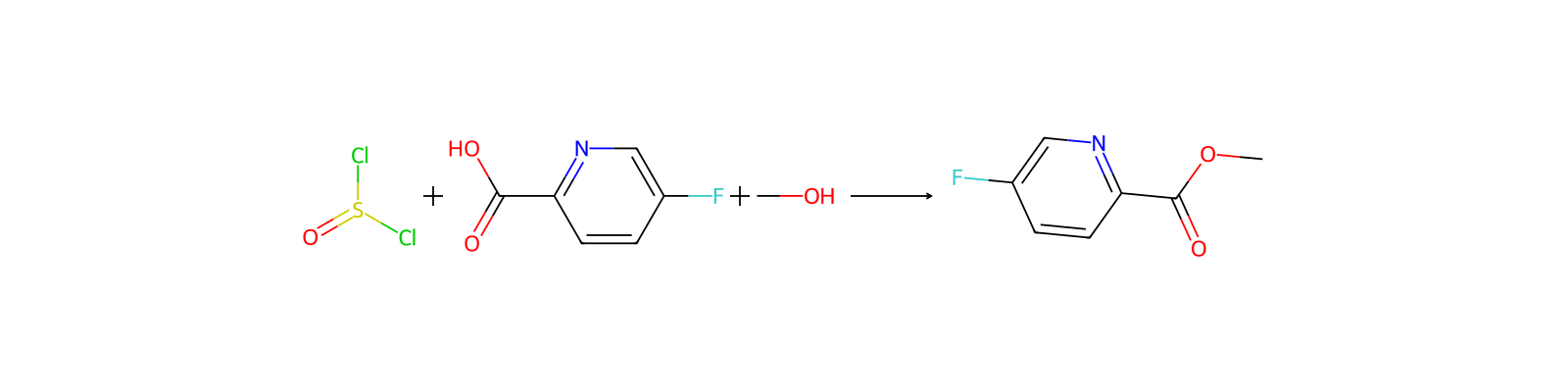
Uses5-Fluoro-2-pyridinecarboxylic acid, a common organic synthetic intermediate, is mainly used for the structural modification and derivatization of pyridine-containing drug molecules and bioactive molecules. The carboxyl group on the pyridine ring can be converted to an ester group, but acid-promoted esterification is generally not used. A more common approach is to first convert the carboxyl group to an acyl chloride using sulfoxide, followed by the addition of an alcohol to convert it to an ester group. Furthermore, the carboxyl group on this compound can also be converted to a trifluoromethyl group. Finally, the nitrogen atom on the pyridine ring can also be oxidized to nitrogen oxides.

Upstream & downstream products

Upstream raw materials

HexaneNitrogenAmmonium formate2,2,6,6-TetramethylpiperidineChlorotrimethylsilaneCarbon dioxide3-Fluoropyridine2-DimethylaminoethanolTetrahydrofuranHydrochloric acidMethanol1,1,2-TrichlorotrifluoroethaneTetrabutylammonium FluorideHEAVY DISTILLATE

Related reactions

487 records
New reaction record
HRID 68554 reaction equation
HRID 68554As reactant
HRID 77578 reaction equation
HRID 77578As reactant
HRID 77585 reaction equation
HRID 77585As reactant
HRID 102421 reaction equation
HRID 102421As product
HRID 130829 reaction equation
HRID 130829As product
HRID 130830 reaction equation
HRID 130830As reactant
HRID 169487 reaction equation
HRID 169487As product
HRID 179267 reaction equation
HRID 179267As reactant
PreviousPage 1 of 61

Compound notes

On this pageBasic informationNames & identifiersPropertiesSafety & regulationChemistry & industryRelated reactionsCompound notes
Hazard statements
315 · H315-H319-H335
Precautionary statements
261 · P261-P280a-P304+P340-P305+P351+P338-P405-P501a
Hazard Codes
Xi
HazardClass
IRRITANT
HS Code
2933399090 · 2933399090
n-Butyllithium

Downstream products

5-Fluoro-2-hydroxymethyl pyridine5-Fluoro-2-(trifluoromethyl)pyridineEthyl 5-fluoropyridine-2-carboxylate