

Basic information
- Standard SMILES
O=[N+]([O-])c1cccc(S(=O)(=O)[O-])c1.[Na+]- InChIKey
LJRGBERXYNQPJI-UHFFFAOYSA-M- Molecular formula
- C6H4NNaO5S
- Average molar mass
- 225.16 g/mol
- Monoisotopic mass
- 224.97078751
Overview
The CIR Expert Panel concludes that the data available on Sodium m-Nitrobenzenesulfonate are insufficient to support the safety of this ingredient as used in cosmetic products.
Names & identifiers
- Preferred name
- Sodium 3-nitrobenzenesulfonate
- IUPAC
- sodium 3-nitrobenzenesulfonate
- English name
- Sodium 3-nitrobenzenesulphonate
- Molecular formula
- C6H4NNaO5S
- Molecular weight
- 225.15
Names & synonyms
127-68-4SODIUM 3-NITROBENZENESULFONATE3-Nitrobenzenesulfonic acid sodium saltSodium m-nitrobenzenesulfonateTiskan [Czech]LudigolNacanLudigol F,60TiskanBenzenesulfonic acid, 3-nitro-, sodium saltDTXSID20270483-Nitrobenzenesulfonic acid, sodium salt
Show more names
RESIST SALT3-Nitrobenzenesulfonate3-nitrobenzenesulphonateM-nitrobenzene sodiuM sulphonatesodium 3-nitrobenzene-1-sulfonate
HSDB 5614m-Nitrobenzenesulfonic acid, sodium saltNSC 9795EINECS 204-857-3Nitrobenzen-m-sulfonan sodnyUNII-1F11SXJ4C6Nitrobenzen-m-sulfonan sodny [Czech]m-Nitrobenzenesulfonic acid sodium salt
Database identifiers
- CAS
127-68-4- PubChem CID
- 31389
- DTXSID
DTXSID2027048- ChEMBL
CHEMBL3188704- UNII
- 1F11SXJ4C6
- EC Number
- 204-857-3
Properties
Computed structural properties
- Topological polar surface area
- 111 Ų
- Hydrogen bond donors
- 0
- Hydrogen bond acceptors
- 5
- Rotatable bonds
- 0
- Heavy atoms
- 14
- Formal charge
- 0
- Complexity
- 274
Experimental & physicochemical properties
Chemical ClassesNitrogen Compounds -> Nitrobenzesulfonic Acids
Cosmetics
Cosmetic ingredients (Sodium m-Nitrobenzenesulfonate) -> CIR (Cosmetic Ingredient Review)
Viscosity controlling
Melting Point350 °C
Physical Description
Other Solid; Dry Powder; Large Crystals; Dry Powder; Large Crystals; Liquid; Other Solid
Solid; [IUCLID] Slightly yellow powder; [MSDSonline]
Physicochemical properties
- Melting point
- 350 °C · 350 °C
- Boiling point
- 217.5 °C · 217.5°C
- Density
- 0.45 g/cm3 · 0.45 g/cm3 (20 °C)
- bulk density
- 450 kg/m3 · 450kg/m3
- vapor pressure
- 10.3 Pa · 10.3Pa at 25℃
- Flash point
- 100 °C · 100 °C
- storage temp.
- 30 °C · Store below +30°C.
- solubility
- 50 mg/mL, · water: soluble50mg/mL, clear to slightly hazy, faintly yellow to yellow
- form
- Crystalline Powder
- pka
- 0 · 0[at 20 ℃]
- color
- Light yellow
- PH
- 8 · 8 (50g/l, H2O, 23℃)
- Water Solubility
- 200 g/L · 200 g/L (20 ºC)
- Sensitive
- Hygroscopic
- BRN
- 3639982 · 3639982
- Stability
- Stable. Hygroscopic. Incompatible with strong oxidizing agents.
- Cosmetics Ingredients Functions
- VISCOSITY CONTROLLING
- InChI
- 1S/C6H5NO5S.Na/c8-7(9)5-2-1-3-6(4-5)13(10,11)12;/h1-4H,(H,10,11,12);/q;+1/p-1
- InChIKey
- LJRGBERXYNQPJI-UHFFFAOYSA-M
- SMILES
- [Na+].[O-][N+](=O)c1cccc(c1)S([O-])(=O)=O
- LogP
- -2.61 at · -2.61 at 25℃
- CAS DataBase Reference
- 127 · 127-68-4(CAS DataBase Reference)
- EWG's Food Scores
- 2 · 2-3
- FDA UNII
- 1 F11SXJ4C6 · 1F11SXJ4C6
- EPA Substance Registry System
- 3 · Sodium 3-Nitrobenzenesulfonate (127-68-4)
- UNSPSC Code
- 12352107 · 12352107
- NACRES
- 22 · NA.22
- Symbol(GHS)
- 7 · GHS07
- Signal word
- Warning
- Hazard statements
- 317 · H317-H319
- Precautionary statements
- 280 · P280-P302+P352-P305+P351+P338
- PPE
- 95 · dust mask type N95 (US), Eyeshields, Faceshields, Gloves
- Hazard Codes
- Xi
- Risk Statements
- 36 · 36-43
- Safety Statements
- 24 · 24-26-37
- WGK Germany
- 1 · 1
- RTECS
- 7195000 · DB7195000
- Autoignition Temperature
- 355 °C · 355 °C
- TSCA
- TSCA listed
- HS Code
- 29049085 · 29049085
- Storage Class
- 11 · 11 - Combustible Solids
- Hazard Classifications
- 2 Skin · Eye Irrit. 2Skin Sens. 1
- Hazardous Substances Data
- 127 · 127-68-4(Hazardous Substances Data)
- Toxicity
- 50 orally · LD50 orally in Rabbit: > 2000 mg/kg
- REACH Registrations
- Active
Safety & regulation
GHS classification
GHS Classification
Warning
H317: May cause an allergic skin reaction [Warning Sensitization, Skin]
P261, P264+P265, P272, P280, P302+P352, P305+P351+P338, P321, P333+P317, P337+P317, P362+P364, and P501 (click each P-code to see the statement)
This chemical does not meet GHS hazard criteria for 7.5% (54 of 724) of reports.
Warning
H317 (92.5%): May cause an allergic skin reaction [Warning Sensitization, Skin]
Hazard information
Regulatory Information
Chemical: Benzenesulfonic acid, 3-nitro-, sodium salt
Benzenesulfonic acid, 3-nitro-, sodium salt (1:1) is listed on the EPA's Chemical Data Reporting (CDR) system. Manufacturers and importers of Benzenesulfonic acid, 3-nitro-, sodium salt (1:1) are required to report information about their production and use of this chemical to the EPA under the Toxic Substances Control Act (TSCA). (40 eCFR Part 711)
Status: Active Update: 09-06-2022 https://echa.europa.eu/registration-dossier/-/registered-dossier/15792
3-Nitrobenzenesulphonic acid sodium salt: Does not have an individual approval but may be used under an appropriate group standard
Hazards SummaryMay cause skin sensitization after prolonged contact, based on animal studies; [IUCLID] An eye irritant; May cause skin sensitization; [MSDSonline]
Hazard Classes and Categories
Skin Sens. 1 (92.5%)
Eye irritation - category 2
Serious eye damage/eye irritation - Category 2
Eye Irrit. 2
Safety & protection
Protective Action Criteria (PAC)
33 [mg/m3]
360 [mg/m3]
2200 [mg/m3]
Toxicology
Toxicity Summary
The CIR Expert Panel concludes that the data available on Sodium m-Nitrobenzenesulfonate are insufficient to support the safety of this ingredient as used in cosmetic products.
Ingredients for which the data are insufficient and their use in cosmetics is not supported
Toxicity DataLC50 (rat) > 5,100 mg/m3/4h
Safety data
- PPE
- dust mask type N95 (US), Eyeshields, Faceshields, Gloves
- wgk
- 1
- tsca
- TSCA listed
- rtecs
- DB7195000
- hs_code
- 29049085
- Toxicity
- LD50 orally in Rabbit: > 2000 mg/kg
- risk_code
- 36-43
- Signal word
- Warning
- Symbol(GHS)
- GHS07
- hazard_code
- Xi
- safety_code
- 24-26-37
- Storage Class
- 11 - Combustible Solids
- Hazard statements
- H317-H319
- REACH Registrations
- Active
- Hazard Classifications
- Eye Irrit. 2Skin Sens. 1
- Autoignition Temperature
- 355 °C
- Precautionary statements
- P280-P302+P352-P305+P351+P338
- Hazardous Substances Data
- 127-68-4(Hazardous Substances Data)
Chemistry & industry
Uses & manufacturing
Uses
CIR ingredient: Sodium m-Nitrobenzenesulfonate
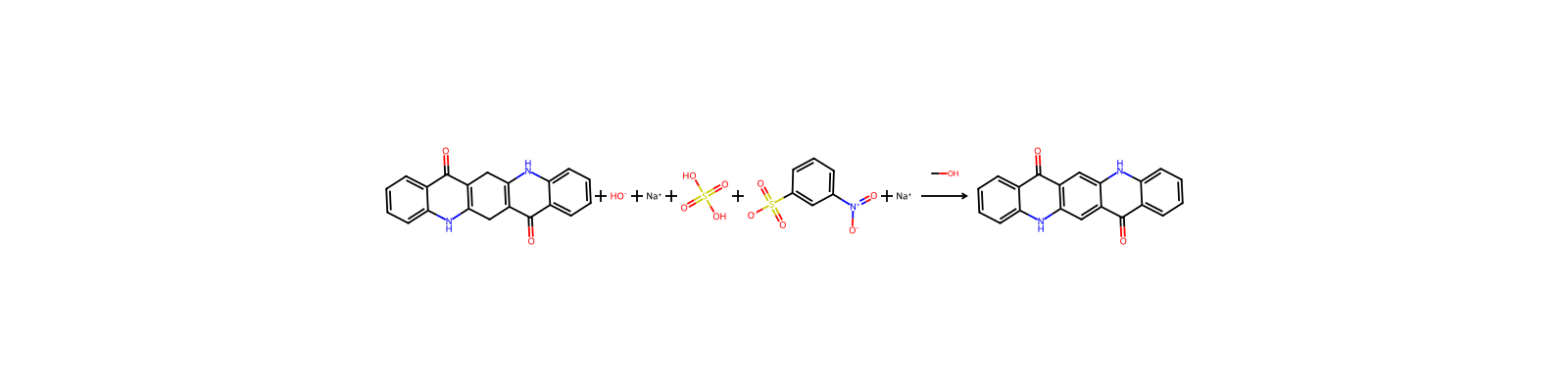
Used as antireduction agent; [HSDB] Used in chemical, electrical/electronics, photographic, and textile processing industries (coloring, electroplating, fixing, oxidizing, and surface-active agent); [IUCLID]
Electroplating [Category: Plate]
ANTIREDUCTION AGENT
U.S. Production2023: 1,000,000 - <2,500,000 lb
Consumer UsesCatalyst
Industry UsesPlating agent
Use ClassificationCosmetics -> Viscosity controlling
General Manufacturing Information
Paint and Coating Manufacturing
Benzenesulfonic acid, 3-nitro-, sodium salt (1:1): ACTIVE
Applications
UsesSodium 3-nitrobenzenesulfonate is a reagent in the synthesis of azetidinyl ketolides for treatment of susceptible and multidrug resistant community-acquired respiratory tract infections.
Upstream & downstream products
Upstream raw materials
Downstream products
Suppliers50 total
国药集团化学试剂有限公司86-21-63210123 · [email protected]
梯希爱(上海)化成工业发展有限公司021-67121386 · [email protected]
衢州润东化工有限公司0570-8789886 18892685668 · [email protected]
上海阿拉丁生化科技股份有限公司400-6206333 13167063860 · [email protected]
上海如吉生物科技发展有限公司+86-21-65211385-8001 36031160 · [email protected]
浙江新海天生物科技有限公司008615925805416 · [email protected]
Syntechem Co.,Ltd[email protected]
阿法埃莎(中国)化学有限公司400-6106006 · [email protected]
安耐吉化学&3A(安徽泽升科技股份有限公司)400-0056266 · [email protected]
上海瀚鸿科技股份有限公司021-54306202 13764082696 · [email protected]
上海柯维化学技术有限公司021-64609169 18901607656 · [email protected]
上海景颜化工科技有限公司13817811078 · [email protected]
武汉赛沃尔化工有限公司027-85613400 18707177243 · [email protected]
山东西亚化学有限公司13355009207 13355009207 · [email protected]
唐山默内德贸易有限公司0315-8309571 15633399667 · [email protected]
玛雅试剂+86 (573) 82222445 (0)18006601000 452520369 · [email protected]
四川库利南科技有限公司400-1166-196 18981987031 · [email protected]
天津希恩思生化科技有限公司400 638 7771 · [email protected]
湖南汇百侍生物科技有限公司0731-85526065 13308475853 · [email protected]
斯百全化学(上海)有限公司021-021-021-67601398-809-809-809 15221380277 · [email protected]
北京泰亚杰科技有限公司021-33690831-8001 13552411790;18616022633 · [email protected]
艾科试剂4008-755-333 18080918076 · [email protected]
上海思域化工科技有限公司86-21-34053660 · [email protected]
赛默飞世尔科技(中国)有限公司800-810-5118 · [email protected]
上海特伯化学科技有限公司+86-21-60341587 · [email protected]
江苏艾康生物医药研发有限公司025-66113011 13913916777 · [email protected]
上海健超生物科技有限公司150-2103-5486 18017383231 · [email protected]
TCI AMERICA800-4238616 · [email protected]
TOKYO CHEMICAL INDUSTRY CO., LTD.03-36680489 · [email protected]
TCI Europe320-37350700 · [email protected]
南京杜莱生物技术有限公司025-84699383-8003;025-846993838003-8003 18013301590 · [email protected]
重庆卡兰医药有限公司023-62879767 · [email protected]
北京环宇世纪化学科技有限公司hysj_bj.com
上海将来实业股份有限公司400-0066400 13621662912 · [email protected]
上海将来实业股份有限公司021-61552785 · [email protected]
安徽科迪达化工有限公司0554-2106669 · [email protected]
HBCChem, Inc.+1-510-219-6317 · [email protected]
日照力德士化工有限公司010-51268198 · [email protected]
美岚实业(上海)有限公司021-58958189 · [email protected]
上海爱蝶实业有限公司021-58957966 18930537195 · [email protected]
成都零六生物科技有限公司400-1166-196 13458535857 · [email protected]
广拓化学(上海)有限公司021-60899189-8001 18918189673 · [email protected]
上海御略医药科技有限公司021-60345187 13671753212 · [email protected]
上海麦克林生化科技股份有限公司15221275939 15221275939 · [email protected]
杭州杰恒化工有限公司0571-87396432 · [email protected]
上海有朋化工有限公司021-69005955 13701776567 · [email protected]
北京海力扬化学科技有限公司13718199399 · [email protected]
四川海诺威科技有限公司13708085536 13708085536 · [email protected]
上海凯赛化工有限公司021-33516722 13701817765 · [email protected]
上海彤源化工有限公司021-021-69182866 13701855675 · [email protected]
Related reactions
113 records




Linked notes
Loading…