
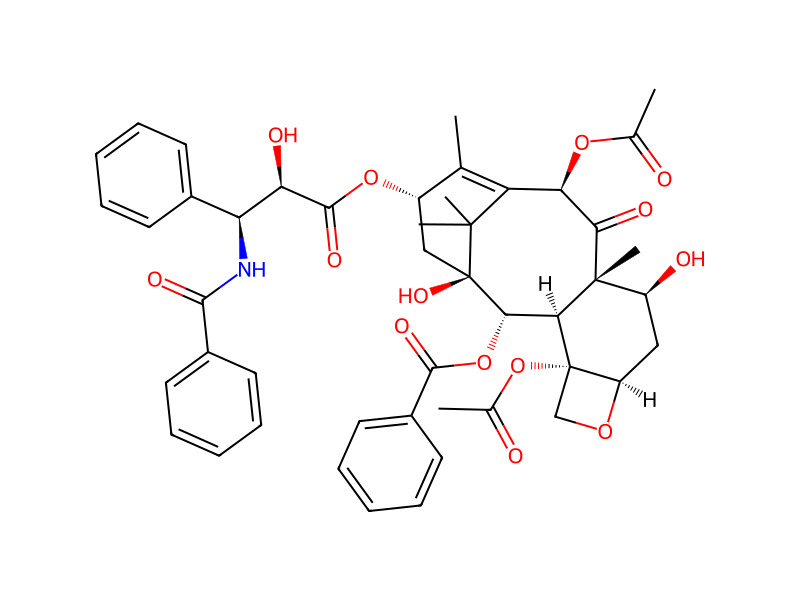
Basic information
- Standard SMILES
CC(=O)O[C@H]1C(=O)[C@@]2(C)[C@H]([C@H](OC(=O)c3ccccc3)[C@]3(O)C[C@H](OC(=O)[C@H](O)[C@@H](NC(=O)c4ccccc4)c4ccccc4)C(C)=C1C3(C)C)[C@]1(OC(C)=O)CO[C@@H]1C[C@@H]2O- InChIKey
RCINICONZNJXQF-MZXODVADSA-N- Molecular formula
- C47H51NO14
- Average molar mass
- 853.9 g/mol
- Monoisotopic mass
- 853.33095531
Overview
Paclitaxel can cause developmental toxicity, female reproductive toxicity and male reproductive toxicity according to state or federal government labeling requirements.
Names & identifiers
- Preferred name
- Paclitaxel
- IUPAC
- [(1S,2S,3R,4S,7R,9S,10S,12R,15S)-4,12-diacetyloxy-15-[(2R,3S)-3-benzamido-2-hydroxy-3-phenylpropanoyl]oxy-1,9-dihydroxy-10,14,17,17-tetramethyl-11-oxo-6-oxatetracyclo[11.3.1.03,10.04,7]heptadec-13-en-2-yl] benzoate
- English name
- Paclitaxel
- Molecular formula
- C47H51NO14
- Molecular weight
- 853.92
Names & synonyms
paclitaxel33069-62-4TAXOLYewtaxanTaxol APlaxicelGenaxolGenetaxylEbetaxelCapxolPaxeneOncoGel
Show more names
BACCATIN IIIAbraxanePaclitaxe5β,20-Epoxy-1,7β-dihydroxy-9-oxotax-11-ene-2α,4,10β,13α-tetrayl 4,10-diacetate 2-benzoate 13-[(2R,3S)-3-(benzoylamino)-2-hydroxy-3-phenylpropanoate][2aR-[2aα,4β,4aβ,6α,9α(αR*,βS*),11α,12α,12aα,12bα]]-β-(Benzoylamino)-α-hydroxy-6,12b-bis(acetyloxy)-12-(benzoyloxy)-2a,3,4,4a,5,6,9,10,11,12,12,12b-dodecahydro-4,11-dihydroxy-4a,8,13,13-tetramethyl-5-oxo-7,11-methano-1H-cyclodeca[3,4]benz[1,2-b]oxet-9-ylesterbenzenepropanoicacid6,12b-bis(acetyloxy)-12-(benzoyloxy)-2a,3,4,4a,5,6,9,10,11,12,12a,12b-dodecahydro-4,11-dihydroxy-4a,8,13,13-tetramethyl-5-oxo-7,11-methano-1H-cyclodeca[3,4]benz[1,2-b]oxet-9-ylester, (αR, βS)-αR-hydroxy-βS-(benzoylamino)-benzenepropanoic acid, (2aR,4S,4aS,6R,9S,11S,12S,12aR,12bS)-6,12b-bis(acetyloxy)-12-(benzoyloxy)-2a,3,4,4a,5,6,9,10,11,12,12a,12b-dodecahydro-4,11-dihydroxy-4a,8,13,13-tetramethyl-5-oxo-7,11-methano-1H-cyclodeca[3,4]benz[1,2-b]oxet-9-yl esterBenzenepropanoic acid, β-(benzoylamino)-α-hydroxy-, (2aR,4S,4aS,6R,9S,11S,12S,12aR,12bS)-6,12b-bis(acetyloxy)-12-(benzoyloxy)-2a,3,4,4a,5,6,9,10,11,12,12a,12b-dodecahydro-4,11-dihydroxy-4a,8,13,13-tetramethyl-5-oxo-7,11-methano-1H-cyclodeca[3,4]benz[1,2-b]oxet-9-yl ester, (αR,βS)-TAXUS
GenexolIntaxelMitotaxPacliexOnxolTaxAlbinCyclopaxPaxceed
Database identifiers
- CAS
33069-62-4- PubChem CID
- 36314
- DTXSID
DTXSID9023413- ChEMBL
CHEMBL428647- ChEBI
CHEBI:45863- UNII
- P88XT4IS4D
- EC Number
- 608-826-9
- Nikkaji
- J17.834I
Properties
Computed structural properties
- XLogP
- 2.5
- Topological polar surface area
- 221 Ų
- Hydrogen bond donors
- 4
- Hydrogen bond acceptors
- 14
- Rotatable bonds
- 14
- Heavy atoms
- 62
- Formal charge
- 0
- Complexity
- 1,790
Experimental & physicochemical properties
Chemical ClassesOther Uses -> Biochemical Research
Drugs
Pharmaceuticals -> Antibiotics
Pharmaceuticals -> Listed in ZINC15
LogP
3
4.5
Color/Form
White to off-white crystalline powder
Needles from aqueous methanol
Solubility
Insoluble
Insoluble in water
5.56e-03 g/L
Human Drugs
Breast Feeding; Lactation; Milk, Human; Antineoplastic Agents, Phytogenic; Antimitotic Agents; Tubulin Modulators
FDA approved drugs -> Active ingredient
EMA approved medicines: Human medicine
EMA approved medicines: Human medicine
EMA approved medicines: Human medicine
EMA approved medicines: Human medicine
Melting Point
415 to 421 °F (NTP, 1992)
216-217 °C
213-216 °C (decomposition)
213 - 216 °C
Optical Rotation
Specific optical rotation: -49 deg at 20 °C/D (methanol); UV max absorption 2 (methanol): 227, 273, nm (E= 29,800,1700)
(c = 1, MeOH) [a]20D = -53 +- 20 degrees
Physical Description
Taxol appears as needles (from aqueous methanol) or fine white powder. An anti-cancer drug.
Solid; [Merck Index] White to off-white solid; [HSDB] Powder; [Sigma-Aldrich MSDS]
Solid
Stability/Shelf Life
Bulk: Bulk samples stored at room temperature for 30 days showed no TLC or HPLC decomposition as indicated by UV absorption The bulk compound stored at 60 oC for three weeks also showed no decomposition After four weeks very minor decomposition was detected by TLC Ultraviolet Absorption : (MeOH) max = 227 2nm E = 28,500 - 30,900 High Performance Liquid Chromatography : Column: IBM ODS, 5um 46 x 250mm Mobile Phase: 63% MeOH/37% water Flow Rate: 1.0 mL/min Detection: UV at 230 nm Sample Preparation: Dissolve approximately 6 mg sample in 10 mL methanol Mix 1 mL of this solution with 1 mL of internal standard solution Internal Standard: 20 mg Paraben in 25 mL methanol Retention Volume: 19.3 mL (NSC 125973) 7.7 mL (I.S.)
Other Experimental PropertiesClear colorless to slightly yellow viscous solution /Paclitxel Injection USP/
Physicochemical properties
- Melting point
- 213 °C · 213 °C (dec.)(lit.)
- alpha
- 20 · D20 -49° (methanol)
- Boiling point
- 774.66 °C · 774.66°C (rough estimate)
- Density
- 0.2 · 0.200
- refractive index
- -49 ° · -49 ° (C=1, MeOH)
- Flash point
- 9 ℃ · 9℃
- storage temp.
- 2 · 2-8°C
- solubility
- 50 mg/mL, · methanol: 50 mg/mL, clear, colorless
- form
- powder
- pka
- 11.9 · 11.90±0.20(Predicted)
- color
- white
- Water Solubility
- 0.3 mg/L · 0.3mg/L(37 ºC)
- λmax
- 227 nm · 227nm(MeOH)(lit.)
- Merck
- 14 · 14,6982
- BRN
- 1420457 · 1420457
- Stability
- Stable. Incompatible with strong oxidizing agents. Combustible.
- InChIKey
- RCINICONZNJXQF-MZXODVADSA-N
- SMILES
- N([C@H]([C@@H](O)C(=O)O[C@H]3C[C@]4([C@H](C6[C@]7([C@H](OC7)C[C@@H]([C@]6(C(=O)[C@@H](C(=C3C)C4(C)C)OC(=O)C)C)O)OC(=O)C)OC(=O)c5ccccc5)O)c2ccccc2)C(=O)c1ccccc1
- LogP
- 3.95 · 3.950 (est)
- CAS DataBase Reference
- 33069 · 33069-62-4(CAS DataBase Reference)
- NCI Dictionary of Cancer Terms
- -7 · ABI-007; Abraxane; paclitaxel
- FDA UNII
- 88 XT4IS4D · P88XT4IS4D
- NCI Drug Dictionary
- Abraxane
- ATC code
- 1 CD01 · L01CD01
- Proposition 65 List
- Paclitaxel
- EPA Substance Registry System
- Paclitaxel (33069-62-4)
- UNSPSC Code
- 41116107 · 41116107
- NACRES
- 77 · NA.77
- Protein binding
- 89 · 89-98%
- Excreted unchanged in urine
- 1.3 · 1.3-12.6%
- Volume of distribution
- 227 · 227-688 Litres/m2(L/kg)
- Biological half-life
- 3 · 3-52.7 (Abraxane: 13-27) / -
- Symbol(GHS)
- 5 · GHS05,GHS07,GHS08
- Signal word
- Danger
- Hazard statements
- 315 · H315-H317-H318-H334-H335-H340-H360D-H372
- Precautionary statements
- 202 · P202-P260-P280-P302+P352-P305+P351+P338-P308+P313
- Hazard Codes
- Xn
- Risk Statements
- 37 · 37/38-41-42/43-62-68-40-48-20/21/22-68/20/21/22
- Safety Statements
- 22 · 22-26-36/37/39-45
- RIDADR
- 1544 · 1544
- WGK Germany
- 3 · 3
- RTECS
- 8340700 · DA8340700
- F
- 10 · 10-21
- HazardClass
- 6.1 · 6.1(b)
- PackingGroup
- III
- HS Code
- 29329990 · 29329990
- Storage Class
- 6.1 C · 6.1C - Combustible, acute toxic Cat.3toxic compounds or compounds which causing chronic effects
- Hazard Classifications
- 2 Repr · Muta. 2Repr. 1BSTOT RE 2
- Hazardous Substances Data
- 33069 · 33069-62-4(Hazardous Substances Data)
- Toxicity
- 50 intraperitoneal · LD50 intraperitoneal in mouse: 128mg/kg
Safety & regulation
GHS classification
GHS Classification
Danger
H315 (87.5%): Causes skin irritation [Warning Skin corrosion/irritation]
P203, P233, P260, P261, P264, P264+P265, P270, P271, P272, P273, P280, P284, P302+P352, P304+P340, P305+P354+P338, P317, P318, P319, P321, P332+P317, P333+P317, P342+P316, P362+P364, P403, P403+P233, P405, and P501 (click each P-code to see the statement)
Aggregated GHS information provided per 256 reports by companies from 27 notifications to the ECHA C&L Inventory. Each notification may be associated with multiple companies.
Hazard information
Regulatory InformationHazard Traits - Developmental Toxicity; Reproductive Toxicity
DOT LabelPoison
Fire HazardsFlash point data for this chemical are not available. It is probably combustible. (NTP, 1992)
Health HazardsExcerpt from ERG Guide 154 [Substances - Toxic and/or Corrosive (Non-Combustible)]:
Hazards Summary
An irritant that may cause serious eye injury; May cause skin and respiratory sensitization; May cause liver and kidney injury and bone depression; Suspected mutagen and of being toxic to fertility or the developing child; [Sigma-Aldrich MSDS]
Reactive GroupAlcohols and Polyols
Special Reports
Chem & Eng News 70 (41): 30-2 (1992); A discussion concerning the development and synthesis of taxol, a new antitumor drug.
Van Ingen G et al; Sudden Unexpected Death Due to Taxus Poisoning: A report of five cases, with review of the literature. Forensic Sci Int 56 (1): 81-7 (1992). The clinical and autopsy findings are summarized, the diagnostic aspects are discussed and the literature concerning Taxus is reviewed.
Correia JJ; Effects of Antimitotic Agents on Tubulin Nucleotide Interactions. Pharmacol Ther 52 (2): 127-47 (1991). The interaction of antimitotic drugs with guanine nucleotides in the tubulin-microtubule system is reviewed. Taxol stoichiometrically induces microtubule formation and, in the presence of guanosine triphosphate, assembly associated guanosine triphosphate hydrolysis.
Air and Water ReactionsMay be sensitive to prolonged exposure to moisture. (NTP, 1992).
Hazard Classes and CategoriesSkin Irrit. 2 (87.5%)
Shipment Methods and Regulations
/PRECAUTIONS FOR ANTINEOPLASTIC AGENTS:/ Methods for transporting hazardous drugs to the health-care setting should be consistent with environmental protection and national or local regulations for transporting hazardous substances. When hazardous drugs are being transported to the home-care setting, appropriate containers (eg, lined cardboard boxes) and procedures should be used to prevent breakage and contain leakage. ... The drugs must be securely capped or sealed and properly packaged and protected during transport to reduce further the chance of breakage and spillage in a public area such as a corridor or elevator. /Antineoplastic agents/
Safety & protection
Fire FightingFires involving this material can be controlled with a dry chemical, carbon dioxide, or Halon extinguisher. (NTP, 1992)
First Aid
EYES: First check the victim for contact lenses and remove if present. Flush victim's eyes with water or normal saline solution for 20 to 30 minutes while simultaneously calling a hospital or poison control center. Do not put any ointments, oils, or medication in the victim's eyes without specific instructions from a physician. IMMEDIATELY transport the victim after flushing eyes to a hospital even if no symptoms (such as redness or irritation) develop.
Storage Conditions
Commercially available albumin-bound paclitaxel for injectable suspension should be stored in unopened vials at 20-25 °C and retained in the original package for protection from bright light. Neither freezing nor refrigeration adversely affects albumin-bound paclitaxel for injectable suspension. When stored under recommended conditions, unopened vials of commercially available albumin-bound paclitaxel for injectable suspension are stable until the date indicated on the package. /Paclitaxel (albumin-bound)/
The manufacturer states that, when diluted as directed, paclitaxel solutions are stable for up to 27 hours when stored at approximately 25 °C under ambient lighting conditions.
Commercially available paclitaxel for injection concentrate should be stored in unopened vials at 20-25 °C and retained in the original package for protection from light. Neither freezing nor refrigeration adversely affects paclitaxel for injection concentrate. Refrigeration may result in precipitation of the drug or formulation vehicle; however, the precipitate typically will dissolve at room temperature without loss of potency. If freezing occurs, paclitaxel for injection concentrate may be thawed at room temperature until precipitate dissolves; the manufacturer states that the chemical or physical stability of the injection is not affected. If the solution remains cloudy or if an insoluble precipitate remains at room temperature, the vial should be discarded. When stored under recommended conditions, unopened vials of commercially available paclitaxel for injection concentrate are stable until the date indicated on the package.
Nonfire Spill Response
SMALL SPILLS AND LEAKAGE: If you spill this chemical, you should dampen the solid spill material with water, then transfer the dampened material to a suitable container. Use absorbent paper dampened with water to pick up any remaining material. Seal your contaminated clothing and the absorbent paper in a vapor-tight plastic bag for eventual disposal. Wash all contaminated surfaces with a soap and water solution. Do not reenter the contaminated area until the Safety Officer (or other responsible person) has verified that the area has been properly cleaned.
Disposal Methods
SRP: At the time of review, criteria for land treatment or burial (sanitary landfill) disposal practices are subject to significant revision. Prior to implementing land disposal of waste residue (including waste sludge), consult with environmental regulatory agencies for guidance on acceptable disposal practices.
/PRECAUTIONS FOR ANTINEOPLASTIC AGENTS:/ All contaminated disposables should be contained in sealable bags for transfer to larger waste containers. /Antineoplastic agents/
/PRECAUTIONS FOR ANTINEOPLASTIC AGENTS:/ All bottles must be discarded as contaminated waste after decontamination of the biohazard cabinet. All protective apparel (gown, gloves, goggles, and respirator) should be discarded as contaminated waste. /Antineoplastic agents/
/PRECAUTIONS FOR ANTINEOPLASTIC AGENTS:/ The contaminated filters must be removed, bagged in thick plastic and prepared for disposal in a hazardous waste dump site or incinerator licensed by the Environmental Protection Agency (EPA). /Antineoplastic agents/
For more Disposal Methods (Complete) data for TAXOL (8 total), please visit the HSDB record page.
Preventive Measures
/PRECAUTIONS FOR ANTINEOPLASTIC AGENTS:/ Accidental contamination of the health-care environment, resulting in exposure of personnel, patients, visitors, and family members to hazardous substances, is prevented by maintaining the physical integrity and security of packages of hazardous drugs. 1. Access to all areas where hazardous drugs are stored is limited to specified authorized staff. 2. A method should be present for identifying to personnel those drugs that require special precautions (eg, cytotoxics). One way to accomplish this is to apply appropriate warning labels to all hazardous drug containers, shelves, and bins where the drug products are stored. ... 3. A method of identifying, for patients and family members, those drugs that require special precautions in the home should be in place. This may be accomplished in the health-care setting, by providing specific labeling for discharge medications, along with written instructions. 4. Methods for identifying shipping cartons of hazardous drugs should be required from manufacturers and distributors of these drugs. 5. Written procedures for handling damaged packages of hazardous drugs should be maintained. Personnel involved in shipping and receiving hazardous drugs should be trained in these procedures, including the proper use of protective garments and equipment. Damaged shipping cartons of hazardous drugs should be received and opened in an isolated area (eg, in a laboratory fume hood, if available, not in a vertical laminar airflow biological safety cabinet used for preparing sterile products). /Antineoplastic agents/
/PRECAUTIONS FOR ANTINEOPLASTIC AGENTS:/ Facilities (eg, shelves, carts, counters, and trays) for storing hazardous drugs are designed to prevent breakage and to limit contamination in the event of leakage. Bins, shelves with barriers at the front, or other design features that reduce the chance of drug containers falling to the floor should be used. Hazardous drugs requiring refrigeration should be stored separately from nonhazardous drugs in individual bins designed to prevent breakage and to contain leakage. /Antineoplastic agents/
/PRECAUTIONS FOR ANTINEOPLASTIC AGENTS:/ Until the reproductive risks (or lack thereof) associated with handling hazardous drugs within a safety program have been substantiated, staff who are pregnant or breast-feeding should be allowed to avoid contact with these drugs. Policies should be in effect that provide these individuals with alternative tasks or responsibilities if they so desire. /Antineoplastic agents/
/PRECAUTIONS FOR ANTINEOPLASTIC AGENTS:/ The pharmacy should provide access to information on toxicity, treatment of acute exposure (if available), chemical inactivators, solubility and stability of hazardous drugs (including investigational agents) used in the workplace. /Antineoplastic agents/
For more Preventive Measures (Complete) data for TAXOL (20 total), please visit the HSDB record page.
Isolation and EvacuationExcerpt from ERG Guide 154 [Substances - Toxic and/or Corrosive (Non-Combustible)]:
Personal Protective Equipment (PPE)
RECOMMENDED RESPIRATOR: Where the neat test chemical is weighed and diluted, wear a NIOSH-approved half face respirator equipped with an organic vapor/acid gas cartridge (specific for organic vapors, HCl, acid gas and SO2) with a dust/mist filter. (NTP, 1992)
/PRECAUTIONS FOR ANTINEOPLASTIC AGENTS:/ Protective apparel: Disposable closed-front gown or coveralls, disposable utility gloves over disposable latex gloves, NIOSH-approved air-purifying half-mask respirator equipped with a high efficiency filter, and eye protection should be worn. /Antineoplastic agents/
/PRECAUTIONS FOR ANTINEOPLASTIC AGENTS:/ Class 100 clean-air work stations, both horizontal and vertical airflow (with no containment characteristics), are inappropriate engineering controls for handling hazardous drugs because they provide no personnel protection and permit environmental contamination. Although there are no engineering controls designed specifically for the safe handling of hazardous chemicals as sterile products, Class II contained vertical-flow biological safety cabinets (biohazard cabinets) have been adopted for this use. Biohazard cabinetry is, however, designed for the handling of infectious agents, not hazardous chemicals. ... Based on design, ease of use, and cost considerations, Class II contained-vertical-flow biohazard cabinetry is currently recommended for use in preparing sterile doses of hazardous drugs. Class II cabinetry design and performance specifications are defined in NSF Standard 49. Biological safety cabinets selected for use with hazardous drugs should meet NSF Standard 49 specifications to ensure the maximum protection from these engineering controls. /Antineoplastic agents/
/PRECAUTIONS FOR ANTINEOPLASTIC AGENTS:/ Workers should wear powder free, disposable surgical latex gloves of good quality when preparing hazardous drugs. Selection criteria for gloves should include thickness (especially at the fingertips where stress is the greatest), fit, length, and tactile sensation. ... The practice of double gloving is supported by research that indicates that many glove materials vary in drug permeability even within lots; therefore, double gloving is recommended. ... In general, surgical latex gloves fit better, have appropriate elasticity for double gloving and maintaining the integrity of the glove-gown interface, and have sufficient tactile sensation (even during double gloving) for stringent aseptic procedures. ... Powdered gloves should be avoided. /Antineoplastic agents/
/PRECAUTIONS FOR ANTINEOPLASTIC AGENTS:/ Workers who are not protected by the containment environment of a biohazard cabinet should use respiratory protection when handling hazardous drugs. Respiratory protection should be an adjunct to and not a substitute for engineering controls. Surgical masks of all types provide no respiratory protection against powdered or liquid aerosols of hazardous drugs. In situations where workers may be exposed to potential eye contact with hazardous drugs, an appropriate plastic face shield or splash goggles should be worn. /Antineoplastic agents/
/PRECAUTIONS FOR ANTINEOPLASTIC AGENTS:/ During compounding of hazardous drugs (eg, crushing, dissolving, and preparing an ointment), workers should wear low permeability gowns and double gloves. Compounding should take place in a protective area such as a disposable glove box. If compounding must be done in the open, an area away from drafts and traffic must be selected, and the worker should use appropriate respiratory protection. /Antineoplastic agents/
Toxicology
Interactions
Concomitant administration of CNS depressants such as antihistamines or opiates with paclitaxel should be undertaken with caution as these drugs may cause potentiation of CNS depression caused by the alcohol contained in the paclitaxel formulation.
Untreated and minimally pretreated solid tumor patients received alternating sequences of taxol and cisplatin. Sequential dose escalation of each agent using taxol doses of 110 or 135 mg/sq m and cisplatin doses of 50 or 75 mg/sq m resulted in four dosage permutations that induced grades 3 and 4 neutropenia in 72% to 84% and 50% to 53% of courses, respectively. Neutropenia was brief, and hospitalization for neutropenia and fever was required in 13% to 24% of courses. However, further escalation of taxol to 170 or 200 mg/sq m induced grade 4 neutropenia in 79% to 82% of courses. At the highest taxol-cisplatin dose level (200 mg/sq m to 75 mg/sq m), the mean neutrophil count nadir was 98/uL, and hospitalization for neutropenia and fever was required in 64% of courses. The sequence of cisplatin before taxol, which has less antitumor activity in vitro, induced more profound neutropenia than the alternate sequence. Pharmacologic studies indicated that this difference was probably due to 25% lower taxol clearance rates when cisplatin preceded taxol. ...
... Pharmacokinetic studies show that administration of cisplatin followed by conventional paclitaxel decreases paclitaxel clearance by approximately 25-33%. When cisplatin and paclitaxel must be administered sequentially, the sequence of paclitaxel followed by cisplatin is recommended. Increased severity of neutropenia and thrombocytopenia have been reported when paclitaxel is administered (by 24-hour IV infusion) followed by cyclophosphamide.
Administration of paclitaxel followed by carboplatin was associated with similar rates of neutropenia but less severe thrombocytopenia compared with carboplatin alone; a pharmacodynamic mechanism for the interaction between the drugs has been postulated since the pharmacokinetics of the agents were unchanged.
For more Interactions (Complete) data for TAXOL (8 total), please visit the HSDB record page.
Hepatotoxicity
Paclitaxel has been associated with serum aminotransferase elevations in 7% to 26% of patients, but values greater than 5 times the upper limit of normal (ULN) in only 2% of those receiving the highest doses. Similar rates of alkaline phosphatase elevations and occasional mild bilirubin elevations also occur. The abnormalities are usually asymptomatic, mild and self-limited, rarely requiring dose modification or discontinuation. Paclitaxel has not been linked convincingly to instances of delayed, idiosyncratic clinically apparent liver injury with jaundice. However, the hypersensitivity reactions that occur with infusions of paclitaxel can be severe and accompanied by acute hepatic necrosis. The liver injury may be relatively mild and anicteric (Case 1), but can also be severe with rapid onset of multiorgan failure and death. At least one instance of acute liver failure following a hypersensitivity reaction to paclitaxel has been published in the literature and recent modifications of the product labels for paclitaxel and docetaxel mention the occurrence of toxic deaths following severe infusion reactions. Because paclitaxel is often given with other antineoplastic agents, liver injury arising during therapy cannot always be reliably attributed to paclitaxel rather than to other specific agents. Furthermore, paclitaxel in combination with other anticancer agents may be associated with reactivation of hepatitis B, increased risk of opportunistic viral infections, sinusoidal obstruction syndrome or sepsis, any of which can cause liver test abnormalities or clinically apparent liver injury.
Adverse Effects
Occupational hepatotoxin - Secondary hepatotoxins: the potential for toxic effect in the occupational setting is based on cases of poisoning by human ingestion or animal experimentation.
Paclitaxel can cause a range of adverse effects. The most prevalent adverse effects of paclitaxel use are alopecia, nausea and vomiting, mucositis, neutropenia, leukopenia, anemia, hypersensitivity reactions, arthralgia, myalgia, and weakness. Peripheral neuropathy is another common adverse effect, and patients with preexisting neuropathies may have an increased risk. A 20% reduction in the dose should be considered for patients who develop severe neuropathy.
Exposure RoutesWhen a 24 hour infusion of 135 mg/m^2 is given to ovarian cancer patients, the maximum plasma concentration (Cmax) is 195 ng/mL, while the AUC is 6300 ng*h/mL.
Toxicity Summary
Currently, no known antidote for paclitaxel overdosage exists. The primary expected complications of overdosage would typically involve bone marrow suppression, peripheral neurotoxicity, and mucositis. However, it is noteworthy that hyaluronidase is commonly utilized as an antidote for addressing paclitaxel extravasation. If the needle or cannula is still in place, it is advised to administer 1 to 6 mL of hyaluronidase into the existing IV line. If the needle or cannula is no longer inserted, healthcare providers may inject the hyaluronidase subcutaneously, encircling the area of extravasation clockwise. This procedure may be repeated several times over the next 3 to 4 hours.
Paclitaxel interferes with the normal function of microtubule growth. Whereas drugs like colchicine cause the depolymerization of microtubules in vivo, paclitaxel arrests their function by having the opposite effect; it hyper-stabilizes their structure. This destroys the cell's ability to use its cytoskeleton in a flexible manner. Specifically, paclitaxel binds to the β subunit of tubulin. Tubulin is the 'building block' of mictotubules, and the binding of paclitaxel locks these building blocks in place. The resulting microtubule/paclitaxel complex does not have the ability to disassemble. This adversely affects cell function because the shortening and lengthening of microtubules (termed dynamic instability) is necessary for their function as a transportation highway for the cell. Chromosomes, for example, rely upon this property of microtubules during mitosis. Further research has indicated that paclitaxel induces programmed cell death (apoptosis) in cancer cells by binding to an apoptosis stopping protein called Bcl-2 (B-cell leukemia 2) and thus arresting its function.
Medical Surveillance
/PRECAUTIONS FOR ANTINEOPLASTIC AGENTS:/ There is no method available for routine monitoring of personnel for evidence of hazardous drug exposure. Tests for the presence of mutagens or chromosomal damage are not drug specific and are of value only in controlled studies. Chemical analysis of urine for the presence of hazardous drugs at the sensitivity level needed to detect occupational exposure is limited to a few drugs and is not yet commercially available. /Antineoplastic agents/
Natural Pollution SourcesTaxol is a component found in the bark of the Pacific Yew tree, Taxus brevifolia.
Human Toxicity Excerpts
/SIGNS AND SYMPTOMS/ Overdosage of conventional paclitaxel in pediatric patients may be associated with acute ethanol toxicity because of the presence of dehydrated alcohol in the formulation.
/SIGNS AND SYMPTOMS/ Signs and symptoms of acute overdose: Ventricular arrhythmias, erythema, congestive heart failure, dyspnea, neuropathy (peripheral), myopathy, dysphagia, diplopia, chest pain, stomatitis, wheezing, neuritis, leukopenia; neutropenia; agranulocytosis; granulocytopenia.
/SIGNS AND SYMPTOMS/ Limited information is available on acute overdosage of paclitaxel. Overdosage with paclitaxel would be expected to produce effects such as myelosuppression, peripheral or sensory neurotoxicity, and mucositis.
/CASE REPORTS/ A 58-years-old woman with a metastatic ovarian carcinoma who had chest pain, nausea and collapse during their first Taxol infusion /is described/. The infusion was stopped and the patient was submitted to the intensive care unit (ICU) to exclude an acute coronary syndrome. The electrocardiography (ECG) showed a third-degree heart block and ST elevation in II, III and avF. In the initial and in the control laboratory investigation values of cardiac enzymes (creatinine kinase and Troponine T) remained normal. The control ECG after 30 minutes turned back to normal. After one day the patient was submitted back to a normal ward. ...
For more Human Toxicity Excerpts (Complete) data for TAXOL (11 total), please visit the HSDB record page.
Carcinogen ClassificationNo indication of carcinogenicity to humans (not listed by IARC).
Drug Induced Liver Injury
Drug Induced Liver Injury Rank (DILIrank 2.0)
Paclitaxel
vLess-DILI-concern
4
Adverse reactions
DOI:10.1016/j.drudis.2016.02.015
Non-Human Toxicity Excerpts
/LABORATORY ANIMALS: Acute Exposure/ Paclitaxel, an antineoplastic agent, was given to Crj: CD (SD) rats of both sexes at 38, 50, 65 and 85 mg/kg by single intravenous administration to investigate its acute toxicity. The results obtained are summarized as follows: 1. Tachypnea and decreased activity with prone position were noted for vehicle and all paclitaxel groups, and alopecia for all paclitaxel groups. 2. Deaths occurred for one out of 5 males and 2 out of 5 females at 85 mg/kg. One female died of respiratory insufficiency induced by vehicle on Day 0. One female and one male died of the systemic toxicity of paclitaxel such as hypoplasia of the bone marrow and lymphoid depletion of lymphatic organs on Days 6 and 12, respectively. 3. On Days 4 and 5, all paclitaxel groups showed decreases of reticulocyte and white blood cell counts, as well as decrease of differential count of neutrophils. These changes were generally recovered by a week after dosing. 4. Histopathological examinations revealed atrophy of the thymic medulla, hypoplasia of the bone marrow and lymphoid depletion of the spleen for a few males at 85 mg/kg, and hypospermatogenesis and tubular atrophy of the testes for all paclitaxel groups. Based on these results, 85 mg/kg of paclitaxel was lethal to rats, and hematopoietic, lymphoid and male reproductive systems were primarily affected under this condition.
/LABORATORY ANIMALS: Acute Exposure/ Paclitaxel (single intravenous injection in a maximum tolerated dose of 4.6 mg/kg) to white outbred rats causes bone marrow hypoplasia, increased granulocyte and erythroid cell mitosis (metaphase-anaphase transition), and moderate pancytopenia developments in peripheral blood (hypoplastic anemia, deep, short-term neutropenia, lymphopenia and thrombocytopenia) in the first hours after injection. A considerable increase of polyploidy (4n) cells and a moderate increase in the structural changes (chromatid deletions) of chromosomes was observed on bone marrow metaphase plates in 24 hr. The drug introduction causes earlier increase in the rate of thymus cells mitosis, a growth in the number of thymocytes with apoptosis signs, and a moderate decrease in the thymus and spleen weight. All changes are reversible. Long-term (90 days after injection) observation revealed decreased lymphocyte count in the peripheral blood and bone marrow and earlier thymus involution.
/LABORATORY ANIMALS: Developmental or Reproductive Toxicity/ Reproduction studies in rats receiving albumin-bound paclitaxel at IV doses of 6 mg/sq m (approximately 2% of the maximum recommended human dose on a mg/sq m basis) on gestation days 7 to 17 resulted in embryotoxicity and fetotoxicity. The drug caused intrauterine mortality, increased resorptions, reduced numbers of litters, increased fetal deaths, reduction in fetal body weight, and increased fetal anomalies including soft tissue and skeletal malformations, such as eye bulge, folded retina, microphthalmia, and dilation of brain ventricles. Fetal anomalies also occurred in the offspring of rats receiving lower doses of albumin-bound paclitaxel (IV doses of 3 mg/sq m or approximately 1% of the maximum recommended human dose on a mg/sq m basis).
/LABORATORY ANIMALS: Developmental or Reproductive Toxicity/ Reproduction studies in rabbits receiving IV conventional paclitaxel doses of 3 mg/kg daily (approximately 0.2 times the maximum recommended human dose on a mg/sq m basis) during organogenesis revealed evidence of maternal toxicity, embryotoxicity, and fetotoxicity. The drug caused intrauterine mortality, increased resorptions, and increased fetal deaths. No teratogenic effects were observed in the offspring of rats receiving daily IV paclitaxel doses of 1 mg/kg; however, the teratogenic potential of higher paclitaxel doses could not be assessed because of extensive fetal mortality.
For more Non-Human Toxicity Excerpts (Complete) data for TAXOL (13 total), please visit the HSDB record page.
Probable Routes of Human Exposure/PRECAUTIONS FOR ANTINEOPLASTIC AGENTS:/ ... exposure may be through inadvertent ingestion of the drug on foodstuffs (eg, workers' lunches), inhalation of drug dusts or droplets or direct skin contact. /Antineoplastic agents/
Safety data
- F
- 10-21
- wgk
- 3
- rtecs
- DA8340700
- ridadr
- 1544
- hs_code
- 29329990
- Toxicity
- LD50 intraperitoneal in mouse: 128mg/kg
- risk_code
- 37/38-41-42/43-62-68-40-48-20/21/22-68/20/21/22
- Signal word
- Danger
- Symbol(GHS)
- GHS05,GHS07,GHS08
- hazard_code
- Xn
- safety_code
- 22-26-36/37/39-45
- hazard_class
- 6.1(b)
- Storage Class
- 6.1C - Combustible, acute toxic Cat.3toxic compounds or compounds which causing chronic effects
- packing_group
- III
- Hazard statements
- H315-H317-H318-H334-H335-H340-H360D-H372
- Hazard Classifications
- Muta. 2Repr. 1BSTOT RE 2
- Precautionary statements
- P202-P260-P280-P302+P352-P305+P351+P338-P308+P313
- Hazardous Substances Data
- 33069-62-4(Hazardous Substances Data)
Chemistry & industry
Pharmacology
ATC Code
L01CD01
L - Antineoplastic and immunomodulating agents
QL - Antineoplastic and immunomodulating agents
L01CD01
Protein Binding89%-98% bound to plasma protein. The presence of cimetidine, ranitidine, dexamethasone, or diphenhydramine did not affect protein binding of paclitaxel.
Pharmacodynamics
Paclitaxel is a taxoid antineoplastic agent indicated as first-line and subsequent therapy for the treatment of advanced carcinoma of the ovary, and other various cancers including breast cancer. Paclitaxel is a novel antimicrotubule agent that promotes the assembly of microtubules from tubulin dimers and stabilizes microtubules by preventing depolymerization. This stability results in the inhibition of the normal dynamic reorganization of the microtubule network that is essential for vital interphase and mitotic cellular functions. In addition, paclitaxel induces abnormal arrays or "bundles" of microtubules throughout the cell cycle and multiple asters of microtubules during mitosis.
Mechanism of Action
Paclitaxel interferes with the normal function of microtubule growth. Whereas drugs like colchicine cause the depolymerization of microtubules in vivo, paclitaxel arrests their function by having the opposite effect; it hyper-stabilizes their structure. This destroys the cell's ability to use its cytoskeleton in a flexible manner. Specifically, paclitaxel binds to the β subunit of tubulin. Tubulin is the "building block" of mictotubules, and the binding of paclitaxel locks these building blocks in place. The resulting microtubule/paclitaxel complex does not have the ability to disassemble. This adversely affects cell function because the shortening and lengthening of microtubules (termed dynamic instability) is necessary for their function as a transportation highway for the cell. Chromosomes, for example, rely upon this property of microtubules during mitosis. Further research has indicated that paclitaxel induces programmed cell death (apoptosis) in cancer cells by binding to an apoptosis stopping protein called Bcl-2 (B-cell leukemia 2) and thus arresting its function.
Evidence suggests that paclitaxel also may induce cell death by triggering apoptosis. In addition, paclitaxel and docetaxel enhance the effects of ionizing radiation, possibly by blocking cells in the G2 phase, the phase of the cell cycle in which cells are most radiosensitive.
Paclitaxel is an antimicrotubule antineoplastic agent. Unlike some other common antimicrotubule agents (e.g., vinca alkaloids, colchicine, podophyllotoxin), which inhibit microtubule assembly, paclitaxel and docetaxel (a semisynthetic taxoid) promote microtubule assembly. Microtubules are organelles that exist in a state of dynamic equilibrium with their components, tubulin dimers. They are an essential part of the mitotic spindle and also are involved in maintenance of cell shape and motility, and transport between organelles within the cell. By binding in a reversible, concentration-dependent manner to the beta-subunit of tubulin at the N-terminal domain, paclitaxel enhances the polymerization of tubulin, the protein subunit of the spindle microtubules, even in the absence of factors that are normally required for microtubule assembly (e.g., guanosine triphosphate [GTP]), and induces the formation of stable, nonfunctional microtubules. Paclitaxel promotes microtubule stability even under conditions that typically cause depolymerization in vitro (e.g., cold temperature, the addition of calcium, the presence of antimitotic drugs). While the precise mechanism of action of the drug is not understood fully, paclitaxel disrupts the dynamic equilibrium within the microtubule system and blocks cells in the late G2 phase and M phase of the cell cycle, inhibiting cell replication.
... Taxol induces tubulin polymerization and forms extremely stable and nonfunctional microtubules. Taxol has demonstrated broad activity in preclinical screening studies, and antineoplastic activity has been observed in several classically refractory tumors. These tumors include cisplatin resistant ovarian carcinoma in phase II trials and malignant melanoma and non-small cell lung carcinoma in phase I studies.
Biological Half-Life
When a 24 hour infusion of 135 mg/m^2 is given to ovarian cancer patients, the elimination half=life is 52.7 hours.
5.3-17.4 hours after 1 and 6 hour infusions at dosing levels of 15-275 mg/sq m
Following IV infusion of paclitaxel over periods ranging from 6-24 hours in adults with malignancy, plasma concentrations of paclitaxel appeared to decline in a biphasic manner in some studies, with an average distribution half-life of 0.34 hours and an average elimination half-life of 5.8 hours. However, additional studies, particularly those in which paclitaxel is administered over shorter periods of infusion, show that the drug exhibits nonlinear pharmacokinetic behavior. In patients receiving paclitaxel 175 mg/sq m administered by 3-hour IV infusion, the distribution half-life averages 0.27 hours and the elimination half-life averages 2.33 hours.
Following 30-minute or 3-hour IV infusion of 80-375 mg/sq m albumin-bound paclitaxel, ... terminal half-life albumin-bound paclitaxel was about 27 hours. ... /Paclitaxel (albumin-bound)/
Metabolism/Metabolites
Hepatic. In vitro studies with human liver microsomes and tissue slices showed that paclitaxel was metabolized primarily to 6a-hydrox-ypaclitaxel by the cytochrome P450 isozyme CYP2C8; and to two minor metabolites, 3’-p-hydroxypaclitaxel and 6a, 3’-p-dihydroxypaclitaxel, by CYP3A4.
Paclitaxel is extensively metabolized in the liver. Metabolism of paclitaxel to its major metabolite, 6alpha-hydroxypaclitaxel, is mediated by cytochrome P-450 isoenzyme CYP2C8,1 185 187 202 354 while metabolism to 2 of its minor metabolites, 3'-p-hydroxypaclitaxel and 6alpha,3'-p-dihydroxypaclitaxel, is catalyzed by CYP3A4.
The elimination of nonradioactive taxol in bile and urine was investigated in the rat after administration via the caudal vein (10 mg/kg). As in humans, no metabolites of taxol were detected by HPLC in rat urine, and only 10% of the injected taxol was recovered in urine over a 24 hr period. In contrast, 11.5% and 29% of the injected taxol was recovered in rat bile as unchanged taxol and metabolites, respectively. Among the nine taxol metabolites detected by HPLC, the side chain at C13, which is required for pharmacological activity, had been removed in only one minor metabolite, baccatin III. The chemical structures of the two major hydroxylated metabolites were determined by MS (fast atom bombardment and desorption chemical ionization) and (1)H NMR spectroscopy. One was a taxol derivative hydroxylated on the phenyl group at C3 of the side chain at C13, while the other corresponded to a taxol derivative hydroxylated in the m-position on the benzoate of the side chain at C2. Although these two major taxol metabolites were as active as taxol in preventing cold microtubule disassembly, they were, respectively, 9 and 39 times less cytotoxic as taxol on in vitro L1210 leukemia growth. These results show for the first time that there is a significant hepatic metabolism of taxol.
To investigate how taxane's substituents at C3' affect its metabolism, ... the metabolism of cephalomannine and paclitaxel, a pair of analogs that differ slightly at the C3' position /was compared/. After cephalomannine was incubated with human liver microsomes in an NADPH-generating system, two monohydroxylated metabolites (M1 and M2) were detected by liquid chromatography/tandem mass spectrometry. C4'' (M1) and C6alpha (M2) were proposed as the possible hydroxylation sites, and the structure of M1 was confirmed by (1)H NMR. Chemical inhibition studies and assays with recombinant human cytochromes P450 (P450s) indicated that 4''-hydroxycephalomannine was generated predominantly by CYP3A4 and 6alpha-hydroxycephalomannine by CYP2C8. The overall biotransformation rate between paclitaxel and cephalomannine differed slightly (184 vs. 145 pmol/min/mg), but the average ratio of metabolites hydroxylated at the C13 side chain to C6alpha for paclitaxel and cephalomannine varied significantly (15:85 vs. 64:36) in five human liver samples. Compared with paclitaxel, the major hydroxylation site transferred from C6alpha to C4'', and the main metabolizing P450 changed from CYP2C8 to CYP3A4 for cephalomannine. In the incubation system with rat or minipig liver microsomes, only 4''-hydroxycephalomannine was detected, and its formation was inhibited by CYP3A inhibitors. Molecular docking by AutoDock suggested that cephalomannine adopted an orientation in favor of 4''-hydroxylation, whereas paclitaxel adopted an orientation favoring 3'-p-hydroxylation. Kinetic studies showed that CYP3A4 catalyzed cephalomannine more efficiently than paclitaxel due to an increased V(m). Our results demonstrate that relatively minor modification of taxane at C3' has major consequence on the metabolism.
Hepatic. In vitro studies with human liver microsomes and tissue slices showed that paclitaxel was metabolized primarily to 6a-hydrox-ypaclitaxel by the cytochrome P450 isozyme CYP2C8; and to two minor metabolites, 3’-p-hydroxypaclitaxel and 6a, 3’-p-dihydroxypaclitaxel, by CYP3A4. Route of Elimination: In 5 patients administered a 225 or 250 mg/m2 dose of radiolabeled paclitaxel as a 3-hour infusion, a mean of 71% of the radioactivity was excreted in the feces in 120 hours, and 14% was recovered in the urine. Half Life: When a 24 hour infusion of 135 mg/m^2 is given to ovarian cancer patients, the elimination half=life is 52.7 hours.
FDA Pharmacological Classification
P88XT4IS4D
PACLITAXEL
Physiologic Effects [PE] - Microtubule Inhibition
Established Pharmacologic Class [EPC] - Microtubule Inhibitor
Paclitaxel is a Microtubule Inhibitor. The physiologic effect of paclitaxel is by means of Microtubule Inhibition.
PACLITAXEL
MeSH Pharmacological Classification
Agents obtained from higher plants that have demonstrable cytostatic or antineoplastic activity.
Agents that interact with TUBULIN to inhibit or promote polymerization of MICROTUBULES.
Absorption, Distribution and Excretion
When a 24 hour infusion of 135 mg/m^2 is given to ovarian cancer patients, the maximum plasma concentration (Cmax) is 195 ng/mL, while the AUC is 6300 ng•h/mL.
In 5 patients administered a 225 or 250 mg/m2 dose of radiolabeled paclitaxel as a 3-hour infusion, a mean of 71% of the radioactivity was excreted in the feces in 120 hours, and 14% was recovered in the urine.
227 to 688 L/m^2 [apparent volume of distribution at steady-state, 24 hour infusion]
21.7 L/h/m2 [Dose 135 mg/m2, infusion duration 24 h]
Paclitaxel bound to nanoparticles of the serum protein albumin is delivered via endothelial transport mediated by albumin receptors, and the resulting concentration of paclitaxel in tumor cells is increased compared with that achieved using an equivalent dose of conventional paclitaxel. Like conventional paclitaxel, albumin-bound paclitaxel has a large volume of distribution. Following 30-minute or 3-hour IV infusion of 80-375 mg/sq m albumin-bound paclitaxel, the volume of distribution averaged 632 L/sq m. The volume of distribution of albumin-bound paclitaxel 260 mg/sq m by 30-minute IV infusion was 53% larger than the volume of distribution of conventional paclitaxel 175 mg/sq m by 3-hour IV infusion. /Paclitaxel (albumin-bound)/
Following IV administration, paclitaxel is widely distributed into body fluids and tissues. Paclitaxel has a large volume of distribution that appears to be affected by dose and duration of infusion. Following administration of paclitaxel doses of 135 or 175 mg/sq m by IV infusion over 24 hours in patients with advanced ovarian cancer, the mean apparent volume of distribution at steady state ranged from 227-688 L/sq m. The steady-state volume of distribution ranged from 18.9-260 L/sq m in children with solid tumors or refractory leukemia receiving paclitaxel 200-500 mg/sq m by 24-hour IV infusion. Paclitaxel does not appear to readily penetrate the CNS, but paclitaxel has been detected in ascitic fluid following IV infusion of the drug. It is not known whether paclitaxel is distributed into human milk, but in lactating rats given radiolabeled paclitaxel, concentrations of radioactivity in milk were higher than those in plasma and declined in parallel with plasma concentrations of the drug.
Cellular LocationsCytoplasm
Metabolite PathwaysPaclitaxel Action Pathway
Uses & manufacturing
Uses
A compound extracted from the Pacific yew tree Taxus brevifolia with antineoplastic activity. Paclitaxel binds to tubulin and inhibits the disassembly of microtubules, thereby resulting in the inhibition of cell division. This agent also induces apoptosis by binding to and blocking the function of the apoptosis inhibitor protein Bcl-2 (B-cell Leukemia 2). (NCI Thesaurus) [ChemIDplus] Used to study microtubules and as an antineoplastic; [Merck Index]
Tool in study of structure and function of microtubules.
... therapy of ovarian, breast, lung, esophogeal, bladder, and head and neck cancers
... antiplatelet therapy
THERAP CAT: Antineoplastic; antirestenotic
MEDICATION
Methods of Manufacturing
... First isolated, as the l-form, from the bark of the Pacific yew tree, Taxus breviofolia, Taxacaea
Semisynthetic process extracting deacetylbaccatin III (precursor of taxol) from a yew plant, Taxus baccata, using needles and twigs from the plant rather than bark tissue.
Taxomyces andreanae, a fungal endophyte, was isolated from the phloem ... of the Pacific yew, Taxus brevifolia. The fungus is hyphomyceteous and, when grown in a semi-synthetic liquid medium, produced taxol and related cmpd. ... Both (1-14)C acetic acid and L-(U-14)C phenylalanine served as precursors of (14)C taxol in fungal cultures. No taxol was detected in zero time cultures or in the small agar plugs used to inoculate the culture flasks.
Formulations/Preparations
Parenteral: For injection, concentrate, for IV infusion: 6 mg/mL Onxol (with dehydrated alcohol 49.7% (v/v) and polyoxyl 35 castor oil 527 mg/mL) (Teva), Paclitaxel Injection (with dehydrated alcohol 49.7% (v/v) and polyoxyl 35 castor oil 527 mg/mL) (Bedford, Mayne, UDL), Taxol (with dehydrated alcohol 49.7% (v/v) and polyoxyl 35 castor oil 527 mg/mL) (Bristol-Myers Squibb).
Parenteral: For injectable suspension, for IV infusion: 100 mg (of paclitaxel) Abraxane (Abraxis). /Paclitaxel (albumin-bound)/
Paclitaxel is commercially available as protein-bound particles consisting of paclitaxel bound to albumin; the mean particle size of albumin-bound paclitaxel is about 130 nm. Albumin-bound paclitaxel is a sterile, white to yellow lyophilized powder that must be reconstituted for use as an injectable suspension; there are no solvents. Each single-use vial contains 100 mg of paclitaxel and approximately 900 mg of human albumin.
Because paclitaxel is extremely hydrophobic, the commercially available injection concentrate is a sterile, nonaqueous solution of the drug in polyoxyl 35 castor oil (Cremophor EL, polyoxyethylated castor oil) and dehydrated alcohol. Commercially available paclitaxel for injection concentrate is a clear, colorless to slightly yellow, viscous solution. Following dilution of paclitaxel for injection concentrate with 5% dextrose and 0.9% sodium chloride injection or 5% dextrose and Ringer's injection, solutions containing 0.6 or 1.2 mg of paclitaxel per mL maintain a pH of 4.4-5.6 for up to 27 hours.
General Manufacturing Information
Because of the limited number of plants available, 4 million Taxus trees have been planted to allow for continued supply of this drug.
Antimicrotubule agent extracted from the Pacific yew tree ... being investigated for the use in treatment of lymphoma and mammary carcinoma in veterinary medicine
Applications
DescriptionPaclitaxel, a natural product isolated from the bark of the Pacific yew, is effective in treating refractory metastatic ovarian cancer. Unlike any other antineoplastic agents, paclitaxel appears to have several possible mechanisms of action, including an antimicrotubule action through the promotion of tubulin polymerization and stabilization of microtubules, thereby, halting mitosis and promoting cell death. The supply of paclitaxel is limited by its low natural abundance and currently it is being manufactured by a semi-synthetic route from deacetylbaccatin Ⅲ that is isolated from the needles of the yew tree. Recent completion of two total syntheses of taxol conquered the structural complexity of the title compound and may be useful in obtaining certain closely related analogs, some of which have been found to have antitumor activity. Paclitaxel has potential uses in the treatment of metastatic breast cancer, lung cancer, head and neck cancer, and malignant melanoma.
HistoryPaclitaxel, initially named taxol, is a naturally occurring diterpenoid compound extracted from the Pacific yew tree, Taxus brevifolia. Paclitaxel was discovered by National Cancer Institute (NCI) in 1960s. Scientists were conducting screenings of plant extracts in search of potential anticancer agents when they discovered the distinctive cytotoxic properties of paclitaxel against cancer cells. In October of 1995, China became the second country with formal production of paclitaxel and its injection in the world.Paclitaxel/Taxol is on the World Health Organization’s Model List of Essential Medicines, and was at one point the best-selling cancer drug ever manufactured, with annual sales of $1.6 billion in 2000.
UsesPaclitaxel is an antineoplastic that used to treat patients with lung, ovarian, breast cancer, head and neck cancer, and advanc ed forms of Kaposi's sarcoma. Paclitaxel is a mitotic inhibitor used in cancer chemotherapy. It is also used in the study of structure and function of microtubles into tubulin.
General DescriptionPaclitaxel (commercial name, Taxol) a complex diterpene alkaloid isnaturally obtained from Taxus species (family Taxaceae). Paclitaxel has been provedas highly effective in the treatment of various types of cancers, since it acts as amicrotubule-stabilizing agent to protect against disassembly. Paclitaxel was developed by the National Cancer Institute, USA, as a drug for cancer therapy andused for the treatment of refractory ovarian cancer, metastatic breast and lung cancer,and Kaposi’s sarcoma (Srivastava et al. 2005). The natural source of paclitaxelis the bark of several Taxus species; however, the cost of extraction is very highsince the concentration of paclitaxel accumulation is very low (0.02% of dry weight)and also entails the destruction of natural resources (Cusido et al. 2014). Eventhough, paclitaxel can be chemically synthesized, but this process is not commerciallyviable. Plant cell cultures have been developed for the production of paclitaxelby Phyton Biotech in 1995, and in 2004 the FDA has approved the use of plantculture supply of paclitaxel/Taxol (Leone and Roberts 2013).
Preparation methods
PreparationThe total synthesis of paclitaxel (Taxol) is described. Double Rubottom oxidation of the bis(silyl enol ether) derived from a tricarbocyclic diketone effectively installed a bridgehead olefin and C-5/C-13 hydroxy groups in a one-step operation. The novel Ag-promoted oxetane formation smoothly constructed the tetracyclic framework of paclitaxel.Total Synthesis of PaclitaxelThe biosynthesis of paclitaxel involves the condensation of the three isoprenyl diphosphate (IPP) units with dimethylallyl diphosphate (DMAPP). Plants are unique in producing IPP and DMAPP by both the mevalonic pathway (MVA) in the cytosol or via the methylerythritol phosphate (MEP) pathway in the plastids.Paclitaxel: biosynthesis, production and future prospects
Upstream & downstream products
Upstream raw materials
Downstream products
Suppliers50 total
国药集团化学试剂有限公司86-21-63210123 · [email protected]
北京华美互利生物化工010-56205725 · [email protected]
梯希爱(上海)化成工业发展有限公司021-67121386 · [email protected]
上海阿拉丁生化科技股份有限公司400-6206333 13167063860 · [email protected]
上海纯优生物科技有限公司18302135232 18302135232 · [email protected]
INTATRADE GmbH+49 3493/605464 · [email protected]
T&W GROUP021-61551611 13296011611 · [email protected]
上海如吉生物科技发展有限公司+86-21-65211385-8001 36031160 · [email protected]
韶远科技(上海)有限公司021-50795510 4000665055 · [email protected]
LGM Pharma1-(800)-881-8210 · [email protected]
上海将来实业股份有限公司400-0066400 13621662912 · [email protected]
上海迈瑞尔生化科技有限公司4006356688 18621169109 · [email protected]
武汉易泰科技有限公司上海分公司18930552037 · [email protected]
上海波以尔化工有限公司[email protected]
宁波亿诺化学品有限公司86-574-27787657 · [email protected]
大连美仑生物技术有限公司0411-62910999 13889544652 · [email protected]
安耐吉化学&3A(安徽泽升科技股份有限公司)400-0056266 · [email protected]
上海瀚鸿科技股份有限公司021-54306202 13764082696 · [email protected]
上海柯维化学技术有限公司021-64609169 18901607656 · [email protected]
China Kouting Group Limited+86 (21) 5811-6473 5811-6475 · [email protected]
北京迈索化学技术有限公司010-57862036 18811083386 · [email protected]
天津万象恒远科技有限公司15722085254 · [email protected]
成都普菲德生物技术有限公司028-82610909 13388174823 · [email protected]
Ascent Scientific4401179829988 · [email protected]
上海景颜化工科技有限公司13817811078 · [email protected]
嘉兴市艾森化工有限公司0573-85285100 18627885956 · [email protected]
Pure Chemistry Scientific Inc.001-857-928-2050 or 1-888-588-9418 · [email protected]
深圳虹彩祥根生物科技有限公司+86-0755-89668383 · [email protected]
上海隆盛化工有限公司58099637 13585536065 · [email protected]
MedChemexpress LLC021-58955995 · [email protected]
上海瀚香生物科技有限公司177-54423994 17754423994 · [email protected]
武汉丰泰威远科技有限公司027-87465837 19945049750 · [email protected]
杭州东帆化学有限公司86-0571-85151182
孝感深远化工有限公司15527621225; 15527621225 · [email protected]
云南西力生物技术股份有限公司0871-65217109 · [email protected]
上海贝美医药科技有限公司21-33738120 15000110506 · [email protected]
山东西亚化学有限公司13355009207 13355009207 · [email protected]
四川库利南科技有限公司400-1166-196 18981987031 · [email protected]
湖南汇百侍生物科技有限公司0731-85526065 13308475853 · [email protected]
成都健腾生物技术有限公司86-28-85159085 · [email protected]
斯百全化学(上海)有限公司021-021-021-67601398-809-809-809 15221380277 · [email protected]
上海源叶生物科技有限公司13636370518 · [email protected]
艾科试剂4008-755-333 18080918076 · [email protected]
成都锦然生物科技有限公司028-83311324 1278112614 · [email protected]
上海思域化工科技有限公司86-21-34053660 · [email protected]
西安康培基生物科技有限公司86-029-85456576 · [email protected]
赛默飞世尔科技(中国)有限公司800-810-5118 · [email protected]
AdooQ BioScience, LLC+1 (866) 930-6790 · [email protected]
Wuhan NCE Biomedical Co.,Ltd.4000-027-021 |24 +86-13986109188 | +86-15623472865 | +81-08033611988
南京诺利斯医药科技有限公司13901585132 · [email protected]
Additional notes
DefinitionChEBI: Paclitaxel is a tetracyclic diterpenoid isolated originally from the bark of the Pacific yew tree, Taxus brevifolia. It is a mitotic inhibitor used in cancer chemotherapy. Note that the use of the former generic name 'taxol' is now limited, as Taxol is a registered trade mark. It has a role as a microtubule-stabilising agent, a metabolite, a human metabolite and an antineoplastic agent. It is a tetracyclic diterpenoid and a taxane diterpenoid. It is functionally related to a baccatin III.
Related reactions
97 records


Linked notes
Loading…