HomeMCPWorkbenchSkills
HomeWorkbenchNotificationsMe
llms.txt · MCP GuidePrivacy Policy · Terms of Service · Supportv1.8.0
  1. Home
  2. /Compound

Lithium Hydroxide

HCID 3939
New noteNew reactionRequest quotes
Print preview

Completing data — refresh the page later to see the latest

Basic informationOverviewNames & identifiersPropertiesSafety & regulationChemistry & industryRelated reactionsCompound notes
Substructure searchFind similar structures

Basic information

CAS
1310-65-2
Standard SMILES
[Li+].[OH-]
InChIKey
WMFOQBRAJBCJND-UHFFFAOYSA-M
Molecular formula
HLiO
Average molar mass
24 g/mol
Monoisotopic mass
24.0187442

Overview

Lithium hydroxide, solution appears as a clear to water-white liquid which may have a pungent odor. Contact may cause severe irritation to skin, eyes, and mucous membranes. It may be toxic by ingestion, inhalation and skin absorption. It is used to make other chemicals.

Names & identifiers

Preferred name
Lithium Hydroxide
IUPAC
lithium hydroxide
English name
Lithium hydroxide
Molecular formula
LiOH
Molecular weight
23.95

Names & synonyms

Lithium hydroxide1310-65-2Lithium hydrateLithium hydroxide anhydrousLithium hydroxide (Li(OH))903YL31JASCHEBI:33979DTXSID70893845215-183-4RefChem:5957DTXCID801323885G51XLP968G
Show more names
ithium hydroxideLithiuM hydroxide,anhydroLithium hydroxide ,99% [anhydrous]"Lithium hydroxide, anhydrous/ 99%"Lithium hydoxideHEXANE, 95+%, PRA GRADElithiumhydroxide(li(oh))lithiumhydroxideanhydrous
lithium;hydroxideLiOHLithiumhydroxidLithium hydroxide, anhydrousMFCD00011095HLiOLithium hydroxide flakeslithiumhydroxide

Database identifiers

CAS
1310-65-2、64538-53-0
PubChem CID
3939
DTXSID
DTXSID70893845
ChEBI
CHEBI:33979
UNII
903YL31JAS
EC Number
215-183-4
Nikkaji
J43.856A

Properties

Computed structural propertiesFilling in

Topological polar surface area
1 Ų
Hydrogen bond donors
1
Hydrogen bond acceptors
1
Rotatable bonds
0
Heavy atoms
2
Formal charge
0
Complexity
2

Experimental & physicochemical properties

Chemical ClassesOther Classes -> Bases
PolymersPlastics -> N.a.
CosmeticsBuffering; Hair waving or straightening
Density · 2 items

2.54 g/cm³

1.45 @25 °C

SolubilitySolubility in water, g/100ml at 20 °C: 12.8 (good)
Boiling Point1626 °C @760 [mm Hg]
Decomposition924 °C
Melting Point · 2 items

450-471 °C

473 °C

Vapor PressureVapor pressure, Pa at 20 °C: (negligible)
Food Contact SubstancesFCS -> FDA Inventory of Food Contact Substances Listed in 21 CFR
Physical Description · 4 items

Safety & regulation

Safety information is for reference only and does not replace the supplier’s Safety Data Sheet (SDS), applicable regulations, or professional assessment.

GHS classification

GHS Classification · 6 items

This chemical does not meet GHS hazard criteria for 9.7% (95 of 980) of reports.

Danger

H301 (12.6%): Toxic if swallowed [Danger Acute toxicity, oral]

P260, P262, P264, P264+P265, P270, P280, P301+P316, P301+P317, P301+P330+P331, P302+P352, P302+P361+P354, P304+P340, P305+P354+P338, P316, P317, P321, P330, P361+P364, P363, P405, and P501 (click each P-code to see the statement)

Aggregated GHS information provided per 980 reports by companies from 28 notifications to the ECHA C&L Inventory. Each notification may be associated with multiple companies.

Danger

Hazard information

Regulatory Information · 4 items

Chemical: Lithium hydroxide (Li(OH))

Lithium hydroxide (Li(OH)) is listed on the EPA's Chemical Data Reporting (CDR) system. Manufacturers and importers of Lithium hydroxide (Li(OH)) are required to report information about their production and use of this chemical to the EPA under the Toxic Substances Control Act (TSCA). (40 eCFR Part 711)

Status: Active Update: 17-02-2023 https://echa.europa.eu/registration-dossier/-/registered-dossier/14855

Lithium hydroxide: Does not have an individual approval but may be used under an appropriate group standard

Other Safety InformationIMAP assessments - Lithium hydroxide: Human health tier II assessment
DOT LabelCorrosive
Fire Hazards · 4 items

Excerpt from ERG Guide 154 [Substances - Toxic and/or Corrosive (Non-Combustible)]:

· Non-combustible, substance itself does not burn but may decompose upon heating to produce corrosive and/or toxic fumes.

· Non-combustible, substance itself does not burn but may decompose upon heating to produce corrosive and/or toxic fumes.

Chemistry & industry

Uses & manufacturing

Uses · 2 items

Used in photographic developing solutions, alkaline storage batteries, lithium-based greases, polymerization catalysts, carbon dioxide absorbents, alkyd paints, textile dye solubilizers, and copper electroplating baths; Produced along with lithium oxide when lithium-aluminum alloys are heated by welding or cutting; [AIHA] Used in cosmetics; [ExPub: EC]

Welding [Category: Weld]

U.S. Production2023: 10,000,000 - <25,000,000 lb
Consumer UsesLubricating agent
Industry UsesAbsorbent
Use Classification · 2 items

Cosmetics -> Buffering; Hair waving or straightening

Plastics -> Polymer Type -> N.a.

General Manufacturing Information · 2 items

Synthetic Dye and Pigment Manufacturing

Lithium hydroxide (Li(OH)): ACTIVE

Applications · 5 items

UsesLithium hydroxide is used as an electrolyte in certain alkaline storage batteries; and in the production of lithium soaps. Other uses of this compound include its catalytic applications in esterification reactions in the production of alkyd resins; in photographic developer solutions; and as a starting material to prepare other lithium salts.

UsesThe compound is soluble in water. The compound is used in the formulation of lithium soaps used in multipurpose greases; also in the manufacture of various lithium salts; and as an additive to the electrolyte of alkaline storage batteries. LiOH also is an efficient, light-weight absorbent for carbon dioxide.

UsesLithium hydroxide is used as a heat transfer medium, as a storage-battery electrolyte and also used for the production of lithium greases. It is also used in ceramics, in some portland cement formulations, in the absoption of carbondioxide from sealed enviornments such as submarines, spacecrafts and breathing apparatus. It is used in esterification reactions, as stabilizer in photographic developments and as a coolant in pressurized water reactors for corrosion control.

Related reactions

14,381 records
New reaction record
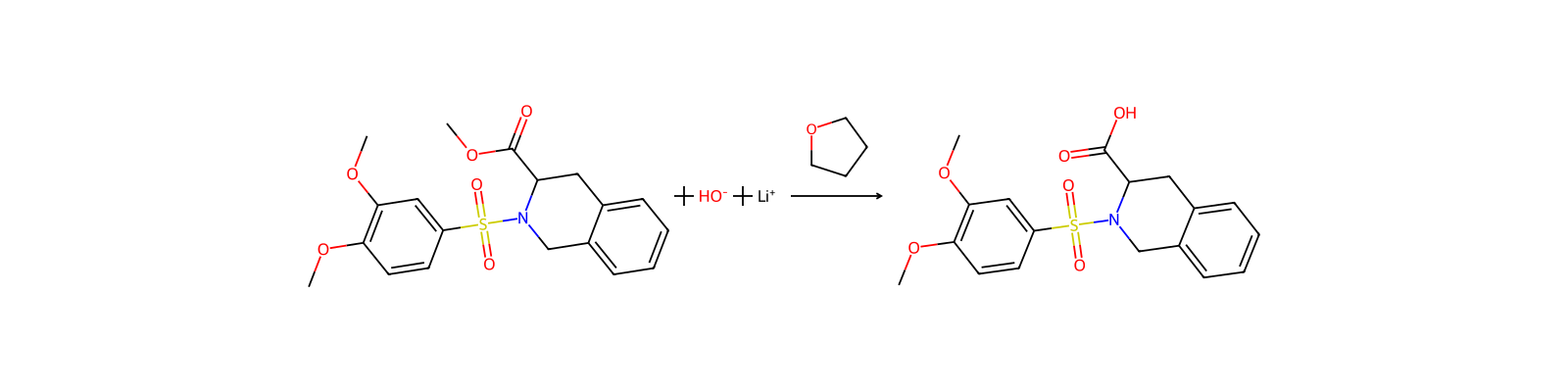
HRID 1229 reaction equation
HRID 1229As reactantuspto-grants-1998_03
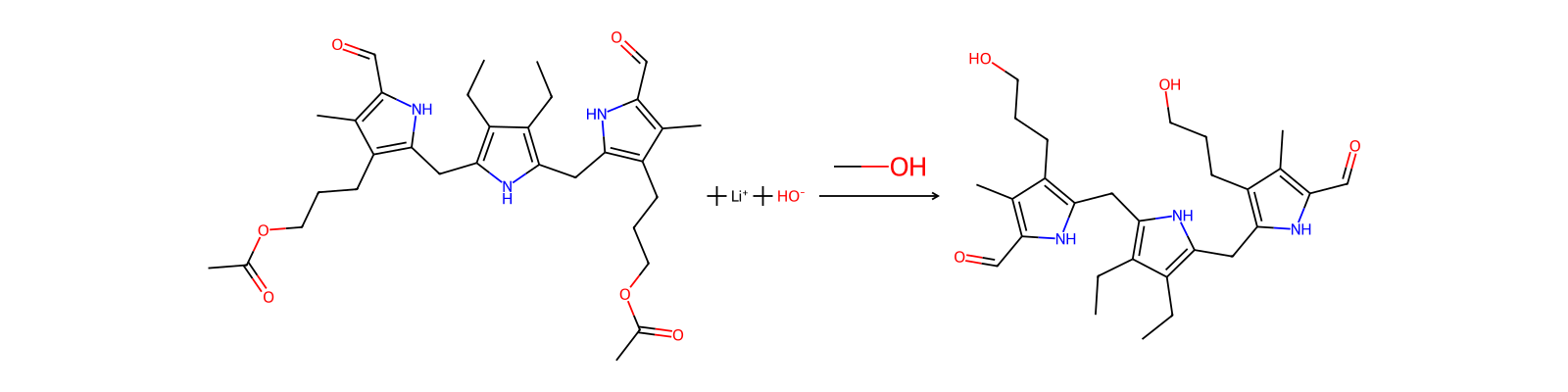
HRID 1735 reaction equation
HRID 1735As reactantuspto-grants-1998_03
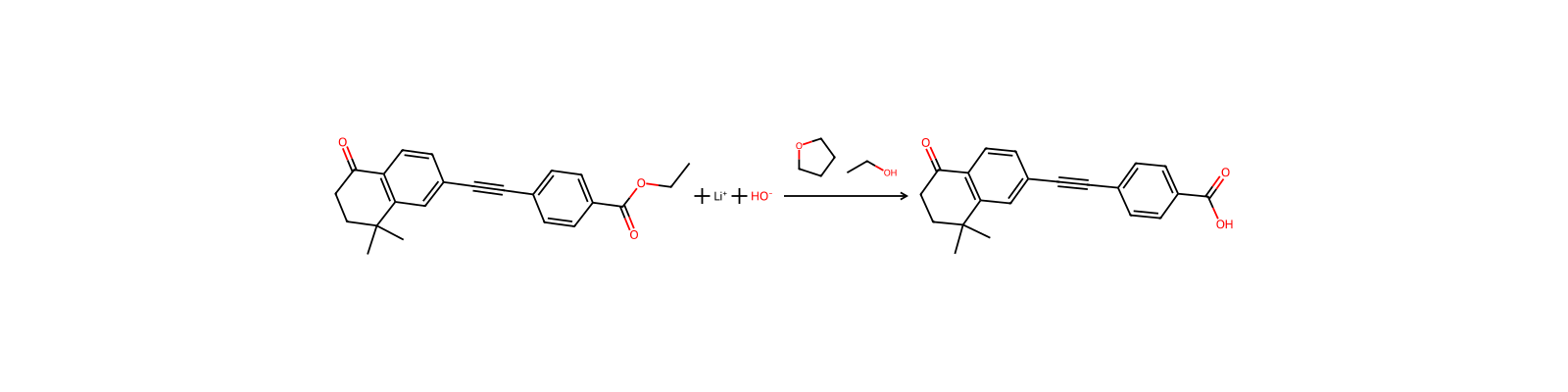
HRID 2145 reaction equation
HRID 2145As reactantuspto-grants-1998_03
HRID 2607 reaction equation
HRID 2607As reactantuspto-grants-1998_03
HRID 2611 reaction equation
HRID 2611As reactantuspto-grants-1998_03
HRID 2622 reaction equation
HRID 2622As reactantuspto-grants-1998_03
HRID 3096 reaction equation
HRID 3096As reactantuspto-grants-1998_03
HRID 4871 reaction equation
HRID 4871As reactantuspto-grants-1993_09
Page 1 of 500

Compound notes

Loading…

On this pageBasic informationOverviewNames & identifiersPropertiesSafety & regulationChemistry & industryRelated reactionsCompound notes
More actions
New noteNew reactionRequest quotes

Lithium hydroxide, solution appears as a clear to water-white liquid which may have a pungent odor. Contact may cause severe irritation to skin, eyes, and mucous membranes. It may be toxic by ingestion, inhalation and skin absorption. It is used to make other chemicals.

Large Crystals; Liquid; Wet Solid; Dry Powder; Liquid

White crystals or granular powder; [AIHA] Readily absorbs carbon dioxide and water from air; [Merck Index] White odorless granules; Hygroscopic; [Alfa Aesar MSDS]

COLOURLESS-TO-WHITE HYGROSCOPIC CRYSTALS.

Physicochemical properties

Melting point
470 °C · 470 °C (dec.) (lit.)
Boiling point
925 °C · 925°C
Density
1.43 · 1.43
bulk density
550 kg/m3 · 550kg/m3
storage temp.
30 °C · Store below +30°C.
solubility
71 g/L · water: soluble71g/L at 20°C
pka
14 · 14[at 20 ℃]
form
Solid
Specific Gravity
2.54 · 2.54
color
White to light yellow
Odor
odorless
PH
12 · 12 (50g/l, H2O, 50℃)
Water Solubility
113 g/L · 113 g/L (20 ºC)
Specific Heat Capacity
2.07 J/ · Cp(crystal): 2.07 J/(g·K); Cp(gas): 1.92 J/(g·K), at 25℃
Sensitive
Air Sensitive & Hygroscopic
Merck
14 · 14,5534
Stability
Stable. Incompatible with moisture. strong acids, carbon dioxide.
Cosmetics Ingredients Functions
HAIR WAVING OR STRAIGHTENINGBUFFERING
InChI
1S/Li.H2O/h;1H2/q+1;/p-1
InChIKey
WMFOQBRAJBCJND-UHFFFAOYSA-M
SMILES
[Li+].[OH-]
Indirect Additives used in Food Contact Substances
LITHIUM HYDROXIDE
FDA 21 CFR
175.39 · 175.390
CAS DataBase Reference
1310 · 1310-65-2(CAS DataBase Reference)
FDA UNII
903 YL31JAS · 903YL31JAS
NIST Chemistry Reference
Lithium hydroxide(1310-65-2)
EPA Substance Registry System
Lithium hydroxide (1310-65-2)
UNSPSC Code
12352305 · 12352305
NACRES
24 · NA.24
Symbol(GHS)
5 · GHS05,GHS06,GHS08
Signal word
Danger
Hazard statements
301 · H301+H331-H314-H360-H370
Precautionary statements
501 · P501-P260-P270-P202-P201-P271-P264-P280-P308+P311-P303+P361+P353-P301+P330+P331-P363-P301+P310+P330-P304+P340+P310-P305+P351+P338+P310-P403+P233-P405
Hazard Codes
C
Risk Statements
52 · 52/53-35-20/22-22-34-23
Safety Statements
45 · 45-36/37/39-26-22
RIDADR
2679 · UN 2679 8/PG II/III (LITHIUM HYDROXIDE SOLUTION)
WGK Germany
1 · 1
RTECS
6307070 · OJ6307070
TSCA
TSCA listed
HazardClass
8 · 8
PackingGroup
II
HS Code
28252010 · 28252010
Storage Class
8 A · 8A - Combustible corrosive hazardous materials
Hazard Classifications
4 OralEye · Acute Tox. 4 OralEye Dam. 1Skin Corr. 1B
Toxicity
50 orally · LD50 orally in Rabbit: 210 mg/kg
REACH Registrations
Active
Limited Quantities
1 Kg · 1 Kg (2.2 lbs) (solid)
Excepted Quantities
Max Inner Pack (30g or 30ml) and Max Outer Pack (500g or 500ml)

Not combustible.

Health Hazards · 3 items

Excerpt from ERG Guide 154 [Substances - Toxic and/or Corrosive (Non-Combustible)]:

· TOXIC and/or CORROSIVE; inhalation, ingestion or skin contact with material may cause severe injury or death.

· TOXIC and/or CORROSIVE; inhalation, ingestion or skin contact with material may cause severe injury or death.

Hazards SummaryCorrosive to skin; [Quick CPC] High inhalation exposure can cause pulmonary edema; [ICSC] Causes abnormal liver function test results in animal experiments; [RTECS] See Lithium oxide.
DOT ID and Guide · 2 items

2680 154

2679 154

Reactive GroupBases, Strong
UN ClassificationUN Hazard Class: 8; UN Pack Group: II
Reactivity AlertsKnown Catalytic Activity
Reactivity Profile · 1 item

LITHIUM HYDROXIDE, SOLUTION neutralizes acids exothermically to form salts plus water. Reacts with certain metals (such as aluminum and zinc) to form oxides or hydroxides of the metal and generate gaseous hydrogen. May initiate polymerization reactions in polymerizable organic compounds, especially epoxides. May generate flammable and/or toxic gases with ammonium salts, nitrides, halogenated organics, various metals, peroxides, and hydroperoxides. May serve as a catalyst. Reacts when heated above about 84 °C with aqueous solutions of reducing sugars other than sucrose, to evolve toxic levels of carbon monoxide [Bretherick, 5th Ed., 1995].

Chemical Dangers · 1 item

Decomposes on heating above 924 °C . This produces toxic fumes. The solution in water is a strong base. It reacts violently with acid and is corrosive to aluminium, tin and zinc. This produces flammable/explosive gas (hydrogen - see ICSC 0001). Reacts with strong oxidants.

Safety & protection

Fire Fighting · 2 items

Excerpt from ERG Guide 154 [Substances - Toxic and/or Corrosive (Non-Combustible)]:

In case of fire in the surroundings, use appropriate extinguishing media.

First Aid Measures · 4 items

Fresh air, rest. Half-upright position. Artificial respiration may be needed. Refer immediately for medical attention.

Remove contaminated clothes. Rinse skin with plenty of water or shower for at least 15 minutes. Refer immediately for medical attention.

Rinse with plenty of water (remove contact lenses if easily possible). Refer immediately for medical attention.

Rinse mouth. Do NOT induce vomiting. Give one or two glasses of water to drink. Refer immediately for medical attention.

Accidental Release Measures · 4 items

· CALL 911. Then call emergency response telephone number on shipping paper. If shipping paper not available or no answer, refer to appropriate telephone number listed on the inside back cover.

· ELIMINATE all ignition sources (no smoking, flares, sparks or flames) from immediate area.

· CALL 911. Then call emergency response telephone number on shipping paper. If shipping paper not available or no answer, refer to appropriate telephone number listed on the inside back cover.

· ELIMINATE all ignition sources (no smoking, flares, sparks or flames) from immediate area.

First Aid · 3 items

Excerpt from ERG Guide 154 [Substances - Toxic and/or Corrosive (Non-Combustible)]:

General First Aid:

General First Aid:

Safe StorageSeparated from food and feedstuffs, strong oxidants and strong acids. Store only in original container. Dry. Well closed. Store in an area without drain or sewer access.
Exposure Control and Personal Protection · 2 items

· Wear positive pressure self-contained breathing apparatus (SCBA).

· Wear positive pressure self-contained breathing apparatus (SCBA).

Nonfire Spill ResponseExcerpt from ERG Guide 154 [Substances - Toxic and/or Corrosive (Non-Combustible)]:
Spillage Disposal · 1 item

Personal protection: chemical protection suit including self-contained breathing apparatus. Do NOT let this chemical enter the environment. Sweep spilled substance into covered plastic containers. Carefully collect remainder. Then store and dispose of according to local regulations.

Isolation and Evacuation · 3 items

Excerpt from ERG Guide 154 [Substances - Toxic and/or Corrosive (Non-Combustible)]:

Immediate precautionary measure

Immediate precautionary measure

Eye PreventionWear face shield or eye protection in combination with breathing protection.
Inhalation RiskEvaporation at 20 °C is negligible; a harmful concentration of airborne particles can, however, be reached quickly when dispersed.
Skin PreventionProtective gloves. Protective clothing.

Toxicology

Adverse EffectsNeurotoxin - Other CNS neurotoxin
Exposure RoutesThe substance can be absorbed into the body by inhalation of its aerosol and by ingestion. Serious local effects by all routes of exposure.
Signs and Symptoms · 4 items

Cough. Sore throat. Burning sensation. Shortness of breath. Laboured breathing.

Redness. Pain. Serious skin burns. Blisters.

Redness. Pain. Blurred vision. Severe deep burns.

Abdominal pain. Burning sensation in the throat and chest. Nausea. Vomiting. Shock or collapse.

ICSC Environmental DataThis substance may be hazardous to the environment. Special attention should be given to aquatic organisms.
Toxicity DataLC50 (rat) = 960 mg/m3/4hr

Safety data

wgk
1
tsca
TSCA listed
rtecs
OJ6307070
ridadr
UN 2680 8/PG II (LITHIUM HYDROXIDE)
hs_code
28252010
Toxicity
LD50 orally in Rabbit: 210 mg/kg
risk_code
52/53-35-20/22-22-34-23
Signal word
Danger
Symbol(GHS)
GHS05,GHS06,GHS08
hazard_code
C
safety_code
45-36/37/39-26-22
hazard_class
8
Storage Class
8A - Combustible corrosive hazardous materials
packing_group
II
Hazard statements
H301+H331-H314-H360-H370
Limited Quantities
1 Kg (2.2 lbs) (solid)
Excepted Quantities
Max Inner Pack (30g or 30ml) and Max Outer Pack (500g or 500ml)
REACH Registrations
Active
Hazard Classifications
Acute Tox. 4 OralEye Dam. 1Skin Corr. 1B
Precautionary statements
P501-P260-P270-P202-P201-P271-P264-P280-P308+P311-P303+P361+P353-P301+P330+P331-P363-P301+P310+P330-P304+P340+P310-P305+P351+P338+P310-P403+P233-P405

UsesLithium hydroxide is an alkali metal hydroxide that is used in storage batteries and soaps and as CO2 absorber in spacecrafts.

General DescriptionLithium hydroxide, solution appears as a clear to water-white liquid which may have a pungent odor. Contact may cause severe irritation to skin, eyes, and mucous membranes. It may be toxic by ingestion, inhalation and skin absorption. It is used to make other chemicals.

Preparation methods · 1 item

PreparationLithium hydroxide is prepared by the reaction of lithium carbonate with calcium hydroxide: Li2CO3 + Ca(OH)2 → 2LiOH + CaCO3 Calcium carbonate is filtered out and the solution is evaporated and crystallized. The product obtained is the monohydrate, LiOH•H2O. The anhydrous compound is obtained by heating the hydrate above 100°C in vacuum or carbon dioxide-free air. The hydroxide also may be prepared by treating lithium oxide with water.

Upstream & downstream products

Upstream raw materials

Lithium carbonateCalcium hydroxide

Downstream products

L-Lactic acid lithium salt5-Bromoindole-2-carboxylic acidLithium acetateLithium peroxideLITHIUM LACTATELITHIUM METASILICATE4-[4-(Aminomethyl)pyridin-2-yl]piperazine, N1-BOC protected5-Bromo-1-benzofuran-2-carboxylic acid3-(2-Furyl)propanoic acidLithium sulfateLithium acetate dihydrateLithium bromide6-Bromo-1-benzofuran-2-carboxylic acid5-Chloroindole-2-carboxylic acid5-Methylisoxazole-3-carbonyl chloride2,5-Dihydroxyterephthalic acidLithium chromatelithium base greaseLithium nitrate1,3,5-Trimethyl-1,3,5-triphenylcyclotrisiloxaneMolybdenum disulfide lithium-based grease1-Boc-3-hydroxymethyl-piperazineLithium chloride
Additional notes · 1 item

DefinitionA white crystalline solid, LiOH, is soluble in water, slightly soluble in ethanol, and insoluble in ether. It is known as the monohydrate (monoclinic; r.d. 1.51) and in the anhydrous form (tetragonal, r.d. 1.46; m.p. 450°C; decomposes at 924°C). The compound is made by reacting lime with lithium salts or lithium ores. Lithium hydroxide is basic but has a closer resemblance to group 2 hydroxides than to the other group 1 hydroxides (an example of the first member of a periodic group having atypical properties).