
Phosphonic acid
Basic information
- CAS
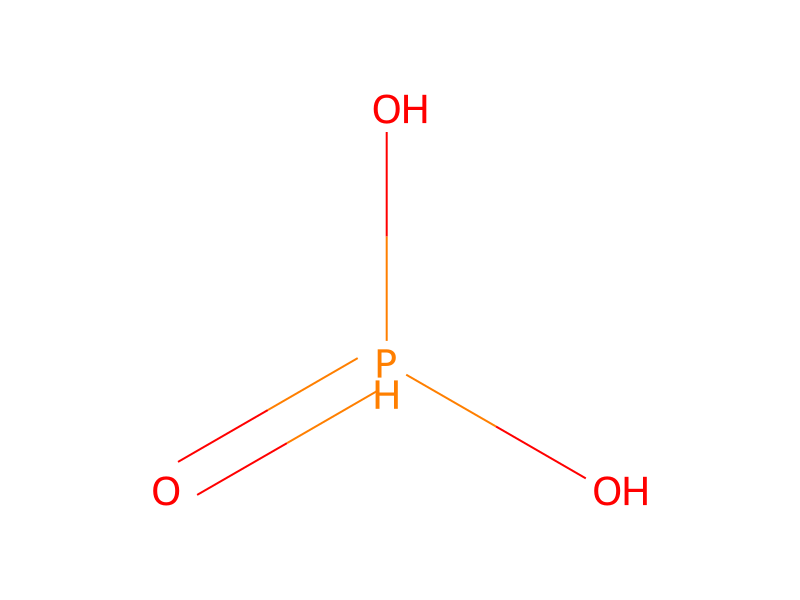
13598-36-2- Standard SMILES
O=[PH](O)O- InChIKey
ABLZXFCXXLZCGV-UHFFFAOYSA-N- Molecular formula
- H3O3P
- Average molar mass
- 81.996 g/mol
- Monoisotopic mass
- 81.98198095
Names & identifiers
- Preferred name
- Phosphonic acid
- IUPAC
- phosphonic acid
- English name
- Phosphorous acid
- Molecular formula
- H3O3P
- Molecular weight
- 82
Names & synonyms
RefChem:6132DTXCID6029674237-066-713598-36-2CHEBI:44976DTXSID2049715Phosphonic acidPhosphorus trihydroxidePhosphorous acidPHOSPHORUS ACIDPhosphorous acid 99%Phosphonsure
Show more names
Phospohorous acidPhosphorous Acid CrystalPhosphorous acid, extra pure, 98%Phosphorous acid, 98%, extra pureH3PO3
Database identifiers
- CAS
13598-36-2- PubChem CID
- 407
- DTXSID
DTXSID2049715- ChEMBL
CHEMBL1235291- EC Number
- 237-066-7
Properties
Computed structural properties
- XLogP
- -1.6
- Topological polar surface area
- 57.5 Ų
- Hydrogen bond donors
- 2
- Hydrogen bond acceptors
- 3
- Rotatable bonds
- 0
- Heavy atoms
- 4
- Formal charge
- 0
- Complexity
- 26.3
Experimental & physicochemical properties
Chemical ClassesCorrosives
Physical DescriptionDry Powder; Liquid; Liquid; Large Crystals; CBI; Dry Powder
Physicochemical properties
- Melting point
- 73 °C · 73 °C
- Boiling point
- 200 °C · 200 °C
- Density
- 1.651 g/mL · 1.651 g/mL at 25 °C(lit.)
- vapor pressure
- 0.001 Pa · 0.001Pa at 20℃
- Flash point
- 200 °C · 200°C
- storage temp.
- 0 · 0-6°C
- solubility
- DMSO (Slightly), Methanol (Slightly), Water (Sparingly)
- form
- Crystals
- pka
- 1 · pK1 1.29; pK2 6.74(at 25℃)
- Specific Gravity
- 1.651 · 1.651
- color
- White
- PH
- 1 · pKa1= 1.10, pKa2 = 6.33(25℃)
Safety & regulation
Safety information is for reference only and does not replace the supplier’s Safety Data Sheet (SDS), applicable regulations, or professional assessment.
GHS classification
GHS Classification
Danger
H302: Harmful if swallowed [Warning Acute toxicity, oral]
P260, P264, P270, P280, P301+P317, P301+P330+P331, P302+P361+P354, P304+P340, P305+P354+P338, P316, P321, P330, P363, P405, and P501 (click each P-code to see the statement)
This chemical does not meet GHS hazard criteria for 0.1% (2 of 1718) of reports.
Danger
H290 (22.3%): May be corrosive to metals [Warning Corrosive to Metals]
Hazard information
Regulatory Information
Chemical: Phosphonic acid
Commission Regulation No 844/2012
Phosphonic acid is listed on the EPA's Chemical Data Reporting (CDR) system. Manufacturers and importers of Phosphonic acid are required to report information about their production and use of this chemical to the EPA under the Toxic Substances Control Act (TSCA). (40 eCFR Part 711)
REACH registered substance: Phosphonic acid (EC: 237-066-7)
Ortho phosphorous acid: Does not have an individual approval but may be used under an appropriate group standard
The New Jersey Worker and Community Right to Know Act requires public and private employers to provide information about hazardous substances at their workplaces. (N.J.S.A. 34:5A-1 et. seq.)
Other Safety InformationIMAP assessments - Phosphonic acid: Human health tier II assessment
EPA Safer ChemicalChemical: Phosphonic acid
Hazard Classes and Categories
Met. Corr. 1 (22.3%)
Acute toxicity - category 4
Self-reactive substances and mixtures - Type G
Corrosives
Acute Tox. 4 *
Safety & protection
Chemistry & industry
Uses & manufacturing
U.S. Production2023: 10,000,000 - <25,000,000 lb
Consumer UsesNot Known or Reasonably Ascertainable
Industry UsesCBI
Household ProductsInformation on 6 consumer products that contain Phosphorus acid in the following categories is provided:
Use Classification
EPA Safer Chemical Functional Use Classes -> Oxidants and Oxidant Stabilizers
Safer Chemical Classes -> Yellow triangle - The chemical has met Safer Choice Criteria for its functional ingredient-class, but has some hazard profile issues
General Manufacturing Information
All Other Basic Organic Chemical Manufacturing
Phosphonic acid: ACTIVE
Applications
DescriptionPhosphorous acid is an intermediate in the preparation of other phosphorous compounds. It is a raw material to prepare phosphonates for water treatment such as iron and manganese control, scale inhibition and removal, corrosion control and chlorine stabilization. The alkali metal salts (phosphites) of phosphorous acid are being widely marketed either as an agricultural fungicide (e.g. Downy Mildew) or as a superior source of plant phosphorous nutrition. Phosphorous acid is used in stabilizing mixtures for plastic materials. Phosphorous acid is used for inhibiting high-temperature of corrosion-prone metal surfaces and to produce lubricants and lubricant additives.
DescriptionPhosphorous acid, H3PO3, is diprotic (readily ionizes two protons), not triprotic as might be suggested by this formula. Phosphorous acid is as an intermediate in the preparation of other phosphorous compounds. Because preparation and uses of “phosphorous acid” actually pertain more to the major tautomer, phosphonic acid, it is more often referred to as “phosphorous acid”. Phosphorous acid has the chemical formula H3PO3, which is best expressed as HPO(OH)2 to show its diprotic character. P(OH)3 (IUPAC: phosphorous acid) has CAS number 10294-56-1. It has been shown to be a stable tautomer.
Related reactions
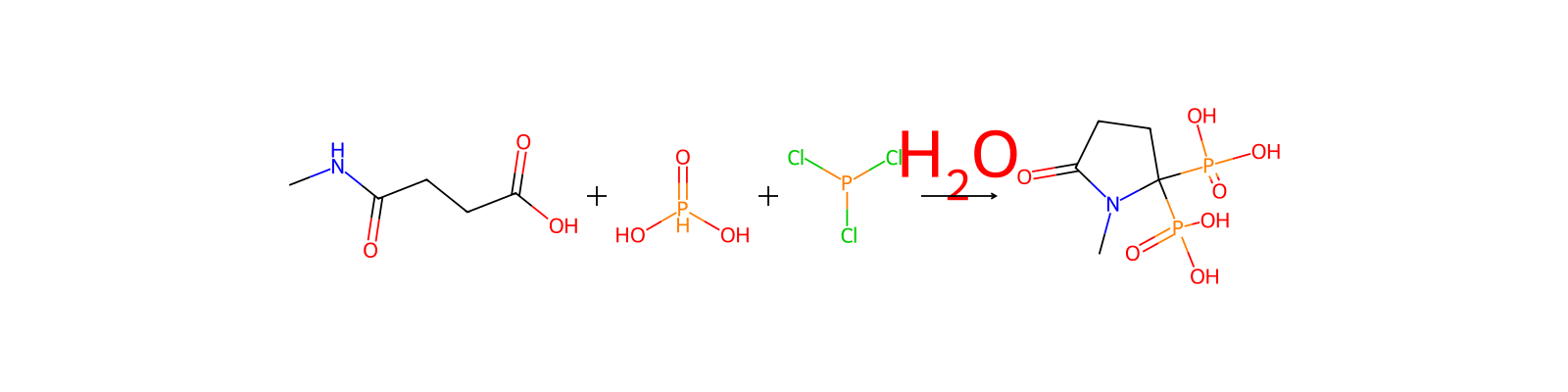
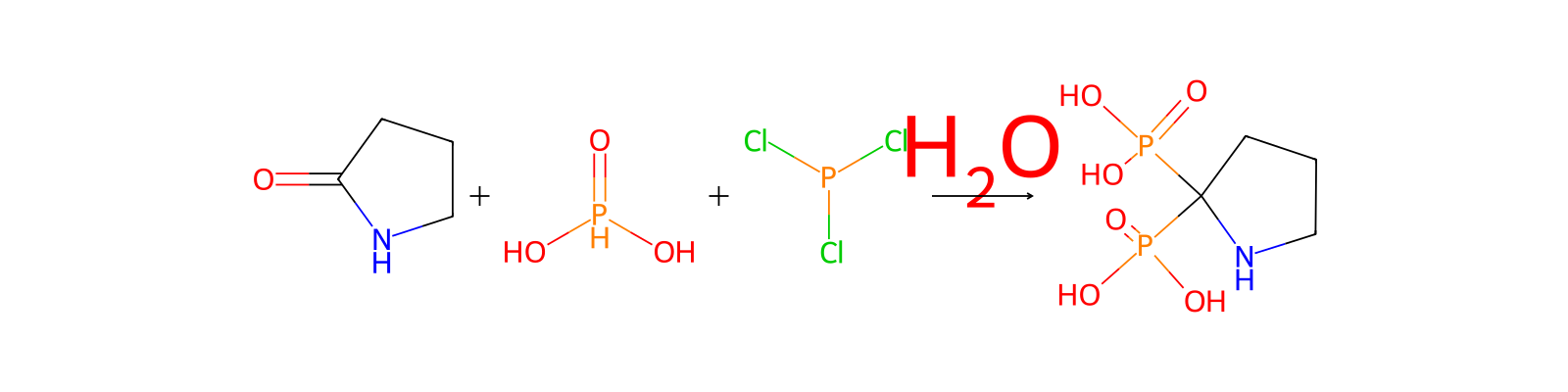
45 records


Compound notes
Loading…