
Basic information
- Standard SMILES
COP(N)(=O)SC- InChIKey
NNKVPIKMPCQWCG-UHFFFAOYSA-N- Molecular formula
- C2H8NO2PS
- Average molar mass
- 141.13 g/mol
- Monoisotopic mass
- 141.00133667
Names & identifiers
- Preferred name
- Methamidophos
- IUPAC
- [amino(methylsulfanyl)phosphoryl]oxymethane
- English name
- Methamidophos
- Molecular formula
- C2H8NO2PS
- Molecular weight
- 141.13
Names & synonyms
methamidophosMetamidophos10265-92-6TamaronMONITORTahmabonFilitoxHamidopO,S-Dimethyl phosphoramidothioateAcephate-metOrtho MonitorMetamidofos estrella
Show more names
TamGIANTProdexre9006RE 9006TamanoxB-71628ckb1220
Phosphoramidothioic acid, O,S-dimethyl esterMonitor (insecticide)Chevron 9006Chevron ortho 9006Bayer 5546Ortho 9006DTXSID6024177CKB 1220
Database identifiers
- CAS
10265-92-6、115182-35-9- PubChem CID
- 4096
- DTXSID
DTXSID6024177- ChEMBL
CHEMBL504888- ChEBI
CHEBI:38721- UNII
- 8Z083FM94W
- EC Number
- 233-606-0
- Nikkaji
- J9.819A
Properties
Computed structural properties
- XLogP
- -0.9
- Topological polar surface area
- 77.6 Ų
- Hydrogen bond donors
- 1
- Hydrogen bond acceptors
- 4
- Rotatable bonds
- 2
- Heavy atoms
- 7
- Formal charge
- 0
- Complexity
- 95
Experimental & physicochemical properties
LogP
log Kow = -0.8 @ 20 °C
-0.66
OdorMercaptan-like odor
Density
1.31 at 112.1 °F (EPA, 1998) - Denser than water; will sink
1.27 g/cu cm at 20 °C
Relative density (water = 1): 1.3
1.31 @ 44.5°C
Color/Form
Colorless crystals
Crystals from ether
Solubility
Soluble in aliphatic chlorinated hydrocarbons, alcohols; slightly soluble in ether.
Solubility (g/l) at 20 °C in: isopropanol: >200; dichloromethane: >200; hexane: 0.1-1; toluene: 2-5
Readily sol in n-hexane, dichloromethane, 2-propanol, toluene
Miscible in water
Solubility in water: good
CorrosivitySlightly corrosive to mild steel and copper-containing alloys.
Boiling Point
Decomposes (EPA, 1998)
Decomposes on heating without boiling
Decomposition
When heated to decomposition it emits very toxic fumes of /nitrogen, phosphorous and sulfur oxides/.
...50% is decomposed in 140 hr at 40 °C and pH 2, in 120 hr at 37 °C and pH 9.
Melting Point
112 °F (EPA, 1998)
44.9 °C
MP: 20-25 °C /Technical/
Melting point: 39-41 °C.
44 °C
40 °C
Vapor Pressure
0.0003 mmHg at 86 °F (EPA, 1998)
0.000035 [mmHg]
4.7 mPa (3.5X10⁻⁵ mm Hg) at 25 °C
Vapor pressure, Pa at 20 °C: 0.002
0.0003 [mm Hg] @25 °C
Refractive IndexIndex of refraction: 1.5092 @ 40 °C/D
Physical Description
Methamidophos is a crystalline solid, technical product is off-white with a pungent odor. Used as an insecticide on a number of vegetables and on cotton. (EPA, 1998)
Colorless crystals with a mercaptan-like odor; [HSDB] Colorless to white solid with a strong odor of mercaptans; Formulated as technical/manufacturing use liquid and emulsifiable concentrate end-use-product; [Reference #2]
COLOURLESS CRYSTALS.
Physicochemical properties
- Melting point
- 44.5 °C · 44.5°C
- Boiling point
- 208.7 · 208.7±23.0 °C(Predicted)
- Density
- 44.5 · d44.5 1.31
- vapor pressure
- 2.3 · 2.3×10-3Pa (25°C)
- refractive index
- 40 · nD40 1.5092
- Flash point
- 212 °C · 212 °C
- storage temp.
- 0 · 0-6°C
- solubility
- Chloroform (Slightly), Methanol (Slightly)
- Water Solubility
- 200 g · >200 g l-1 (20°C)
- pka
- -0.58 · -0.58±0.70(Predicted)
- form
- solid
- Henry's Law Constant
- 1.1 · 1.1×104 mol/(m3Pa) at 25℃, HSDB (2015)
- Stability
- Stable. Incompatible with strong oxidizing agents, copper, copper alloys.
- Major Application
- agricultureenvironmental
- InChI
- 1S/C2H8NO2PS/c1-5-6(3,4)7-2/h1-2H3,(H2,3,4)
- InChIKey
- NNKVPIKMPCQWCG-UHFFFAOYSA-N
- SMILES
- COP(N)(=O)SC
- CAS DataBase Reference
- 10265 · 10265-92-6(CAS DataBase Reference)
- EWG's Food Scores
- 4 · 4-5
- NCI Dictionary of Cancer Terms
- monitor; TAM
- FDA UNII
- 8 Z083FM94W · 8Z083FM94W
- NIST Chemistry Reference
- Phosphoramidothioic acid, o,s-dimethyl ester(10265-92-6)
- EPA Substance Registry System
- Methamidophos (10265-92-6)
- UNSPSC Code
- 41116107 · 41116107
- NACRES
- 24 · NA.24
- Symbol(GHS)
- 6 · GHS06,GHS09
- Signal word
- Danger
- Hazard statements
- 300 · H300-H311-H330-H400
- Precautionary statements
- 264 · P264-P270-P301+P310-P321-P330-P405-P501-P280-P302+P352-P312-P322-P361-P363-P405-P501-P260-P271-P284-P304+P340-P310-P320-P403+P233-P405-P501-P273-P391-P501
- PPE
- 95 · dust mask type N95 (US), Eyeshields, Faceshields, Gloves, type P2 (EN 143) respirator cartridges
- Hazard Codes
- T+;N,N,T+,Xn,F
- Risk Statements
- 24 · 24-26/28-50-36-20/21/22-11
- Safety Statements
- 1 · 1/2-28-36/37-45-61-26
- RIDADR
- 2783 · 2783
- WGK Germany
- 3 · WGK 3
- RTECS
- 4970000 · TB4970000
- HazardClass
- 6.1 · 6.1(a)
- PackingGroup
- II
- Storage Class
- 6.1 A · 6.1A - Combustible acute toxic Cat. 1 and 2very toxic hazardous materials
- Hazard Classifications
- 2 DermalAcute · Acute Tox. 2 DermalAcute Tox. 2 InhalationAcute Tox. 2 OralAquatic Acute 1Aquatic Chronic 1
- Hazardous Substances Data
- 10265 · 10265-92-6(Hazardous Substances Data)
- Toxicity
- 50 in · LD50 in adult male, female rats (mg/kg): 25, 27 orally (Gaines, Linder)
Safety & regulation
GHS classification
GHS Classification
Danger
H300: Fatal if swallowed [Danger Acute toxicity, oral];H311: Toxic in contact with skin [Danger Acute toxicity, dermal];H330: Fatal if inhaled [Danger Acute toxicity, inhalation];H400: Very toxic to aquatic life [Warning Hazardous to the aquatic environment, acute hazard]
P260, P262, P264, P270, P271, P273, P280, P284, P301+P316, P302+P352, P304+P340, P316, P320, P321, P330, P361+P364, P391, P403+P233, P405, and P501 (click each P-code to see the statement)
Danger
Hazard information
Regulatory Information
Chemical: Phosphoramidothioic acid, O,S-dimethyl ester
Hazard Traits - Developmental Toxicity; Neurotoxicity;Authoritative List - CECBP - Priority Chemicals;Report - if used as a fragrance or flavor ingredient
Regulation (EC) No 1107/2009 (amended)
Methamidophos is listed in the dataset of EPA Human Health Benchmarks for Pesticides under the Safe Drinking Water Act (40 eCFR 141)
2006/131/EC
The New Jersey Worker and Community Right to Know Act requires public and private employers to provide information about hazardous substances at their workplaces. (N.J.S.A. 34:5A-1 et. seq.)
DOT LabelPoison
Fire Hazards
(Non-Specific -- Organophosphorus Pesticide, n.o.s.) Container may explode in heat of fire. Fire and runoff from fire control water may produce irritating or poisonous gases. (Non-Specific -- Phosphoramidothioic Acid, O-Ethyl S-Methyl Ester) Emits very toxic fumes of nitrogen oxides, phosphorus oxides, and sulfur oxides when heated to decomposition. Stable at neutral pH. Avoid strong acids or alkalis. (EPA, 1998)
Combustible under specific conditions. Liquid formulations containing organic solvents may be flammable. Gives off irritating or toxic fumes (or gases) in a fire. Risk of fire and explosion if formulations contain flammable/explosive solvents.
Health HazardsThis material is harmful or fatal if swallowed, inhaled, or absorbed through the skin. (EPA, 1998)
Hazards Summary
Classified as highly toxic, it may be used only by certified applicators. [EXTOXNET] A small number of the organophosphates (OPs) can Induce Delayed Neuropathy (OPIDN). OPIDN usually occurs after ingestion and is usually nonoccupational. [Levy, p. 431] An eye irritant; Can be absorbed through skin; A cholinesterase inhibitor that may cause CNS effects (convulsions and respiratory failure) on short-term exposure; Extended or repeated exposure may cause delayed neuropathy; [ICSC] Reports of delayed neuropathy form occupational exposures; [HSDB] Also a metabolite of the OP pesticide acephate; A cholinesterase inhibitor that is one of the most acutely toxic of the OP pesticides; A moderate eye (corneal opacity persisting up to ten days in 2/6 rabbits) and mild skin irritant; Not sensitizing to guinea pig skin; Neuropathology observed in hens but not in rats; [Reference #2] Ranked second in the US for percentage of cases with life-threatening symptoms among occupational Poison Control Center cases; Reproductive studies have shown effects to several parameters at relatively low exposure levels; No evidence of mutagenicity or carcinogenicity; [UNEP DGDs] The average of two baseline respective cholinesterase activity determinations three days apart, with no exposures to enzyme inhibiting pesticides for at least 30 days, is recommended for each worker prior to exposure to cholinesterase inhibitors because of large inter-individual differences in published baseline values. To be established at least once a year. Removal from workplace exposures is recommended until the cholinesterase activity returns to within 20% of baseline. [TLVs and BEIs]
Reactive GroupEsters, Sulfate Esters, Phosphate Esters, Thiophosphate Esters, and Borate Esters;Acids, Weak
EC ClassificationSymbol: T+, N; R: 24-26/28-50; S: (1/2)-28-36/37-45-61
UN ClassificationUN Hazard Class: 6.1; UN Pack Group: II
Special Reports
USEPA/Office of Pesticide Programs; Interim Reregistration Eligibility Decision (IRED) for Methamidophos. EPA issues an IRED for a pesticide that is undergoing reregistration, requires a reregistration eligibility decision, and also needs a cumulative assessment under FQPA. The IRED, issued after EPA completes the individual pesticide\'s aggregate risk assessment, may include taking risk reduction measures -- for example, reducing risks to workers or eliminating uses that the registrant no longer wishes to maintain -- to gain the benefits of these changes before the final RED can be issued following the Agency\'s consideration of cumulative risks.[Available from, as of July 24, 2003: http://www.epa.gov/pesticides/reregistration/status.htm]
FIFRA Requirements
Classified for restricted use and limited to use by or under the direct supervision of a certified applicator. Formulation: Liqiud formulations 40% and greater; Use Pattern: Tobacco; Classification: Restricted; Criteria Influencing Restriction: Acute dermal toxicity; residue effects on avian species.
Classified for restricted use and limited to use by or under the direct supervision of a certified applicator. Formulation: Dust formulations 2.5% and greater; Use Pattern: Tobacco; Classification: Restricted; Criteria Influencing Restriction: Residue effects on avian species.
As the federal pesticide law FIFRA directs, EPA is conducting a comprehensive review of older pesticides to consider their health and environmental effects and make decisions about their future use. Under this pesticide reregistration program, EPA examines health and safety data for pesticide active ingredients initially registered before November 1, 1984, and determines whether they are eligible for reregistration. In addition, all pesticides must meet the new safety standard of the Food Quality Protection Act of 1996. Methamidophos is found on List A, which contains most food use pesticides and consists of the 194 chemical cases (or 350 individual active ingredients) for which EPA issued registration standards prior to FIFRA, as amended in 1988. Case No: 0043; Pesticide type: insecticide (acaricide); Registration Standard Date: 09/30/82; Case Status: OPP is reviewing data from the pesticide's producers regarding its human health and/or environmental effects, or OPP is determining the pesticide's eligibility for reregistration and developing the Reregistration Eligibility Decision (RED) document.; Active ingredient (AI): Methamidophos; Data Call-in (DCI) Date(s): 07/27/94, 10/13/95; AI Status: The producers of the pesticide has made commitments to conduct the studies and pay the fees required for reregistration, and are meeting those commitments in a timely manner.
Tolerances are established for residues of the insecticide methamidophus (O,S-dimethyl phosphoramidothioate) in or on the following raw agricultural commodities: broccoli; Brussels sprouts; cabbage; cauliflower; cotton, undelinted seed; cucumber; eggplant; lettuce; melon; pepper; potatoe; and tomato.
For more FIFRA Requirements (Complete) data for METHAMIDOPHOS (6 total), please visit the HSDB record page.
Reactivity Profile
Organophosphates, such as METHAMIDOPHOS, are susceptible to formation of highly toxic and flammable phosphine gas in the presence of strong reducing agents such as hydrides. Partial oxidation by oxidizing agents may result in the release of toxic phosphorus oxides. Avoid strong acids or alkalis. [EPA, 1998].
Chemical DangersDecomposes on heating and on burning. This produces toxic and irritating fumes including nitrogen oxides, phosphorus oxides and sulfur oxides. Attacks mild steel and copper-containing alloys (technical grade).
Safety & protection
Fire Fighting
(Non-Specific -- Organophosphorus Pesticide, n.o.s.) Stay upwind; keep out of low areas. Move containers from fire area if you can do it without risk. Fight fire from maximum distance. Dike fire control water for later disposal; do not scatter the material. Wear positive pressure breathing apparatus and special protective clothing.;(Non-Specific -- Organophosphorus Pesticide, n.o.s.) This material may burn, but does not ignite readily. For small fires, use dry chemical, carbon dioxide, water spray, or foam. For large fires, use water spray, fog, or foam. (EPA, 1998)
Use water spray, powder, alcohol-resistant foam, carbon dioxide.
First Aid Measures
Remove immediately from exposure. Fresh air, rest. Half-upright position. Refer immediately for medical attention.
Wear protective gloves when administering first aid. Remove contaminated clothes. Rinse skin with plenty of water or shower. Refer immediately for medical attention.
Rinse with plenty of water for several minutes (remove contact lenses if easily possible). Refer immediately for medical attention.
Rinse mouth. Give a slurry of activated charcoal in water to drink, but NOT if convulsions occur. Rest. Refer immediately for medical attention.
First Aid
Note: Methamidophos is a cholinesterase inhibitor.;Signs and Symptoms of Acute Methamidophos Exposure: Acute exposure to methamidophos may produce the following signs and symptoms: pinpoint pupils, blurred vision, headache, dizziness, muscle spasms, and profound weakness. Vomiting, diarrhea, abdominal pain, seizures, and coma may also occur. The heart rate may decrease following oral exposure or increase following dermal exposure. Chest pain may be noted. Hypotension (low blood pressure) may be noted, although hypertension (high blood pressure) is not uncommon. Respiratory symptoms include dyspnea (shortness of breath), respiratory depression, and respiratory paralysis. Psychosis may occur.;Emergency Life-Support Procedures: Acute exposure to methamidophos may require decontamination and life support for the victims. Emergency personnel should wear protective clothing appropriate to the type and degree of contamination. Air-purifying or supplied-air respiratory equipment should also be worn, as necessary. Rescue vehicles should carry supplies such as plastic sheeting and disposable plastic bags to assist in preventing spread of contamination.;Inhalation Exposure:;1. Move victims to fresh air. Emergency personnel should avoid self-exposure to methamidophos.;2. Evaluate vital signs including pulse and respiratory rate, and note any trauma. If no pulse is detected, provide CPR. If not breathing, provide artificial respiration. If breathing is labored, administer oxygen or other respiratory support.;3. Obtain authorization and/or further instructions from the local hospital for administration of an antidote or performance of other invasive procedures.;4. Transport to a health care facility.;Dermal/Eye Exposure:;1. Remove victims from exposure. Emergency personnel should avoid self- exposure to methamidophos.;2. Evaluate vital signs including pulse and respiratory rate, and note any trauma. If no pulse is detected, provide CPR. If not breathing, provide artificial respiration. If breathing is labored, administer oxygen or other respiratory support.;3. Remove contaminated clothing as soon as possible.;4. If eye exposure has occurred, eyes must be flushed with lukewarm water for at least 15 minutes.;5. Wash exposed skin areas three times with soap and water.;6. Obtain authorization and/or further instructions from the local hospital for administration of an antidote or performance of other invasive procedures.;7. Transport to a health care facility.;Ingestion Exposure:;1. Evaluate vital signs including pulse and respiratory rate, and note any trauma. If no pulse is detected, provide CPR. If not breathing, provide artificial respiration. If breathing is labored, administer oxygen or other respiratory support.;2. Obtain authorization and/or further instructions from the local hospital for administration of an antidote or performance of other invasive procedures.;3. Vomiting may be induced with syrup of Ipecac. If elapsed time since ingestion of methamidophos is unknown or suspected to be greater than 30 minutes, do not induce vomiting and proceed to Step
Safe StorageProvision to contain effluent from fire extinguishing. Separated from food and feedstuffs. Dry. Keep in a well-ventilated room. Store in an area without drain or sewer access.
Exposure Control and Personal Protection
Biological Exposure Indices (BEI) [ACGIH] - Acetylcholinesterase activity in red blood cells = 70% of individual's baseline; Butylcholinesterase activity in serum or plasma = 60% of individual's baseline; Sample at end of shift; [TLVs and BEIs]
Fire Fighting Procedures
If material on fire or involved in fire: Do not extinguish fire unless flow can be stopped. Use water in flooding quantities as fog. Solid streams of water may be ineffective. Cool all affected containers with flooding quantities of water. Apply water from as far a distance as possible. Use "alcohol" foam, dry chemical or carbon dioxide. /Organophosphorus pesticides, liquid, flammable, toxic; Organophosphorus pesticides, liquid, toxic/
If material on fire or involved in fire: Use water in flooding quantities as fog. Extinguish fire using agent suitable for type of surrounding fire. (Material itself does not burn or burns with difficulty.) /Organophosphorus pesticides, solid, toxic/
Storage Conditions
...Concentrates... should not be stored in mild steel containers.
...Keep container closed. ...
Provision to contain effluent from fire extinguishing. Separated from food and feedstuffs. Dry. Keep in a well-ventilated room.
Cleanup Methods
Environmental considerations: Air spill: Apply water spray or mist to knock down vapors. /Organophosphorus pesticides, liquid, flammable, toxic; Organophosphorus pesticides, liquid, toxic; Organophosphorus pesticides, solid, toxic/
Environmental considerations: Water spill: Use natural barriers or oil spill control booms to limit spill travel. Remove trapped material with suction hoses. /Organophosphorus pesticides, liquid, flammable, toxic; Organophosphorus pesticides, liquid, toxic; Organophosphorus pesticides, solid, toxic/
Environmental considerations: Land spill: Dig a pit, pond, lagoon, holding area to contain liquid or solid material. /SRP: If time permits, pits, ponds, lagoons, soak holes, or holding areas should be sealed with an impermeable flexible membrane liner./ Dike surface flow using soil, sand bags, foamed polyurethane, or foamed concrete. Absorb bulk liquid with fly ash, cement powder, or commercial sorbents. /Organophosphorus pesticides, liquid, flammable, toxic; Organophosphorus pesticides, liquid, toxic; Organophosphorus pesticides, solid, toxic/
Nonfire Spill Response
(Non-Specific -- Organophosphorus Pesticide, n.o.s.) Stay upwind; keep out of low areas. Ventilate closed spaces before entering them. Do not touch spilled material; stop leak if you can do so without risk. Use water spray to reduce vapors.;Small spills: absorb with sand or other noncombustible absorbent material and place into containers for later disposal.;Small dry spills: with clean shovel place material into clean dry container and cover; move containers from spill area.;Large spills: dike far ahead of spill for later disposal. (EPA, 1998)
Disposal Methods
Do NOT wash away into sewer. Sweep spilled substance into sealable containers; if appropriate, moisten first to prevent dusting. Carefully collect remainder, then remove to safe place. (Extra personal protection: complete protective clothing including self-contained breathing apparatus).
Hydrolysis... /of treated residues/: Alkaline hydrolysis produces methyl phosphoramidoate and methyl mercaptan. Those products are less hazardous. Acid hydrolysis yields... dimethylphosphorathioate and ammonia. ...Containers should be thoroughly drained and rinsed with aqueous alkali. Recommendable method: Incineration. Peer-review: Large amounts incinerate in a unit with effluent gas scrubbing. (Peer-review conclusions of an IRPTC expert consultation (May 1985))
SRP: The most favorable course of action is to use an alternative chemical product with less inherent propensity for occupational exposure or environmental contamination. Recycle any unused portion of the material for its approved use or return it to the manufacturer or supplier. Ultimate disposal of the chemical must consider: the material's impact on air quality; potential migration in soil or water; effects on animal, aquatic, and plant life; and conformance with environmental and public health regulations.
Spillage Disposal
Personal protection: complete protective clothing including self-contained breathing apparatus. Do NOT let this chemical enter the environment. Sweep spilled substance into covered sealable containers. If appropriate, moisten first to prevent dusting. Carefully collect remainder. Then store and dispose of according to local regulations.
Preventive Measures
DO NOT GET IN EYES, ON SKIN, OR CLOTHING, DO NOT BREATHE DUST, KEEP CONTAINER CLOSED. USE WITH ADEQUATE VENTILATION ... DO NOT DRINK ANY ALCOHOLIC BEVERAGES BEFORE OR DURING SPRAYING SINCE ALCOHOL PROMOTES ABSORPTION OF ORGANIC PHOSPHATES.
If material not on fire and not involved in fire: Keep sparks, flames, and other sources of ignition away. Keep material out of water sources and sewers. /Organophosphorus pesticides, solid, toxic
If material not on fire and not involved in fire: Keep sparks, flames, and other sources of ignition away. Keep material out of water sources and sewers. Build dikes to contain flow as necessary. Attempt to stop leak if without undue personnel hazard. Use water spray to knock-down vapors. /Organophosphorus pesticides, liquid, toxic/
Personnel protection: Avoid breathing dusts, and fumes from burning material. Keep upwind. Avoid bodily contact with the material. Do not handle broken packages unless wearing appropriate personal protective equipment. Wash away any material which may have contacted the body with copious amounts of water or soap and water. /Organophosphorus pesticides, solid, toxic/
For more Preventive Measures (Complete) data for METHAMIDOPHOS (10 total), please visit the HSDB record page.
Toxicology
Treatment
If the compound has been ingested, rapid gastric lavage should be performed using 5% sodium bicarbonate. For skin contact, the skin should be washed with soap and water. If the compound has entered the eyes, they should be washed with large quantities of isotonic saline or water. In serious cases, atropine and/or pralidoxime should be administered. Anti-cholinergic drugs work to counteract the effects of excess acetylcholine and reactivate AChE. Atropine can be used as an antidote in conjunction with pralidoxime or other pyridinium oximes (such as trimedoxime or obidoxime), though the use of '-oximes' has been found to be of no benefit, or possibly harmful, in at least two meta-analyses. Atropine is a muscarinic antagonist, and thus blocks the action of acetylcholine peripherally.
Interactions
Because different classes of enzymes may be inhibited, the effects of organophosphorus pesticide poisoning may be complex and potentially at least could involve interactions with drugs as well as with other pesticides or chemicals. Potentiation may also involve solvents or other components of formulated pesticides. Certain drugs such as phenothiazines, antihistamines, CNS depressants, barbiturates, xanthines (theophylline), aminoglycosides and parasympathomimetic agents are to be avoided because of increased toxicity. /Organophosphorus pesticides/
Target OrgansNervous
Health Effects
Acute exposure to cholinesterase inhibitors can cause a cholinergic crisis characterized by severe nausea/vomiting, salivation, sweating, bradycardia, hypotension, collapse, and convulsions. Increasing muscle weakness is a possibility and may result in death if respiratory muscles are involved. Accumulation of ACh at motor nerves causes overstimulation of nicotinic expression at the neuromuscular junction. When this occurs symptoms such as muscle weakness, fatigue, muscle cramps, fasciculation, and paralysis can be seen. When there is an accumulation of ACh at autonomic ganglia this causes overstimulation of nicotinic expression in the sympathetic system. Symptoms associated with this are hypertension, and hypoglycemia. Overstimulation of nicotinic acetylcholine receptors in the central nervous system, due to accumulation of ACh, results in anxiety, headache, convulsions, ataxia, depression of respiration and circulation, tremor, general weakness, and potentially coma. When there is expression of muscarinic overstimulation due to excess acetylcholine at muscarinic acetylcholine receptors symptoms of visual disturbances, tightness in chest, wheezing due to bronchoconstriction, increased bronchial secretions, increased salivation, lacrimation, sweating, peristalsis, and urination can occur. Certain reproductive effects in fertility, growth, and development for males and females have been linked specifically to organophosphate pesticide exposure. Most of the research on reproductive effects has been conducted on farmers working with pesticides and insecticdes in rural areas. In females menstrual cycle disturbances, longer pregnancies, spontaneous abortions, stillbirths, and some developmental effects in offspring have been linked to organophosphate pesticide exposure. Prenatal exposure has been linked to impaired fetal growth and development. Neurotoxic effects have also been linked to poisoning with OP pesticides causing four neurotoxic effects in humans: cholinergi
Ecotoxicity Values
LC50 Rainbow trout 25 ppm/96 hr, static
LC50 Bluegill sunfish 34 ppm/96 hr, static
LC50 Penaeus stylirostris naupliae (Shrimp larvae) 160 ng/l/12 hr; 10 ng/l/24 hr; 0.6 ng/l/36 hr /Conditions of bioassay not specified/
LC50 Penaeus stylirostris (Shrimp larvae) 300 ng/l/12 hr; 85 ng/l/24 hr; 2.4 ng/l/36 hr /Conditions of bioassay not specified/
For more Ecotoxicity Values (Complete) data for METHAMIDOPHOS (16 total), please visit the HSDB record page.
Environmental Fate
ORTHENE WAS INTRODUCED INTO A NATURAL STREAM, AND DEGRADATION, INSECTICIDAL AND PISCICIDAL ACTIVITIES, AND CONVERSION OF ORTHENE TO MONITOR WAS FOLLOWED. NO ORTHENE WAS DETECTED 4 DAYS FOLLOWING ITS INTRODUCTION INTO WATER. TRACES OF MONITOR, A METABOLITE OF ORTHENE, WERE FOUND IN THE SEDIMENT. FISH CONVERTED ORTHENE TO MONITOR; HOWEVER, BY 1 DAY POST-APPLICATION ORTHENE AND MONITOR WERE CLEARED FROM THE TISSUES. CONVERSION OF ORTHENE TO MONITOR WAS ALSO FOUND IN THE INSECTS. AT 8 HR POST APPLICATION, INSECTS WERE CLEAR OF ORTHENE AND MONITOR.
Terrestrial Fate: The behavior of (32)P methamidophos was tested in six soils with significant differences in texture, clay composition, and pH. The amt of methamidophos bound in test soils increased with the content of illite in the clay fraction in the order sand < loamy sand < silt loam. Metabolic degradation takes place in sandy soils on an extremely small scale, is higher in loamy sands and reaches the highest rate in silt loam. This trend is related to the microbial activity of the soils. In bog soils, hydrolysis is the major process in degradation.
TERRESTRIAL FATE: Based on a classification scheme(1), a Koc value of 5(2), indicates that methamidophos is expected to have very high mobility in soil(SRC). Volatilization of methamidophos from moist soil surfaces is not expected to be an important fate process(SRC) given an estimated Henry's Law constant of 8.7X10⁻¹⁰ atm-cu m/mole(SRC), using a fragment constant estimation method(3). Methamidophos is not expected to volatilize from dry soil surfaces(SRC) based upon a vapor pressure of 3.5X10⁻⁵ mm Hg(4). Average half-lives in soil under aerobic and anaerobic conditions are 4 and 7.5 days, respectively(5). The photolysis rate in soil is reported as 0.210 per day(5), corresponding to a half-life of 3.3 days(SRC).
AQUATIC FATE: Based on a classification scheme(1), a Koc value of 5(2), indicates that methamidophos is not expected to adsorb to suspended solids and sediment(SRC). Volatilization from water surfaces is not expected(3) based upon an estimated Henry's Law constant of 8.7X10⁻¹⁰ atm-cu m/mole(SRC), developed using a fragment constant estimation method(4). According to a classification scheme(5), an estimated BCF of 3.1(SRC), from its log Kow of -0.8(6) and a regression-derived equation(7), suggests the potential for bioconcentration in aquatic organisms is low(SRC). Half-lives for the hydrolysis of methamidiophos at 22 °C and pH 4, 7, and 9 have been reported to be 1.8 years, 120 hours, and 70 hours, respectively(6). The photolysis rate in water is 0.0079 per day(8), corresponding to a half-life of 87 days(SRC).
ATMOSPHERIC FATE: According to a model of gas/particle partitioning of semivolatile organic compounds in the atmosphere(1), methamidophos, which has a vapor pressure of 3.5X10⁻⁵ mm Hg at 25 °C(2), will exist in both the vapor and particulate phases in the ambient atmosphere. Vapor-phase methamidophos is degraded in the atmosphere by reaction with photochemically-produced hydroxyl radicals(SRC); the half-life for this reaction in air is estimated to be 12 hours(SRC), calculated from its rate constant of 2.8X10⁻¹¹ cu cm/molecule-sec at 25 °C(SRC) that was derived using a structure estimation method(3). Particulate-phase methamidophos may be removed from the air by wet and dry deposition(SRC).
Food Survey Values
Methamidophos was qualitatively identified as residues in food samples tested during the Food and Drug Administration pesticide residue monitoring of various food samples for the test periods of 1978-1982 and 1983-1986(1-2). Methamidophos was qualitatively identified in 1.144% and 0.947% of all food samples tested during the Food and Drug Administration pesticide residue monitoring of various food samples for the test periods of 1988 and 1989, respectively(3). Methamidophos was qualitatively identified in 5% of 1170 food samples tested during the Food and Drug Administration pesticide residue monitoring of various food samples for the test period of 1988(4). Methamidophos was identified at concentrations ranging from 0.05 to 2.0 ppm in 24% of all food and animal feeds tested during the Food and Drug Administration's Los Angeles District Laboratory pesticide residue monitoring of various foods and animal feeds for the test period of 1982-1986(5).
Methamidophos was qualitatively identified in 100%, 13%, 8%, 7%, 33%, 5%, and 53% of beans, broccoli, cabbage, cauliflower, lettuce, potato, and tomato samples tested during the California Department of Food and Agriculture pesticide residue monitoring of various food samples for the test period of 1989, respectively(1).
In the U.S. FDA regulatory monitoring of domestic foods which may be eaten by infants/children (1985-1991), methamidophos was found in the following foods (number of findings, max concentration ppm): apples (2, trace) and oranges (2, 0.17)(1). In the U.S. FDA regulatory monitoring of imported foods which may be eaten by infants/children (1985-1991), methamidophos was found in the following foods (number of findings, max concentration ppm): apple juice (1, trace), apples (1, 0.02), grape juice (1, trace), and pears (7, 0.02)(1). In the Total Diet Study (1985-1991) of infant foods, methamidophos residues were found in the following foods (number of findings, max concentration ppm): oatmeal with applesauce and bananas (1, 0.001), tomatoes, beef, and macaroni (2, 0.001), vegetable with beef (1, 0.002), green beans (21, 0.018), and mixed vegetables (3, 0.001)(1). Methamidophos residues found in the selected Total Diet Study (1985-1991) of adult foods eaten by infants/children were (number of findings, max concentration ppm) in canned apple juice (2, 0.0008), raw apples with the peel (1, 0.0009), and raw pear (1, 0.0007)(1). In an U.S. FDA study (1982-1991), which included 37 market basket studies, each containing 234 food items representing about 5000 food types in American diets covering all age groups, methamidophos was detected 427 times in 49 foods with an average concentrations of 0.0111 ug/g(2). In 1992-1993, the U.S. FDA studied the pesticide residues in domestic and imported pears and tomatoes; methamidophos was detected in 56 and 66% of domestic and imported tomatoes at maximum concentrations of 0.68 and 0.30 ppm, respectively and was not detected in pears(3). Detection of methamidophos was found to occur with a frequency of 3, 5, 6 and 5% in the U.S. FDA Total Diet Study 1982-1984, 1984-1986, 1986-1991 and 1994, respectively(4-6).
Methamidophos was found at or below the maximum residue level (concentration not provided) in approximately 0.8 and 0.6%, and found above the maximum residue level in approximately 0.5 and 0.4% of food sampled in the European Union coordinated monitoring program in 1996 and 1997, respectively(1). Apples, strawberries, tomatoes, lettuce, and grapes were sampled in the 1996 study, and mandarins, pears, bananas, beans, and potatoes were sampled in the 1997 study(1). In a 1990 Total Diet Study in China, methamidophos concentrations in cereals, vegetables, and fruits ranged from trace-69.1, trace-21.4, and 14.3-27.3 ug/kg, respectively(2). Methamidophos residue was found in domestic food products 1990-1994 and imported food products 1990-1994 in Sweden(3). Methamidophos was found in 16 of 177 honey samples supplied by beekeepers from the county of Luge in northwest Spain from 1988-1990, and concentrations ranged from 4-25 ug/kg with a mean of 8.6 ug/kg(4). Methamidophos was detected in 1 of 31 pepper samples in 1995 in the Danish National Monitoring Program for fruits and vegetables(5). Methamidophos was found in cabbage, dill, mango, luffa, and cauliflower in Pakistan at concentrations of 3.1, trace, trace-2.3, 2.11, and 2.60 mg/kg, respectively(6). In a study of 21,982 samples of selected agricultural food commodities available in Canada (1992-1994), methamidophos was found in 28 domestic and 341 imported foods(7). Methamidophos was found in the following domestic commodities: apple juice, fresh beets, cabbage, celery, cucumbers, leaf lettuce, head lettuce, sweet peppers, and potatoes(7). Methamidophos was found in the following imported commodities: fresh beans, cabbage, cantaloupe, carrots, cauliflower, celery, cucumbers, eggplant, kiwi fruit, head lettuce, melons, oranges, peas, pears, sweet peppers, potatoes, snow peas, tomatoes, canned tomatoes, canned mushrooms, and tomato paste(7). In a study of 13,230 samples of selected agricultural food commodities available
Adverse EffectsNeurotoxin - Predominantly motor;Other Poison - Organophosphate
Exposure RoutesThe substance can be absorbed into the body by inhalation, through the skin and by ingestion.
Milk ConcentrationsMany of the organophosphorus insecticides are excreted in the milk ... /Organophosphorus insecticides/
Toxicity Summary
(±)-Methamidophos is a cholinesterase or acetylcholinesterase (AChE) inhibitor. A cholinesterase inhibitor (or 'anticholinesterase') suppresses the action of acetylcholinesterase. Because of its essential function, chemicals that interfere with the action of acetylcholinesterase are potent neurotoxins, causing excessive salivation and eye-watering in low doses, followed by muscle spasms and ultimately death. Nerve gases and many substances used in insecticides have been shown to act by binding a serine in the active site of acetylcholine esterase, inhibiting the enzyme completely. Acetylcholine esterase breaks down the neurotransmitter acetylcholine, which is released at nerve and muscle junctions, in order to allow the muscle or organ to relax. The result of acetylcholine esterase inhibition is that acetylcholine builds up and continues to act so that any nerve impulses are continually transmitted and muscle contractions do not stop. Among the most common acetylcholinesterase inhibitors are phosphorus-based compounds, which are designed to bind to the active site of the enzyme. The structural requirements are a phosphorus atom bearing two lipophilic groups, a leaving group (such as a halide or thiocyanate), and a terminal oxygen.
Average Daily Intake
The Average Daily Intake (AVDI) of methamidophos in 8 and 3 population groups for the periods 1982-1984 and 1988, respectively, was determined according to the FDA's monitoring program for chemical contaminants in the U.S. food supply (Total Diet Study or Market Basket Study)(1-2). For the monitoring period of 1982-1984, the AVDI of methamidophos in 6-11 month old infants, 2 year old toddlers, 14-16 year old females, 14-16 year old males, 25-30 year old females, 25-30 year old males, 60-65 year old females, and 60-65 year old males, was 2.3, 6.4, 3.7, 4.1, 6.5, 5.8, 7.4, and 6.1 ng/kg-body weight/day, respectively(1). For the monitoring period of 1988, the AVDI of methamidophos in 6-11 month old infants, 14-16 year old males, and 60-65 year old females, was 12.6, 13.3, and 25.3 ng/kg-body weight/day, respectively(2).
The average daily intake of methamidophos in a Chinese total diet study in 1991 was 23.9% of the acceptable daily intake of 240 ug/person/day(1). The estimated daily intake of methamidophos was 0.24 ug/man/day for the population of Rome, Italy(2).
Regulatory information
Regulatory Information
Chemical: Phosphoramidothioic acid, O,S-dimethyl ester
Hazard Traits - Developmental Toxicity; Neurotoxicity;Authoritative List - CECBP - Priority Chemicals;Report - if used as a fragrance or flavor ingredient
Regulation (EC) No 1107/2009 (amended)
Methamidophos is listed in the dataset of EPA Human Health Benchmarks for Pesticides under the Safe Drinking Water Act (40 eCFR 141)
2006/131/EC
The New Jersey Worker and Community Right to Know Act requires public and private employers to provide information about hazardous substances at their workplaces. (N.J.S.A. 34:5A-1 et. seq.)
FIFRA Requirements
Classified for restricted use and limited to use by or under the direct supervision of a certified applicator. Formulation: Liqiud formulations 40% and greater; Use Pattern: Tobacco; Classification: Restricted; Criteria Influencing Restriction: Acute dermal toxicity; residue effects on avian species.
Classified for restricted use and limited to use by or under the direct supervision of a certified applicator. Formulation: Dust formulations 2.5% and greater; Use Pattern: Tobacco; Classification: Restricted; Criteria Influencing Restriction: Residue effects on avian species.
As the federal pesticide law FIFRA directs, EPA is conducting a comprehensive review of older pesticides to consider their health and environmental effects and make decisions about their future use. Under this pesticide reregistration program, EPA examines health and safety data for pesticide active ingredients initially registered before November 1, 1984, and determines whether they are eligible for reregistration. In addition, all pesticides must meet the new safety standard of the Food Quality Protection Act of 1996. Methamidophos is found on List A, which contains most food use pesticides and consists of the 194 chemical cases (or 350 individual active ingredients) for which EPA issued registration standards prior to FIFRA, as amended in 1988. Case No: 0043; Pesticide type: insecticide (acaricide); Registration Standard Date: 09/30/82; Case Status: OPP is reviewing data from the pesticide's producers regarding its human health and/or environmental effects, or OPP is determining the pesticide's eligibility for reregistration and developing the Reregistration Eligibility Decision (RED) document.; Active ingredient (AI): Methamidophos; Data Call-in (DCI) Date(s): 07/27/94, 10/13/95; AI Status: The producers of the pesticide has made commitments to conduct the studies and pay the fees required for reregistration, and are meeting those commitments in a timely manner.
Tolerances are established for residues of the insecticide methamidophus (O,S-dimethyl phosphoramidothioate) in or on the following raw agricultural commodities: broccoli; Brussels sprouts; cabbage; cauliflower; cotton, undelinted seed; cucumber; eggplant; lettuce; melon; pepper; potatoe; and tomato.
For more FIFRA Requirements (Complete) data for METHAMIDOPHOS (6 total), please visit the HSDB record page.
CERCLA Reportable Quantities
[40 CFR 355 (7/1/2000)] Releases of CERCLA hazardous substances are subject to the release reporting requirement of CERCLA section 103, codified at 40 CFR part 302, in addition to the requirements of 40 CFR part 355. Methamidophos is an extremely hazardous substance (EHS) subject to reporting requirements when stored in amounts in excess of its threshold planning quantity (TPQ) of 100 or 10,000 lbs. Extremely hazardous substances that are solids are subject to either of two threshold planning quantities ... The lower quantity applies only if the solid exists in powdered form and has a particle size less than 100 microns; or is handled in solution or in molten form; or meets the criteria for a National Fire Protection Association (NFPA) rating of 2, 3 or 4 for reactivity. If the solid does not meet any of these criteria, it is subject to the upper ... threshold planning quantity ... .
State Drinking Water Guidelines(FL) FLORIDA 5 ug/l
Safety data
- PPE
- dust mask type N95 (US), Eyeshields, Faceshields, Gloves, type P2 (EN 143) respirator cartridges
- wgk
- WGK 3
- rtecs
- TB4970000
- ridadr
- 2783
- Toxicity
- LD50 in adult male, female rats (mg/kg): 25, 27 orally (Gaines, Linder)
- risk_code
- 24-26/28-50-36-20/21/22-11
- Signal word
- Danger
- Symbol(GHS)
- GHS06,GHS09
- hazard_code
- T+;N,N,T+,Xn,F
- safety_code
- 1/2-28-36/37-45-61-26
- hazard_class
- 6.1(a)
- Storage Class
- 6.1A - Combustible acute toxic Cat. 1 and 2very toxic hazardous materials
- packing_group
- II
- Hazard statements
- H300-H311-H330-H400
- Hazard Classifications
- Acute Tox. 2 DermalAcute Tox. 2 InhalationAcute Tox. 2 OralAquatic Acute 1Aquatic Chronic 1
- Precautionary statements
- P264-P270-P301+P310-P321-P330-P405-P501-P280-P302+P352-P312-P322-P361-P363-P405-P501-P260-P271-P284-P304+P340-P310-P320-P403+P233-P405-P501-P273-P391-P501
- Hazardous Substances Data
- 10265-92-6(Hazardous Substances Data)
Chemistry & industry
Pharmacology
Mechanism of Action
Organophosphorus insecticides exert their acute effects in both insects and mammals by inhibiting acetylcholinesterase (AChE) in the nervous system with subsequent accumulation of toxic levels of acetylcholine (ACh), which is a neurotransmitter. In many cases, the organophosphorylated enzyme is fairly stable, so that recovery from intoxication may be slow. /Organophosphorus Pesticides/
The interaction with neural neuropathy target esterase and acetylcholinesterase in vivo of methamidophos, its resolved stereoisomers and five higher O-alkyl homologs has been examined along with the ability of these cmpd to cause organophosphorus induced delayed polyneuropathy in adult hens. For the lower homologs, acetylcholinesterase was more sensitive than neuropathy target esterase and it was impossible to achieve high inhibition of neuropathy target esterase in vivo without both prophylaxis and therapy against acute anticholinesterase effects; for the n-hexyl homolog high inhibition of neuropathy target esterase could be achieved without obvious anticholinesterase effects and spontaneous reactivation of inhibited acetycholinesterase was seen as in vitro. The maximum tolerated dose of L(-) methamidophos or of the ethyl- or isopropyl homologs did not inhibit neuropathy target esterase more than 60%, and surviving birds did not develop organophosphorus induced delayed polyneuropathy. The n-propyl, n-butyl and n-hexyl compounds caused typical organophosphorus induced delayed polyneuropathy at doses causing a peak of 70-95% inhibition of neuropathy target esterase in brain, spinal cord and sciatic nerve soon after dosing. Racemic methamidophos caused unusually mild organophosphorus induced delayed polyneuropathy associated with very high inhibition of neuropathy target esterase at doses estimated to be > 8 times the unprotected LD50 and the D-(+) isomer caused organophosphorus induced delayed polyneuropathy at about 5-7 times the LD50. Clinical effects correlated with histopathology in 19 out of 20 examined birds. In contrast to results of many previous studies with organophosphates and phosphonates, all these cases of organophosphorus induced delayed polyneuropathy were associated with formation of inhibited neuropathy target esterase which could be reactivated ex vivo by treatment of autopsy tissue with KF solution. It is not clear whether aging of inhibited neuro
Organophosphates poison insects and mammals primarily by phosphorylation of the acetylcholinesterase enzyme at nerve endings. ... At sufficient dosage, loss of enzyme function allows accumulation of acetylcholine (the impulse- transmitter substance) at cholinergic neuroeffector junctions (muscarinic effects, and at skeletal myoneural junctions and in autonomic ganglia (micotinic effects). Organophosphates also impair nerve impulse transmission in the brain ... . /Organophosphate pesticides/
In a neuropathy target esterase (NTE) study in hens, inhibition of NTE activity in the brain was: 66% at twice the LD50 (50 mg/kg) for Methamidophos (+/-) with 89% of the inhibited NTE being reactivated in an unmodified (unaged) form. For the Methamidophos (+) isomer, NTE was inhibited 98% at ten times the LD50 (400 mg/kg) with 86% of the inhibited NTE being reactivated in an unaged form. For the Methamidophos (-) isomer, NTE was inhibited by 58-84% at five times the LD50 (400 mg/kg) with 27% of the inhibited NTE being reactivated in an unaged form. Approximately 73% of the inhibited NTE was modified (aged). Based on the marked percentage of aged NTE, the (-) isomer could be considered a possible trigger for organophosphorus esterase-induced delayed polyneuropathy (OPIDP).
Metabolism/Metabolites
In a metabolism study, /in which/ female Sprague Dawley rats received single oral doses of 0.16-0.19 mg (0.43-0.51 uC, respectively) of radiolabeled Monitor technical (S-methyl- 14C Methamidophos, 99.5%)...identified metabolites in the urine /were/ O,S-dimethyl- phosphorothioate, methyl dihydrogen phosphate and phosphoric acid... . ...There was no difference in the rate of metabolism, excretion or nature of the metabolites between males and females.
Compound is a metabolite of orthene.
None of the metabolites formed in plants and animals is considered toxic.
Metabolism in the rat was by deamination and demethylation.
For more Metabolism/Metabolites (Complete) data for METHAMIDOPHOS (6 total), please visit the HSDB record page.
Metabolism of organophosphates occurs principally by oxidation, by hydrolysis via esterases and by reaction with glutathione. Demethylation and glucuronidation may also occur. Oxidation of organophosphorus pesticides may result in moderately toxic products. In general, phosphorothioates are not directly toxic but require oxidative metabolism to the proximal toxin. The glutathione transferase reactions produce products that are, in most cases, of low toxicity. Paraoxonase (PON1) is a key enzyme in the metabolism of organophosphates. PON1 can inactivate some organophosphates through hydrolysis. PON1 hydrolyzes the active metabolites in several organophosphates insecticides as well as, nerve agents such as soman, sarin, and VX. The presence of PON1 polymorphisms causes there to be different enzyme levels and catalytic efficiency of this esterase, which in turn suggests that different individuals may be more susceptible to the toxic effect of organophosphate exposure.
MeSH Pharmacological ClassificationPesticides designed to control insects that are harmful to man. The insects may be directly harmful, as those acting as disease vectors, or indirectly harmful, as destroyers of crops, food products, or textile fabrics.
Absorption, Distribution and Excretion
In rats and farm animals, radiolabelled methamidophos was absorbed rapidly and distributed uniformly among all organs and tissues. More than half of the radioactivity was rapidly eliminated from the body, mainly via urine and respiratory air. Radioactivity remaining in the animal was incorporated into endogenous compounds (carbon-1 pool) and eliminated with the natural turnover of these compounds.
Organophosphates are efficiently absorbed by inhalation, ingestion, and skin penetration. /Organophosphate pesticides/
In a metabolism study, female Sprague Dawley rats received single oral doses of 0.16-0.19 mg (0.43-0.51 uC, respectively) of radiolabeled Monitor technical (S-methyl- 14C Methamidophos, 99.5%) and were sacrificed 5-9 days after treatment. Urine, feces and CO2 were collected twice daily and brain, kidney, liver, heart, spleen, femur bone, blood and fat were analyzed for radioactivity. For studies with the 32P-labeled test substance, groups of two male and two female Sprague Dawley rats were preconditioned for 2 weeks with 0.5 mg/kg nonradioactive Monitor technical followed by daily dosing with 0.21 mg (2.72 uC) of radiolabeled Monitor technical (32P Methamidophos, 99.5%) for 1, 3, 7, 14, 21 or 28 days. Urine and feces were collected and the distribution of radioactivity was assessed in kidney, liver, heart, muscle (from the carcass) and carcass fat. Monitor technical was rapidly degraded and/or eliminated within the first 24 hr post dosing. In the 14C studies, 60% of the radioactivity was detected in CO2 and 11% in urine. Fecal excretion of radiolabel was low. In the 32P studies, 70% of the radioactivity was detected in the urine. Fecal excretion of the 32P radiolabel was initially low (2-3%) but increased 3-21 days post dosing (8-21%). The identified metabolites in the urine (O,S-dimethyl- phosphorothioate, methyl dihydrogen phosphate and phosphoric acid) are not considered to be ChE inhibitors. The content of Monitor technical in tissue 14 days post-treatment was <0.004 ppm. There was no difference in the rate of metabolism, excretion or nature of the metabolites between males and females.
Cellular LocationsCytoplasm;Extracellular
Uses & manufacturing
Uses
Used to kill insects on broccoli, Brussels sprouts, cauliflower, grapes, celery, sugar beets, cotton, tobacco, and potatoes; [EXTOXNET] Used to control a wide range of insects in potatoes, tomatoes (special local need only), cotton, and alfalfa grown for seed; Used in other countries on strawberries, peppers, and squash; [Reference #2]
A restricted use pesticide in the US; Registration for cotton cancelled in 2009 with existing stocks to be used by September 2010; [Reference #2]
Farming (Pesticides) [Category: Industry]
For methamidophos (USEPA/OPP Pesticide Code: 101201) ACTIVE products with label matches. /SRP: Registered for use in the U.S. but approved pesticide uses may change periodically and so federal, state and local authorities must be consulted for currently approved uses./
Methamidophos is classified as a Restricted Use Pesticide.
... An acaracide and insecticide ... especially useful on brassica crops, cotton, head lettuce and potatoes.
U.S. Production
(1972) PROBABLY GREATER THAN 4.54X10+5 GRAMS
(1974) 3.63X10+8 GRAMS
Methods of Manufacturing
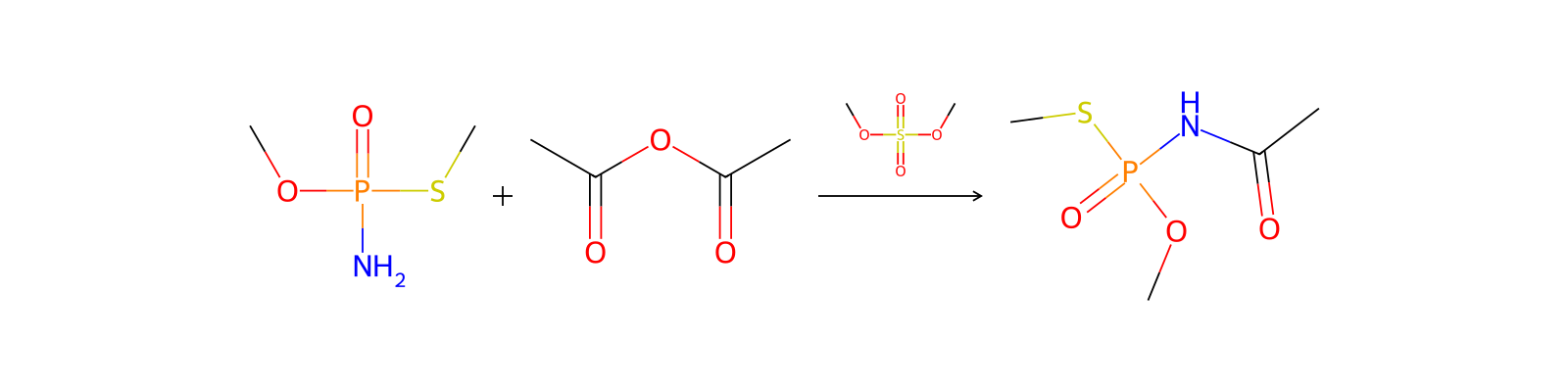
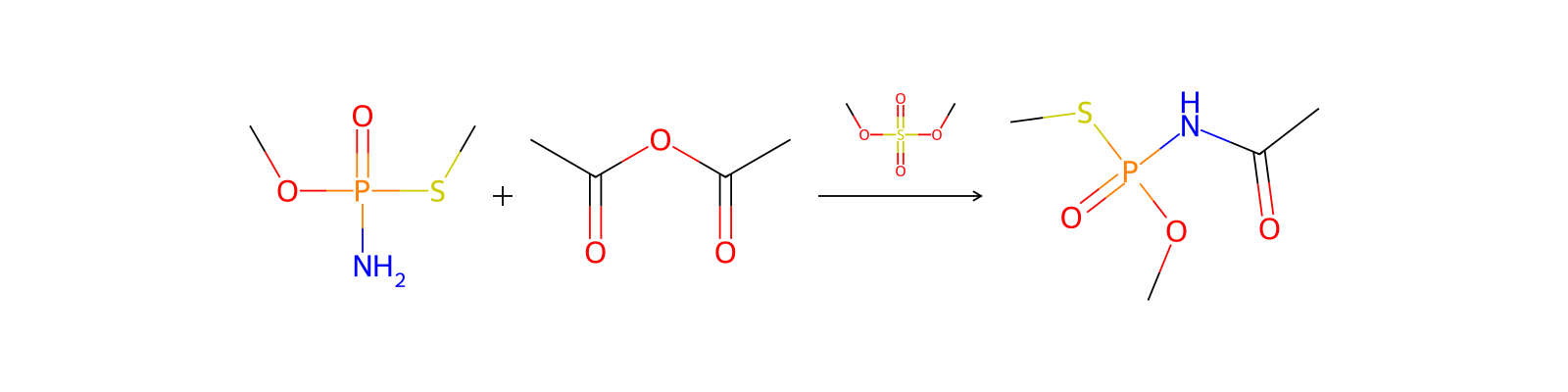
REACTION OF SODIUM METHYL PHOSPHOROAMIDOTHIOATE AND DIMETHYL SULFATE
Methamidophos is prepared by isomerization of O,O-dimethylthiophosphamidate.
Formulations/Preparations
'MONITOR SPRAY CONCENTRATE': SOLUBLE CONCENTRATE (717 G/L); 'TAMARON', SOLUBLE CONCENTRATE (600 G/L)
... WETTABLE POWDER--25% ACTIVE INGREDIENT; GRANULAR--5% ACTIVE INGREDIENT; 50 ULV--ULTRA-LOW VOLUME SPRAY.
Emulsifiable concentrate
Soluble concentrate
Tradenames: 'Monitor' (Bayer, Tomen, Valent); 'Tamaron' (Bayer); 'Cekumidofos' (Cequisa); 'Giant' (Sanonda); 'Jiaanlin' (Shenzhen Jiangshan); 'Lucamet' (Inquiport); 'Methaphos' (Efthymiadis); 'MTD-600' (Westrade); 'Patrole' (Reposo); 'Pilaron' (Pilarquim); ...'Nitofol' (Bayer); 'Afitox T' (Siapa); 'Agromon' (AgroSan); 'Bullet' (CAS); 'Citrimet' (Plaaskem Int.); 'Meta' (Agricultura Nacional); 'Metasint' (Westrade); 'Sherman' (Chemiplant); 'Tamanox' (Crystal); 'Themanitar' (Sanonda). Mixtures: 'Ninja' (+ cypermethrin) (Reposo). Discontinued names: 'Orthotox' * (Schering). Mixtures: 'Taifun' * (+ imidacloprid) (Turkey) (Bayer).
Use ClassificationEnvironmental transformation -> Pesticide transformation products (metabolite, successor)
General Manufacturing Information
The WHO Recommended Classification of Pesticides by Hazard identifies Methamidophos (technical grade) as Class IB: highly hazardous; Main Use: insecticide. According to the PIC /Prior Informed Consent/ Convention, export of /Methamidophos/ can only take place with the prior informed consent of the importing Party. ...(further information can be found at: http://www.pic.int/).
/Methamidophos/ is an acaricide and insecticide effective against a broad range of insect pests on many crops. It is systemic in action when applied to the base or trunk of deciduous trees ...At 0.5-1 kg/ha, its contact effectiveness persists for 7-21 days.
Incompatibilities: Compatible with most pesticides including oil sprays but mixing with alkaline sprays such as lime sulfur or bordeaux mixture should be avoided.
Systemic insecticide and acaricide with contact and stomach action. Cholinesterase inhibitor.
Applications
DescriptionMethamidophos is an off-white crystalline solid. Molecular weight= 141.12; Freezing/Melting point=44.5℃; Vapor pressure= 8 3 104 mmHg at 20℃. Hazard Identification (based on NFPA-704 M Rating System): Health 3, Flammability 1, Reactivity 0. Slightly soluble in water.
UsesMetamidophos is an organophosphate insecticide used in great quantities in rice fields in rice-producing countries.
UsesInsecticide; acaricide.
UsesInsecticide and acaricide.
UsesMethamidophos is used to control a wide range of insects and mites in a very large number of crops.
General DescriptionCrystalline solid, technical product is off-white with a pungent odor. Used as an insecticide on a number of vegetables and on cotton.
Upstream & downstream products
Upstream raw materials
Downstream products
Additional notes
DefinitionChEBI: Methamidophos is an organic thiophosphate resulting from the N-deacylation of the proinsecticide acephate. It has a role as an acaricide, an agrochemical and an avicide. It is an organic thiophosphate, a phosphoramide and an organothiophosphate insecticide.
Related reactions
5 records


Linked notes
Loading…