

Basic information
- CAS
480-41-1- Standard SMILES
O=C1C[C@@H](c2ccc(O)cc2)Oc2cc(O)cc(O)c21- InChIKey
FTVWIRXFELQLPI-ZDUSSCGKSA-N- Molecular formula
- C15H12O5
- Average molar mass
- 272.25 g/mol
- Monoisotopic mass
- 272.06847348
Overview
(S)-naringenin is the (S)-enantiomer of naringenin. It has a role as a plant metabolite and an expectorant. It is a (2S)-flavan-4-one and a naringenin. It is a conjugate acid of a (S)-naringenin(1-). It is an enantiomer of a (R)-naringenin.
Names & identifiers
- Preferred name
- Naringenin
- IUPAC
- (2S)-5,7-dihydroxy-2-(4-hydroxyphenyl)-2,3-dihydrochromen-4-one
- English name
- Naringenin
- Molecular formula
- C15H12O5
- Molecular weight
- 272.25
Names & synonyms
naringenin480-41-1(S)-Naringeninsalipurpol(2S)-NaringeninNaringenineSalipurolnaringetolpelargidanon5,7,4'-Trihydroxyflavanone(-)-(2S)-NaringeninHN5425SBF2
Show more names
NARIGENIN5,7-DIHYDROXY-2-(4-HYDROXYPHENYL)CHROMAN-4-ONE(S)-5,7-Dihydroxy-2-(4-hydroxyphenyl)chroMan-4-one5,7-Dihydroxy-2-(4-hydroxyphenyl)-2,3-dihydro-4H-chromen-4-oneringenin(2R)-5,7-Dihydroxy-2-(4-hydroxyphenyl)-2,3-dihydro-4H-chromen-4-one
(S)-2,3-Dihydro-5,7-dihydroxy-2-(4-hydroxyphenyl)-4H-1-benzopyran-4-oneDTXSID1022392CHEBI:17846(2S)-5,7-dihydroxy-2-(4-hydroxyphenyl)-2,3-dihydrochromen-4-oneNSC-11855NSC-34875CHEBI:50202BE-14348A
Database identifiers
- CAS
480-41-1- PubChem CID
- 439246
- DTXSID
DTXSID1022392- ChEMBL
CHEMBL9352- ChEBI
CHEBI:17846- UNII
- HN5425SBF2
- EC Number
- 207-550-2
- Nikkaji
- J325.849A
Properties
Computed structural properties
- XLogP
- 2.4
- Topological polar surface area
- 87 Ų
- Hydrogen bond donors
- 3
- Hydrogen bond acceptors
- 5
- Rotatable bonds
- 1
- Heavy atoms
- 20
- Formal charge
- 0
- Complexity
- 363
Experimental & physicochemical properties
Chemical ClassesAntioxidant
DrugsPharmaceuticals -> Listed in ZINC15
LipidsPolyketides [PK] -> Flavonoids [PK12] -> Flavanones [PK1214]
SpringerMaterials PropertiesCrystal structure
LogP2.52
Endocrine DisruptorsPotential endocrine disrupting compound
Melting Point251 °C
Physical DescriptionSolid
Collision Cross Section166.9 Ų [M+H]+
Physicochemical properties
- Melting point
- 247 · 247-250 °C(lit.)
- Boiling point
- 335.31 °C · 335.31°C (rough estimate)
- Density
- 1.2066 · 1.2066 (rough estimate)
- refractive index
- 1.6 · 1.6000 (estimate)
- FEMA
- 4797 · 4797 | (+/-)-NARINGENIN
- storage temp.
- Inert atmosphere,Room Temperature
- solubility
- DMSO (Slightly), Methanol (Slightly, Sonicated)
- form
- Powder
- pka
- 7.52 · 7.52±0.40(Predicted)
- color
- Beige-brown
- Cosmetics Ingredients Functions
- SKIN CONDITIONING
- InChI
- InChI=1S/C15H12O5/c16-9-3-1-8(2-4-9)13-7-12(19)15-11(18)5-10(17)6-14(15)20-13/h1-6,13,16-18H,7H2/t13-/m0/s1
- InChIKey
- FTVWIRXFELQLPI-ZDUSSCGKSA-N
- SMILES
- [C@H]1(C2=CC=C(O)C=C2)OC2=CC(O)=CC(O)=C2C(=O)C1
- LogP
- 2.52 · 2.520
- CAS DataBase Reference
- 480 · 480-41-1(CAS DataBase Reference)
- EWG's Food Scores
- 1 · 1
- FDA UNII
- 5425 SBF2 · HN5425SBF2
- EPA Substance Registry System
- 4 H-1-Benzopyran-4-one, · 4H-1-Benzopyran-4-one, 2,3-dihydro-5,7-dihydroxy-2-(4-hydroxyphenyl)-, (2S)- (480-41-1)
- Symbol(GHS)
- 7 · GHS07
- Signal word
- Warning
- Hazard statements
- 302 · H302-H315-H319-H335
- Precautionary statements
- 261 · P261-P305+P351+P338
- Hazard Codes
- Xi,Xn
- Risk Statements
- 36 · 36/37/38-22
- Safety Statements
- 26 · 26-36-37/39
- WGK Germany
- 3 · 3
- HazardClass
- IRRITANT
- HS Code
- 29329990 · 29329990
Safety & regulation
GHS classification
GHS Classification
Warning
H315 (99.3%): Causes skin irritation [Warning Skin corrosion/irritation]
P264, P264+P265, P280, P302+P352, P305+P351+P338, P321, P332+P317, P337+P317, and P362+P364 (click each P-code to see the statement)
Aggregated GHS information provided per 305 reports by companies from 4 notifications to the ECHA C&L Inventory. Each notification may be associated with multiple companies.
Hazard information
Hazard Classes and CategoriesSkin Irrit. 2 (99.3%)
Toxicology
Toxicity Summary
A 2022 review notes that Naringenin has protective effects against toxicities produced by various natural toxins, pharmaceuticals, heavy metals, and environmental chemicals, and that the effects are mainly mediated via suppression of lipid peroxidation, oxidative stress (one example is lead), and inflammatory factors (one example is daunorubicin), and the activation of PI3K/Akt and MAPK survival signaling pathways.
Safety data
- wgk
- 3
- hs_code
- 29329990
- risk_code
- 36/37/38-22
- Signal word
- Warning
- Symbol(GHS)
- GHS07
- hazard_code
- Xi,Xn
- safety_code
- 26-36-37/39
- hazard_class
- IRRITANT
- Hazard statements
- H302-H315-H319-H335
- Precautionary statements
- P261-P305+P351+P338
Chemistry & industry
Pharmacology
Mechanism of Action
A 2021 review notes that the anti-inflammatory and antioxidant activities are via mechanisms such as enhancement of glutathione S-transferase, superoxide dismutase, glutathione peroxidase, and catalase activity, while reducing serum levels of alanine aminotransferase, aspartate aminotransferase, lactate dehydrogenase, and malondialdehyde. The review also notes that the anti-apoptotic potential was mediated by regulating B-cell leukemia/lymphoma 2 (Bcl-2), Bcl-2-associated X protein, and caspase-3/9.
MeSH Pharmacological Classification
Various agents with different action mechanisms used to treat or ameliorate PEPTIC ULCER or irritation of the gastrointestinal tract. This has included ANTIBIOTICS to treat HELICOBACTER INFECTIONS; HISTAMINE H2 ANTAGONISTS to reduce GASTRIC ACID secretion; and ANTACIDS for symptomatic relief.
Compounds which inhibit or antagonize the action or biosynthesis of estrogenic compounds.
Tissue LocationsFibroblasts
Cellular LocationsMembrane
Applications
UsesThe aglucon of Naringin. Inhibitory mechanism of Naringenin against carcinogenic acrylamide formation and nonenzymic browning in Maillard model reactions
Usesantiulcer, antioxidant, immunomodulator, cholesterol lowering
Uses(S)-Naringenin, an active flavanone, maintains antioxidative, anti-inflammatory and antitumorigenic activities. Used in the treatment of praquat (PQ)-induced oxidative stress.
Upstream & downstream products
Upstream raw materials
Downstream products
Suppliers100 total
北京华美互利生物化工010-56205725 · [email protected]
上海阿拉丁生化科技股份有限公司400-6206333 13167063860 · [email protected]
上海纯优生物科技有限公司18302135232 18302135232 · [email protected]
T&W GROUP021-61551611 13296011611 · [email protected]
上海如吉生物科技发展有限公司+86-21-65211385-8001 36031160 · [email protected]
上海将来实业股份有限公司400-0066400 13621662912 · [email protected]
Syntechem Co.,Ltd[email protected]
上海迈瑞尔生化科技有限公司4006356688 18621169109 · [email protected]
大连美仑生物技术有限公司0411-62910999 13889544652 · [email protected]
安耐吉化学&3A(安徽泽升科技股份有限公司)400-0056266 · [email protected]
北京绿百草科技发展有限公司010-61136123 · [email protected]
天津万象恒远科技有限公司15722085254 · [email protected]
成都普思生物科技股份有限公司028-85370565-229 18080489829 · [email protected]
成都普菲德生物技术有限公司028-82610909 13388174823 · [email protected]
上海融禾医药科技发展有限公司17301719108 13341702378 · [email protected]
深圳虹彩祥根生物科技有限公司+86-0755-89668383 · [email protected]
MedChemexpress LLC021-58955995 · [email protected]
长沙上禾生物科技有限公司0731-84213302 18975842720 · [email protected]
潍坊华植生物科技有限公司17388075642 13815430202
南京春秋生物工程有限公司17388075642 13815430202 · [email protected]
杭州东帆化学有限公司86-0571-85151182
云南西力生物技术股份有限公司0871-65217109 · [email protected]
山东西亚化学有限公司13355009207 13355009207 · [email protected]
大赛璐药物手性技术(上海)有限公司021-50460086-9 15921403865 · [email protected]
四川库利南科技有限公司400-1166-196 18981987031 · [email protected]
上海耐士化工科技有限公司400-188-0725 +86 21 34310725 13611771617
湖南汇百侍生物科技有限公司0731-85526065 13308475853 · [email protected]
上海源叶生物科技有限公司13636370518 · [email protected]
艾科试剂4008-755-333 18080918076 · [email protected]
成都锦然生物科技有限公司028-83311324 1278112614 · [email protected]
上海思域化工科技有限公司86-21-34053660 · [email protected]
西安康培基生物科技有限公司86-029-85456576 · [email protected]
赛默飞世尔科技(中国)有限公司800-810-5118 · [email protected]
北京伊诺凯科技有限公司400-810-7969 010-59572699 · [email protected]
AdooQ BioScience, LLC+1 (866) 930-6790 · [email protected]
上海遐瑞医药科技有限公司+86 21 61551611
深圳振强药物研发有限公司0755-66853366 13670046396 · [email protected]
广州爱纯医药科技有限公司020-39119399 18927568969 · [email protected]
上海陶素生化科技有限公司021-33632979 · [email protected]
成都瑞芬思德丹生物科技有限公司2355253622; 18981954830 · [email protected]
上海倍卓生物科技有限公司021-61119791,13386096464 · [email protected]
Xunteng International Trading Co.,Limited—
上海将来实业股份有限公司400-0066400 13621662912 · [email protected]
上海将来实业股份有限公司021-61552785 · [email protected]
四川省维克奇生物科技有限公司028-81700200 18116577057 · [email protected]
成都零六生物科技有限公司400-1166-196 13458535857 · [email protected]
雷丁试剂0510-85629785 18013409632 · [email protected]
上海卓因生物科技有限公司021-61317773 · [email protected]
上海麦克林生化科技股份有限公司15221275939 15221275939 · [email protected]
上海永叶生物科技有限公司86-021-61559134 15921386130 · [email protected]
Additional notes
DefinitionChEBI: (S)-naringenin is the (S)-enantiomer of naringenin. It has a role as an expectorant and a plant metabolite. It is a naringenin and a (2S)-flavan-4-one. It is a conjugate acid of a (S)-naringenin(1-). It is an enantiomer of a (R)-naringenin.
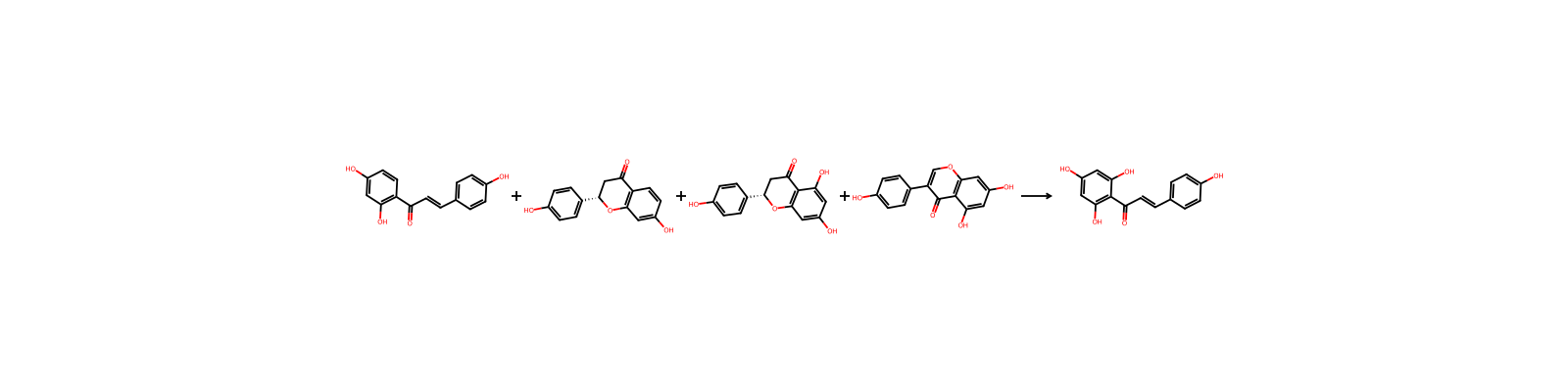
Related reactions
9 records




Compound notes
Loading…