HomeMCPWorkbenchSkills
HomeWorkbenchNotificationsMe
llms.txt · MCP GuidePrivacy Policy · Terms of Service · Supportv1.8.3
  1. Home
  2. /Compound

7-Aminocephalosporanic acid

HCID 441328
New reaction
Print
Basic informationOverviewNames & identifiersPropertiesSafety & regulationChemistry & industryRelated reactionsCompound notes
Substructure searchFind similar structures

Basic information

CAS
957-68-6
Standard SMILES
CC(=O)OCC1=C(C(=O)O)N2C(=O)[C@@H](N)[C@H]2SC1
InChIKey
HSHGZXNAXBPPDL-HZGVNTEJSA-N
Molecular formula
C10H12N2O5S
Average molar mass
272.28 g/mol
Monoisotopic mass
272.04669266

Overview

7beta-aminocephalosporanic acid is the alpha,beta-unsaturated monocarboxylic acid that is the active nucleus for the synthesis of cephalosporins and intermediates. It is functionally related to a cephalosporanic acid. It is a tautomer of a 7beta-aminocephalosporanic acid zwitterion.

Names & identifiers

Preferred name
7-Aminocephalosporanic acid
IUPAC
(6R,7R)-3-(acetyloxymethyl)-7-amino-8-oxo-5-thia-1-azabicyclo[4.2.0]oct-2-ene-2-carboxylic acid
English name
7-Aminocephalosporanic acid
Molecular formula
C10H12N2O5S
Molecular weight
272.28

Names & synonyms

7-Aminocephalosporanic acid957-68-67-ACA7beta-Aminocephalosporanic acid7-Aminocephalosporinic acidDTXSID9045342CHEBI:2255(6R,7R)-3-(acetyloxymethyl)-7-amino-8-oxo-5-thia-1-azabicyclo[4.2.0]oct-2-ene-2-carboxylic acid9XI67897RGDTXCID70253425-THIA-1-AZABICYCLO(4.2.0)OCT-2-ENE-2-CARBOXYLIC ACID, 3-((ACETYLOXY)METHYL)-7-AMINO-8-OXO-, (6R,7R)-5-Thia-1-azabicyclo[4.2.0]oct-2-ene-2-carboxylic acid, 3-[(acetyloxy)methyl]-7-amino-8-oxo-, (6R,7R)-
Show more names
(6R,7R)-3-(acetoxyMethyl)-7-aMino-8-oxo-5-thia-1-azabicyclo[4.2.0]oct-2-ene-2-carboxylic acid7-AminoC10H12N2O5S7-ACA ImpurityD-7-ACA Impurity 4AminocephalosporanicCefalotin Impurity CCefradine impurity A
7-ACA cpd(6R,7R)-3-(acetyloxymethyl)-7-amino-8-oxo-5-thia-1-azabicyclo(4.2.0)oct-2-ene-2-carboxylic acid(6R,7R)-3-(acetyloxymethyl)-7-azanyl-8-oxidanylidene-5-thia-1-azabicyclo(4.2.0)oct-2-ene-2-carboxylic acid(6R,7R)-3-(acetyloxymethyl)-7-azanyl-8-oxidanylidene-5-thia-1-azabicyclo[4.2.0]oct-2-ene-2-carboxylic acidRefChem:545414(6R,7R)-3-(acetyloxymethyl)-7-azaniumyl-8-oxo-5-thia-1-azabicyclo(4.2.0)oct-2-ene-2-carboxylate213-485-07-ACS

Properties

Computed structural properties

XLogP
-4
Topological polar surface area
135 Ų
Hydrogen bond donors
2
Hydrogen bond acceptors
7
Rotatable bonds
4
Heavy atoms
18
Formal charge
0
Complexity
461

Experimental & physicochemical properties

Chemical ClassesOther Uses -> Pharmaceuticals
DrugsPharmaceuticals -> Antibiotics

Physicochemical properties

Melting point
300 °C · >300 °C (lit.)
alpha
94 · 94 º (c=0.5, KH2PO4, PH 7)
Boiling point
560.6 · 560.6±50.0 °C(Predicted)
Density
1.4667 · 1.4667 (rough estimate)
vapor pressure
0 Pa · 0Pa at 20℃
refractive index
1.565 · 1.5650 (estimate)
storage temp.
2 · 2-8°C
solubility
DMSO (Very Slightly, Heated)
pka
2.59 · 2.59±0.50(Predicted)
form
Crystalline Powder
color
Off-white to beige

Safety & regulation

Safety information is for reference only and does not replace the supplier’s Safety Data Sheet (SDS), applicable regulations, or professional assessment.

GHS classification

GHS Classification · 5 items

This chemical does not meet GHS hazard criteria for 1.4% (1 of 73) of reports.

Danger

H317 (97.3%): May cause an allergic skin reaction [Warning Sensitization, Skin]

P233, P260, P261, P264+P265, P271, P272, P280, P284, P302+P352, P304+P340, P305+P351+P338, P319, P321, P333+P317, P337+P317, P342+P316, P362+P364, P403, P403+P233, P405, and P501 (click each P-code to see the statement)

Aggregated GHS information provided per 73 reports by companies from 10 notifications to the ECHA C&L Inventory. Each notification may be associated with multiple companies.

Hazard information

Regulatory Information · 2 items

REACH registered substance: 3-acetoxymethylen-7-amino-8-oxo-5-thia-1-azabicyclo[4.2.0]oct-2-ene-2-carboxylic acid (EC: 213-485-0)

5-Thia-1-azabicyclo4.2.0oct-2-ene-2-carboxylic acid, 3-(acetyloxy)methyl-7-amino-8-oxo-, (6R,7R)-: Does not have an individual approval but may be used as a component in a product covered by a group standard. It is not approved for use as a chemical in its own right.

Hazards SummaryOccupational asthma confirmed in two pharmaceutical workers; [Malo]
Hazard Classes and CategoriesSkin Sens. 1 (97.3%)

Toxicology

Adverse EffectsAsthma - Reversible bronchoconstriction (narrowing of bronchioles) initiated by the inhalation of irritating or allergenic agents.

Safety data

Chemistry & industry

Uses & manufacturing

UsesChemical class is Beta.-Lactams; [NIH ChemDB]
Applications · 4 items

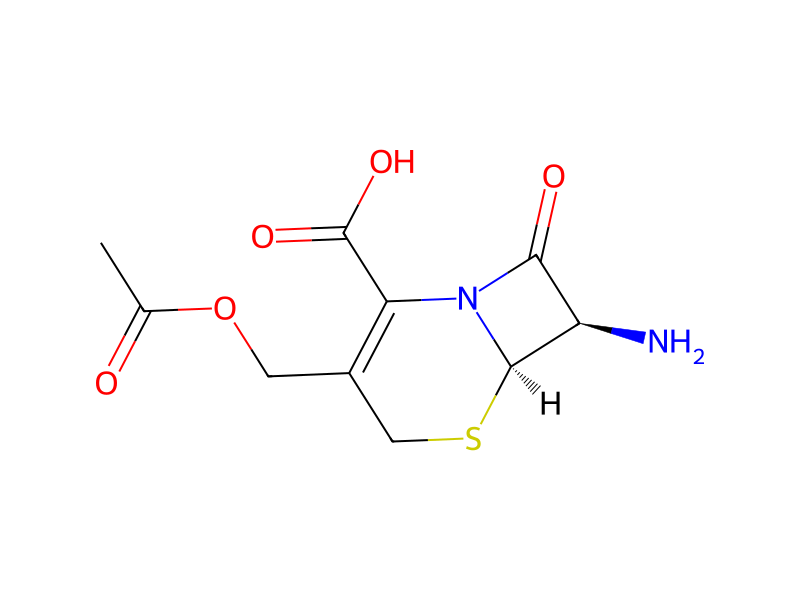
DescriptionThe abbreviation for 7-aminocephalosporanic acid is 7-ACA. It is a white or almost white crystalline powder and serves as a crucial nucleus in the production of cephalosporin antibiotics. By utilizing chemical transformations at positions 7 and 3 of the nucleus, numerous cephalosporins can be synthesized, including cefazolin sodium, cefotaxime sodium, ceftriaxone sodium, cefoperazone sodium, sodium ceftazidime, and cefuroxime sodium.Cephalosporin antibiotics (Cephalosporins) are a cluster of broad-spectrum semisynthetic antibiotics, they all contain the nucleus of 7-aminocephalosporanic acid (7-ACA), with different groups in the 3 and 7 carbon atoms, forming various cephalosporins with different antibacterial activity and pharmacokinetic characteristics. Cephalosporin antibiotics have broad antibacterial spectrum,strong antibacterial effect, and fewer allergic reactions, and only part of the cross allergic with penicillin and they have varying degrees of stability on the β-lactamase . Cephalosporins have fast development, and many families, they are divided into four generation cephalosporins according to the anti-microbial dynamic "generations" . They are the same as penicillin, cephalosporins contain β lactam ring , which is necessary to achieve antibacterial efficacy. But penicillins are 6-amino penicillin acid (6-aminopenicillanic acid, 6-APA) derivatives, and cephalosporins nucleus is 7-aminocephalosporanic acid (7-aminocephalosporamic acid, 7-ACA), the latter is from cephalosporin C, it is a fermentation product of Cephalosporium acremonium.7-aminocephalosporanic acid has a dihydro-thiazine ring (A) and aβ-lactam ring (B), it has a resistant effect on the class of staphylococcus aureus penicillinase. Modifying this nucleus with different side chains can form the entire series of cephalosporin antibiotics. Modifying β-lactam bit 7 (R1), can make antimicrobial efficacy and stability within the β-lactamase change. At 3 bit on-dihydro-thiazine ring substitution (R2), the influence of effect on drug metabolism and pharmacokinetic properties is more staggering than that of antibacterial effect.Cephamycins are associated with cephalosporin C in chemical structure, the main difference is that they have a 7-α-methoxy group (R3), so that the stability to certain β-lactamase is improved . Cephalosporin is a derivative cephalosporin C which is produced by Streptomyces . Cefotetan is an semi-synthetic derivative of organic mycin G, it is a product of Streptomyces organonensis. Cefmetazole is a semi-synthetic product of 7-aminocephalosporanic acid.Figure 1 the chemical structure of the 7-aminocephalosporanic acid

Related reactions

366 records
New reaction record
HRID 5158 reaction equation
HRID 5158As reactant
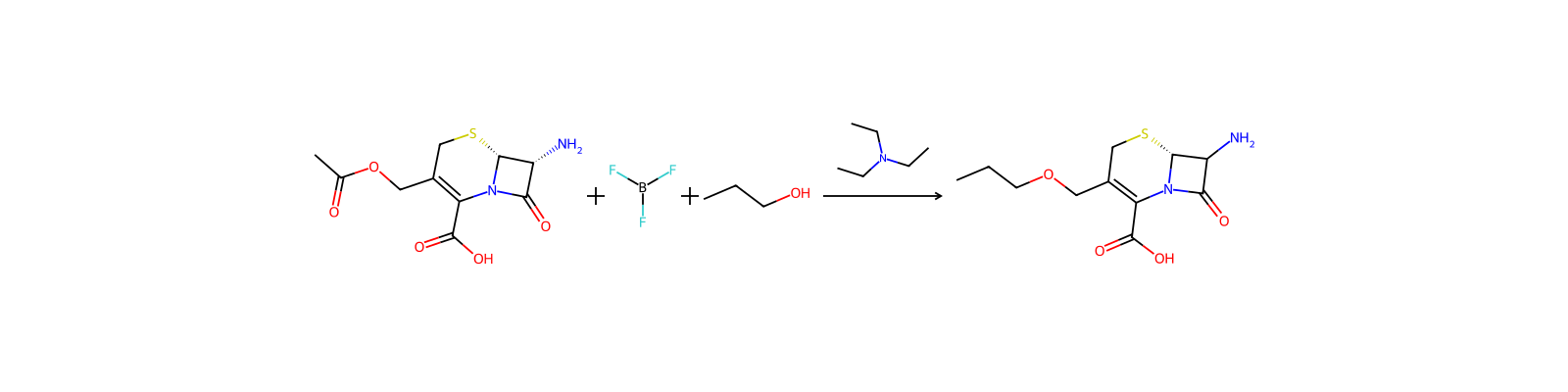
HRID 5159 reaction equation
HRID 5159As reactant
HRID 5160 reaction equation
HRID 5160As reactant
HRID 5161 reaction equation
HRID 5161As reactant
HRID 27137 reaction equation
HRID 27137As reactant
HRID 34493 reaction equation
HRID 34493As reactant
HRID 53090 reaction equation
HRID 53090As product
HRID 67698 reaction equation
HRID 67698As reactant
PreviousPage 1 of 46

Compound notes

On this pageBasic informationOverviewNames & identifiersPropertiesSafety & regulationChemistry & industryRelated reactionsCompound notes

Database identifiers

CAS
957-68-6
PubChem CID
441328
DTXSID
DTXSID9045342
ChEMBL
CHEMBL1615585
ChEBI
CHEBI:2255
UNII
9XI67897RG
EC Number
213-485-0
Nikkaji
J7.191I
optical activity
19 · [α]19/D +90°, c = 0.5 in KH2PO4/trace NaOH
Water Solubility
409.6 mg/L · 409.6mg/L(22.99 ºC)
Merck
14 · 14,434
BRN
622638 · 622638
Stability
Hygroscopic
Major Application
peptide synthesis
InChI
1S/C10H12N2O5S/c1-4(13)17-2-5-3-18-9-6(11)8(14)12(9)7(5)10(15)16/h6,9H,2-3,11H2,1H3,(H,15,16)/t6-,9-/m1/s1
InChIKey
HSHGZXNAXBPPDL-HZGVNTEJSA-N
SMILES
[H][C@]12SCC(COC(C)=O)=C(N1C(=O)[C@H]2N)C(O)=O
LogP
-3.4 at · -3.4 at 20℃
CAS DataBase Reference
957 · 957-68-6(CAS DataBase Reference)
FDA UNII
9 XI67897RG · 9XI67897RG
Comptox DTXSID
9045342 · DTXSID9045342
UNSPSC Code
41116107 · 41116107
NACRES
24 · NA.24
Symbol(GHS)
8 · GHS08
Signal word
Danger
Hazard statements
317 · H317-H334
Precautionary statements
261 · P261-P272-P280-P284-P302+P352-P333+P313
PPE
95 · dust mask type N95 (US), Eyeshields, Faceshields, Gloves
Hazard Codes
Xn,Xi
Risk Statements
42 · 42/43-36/37/38-20/21/22
Safety Statements
22 · 22-36/37-24/25-36-26
WGK Germany
3 · 3
HS Code
2934996000 · 2934996000
Storage Class
11 · 11 - Combustible Solids
Hazard Classifications
1 Skin · Resp. Sens. 1Skin Sens. 1
REACH Registrations
Active
PPE
dust mask type N95 (US), Eyeshields, Faceshields, Gloves
wgk
3
hs_code
2934996000
risk_code
42/43-36/37/38-20/21/22
Signal word
Danger
Symbol(GHS)
GHS08
hazard_code
Xn,Xi
safety_code
22-36/37-24/25-36-26
Storage Class
11 - Combustible Solids
Hazard statements
H317-H334
REACH Registrations
Active
Hazard Classifications
Resp. Sens. 1Skin Sens. 1
Precautionary statements
P261-P272-P280-P284-P302+P352-P333+P313

Uses7-Aminocephalosporanic Acid (Cefoperazone EP Impurity E) is the starting material for semi-synthetic cephalosporins. Obtained by mild acid hydrolysis of cephalosporin C.

UsesPotent antibacterial that inhibits bacterial transpeptidase and β-lactamase activity in Staphylococcus aureus.

General DescriptionThe chemical class of 7-aminocephalosporanic acid is Beta-Lactams. This class includes several antibiotic families, such as penicillins, cephalosporins, carbapenems, and monobactams. The Beta-lactam ring is part of the core structure of these families, which is why they are also referred to as Beta-lactam antibiotics.

Preparation methods · 1 item

PreparationThe synthesis of 7-Aminocephalosporanic acid involves esterification of semi-synthetic cephalosporin-cephalosporin C with trimethylchlorosilane, followed by phosphorus pentachloride chloride and butanol etherifying. The final product is obtained through hydrolysis. The yield from cephalosporin C sodium to 7-ACA is approximately 50%.DOI: 10.3390/jof8050450

Upstream & downstream products

Upstream raw materials

Chlorotrimethylsilane7-(5-amino-5-carboxyvaleramido)cephalosporanic acidPhosphorus pentachloride

Downstream products

7-(alpha-Bromoacetamido)cephalosporanic acidCefteramCefotaximeCefuroximeCephalothin sodiumCEFATHIAMIDINE1H-Tetrazole-1-acetic acid(6R-trans)-3-(acetoxymethyl)-8-oxo-7-(1H-tetrazol-1-ylacetamido)-5-thia-1-azabicyclo[4.2.0]oct-2-ene-2-carboxylic acidDesacetyl-7-ACA LactonecefuracetimeCefteram pivoxilNitrocefin7-AMCAPrecursor of cefcapene diisopropylanmine salt
Additional notes · 1 item

DefinitionChEBI: 7-Aminocephalosporanic acid is the alpha,beta-unsaturated monocarboxylic acid that is the active nucleus for the synthesis of cephalosporins and intermediates. It is functionally related to a cephalosporanic acid. It is a tautomer of a 7beta-aminocephalosporanic acid zwitterion.