HomeMCPWorkbenchSkills
HomeWorkbenchNotificationsMe
llms.txt · MCP GuidePrivacy Policy · Terms of Service · Supportv1.8.0
  1. Home
  2. /Compound

Piperazine

HCID 4837
New noteNew reactionRequest quotes
Print preview

Completing data — refresh the page later to see the latest

Basic informationOverviewNames & identifiersPropertiesSafety & regulationChemistry & industryRelated reactionsCompound notes
Substructure searchFind similar structures

Basic information

CAS
110-85-0
Standard SMILES
C1CNCCN1
InChIKey
GLUUGHFHXGJENI-UHFFFAOYSA-N
Molecular formula
C4H10N2
Average molar mass
86.14 g/mol
Monoisotopic mass
86.08439832

Overview

Needle-like white or colorless crystals. Shipped as a solid or suspended in a liquid medium. Very corrosive to skin, eyes and mucous membranes. Solid turns dark when exposed to light. Flash point 190 °F. Used as a corrosion inhibitor and as an insecticide.

Names & identifiers

Preferred name
Piperazine
IUPAC
piperazine
English name
Piperazine
Molecular formula
C4H10N2
Molecular weight
86.14

Names & synonyms

piperazine110-85-0Diethylenediamine1,4-DiazacyclohexaneHexahydropyrazinePiperazinAntirenPiperazidineDiethyleneimineDispermineLumbricalPipersol
Show more names
Piperzine AnhydrousPiperazine HexahydrtaeAnhydrous Piperazine (PIP)Upixon
Eraverm1,4-PiperazineWurmirazinUvilonPiperazine, anhydrousWorm-A-Ton1,4-DiethylenediaminePyrazine hexahydride

Database identifiers

CAS
110-85-0
PubChem CID
4837
DTXSID
DTXSID1021164
ChEMBL
CHEMBL1412
ChEBI
CHEBI:28568
UNII
1RTM4PAL0V
EC Number
203-808-3
Nikkaji
J1.981J

Properties

Computed structural propertiesFilling in

XLogP
-1.5
Topological polar surface area
24.1 Ų
Hydrogen bond donors
2
Hydrogen bond acceptors
2
Rotatable bonds
0
Heavy atoms
6
Formal charge
0
Complexity
26.5

Experimental & physicochemical properties

Chemical Classes · 2 items

Nitrogen Compounds -> Piperazines

Corrosives

PFASPFAS -> Other/unspecified
Drugs · 2 items

DEA NFLIS-Drug Category -> Piperazines (Hallucinogen)

Pharmaceuticals -> Listed in ZINC15

pHpH = 10.8-11.8 (10% aqueous solution)
SpringerMaterials Properties15N nuclear magnetic resonance spectrum
LogP · 4 items

log Kow = -1.50

-0.8

-1.17

-1.17

Odor · 2 items

Typical amine odor

AMMONIACAL ODOR

TasteSalty taste
Food AdditivesFLAVORING AGENT OR ADJUVANT -> FDA Substance added to food
Density

Safety & regulation

Safety information is for reference only and does not replace the supplier’s Safety Data Sheet (SDS), applicable regulations, or professional assessment.

GHS classification

GHS Classification · 6 items

Danger

H314: Causes severe skin burns and eye damage [Danger Skin corrosion/irritation]

P203, P233, P260, P261, P264, P271, P272, P280, P284, P301+P330+P331, P302+P352, P302+P361+P354, P304+P340, P305+P354+P338, P316, P318, P321, P333+P317, P342+P316, P362+P364, P363, P403, P405, and P501 (click each P-code to see the statement)

Hazard information

Regulatory Information · 6 items

Chemical: Piperazine

Hazard Traits - Respiratory Toxicity

Commission Regulation (EC) No 1565/2000 (Repealed by Com. Implementing Reg. (EU) No 872/2012)

Piperazine is listed on the EPA's Chemical Data Reporting (CDR) system. Manufacturers and importers of Piperazine are required to report information about their production and use of this chemical to the EPA under the Toxic Substances Control Act (TSCA). (40 eCFR Part 711)

Status: Active Update: 22-02-2023 https://echa.europa.eu/registration-dossier/-/registered-dossier/14941

Piperazine: Does not have an individual approval but may be used under an appropriate group standard

Other Safety InformationIMAP assessments - Piperazine: Human health tier II assessment
DOT LabelCorrosive
Fire Hazards · 3 items

Excerpt from ERG Guide 153 [Substances - Toxic and/or Corrosive (Combustible)]:

· Combustible material: may burn but does not ignite readily.

Chemistry & industry

Pharmacology

ATC Code · 2 items

P - Antiparasitic products, insecticides and repellents

QP - Antiparasitic products, insecticides and repellents

Protein Binding60-70%
Pharmacodynamics · 1 item

Piperazine is an anthelminthic especially useful in the treatment of partial intestinal obstruction caused by Ascaris worms, which is a condition primarily seen in children. Piperazine hydrate and piperazine citrate are the main anthelminthic piperazines.

Mechanism of Action · 6 items

Piperazine is a GABA receptor agonist. Piperzine binds directly and selectively to muscle membrane GABA receptors, presumably causing hyperpolarization of nerve endings, resulting in flaccid paralysis of the worm. While the worm is paralyzed, it is dislodged from the intestinal lumen and expelled live from the body by normal intestinal peristalsis.

Piperazine blocks the response of the /target species/ worm muscle (best studied in Ascaris), causing flaccid paralysis of the worm. While the worm is paralyzed, it is dislodged from the intestinal lumen and expelled live from the body by normal intestinal peristalsis.

The predominant effect of piperazine on /the target species/ Ascaris is to cause a flaccid paralysis that results in expulsion of the worm by peristalsis. ... Piperazine blocks the response of Ascaris muscle to acetylcholine, apparently by altering the permeability of the cell membrane to ions that are responsible for the maintenance of the resting potential. The drug causes hyperpolarization and suppression of spontaneous spike potentials with accompanying paralysis.

Piperazine citrate causes reversible muscle paralysis in intestinal nematodes, presumably by causing hyperpolarization of nerve endings /in this target species/. /Piperazine citrate/

Piperazine and its salts, as a gamma-aminobutyric acid (GABA)-like substance, induce a reversible flaccid paralysis in the /target/ nematode parasites. This is provoked by a hyperpolarization of the cell membrane followed by suppression of spontaneous spike potentials. THe paralyzed nematodes are expelled from the gut lumen by normal peristaltic actions.

In mammals, motorcortical GABAa inhibition is important for initiation of smooth flexion and/or extension movements of the extremities affecting motor and postural control. When injected into the hand motor cortical area of three infant macaque monkeys, the GABA agonist muscimol disrupted forelimb movement showing a posture of dropped wrist and fingers as if the radial nerve were paralysed. Interestingly, the three investigated animals exhibited large inter-individual differences in sensitivity to the action of the same dose of muscimol, being low in one, moderate in the second and substantial in the third. Injection into the medial segment of globus pallidus elicited choreiform movements and injections into substantia nigra pars reticulata provoked severe axial posture anomalies with rotational behaviour as well as contralateral hypotonia. Although the symptoms induced by piperazine in sensitive species exhibits some of these features, it is possible that its effects in mammals also involve other modes of action as well, in as much as a nicotinic action on rat sympathetic ganglia in vitro was reported in one series of experiments.

Related reactions

3,819 records

New reaction record
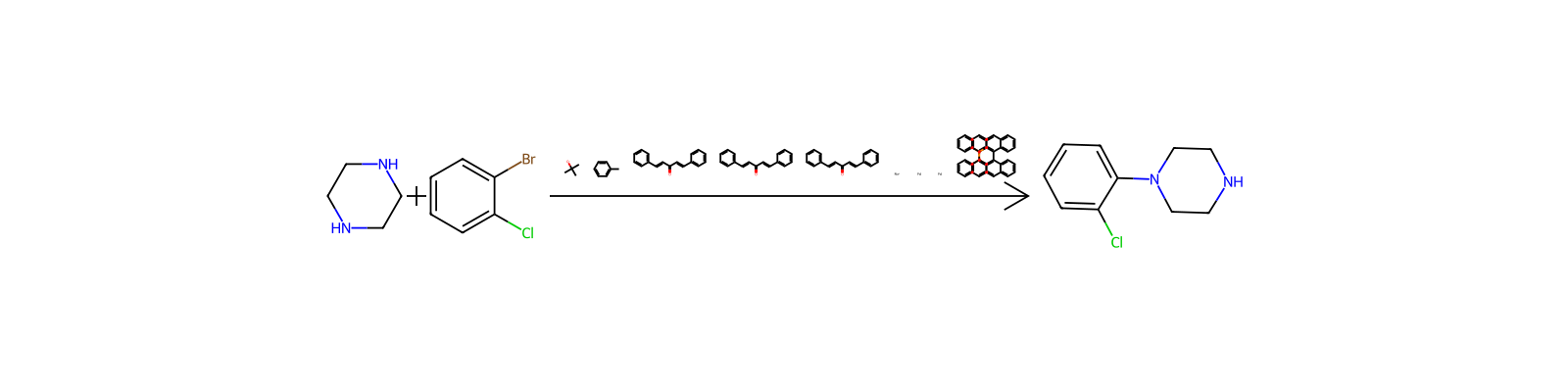
HRID 120 reaction equation
HRID 120As reactant750 AstraZeneca ELN dataset
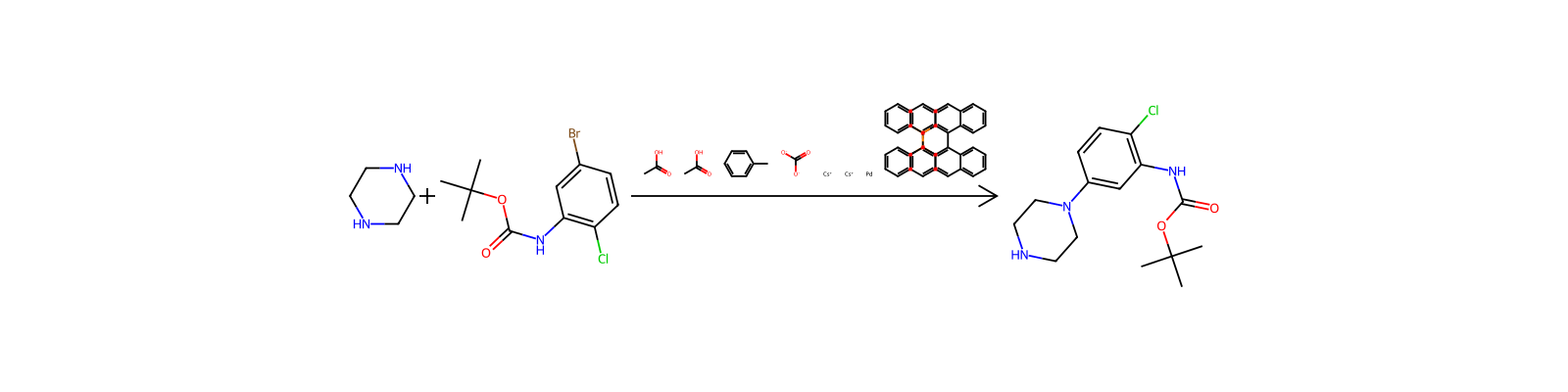
HRID 199 reaction equation
HRID 199As reactant750 AstraZeneca ELN dataset
HRID 217 reaction equation
HRID 217As reactant750 AstraZeneca ELN dataset
HRID 317 reaction equation
HRID 317As reactant750 AstraZeneca ELN dataset
HRID 318 reaction equation
HRID 318As reactant750 AstraZeneca ELN dataset
HRID 504 reaction equation
HRID 504As reactant750 AstraZeneca ELN dataset
HRID 505 reaction equation
HRID 505As reactant750 AstraZeneca ELN dataset
HRID 635 reaction equation
HRID 635As reactant750 AstraZeneca ELN dataset
Page 1 of 478

Compound notes

Loading…

On this pageBasic informationOverviewNames & identifiersPropertiesSafety & regulationChemistry & industryRelated reactionsCompound notes
More actions
New noteNew reactionRequest quotes
· 5 items

1.1 at 68 °F (NTP, 1992) - Denser than water; will sink

1.1 g/cu cm

1.1 g/cm³

Relative density of the vapour/air-mixture at 20 °C (air = 1): 1

1.45 @ 113°C

Flavoring AgentsEU Flavoring substances
Color/Form · 3 items

Plates or leaflets from ethanol

WHITE TO SLIGHTLY OFF-WHITE LUMPS OR FLAKES

Colorless, transparent, needle-like crystals

Physicochemical properties

Melting point
109 · 109-112 °C (lit.)
Boiling point
145 · 145-146 °C (lit.)
Density
1 · 1,1 g/cm3
bulk density
400 kg/m3 · 400kg/m3
vapor pressure
0.8 mm · 0.8 mm Hg ( 20 °C)
refractive index
1.446 · 1.4460
FEMA
4250 · 4250 | PIPERAZINE
FLAVIS Number
14.141 · 14.141 | Piperazine
Flash point
65 °C · 65 °C
storage temp.
30 °C · Store below +30°C.
solubility
2 O: · H2O: 0.1 M at 20 °C, clear, colorless
pka
9.83 · 9.83(at 23℃)
form
Crystalline Flakes
color
White to slightly yellow
PH
11 · 11.0-12.5 (25℃, 0.1M in H2O)
Odor
0.1 % · at 0.10 % in dipropylene glycol. ammoniacal
Odor Type
ammoniacal
biological source
rabbit
explosive limit
14 % · 14%
Water Solubility
150 g/L · 150 g/L (20 ºC)
Sensitive
Air Sensitive & Hygroscopic
λmax
260 nm · λ: 260 nm Amax: 0.035λ: 280 nm Amax: 0.010
JECFA Number
1615 · 1615
Merck
14 · 14,7464
BRN
102555 · 102555
Henry's Law Constant
4.5 · 4.5×103 mol/(m3Pa) at 25℃, Nguyen (2013)
Exposure limits
0.03 ppm · ACGIH TLV-TWA:0.03 ppm (0.1 mg/m3 ),Inhalable fraction,and vapor,measured as piperazine
Stability
Stable. Hygroscopic. Light sensitive. Flammable. Incompatible with strong oxidizing agents.
InChI
1S/C4H10N2/c1-2-6-4-3-5-1/h5-6H,1-4H2
InChIKey
GLUUGHFHXGJENI-UHFFFAOYSA-N
SMILES
C1CNCCN1
LogP
-1.24 at · -1.24 at 20-25℃
CAS DataBase Reference
110 · 110-85-0(CAS DataBase Reference)
Substances Added to Food (formerly EAFUS)
PIPERAZINE
FDA 21 CFR
175.105 · 175.105; 175.320; 177.2550
EWG's Food Scores
2 · 2-3
FDA UNII
1 RTM4PAL0V · 1RTM4PAL0V
ATC code
2 CB01 · P02CB01
NIST Chemistry Reference
Piperazine(110-85-0)
EPA Substance Registry System
Piperazine (110-85-0)
UNSPSC Code
41116107 · 41116107
NACRES
41 · NA.41
Excreted unchanged in urine
5 · 5-30%
Symbol(GHS)
5 · GHS05,GHS07,GHS08
Signal word
Danger
Hazard statements
312 · H312+H332-H303-H314-H361-H370-H372-H317-H334-H335-H402
Precautionary statements
501 · P501-P273-P272-P260-P270-P202-P201-P271-P264-P280-P284-P342+P311-P308+P311-P362+P364-P303+P361+P353-P333+P313-P301+P330+P331-P304+P340+P310-P305+P351+P338+P310-P403+P233-P405
PPE
3 · Eyeshields, Faceshields, Gloves, type P3 (EN 143) respirator cartridges
Hazard Codes
C,Xn
Risk Statements
34 · 34-42/43-52/53-62-52-63
Safety Statements
22 · 22-26-36/37/39-45-61
RIDADR
2579 · UN 2579
WGK Germany
1 · 1
RTECS
7800000 · TK7800000
F
3 · 3-8-23
Hazard Note
Harmful/Corrosive
TSCA
TSCA listed
HS Code
2933 · 2933 59 95
HazardClass
8 · 8
PackingGroup
III
Storage Class
4.1 B · 4.1B - Flammable solid hazardous materials
Hazard Classifications
1 Flam · Eye Dam. 1Flam. Sol. 1Repr. 2Resp. Sens. 1BSkin Corr. 1BSkin Sens. 1B
Hazardous Substances Data
110 · 110-85-0(Hazardous Substances Data)
Toxicity
50 orally · LD50 orally in Rabbit: 2600 mg/kg LD50 dermal Rabbit 8300 mg/kg
REACH Registrations
Active
Limited Quantities
5 L · 5.0 L (1.3 gallons) (liquid) or 5.0 kg (11 lbs) (solid)
Excepted Quantities
Max Inner Pack (30g or 30ml) and Max Outer Pack (1Kg or 1L)

Combustible. Gives off irritating or toxic fumes (or gases) in a fire. Above 65 °C explosive vapour/air mixtures may be formed.

Fire PotentialCombustible when exposed to heat or flame.
Health Hazards · 2 items

Excerpt from ERG Guide 153 [Substances - Toxic and/or Corrosive (Combustible)]:

· TOXIC and/or CORROSIVE; inhalation, ingestion or skin contact with material may cause severe injury or death.

Hazards Summary · 1 item

Corrosive to skin; [Quick CPC] A corrosive substance that can cause pulmonary edema; May cause skin sensitization and asthma after prolonged contact; May cause CNS injury if ingested in large amounts; [ICSC] Salts include dihydrochloride, hexahydrate, citrate, phosphate, propionate, adipate, tartrate, quinate, and sebacate. TLV Basis = respiratory sensitization and asthma; A 1% to 5% solution caused necrosis of the rabbit cornea; Not genotoxic or mutagenic; No teratogenic effects at doses not maternally toxic; Causes tremors and ataxia at doses >45 mg/kg in dogs and cats; NOAEL = 25 mg/kg/day for liver toxicity in dogs; [ACGIH] Causes burns; Inhalation of high concentrations may produce acute pneumonitis and pulmonary edema; [MSDSonline] See Piperazine dihydrochloride.

DOT ID and Guide2579 153
FDA Requirements · 5 items

Piperazine is an indirect food additive for use as a component of adhesives.

Oral dosage form new animal drug. Piperazine citrate capsules. ...Specifications. Piperazine citrate capsules contain piperazine citrate equivalent to 140 milligrams of piperazine base in each capsule. ... Conditions of use. (1) It is used in dogs and cats for the removal of large roundworms (Toxocara canis and Toxascaris leonina). /Piperazine citrate/

Oral dosage form new animal drug. Piperazine phosphate capsules. ... Specifications. Each capsule contains 120, 300, or 600 milligrams of piperazine phosphate monohydrate. ... Indications for use: (i) Dogs. It is used for the removal of large roundworms (ascarids) Toxocara canis and Toxascaris leonina. (ii) Cats. It is used for the removal of large roundworms (ascarids) Toxocara mystax and Toxacaris leonina. /Piperazine phosphate/

Oral dosage form new animal drug. Piperazine suspension. ... Specifications. Each milliliter of suspension contains piperazine monohydrochloride equivalent to 33.5 milligrams (mg) piperazine base. ... Conditions of use in dogs-(1) Indications for use. For the removal of roundworms (Toxocara canisand Toxascaris leonina).

For more FDA Requirements (Complete) data for PIPERAZINE (7 total), please visit the HSDB record page.

Reactive GroupAmines, Phosphines, and Pyridines
EC ClassificationSymbol: C; R: 34-42/43-52/53; S: (1/2)-22-26-36/37/39-45-61
UN ClassificationUN Hazard Class: 8; UN Pack Group: III

Safety & protection

Fire Fighting · 2 items

Excerpt from ERG Guide 153 [Substances - Toxic and/or Corrosive (Combustible)]:

Use water spray, powder, alcohol-resistant foam, carbon dioxide.

First Aid Measures · 4 items

Fresh air, rest. Half-upright position. Artificial respiration may be needed. Refer for medical attention.

Remove contaminated clothes. Rinse skin with plenty of water or shower for at least 15 minutes. Refer for medical attention .

First rinse with plenty of water for several minutes (remove contact lenses if easily possible), then refer for medical attention.

Rinse mouth. Do NOT induce vomiting. Refer for medical attention .

Accidental Release Measures · 2 items

· CALL 911. Then call emergency response telephone number on shipping paper. If shipping paper not available or no answer, refer to appropriate telephone number listed on the inside back cover.

· ELIMINATE all ignition sources (no smoking, flares, sparks or flames) from immediate area.

First Aid · 2 items

EYES: First check the victim for contact lenses and remove if present. Flush victim's eyes with water or normal saline solution for 20 to 30 minutes while simultaneously calling a hospital or poison control center. Do not put any ointments, oils, or medication in the victim's eyes without specific instructions from a physician. IMMEDIATELY transport the victim after flushing eyes to a hospital even if no symptoms (such as redness or irritation) develop.

General First Aid:

Safe StorageSeparated from strong acids, strong oxidants, acid anhydrides, metals and food and feedstuffs. Dry. Well closed.
Exposure Control and Personal Protection· Wear positive pressure self-contained breathing apparatus (SCBA).
Fire Fighting Procedures · 2 items

Piperazine is a combustible liquid. Use dry chemical, carbon dioxide, water spray, or alcohol foam extinguishers. Piperazine may burn, but does not readily ignite. Extinguish fire using an agent suitable for type of surrounding fire. Poisonous gases including nitrogen oxides and hydrogen chloride (hydrochloride) are produced in fire. If material or contaminated runoff enters waterways, notify downstream users of potentially contaminated waters. Notify local health and fire officials and pollution control agencies. Containers may explode in fire. From a secure, explosion-proof location, use water spray to cool exposed containers. If cooling streams are ineffective (venting sound increases in volume and pitch, tank discolors, or shows any signs of deforming), withdraw immediately to a secure position. If employees are expected to fight fires, they must be trained and equipped in OSHA 1910.156.

If material on fire or involved in fire: Extinguish fire using agent suitable for type of surrounding fire. (Material itself does not burn or burns with difficulty.) Use water in flooding quantities as fog. Apply water from as far a distance as possible. Use water spray to knock-down vapors.

Storage Conditions · 5 items

Piperazine must be stored to avoid contact with oxidizers (such as perchlorates, peroxides, permanganates, chlorates, and nitrates) since violent reactions occur. . Sources of ignition such as smoking and open flames are prohibited where piperazine is used, handled, or stored in a manner that could create a potential fire or explosion hazard. Store in tightly closed containers in a cool, well vented area away form oxidizers. Where possible, automatically transfer material from drums or other storage containers to process containers. Metal containers involving the transfer of this chemical should be grounded and bonded. Wherever this chemical is used, handled, manufactured, or stored, use explosion-proof electrical equipment and fittings.

Store below 40 °C (104 °F), preferably between 15 and 30 °C (59 and 86 °F), in a well-closed container, unless otherwise specified by manufacturer. /Piperazine adipate granules for oral solution/

Store below 40 °C (104 °F), preferably between 15 and 30 °C (59 and 86 °F), in a well-closed container, unless otherwise specified by manufacturer. Protect from freezing. /Piperazine adipate oral suspension/

Store below 40 °C (104 °F), preferably between 15 and 30 °C (59 and 86 °F). Store in a tight container.

For more Storage Conditions (Complete) data for PIPERAZINE (6 total), please visit the HSDB record page.

Cleanup Methods · 1 item

Evacuate persons not wearing protective equipment from area of spill or leak until clean-up is complete. Remove all ignition sources. Collect powdered material in the most convenient and safe manner and deposit in sealed containers. Ventilate area after clean-up is complete. It may be necessary to contain and dispose of this chemical as a hazardous waste. If material or contaminated runoff enters waterways, notify downstream users of potentially contaminated waters. Contact your Department of Environmental Protection or your regional office of the federal EPA for specific recommendations. If employees are required to clean-up spills, they must be properly trained and equipped. OSHA 1910.120(q) may be applicable.

Nonfire Spill ResponseExcerpt from ERG Guide 153 [Substances - Toxic and/or Corrosive (Combustible)]:
Disposal Methods · 1 item

SRP: At the time of review, criteria for land treatment or burial (sanitary landfill) disposal practices are subject to significant revision. Prior to implementing land disposal of waste residue (including waste sludge), consult with environmental regulatory agencies for guidance on acceptable disposal practices.

Spillage Disposal · 1 item

Personal protection: chemical protection suit including self-contained breathing apparatus. Do NOT let this chemical enter the environment. Ventilation. Sweep spilled substance into covered containers. If appropriate, moisten first to prevent dusting. Carefully collect remainder. Then store and dispose of according to local regulations.

Toxicology

Interactions · 4 items

In mice, doses of about 625 mg piperazine base/kg bw (6,250 mg/kg feed( was administered for 28 weeks together with 0.1% nitrite in the drinking water. After an additional period of 12 weeks on a basal diet without piperazine and nitrite, a 10 fold increase in numbers of lung adenomas vs control numbers was observed. MIce receiving piperazine alone during the same time period showed afterwards no increase in tumor incidence.

In a different study an increased frequency of lung adenomas in mice was seen when oral doses corresponding to 1,250 mg piperazine/kg bw/day plus 5 mg sodium nitrite/kg bw/day or 138 mg piperazine/kg bw/day plus 200 mg sodium nitrite/kg bw/day were given. Doses of 1,250 mg piperazine.kg bw.day plus 1 mg sodium nitrite/kg bw/day did not result in any increased tumor frequency. In rats receiving 30 mg piperazing/kg bw/day plus 70 mg (0.05%) nitrite daily for 75 weeks there was no increase in tumor incidence.

High doses of piperazine may enhance the effects of chlorpromazine and increase the risk of seizures; concurrent use is not recommended.

Pyrantel may antagonize the anthelmintic effect of piperazine; concurrent use is not recommended.

Environmental Fate · 3 items

TERRESTRIAL FATE: Based on a classification scheme(1), an estimated Koc value of 3.6(SRC), determined from a log Kow of -1.50(2) and a regression-derived equation(3), indicates that piperazine is expected to have very high mobility in soil(SRC). Measured pKa values of 9.73 (first nitrogen) and 5.33 (second nitrogen)(4) indicate that piperazine will exist primarily in cation form in the environment and cations generally adsorb more strongly to soils containing organic carbon and clay than their neutral counterparts(5). Volatilization of piperazine from moist soil surfaces is not expected to be an important fate process(SRC) since cations do not volatilize. Piperazine is not expected to volatilize from dry soil surfaces(SRC) based upon a vapor pressure of 0.16 mm Hg(6). Piperazine may biodegrade in soil based on greater than 51% biodegradation measured after 28 days in a artificial river water total organic carbon (TOC) die-away test; however, only 1.4% degradation occurred after 14 days during a MITI screening test(7,8).

AQUATIC FATE: Based on a classification scheme(1), an estimated Koc value of 3.6(SRC), determined from a log Kow of -1.50(2) and a regression-derived equation(3), indicates that piperazine is not expected to adsorb to suspended solids and sediment(SRC). However, measured pKa values of 9.73 (first nitrogen) and 5.33 (second nitrogen)(4) indicate piperazine will exist almost entirely in the cation form at pH values of 5 to 9 and cations adsorb to suspended solids and sediment more strongly than their neutral counterparts(5). Volatilization of piperazine from water surfaces is not expected to be an important fate process since cations do not volatilize. According to a classification scheme(6), a BCF range of less than 0.3-0.9(7) suggests the potential for bioconcentration in aquatic organisms is low(SRC). Piperazine may biodegrade in water based on greater than 51% biodegradation measured after 28 days in a artificial river water total organic carbon (TOC) die-away test; however, only 1.4% degradation occurred after 14 days during a MITI screening test(7,8).

ATMOSPHERIC FATE: According to a model of gas/particle partitioning of semivolatile organic compounds in the atmosphere(1), piperazine, which has a vapor pressure of 0.16 mm Hg at 20 °C(2), is expected to exist solely as a vapor in the ambient atmosphere. Vapor-phase piperazine is degraded in the atmosphere by reaction with photochemically-produced hydroxyl radicals(SRC); the half-life for this reaction in air is estimated to be 2.3 hours(SRC), calculated from its rate constant of 1.7X10⁻¹⁰ cu cm/molecule-sec at 25 °C(SRC) that was derived using a structure estimation method(3). Piperazine does not contain chromophores that absorb at wavelengths >290 nm and therefore is not expected to be susceptible to direct photolysis by sunlight(4).

Adverse EffectsNeurotoxin - Other CNS neurotoxin
Exposure RoutesThe substance can be absorbed into the body by inhalation and by ingestion.
Milk ConcentrationsEXPERIMENTAL: Piperazine is thought to be distributed into breast milk but no definitive information is available.
Signs and Symptoms · 4 items

Burning sensation. Cough. Sore throat. Shortness of breath. Laboured breathing. Wheezing.

Skin burns. Pain. Blisters.

Redness. Pain. Severe burns.

Burning sensation. Abdominal pain. Nausea. Vomiting. Headache. Weakness. Convulsions. Shock or collapse.

ICSC Environmental DataThis substance may be hazardous to the environment. Special attention should be given to fish.
Soil Adsorption/Mobility · 1 item

The Koc of piperazine is estimated as 3.6(SRC), using a log Kow of -1.50(1) and a regression-derived equation(2). According to a classification scheme(3), this estimated Koc value suggests that piperazine is expected to have very high mobility in soil. Measured pKa values of 9.73 (first nitrogen) and 5.33 (second nitrogen)(4), indicate that this compound will primarily exist in cation form in the environment and cations generally adsorb more strongly to soils containing organic carbon and clay than their neutral counterparts(5).

Atmospheric Concentrations · 2 items

An ambient piperazine concentration of 10-60 ng/cu m in air has been reported(1).

URBAN/SUBURBAN: The concentrations of piperazine measured in submicron aerosol (less than 1-2 um) of Pasedina, California were 0.02, 0.02, 0.05, and 0.06 ug/cu m in 1985, 1986, 1987, and 1988, respectively(1). Piperazine was not detected in supermicron aerosol (greater than 1-2 um) samples collected during 1985, 1986, or 1988(1). The concentration measured in supermicron aerosol during 1987 was 0.01 ug/cu m(1).

Human Toxicity Excerpts · 5 items

/HUMAN EXPOSURE STUDIES/ After treatment of a four-year-old child for 3 days with 100 mg/kg bw piperazine hexahydrate (44 mg/kg b.w. piperazine base), severe asthenia, tottering gait, poor balance, extreme muscular weakness, and EEG changes developed. This first case caused the clinic to investigate all children under treatment with piperazine. In 10 out of 11 children treated with piperazine (hexa) hydrate 80 mg/kg bw (35 mg/kg bw piperazine base) per day for five days, abnormal EEG changes were noted that were similar to those previously described in the literature (i.e. continuous bilateral spikes and polyspikes and high-voltage waves interspaced with slow-wave activity). Only one of the children was reported to suffer from clinical abnormality that could cause confounding (enlarged liver due to chronic cardiac failure). Upon repeated treatment, after normalization of the EEG, of 6 of the children with piperazine hydrate at the same dose together with 1 mg/kg bw prednisone per day the EEG changes either did not appear, or were reported to be less pronounced.[European Commission; EUR 21642 EN European Union Risk Assessment Report Piperazine, Volume 56. Luxembourg: Office for Official Publications of the European Communities (2005). Available from, as of November 15, 2006: http://ecb.jrc.it/DOCUMENTS/Existing-Chemicals/RISK_ASSESSMENT/REPORT/piperazinereport324.pdf]

/SIGNS AND SYMPTOMS/ Besides asthma, chronic exposure to piperazine has been found to induce chronic bronchitis. The over-all prevalence of bronchitis among the Swedish workers involved in piperazine production and processing was found to be around 16%, exhibiting a clear dose-response relationship.[European Commission; EUR 21642 EN European Union Risk Assessment Report Piperazine, Volume 56. Luxembourg: Office for Official Publications of the European Communities (2005). Available from, as of November 15, 2006: http://ecb.jrc.it/DOCUMENTS/Existing-Chemicals/RISK_ASSESSMENT/REPORT/piperazinereport324.pdf]

/SIGNS AND SYMPTOMS/ Transient side effects have been observed which include headaches, nausea, vomiting, diarrhea, lethargy, tremor, incoordination, muscular weakness, urticaria, and vague ocular disturbances. There is a wide range between effective therapeutic and toxic doses. Piperazine (in salt form) has been used without ill effect during pregnancy. /Piperazine salts/[Clayton, G. D. and F. E. Clayton (eds.). Patty's Industrial Hygiene and Toxicology: Volume 2A, 2B, 2C: Toxicology. 3rd ed. New York: John Wiley Sons, 1981-1982., p. 2692]

/SIGNS AND SYMPTOMS/ Therapeutic doses do not usually cause adverse effects, but nausea, vomiting, diarrhea, and allergic reactions may develop. With larger doses, as in inadvertent overdosage or when the drug accumulates in the presence of renal insufficiency, muscular incoordination or weakness, vertigo, dysphasia, confusion, and myoclonic contraction have been reported. These effect usually disappear when the drug is discontinued. Piperazine citrate may induce or exacerbate epileptic seizures in predisposed patients. /Piperazine citrate/[American Medical Association, Council on Drugs. AMA Drug Evaluations Annual 1994. Chicago, IL: American Medical Association, 1994., p. 1754]

Artificial Pollution Sources · 1 item

Piperazine's production and use as an anthelmintic in human and veterinary medicine and as an intermediate for dyes, corrosion inhibitors, rubber vulcanization accelerators, insecticides, and surfactants(1) may result in its release to the environment through various waste streams(SRC).

Environmental Biodegradation · 2 items

AEROBIC: Piperazine, present at 100 mg/L, reached 1.4% of its theoretical BOD in 2 weeks using an activated sludge inoculum at 30 mg/L and the Japanese MITI test(1). In a total organic carbon (TOC) die-away test, piperazine, at an initial concentration of 36 ppm, was degraded by greater than 51% after 28 days in 3 out of 4 artificial river water inocula containing river water microorganisms collected in both spring and autumn(2). Only 0-15% biodegradation occured after 28 days in the fourth inoculum, which contained river water microorganisms collected during the spring(2). Piperazine, at 20 ppm, was degraded by 20% in river water and 77% in sea water after 3 days using the cultivation method(3).

ANAEROBIC: Piperazine at a concentration of 1.0 mM and incubated in freshwater sediment, activated sludge, and estuarine sediment was not degraded after 6 months under denitrifying, sulfate reducing, or methanogenic conditions(1).

Regulatory information

FDA Requirements · 5 items

Piperazine is an indirect food additive for use as a component of adhesives.

Oral dosage form new animal drug. Piperazine citrate capsules. ...Specifications. Piperazine citrate capsules contain piperazine citrate equivalent to 140 milligrams of piperazine base in each capsule. ... Conditions of use. (1) It is used in dogs and cats for the removal of large roundworms (Toxocara canis and Toxascaris leonina). /Piperazine citrate/

Oral dosage form new animal drug. Piperazine phosphate capsules. ... Specifications. Each capsule contains 120, 300, or 600 milligrams of piperazine phosphate monohydrate. ... Indications for use: (i) Dogs. It is used for the removal of large roundworms (ascarids) Toxocara canis and Toxascaris leonina. (ii) Cats. It is used for the removal of large roundworms (ascarids) Toxocara mystax and Toxacaris leonina. /Piperazine phosphate/

Oral dosage form new animal drug. Piperazine suspension. ... Specifications. Each milliliter of suspension contains piperazine monohydrochloride equivalent to 33.5 milligrams (mg) piperazine base. ... Conditions of use in dogs-(1) Indications for use. For the removal of roundworms (Toxocara canisand Toxascaris leonina).

For more FDA Requirements (Complete) data for PIPERAZINE (7 total), please visit the HSDB record page.

Atmospheric Standards · 1 item

This action promulgates standards of performance for equipment leaks of Volatile Organic Compounds (VOC) in the Synthetic Organic Chemical Manufacturing Industry (SOCMI). The intended effect of these standards is to require all newly constructed, modified, and reconstructed SOCMI process units to use the best demonstrated system of continuous emission reduction for equipment leaks of VOC, considering costs, non air quality health and environmental impact and energy requirements. Piperazine is produced, as an intermediate or a final product, by process units covered under this subpart.

Safety data

F
3-8-23
PPE
Eyeshields, Faceshields, Gloves, type P3 (EN 143) respirator cartridges
wgk
1
tsca
TSCA listed
rtecs
TK7800000
ridadr
UN 2579
hs_code
2933 59 95
Toxicity
LD50 orally in Rabbit: 2600 mg/kg LD50 dermal Rabbit 8300 mg/kg
risk_code
34-42/43-52/53-62-52-63
Signal word
Danger
Symbol(GHS)
GHS05,GHS07,GHS08
hazard_code
C,Xn
hazard_note
Harmful/Corrosive
safety_code
22-26-36/37/39-45-61
hazard_class
8
Storage Class
4.1B - Flammable solid hazardous materials
packing_group
III
Hazard statements
H312+H332-H303-H314-H361-H370-H372-H317-H334-H335-H402
Limited Quantities
5.0 L (1.3 gallons) (liquid) or 5.0 kg (11 lbs) (solid)
Excepted Quantities
Max Inner Pack (30g or 30ml) and Max Outer Pack (1Kg or 1L)
REACH Registrations
Active
Hazard Classifications
Eye Dam. 1Flam. Sol. 1Repr. 2Resp. Sens. 1BSkin Corr. 1BSkin Sens. 1B
Precautionary statements
P501-P273-P272-P260-P270-P202-P201-P271-P264-P280-P284-P342+P311-P308+P311-P362+P364-P303+P361+P353-P333+P313-P301+P330+P331-P304+P340+P310-P305+P351+P338+P310-P403+P233-P405
Hazardous Substances Data
110-85-0(Hazardous Substances Data)
Biological Half-Life · 2 items

Following oral administration in humans, piperazine has shown to be absorbed rapidly and to be excreted predominantly and quickly in the urine. During the first 24 hours after administration nearly 40% of the dose was excreted. The shape of the curve for the elimination of piperazine in urine indicates at least two phases in excretion. For the fastest and dominating phase the half life is in the order of a couple of hours.

Plasma half-life is highly variable.

Metabolism/Metabolites · 5 items

About 25% is metabolized in the liver. Piperazine is nitrosated to form N -mononitrosopiperazine (MNPz) in gastric juice, which is then metabolized to N-nitroso-3-hydroxypyrrolidine (NHPYR).

In three studies, orally administered piperazine to humans was nitrosated to N-mononitrosopiperazine to an extent of respectively 0.1, 1 and 5%. ... It seems probable that 1,4-dinitrosopiperazine, not N-mononitrosopiperazine, is the carcinogenic nitrosamine of piperazine. 1,4-Dinitrosopiperazine could not be detected in the analysis of human gastric juice, blood or urine after ingestion of piperazine.

/In 4 hens/ the major component in excreta was unchanged piperazine (approximately 60% at 24 hours and approximately 50% at 7 days after administration. /In 2 pigs/ the major component in both urine and feces was unchanged piperazine (in urine respectively 82% and 61% at 24 hours and 168 hours after administration), although some unidentified metabolites were present in both excreta. /Piperazine dihydrochloride/

Approximately 25% is metabolized in the liver. Piperazine is nitrosated to from N-mononitrosopiperazine (MNPz) in gastric juice and further metabolized to N-nitroso-3-hydroxypyrrolidine (NHPYR).

Piperazine is partly metabolized in an unknown manner in man, since only 15% of 2 g doses are excreted unchanged.

FDA Pharmacological Classification · 2 items

VERMEX

Increased Histamine Release [PE]; Dietary Proteins [CS]; Decreased Sperm Motility [PE]; Decreased Embryonic Implantation [PE]; Copper-containing Intrauterine Device [EPC]; Nut Proteins [EXT]; Plant Proteins [CS]; Copper [CS]; Food Additives [CS]; Allergens [CS]; Inhibit Ovum Fertilization [PE]; Non-Standardized Plant Allergenic Extract [EPC]; Cell-mediated Immunity [PE]; Non-Standardized Food Allergenic Extract [EPC]

MeSH Pharmacological ClassificationSubstances used in the treatment or control of nematode infestations. They are used also in veterinary practice.
Absorption, Distribution and Excretion · 6 items

Rapidly absorbed from the gastrointestinal tract

Following oral administration in humans, piperazine has shown to be absorbed rapidly and to be excreted predominantly and quickly in the urine. During the first 24 hours after administration nearly 40% of the dose was excreted.

Rapidly absorbed from the gastrointestinal tract.

Not absorbed through skin in acute toxic amount. /Piperazine hydrochloride/

Time to peak concentration /is reported as/ 2 to 4 hours.

For more Absorption, Distribution and Excretion (Complete) data for PIPERAZINE (13 total), please visit the HSDB record page.

Cellular LocationsMembrane

Uses & manufacturing

Uses · 6 items

Piperazine salts are used as anthelmintic drugs; Also used to make corrosion inhibitors, insecticides, curing agents for polychloroprene, and antihistamines; [HSDB] Used to make fibers, drugs, and insecticides; Also used in veterinary medicine to eradicate pinworms; [ACGIH]

MEDICATION

MEDICATION (VET)

Piperazine is used as a scruber in gas-washer formulations; as a hardener for glue prepolymers; as an intermediate in the preparation of hydroxyethyl piperazine, N,N'-dimethyl piperazine, and N-methyl piperazine; and as a raw material to prepare intermediates used for antihistamine production. Piperazine salts are human and veterinary medicinal drugs used as anthelmintics.

In mfg of ... corrosion inhibitors, surface-active agents

For more Uses (Complete) data for PIPERAZINE (6 total), please visit the HSDB record page.

U.S. Production · 6 items

2023: 10,000,000 - <50,000,000 lb

This chemical is listed as a High Production Volume (HPV) (65FR81686). Chemicals listed as HPV were produced in or imported into the U.S. in >1 million pounds in 1990 and/or 1994. The HPV list is based on the 1990 Inventory Update Rule. (IUR) (40 CFR part 710 subpart B; 51FR21438).

Production volumes for non-confidential chemicals reported under the Inventory Update Rule. [Table#2810]

(1972) 1.6X10+9 GRAMS

(1975) 1.49X10+9 GRAMS

For more U.S. Production (Complete) data for PIPERAZINE (7 total), please visit the HSDB record page.

Consumption Patterns · 2 items

ESSENTIALLY ALL PIPERAZINE PRODUCED IS CONVERTED TO PIPERAZINE SALTS (1975)

ESSENTIALLY 100% FOR ANTHELMINTIC USE (1976) /PIPERAZINE HYDROCHLORIDE/

Industry UsesIntermediate
Methods of Manufacturing · 5 items

Condensation & de-amination of diethylenetriamine; condensation of diethanolamine in the presence of ammonia; condensation & dehydration of monethanolamine

The ethanol amine based process: Piperazine is synthesized by reaction of ethanolamine with ammonia under high pressure over a catalyst in the presence of hydrogen to produce a mixture of ethylene amines, e.g. piperazine, as well as water as by-product. The ethyleneamines are separated via distillation. Sometimes this process is integrated with the ethanolamine process. The ethanol amine is synthesized by reaction of ethylene oxide with a large excess of ammonia in a liquid phase to produce a mixture of mono-, di-, and triethanolamines. This reaction takes place in a high pressure reactor over an ion exchange catalyst. The excess of ammonia is recovered by distillation and recycled to the reactor.

The ethylene dichloride based process. Ethylene dichloride is reacted with an excess of ammonia under high pressure and moderate temperature. The resultant ethylene amine hydrochloride solution is neutralized with caustic soda to form piperazine and other ethylene amines, which are subsequently isolated by distillation. Sodium chloride is formed as a by-product.

/It is/ prepared by action of alcoholic ammonia on ethylene chloride. By reduction of pyrazine with sodium in alcohol.

For more Methods of Manufacturing (Complete) data for PIPERAZINE (7 total), please visit the HSDB record page.

Formulations/Preparations · 5 items

U.S.- Not commercially available. Canada-2 grams per packet (Rx) (Entacyl (sodium <19.2 mg)). /Piperazine adipate granules for oral solution/

U.S.- Not commercially available. Canada- 600 mg per 5 mL (Rx) (Entacyl (sodium <0.8 mg)).

U.S.- 250 mg (hexahydrate) (275.75 mg piperazine citrate anhydrous) (Rx) (GENERIC). Canada- Not commercially available. /Piperazine citrate Tablets USP/

Piperazine salts are available as tablets & wafers, each containing 500 mg, & as syrups & suspensions containing 100 mg/mL, calculated as hexahydrate. ... Piperazine citrate, USP, and piperazine phosphate, NF, are official preparations. Trade names include Antepar (citrate & phosphate), Multifuge citrate and Pipizan citrate.

For more Formulations/Preparations (Complete) data for PIPERAZINE (10 total), please visit the HSDB record page.

Use Classification · 5 items

Flavouring Agent -> FLAVOURING_AGENT -> JECFA Functional Classes

Flavoring Agents -> JECFA Flavorings Index

Flavouring Agent -> FLAVOURING_AGENT -> JECFA Functional Classes

Flavouring Agent -> FLAVOURING_AGENT -> JECFA Functional Classes

Pharmaceuticals -> Animal Drugs -> Approved in Taiwan

General Manufacturing Information · 5 items

All Other Basic Organic Chemical Manufacturing

Piperazine: ACTIVE

Incompatibilities: with salts of heavy metals, alkaloidal salts, and with acetanilid, phenacetin, and nitrites.

Introduced in 1956 by the Dow Chemical Company as a livestock and poultry anthelmintic. /Piperazine hydrochloride/

Anthelmintics represent the main commercial use of piperazine

Applications · 6 items

DescriptionPiperazine is contained in pyrazinobutazone, an equimolecular sah of piperazine and phenylbutazone. Among occupational cases, most were reported in the pharmaceutical industry or laboratory, in nurses and in veterinarians.

DescriptionPiperazine (Item No. 24019) is an analytical reference standard categorized as a piperazine. This product is intended for research and forensic applications.

UsesLabelled Piperazine

Useskeratolytic, antiseborheic

UsesPiperazine is used as an intermediate in themanufacture of dyes, pharmaceuticals, polymers,surfactants, and rubber accelerators.

General DescriptionNeedle-like white or colorless crystals. Shipped as a solid or suspended in a liquid medium. Very corrosive to skin, eyes and mucous membranes. Solid turns dark when exposed to light. Flash point 190°F. Used as a corrosion inhibitor and as an insecticide.

Upstream & downstream products

Upstream raw materials

Piperazine dihydrochlorideMonoethanolamineAmmonium hydroxidePiperazine hexahydrateParaffin waxSolid sodium hydroxideEthanolamine hydrochloride2-Chloroethanol

Downstream products

Ziprasidone hydrochloride monohydrateTRIFORINE3-Piperazin-1-yl-propionitrile2-Piperazin-1-ylisonicotinic acid1-Boc-piperazine1-[3-(Trifluoromethyl)pyrid-2-yl]piperazine1-(2-Chlorobenzyl)piperazineTerazosin1-(3-Methylpyridin-2-yl)piperazineFlunarizine dihydrochloride4-Amino-3-hydrazino-1,2,4-triazol-5-thiol1-(Cyclohexylcarbonyl)piperazinePiperazine citrate4-(3-Chloropropyl)-1-piperazine ethanol1-(2-Chloro-6-fluorobenzyl)piperazine1-(4-Pyridylmethyl)piperazine1-(3-Nitorpyridin-2-yl)piperazine1-(3-Chlorobenzyl)piperazine1-Boc-piperazine acetate4-PiperazinobenzonitrileAmoxapinePiperazine-1-carboxylic acid dimethylamide1-(3-Methoxypropyl)-piperazineCefbuperazoneN,N-Dimethyl-2-piperazin-1-yl-acetamideSarafloxacin1,4-Diformylpiperazine1,4-Bis(3-aminopropyl)piperazine2-Piperazin-1-yl-acetamidehydrochloride1-Butylpiperazinetrans-1-CinnamylpiperazineVESNARINONEclopenthixol1-[2-(4-Pyridyl)ethyl]piperazine1-(1-Methyl-4-piperidinyl)piperazine1-[3-(Dimethylamino)propyl]piperazine1-(3-Phenylpropyl)piperazineBenzyl 1-piperazinecarboxylate1-[5-(Trifluoromethyl)pyridin-2-yl]piperazinePiperaquinoline

Additional notes

DefinitionChEBI: An azacycloalkane that consists of a six-membered ring containing two nitrogen atoms at opposite positions.

For more Human Toxicity Excerpts (Complete) data for PIPERAZINE (17 total), please visit the HSDB record page.