HomeMCPWorkbenchSkills
HomeWorkbenchNotificationsMe
llms.txt · MCP GuidePrivacy Policy · Terms of Service · Supportv1.8.3
  1. Home
  2. /Compound

Methylmalonic Acid

HCID 487
New reaction
Print
Basic informationOverviewNames & identifiersPropertiesSafety & regulationChemistry & industryRelated reactionsCompound notes
Substructure searchFind similar structures

Basic information

CAS
1215348-94-9
Standard SMILES
CC(C(=O)O)C(=O)O
InChIKey
ZIYVHBGGAOATLY-UHFFFAOYSA-N
Molecular formula
C4H6O4
Average molar mass
118.09 g/mol
Monoisotopic mass
118.02660867

Overview

Methylmalonic acid is a dicarboxylic acid that is malonic acid in which one of the methylene hydrogens is substituted by a methyl group. It has a role as a human metabolite. It is functionally related to a malonic acid. It is a conjugate acid of a methylmalonate(1-).

Names & identifiers

Preferred name
Methylmalonic Acid
IUPAC
2-methylpropanedioic acid
English name
2-Methylpropanedioic acid
Molecular formula
C4H6O4
Molecular weight
118.09

Names & synonyms

Methylmalonic acid516-05-22-Methylmalonic acid2-Methylpropanedioic acidIsosuccinic acidmethylmalonatePropanedioic acid, methyl-1,1-Ethanedicarboxylic acidmethylpropanedioic acidMalonic acid, methyl-CHEBI:308602-methyl-propanedioic acid
Show more names
AI315327onic acidNSC 25201AI3 15327AI3-15327Methylmalonicisosuccinicacid
DTXSID001995498LL8S712J7NSC-25201Acid, MethylmalonicRefChem:818643DTXCID10122040208-219-5METHYL MALONIC ACID

Database identifiers

CAS
1215348-94-9、516-05-2
PubChem CID
487
DTXSID
DTXSID00199549
ChEMBL
CHEMBL1232416
ChEBI
CHEBI:30860
UNII
8LL8S712J7
EC Number
208-219-5、693-939-6
Nikkaji
J6.302I

Properties

Computed structural properties

XLogP
0.1
Topological polar surface area
74.6 Ų
Hydrogen bond donors
2
Hydrogen bond acceptors
4
Rotatable bonds
2
Heavy atoms
8
Formal charge
0
Complexity
103

Experimental & physicochemical properties

DrugsPharmaceuticals -> Listed in ZINC15
LipidsFatty Acyls [FA] -> Fatty Acids and Conjugates [FA01] -> Dicarboxylic acids [FA0117]
SpringerMaterials PropertiesCrystal structure
Solubility679.0 mg/mL
Melting Point135 °C
Physical DescriptionSolid
Dissociation Constants3.12 (at 20 °C)

Physicochemical properties

Melting point
128 · 128-130 °C (lit.)
Boiling point
272.71 °C · 272.71°C (rough estimate)
Density
1.45 · 1.45
refractive index
1.4304 · 1.4304 (estimate)
Flash point
2 ℃ · 2℃
storage temp.
Sealed in dry,Room Temperature
solubility
DMSO (Slightly), Methanol (Slightly)
form
Crystalline Powder
pka
3.07 · 3.07, 5.76(at 25℃)
color
White
Specific Gravity
1.455 · 1.455
PH
3.23 · 3.23(1 mM solution);2.6(10 mM solution);2.05(100 mM solution)
Water Solubility
soluble
BRN
1756084 · 1756084
InChI
1S/C4H6O4/c1-2(3(5)6)4(7)8/h2H,1H3,(H,5,6)(H,7,8)
InChIKey
ZIYVHBGGAOATLY-UHFFFAOYSA-N
SMILES
CC(C(O)=O)C(O)=O
CAS DataBase Reference
516 · 516-05-2(CAS DataBase Reference)
EWG's Food Scores
1 · 1
FDA UNII
8 LL8S712J7 · 8LL8S712J7
NIST Chemistry Reference
Methylmalonic acid(516-05-2)
Comptox DTXSID
199549 · DTXSID00199549
UNSPSC Code
41116107 · 41116107
NACRES
24 · NA.24
Symbol(GHS)
7 · GHS07
Signal word
Warning
Hazard statements
315 · H315-H319-H335
Precautionary statements
302 · P302+P352-P305+P351+P338
target organs
Respiratory system
Hazard Codes
Xi,Xn,F
Risk Statements
36 · 36/37/38-36-20/21/22-11
Safety Statements
26 · 26-36/37-16
RIDADR
1648 · UN 1648 3 / PGII
WGK Germany
3 · 3
RTECS
1400000 · OO1400000
HS Code
2917190090 · 2917190090
Storage Class
11 · 11 - Combustible Solids
Hazard Classifications
2 Skin · Eye Irrit. 2Skin Irrit. 2STOT SE 3

Safety & regulation

Safety information is for reference only and does not replace the supplier’s Safety Data Sheet (SDS), applicable regulations, or professional assessment.

GHS classification

GHS Classification · 6 items

This chemical does not meet GHS hazard criteria for 5.4% (3 of 56) of reports.

Warning

H315 (94.6%): Causes skin irritation [Warning Skin corrosion/irritation]

P261, P264, P264+P265, P271, P280, P302+P352, P304+P340, P305+P351+P338, P319, P321, P332+P317, P337+P317, P362+P364, P403+P233, P405, and P501 (click each P-code to see the statement)

Aggregated GHS information provided per 56 reports by companies from 6 notifications to the ECHA C&L Inventory. Each notification may be associated with multiple companies.

Warning

Hazard information

Hazard Classes and Categories · 2 items

Skin Irrit. 2 (94.6%)

Skin Irrit. 2 (100%)

Toxicology

Health Effects · 1 item

Chronically high levels of methylmalonic acid are associated with at least 5 inborn errors of metabolism including: Malonyl CoA decarboxylase deficiency, Malonic Aciduria, Methylmalonate Semialdehyde Dehydrogenase Deficiency, Methylmalonic Aciduria and Methylmalonic Aciduria Due to Cobalamin-Related Disorders.

Toxicity Summary · 1 item

Methylmalonic acid is a vital intermediate in the metabolism of fat and protein. Abnormalities in methylmalonic acid metabolism lead to methylmalonic aciduria. This metabolic disease is attributed to a block in the enzymatic conversion of methylmalonyl CoA to succinyl CoA. Accumulation of Methylmalonic acid in the body has been shown to be toxic.

Carcinogen ClassificationNo indication of carcinogenicity to humans (not listed by IARC).

Safety data

wgk
3
rtecs
OO1400000
ridadr
UN 1648 3 / PGII
hs_code
2917190090
risk_code
36/37/38-36-20/21/22-11
Signal word
Warning
Symbol(GHS)
GHS07
hazard_code
Xi,Xn,F
safety_code
26-36/37-16
Storage Class
11 - Combustible Solids
target organs
Respiratory system
Hazard statements
H315-H319-H335
Hazard Classifications
Eye Irrit. 2Skin Irrit. 2STOT SE 3
Precautionary statements
P302+P352-P305+P351+P338

Chemistry & industry

Pharmacology

Tissue LocationsKidney
Cellular LocationsCytoplasm
Metabolite Pathways2-Methyl-3-Hydroxybutryl CoA Dehydrogenase Deficiency

Uses & manufacturing

UsesThis is an endogenously produced metabolite found in the human body. It is used in metabolic reactions, catabolic reactions or waste generation.
Applications · 3 items

UsesMethylmalonic acid can be used as a substrate in:Esterification reactions by various catalysts.Synthesis of pyrimidinium betaines with formamidine.Synthesis of malonic acid half thioester (MAHT).

Uses2-Methylpropanedioic acid binds with coenzyme A to form methylmalonyl-CoA, also a metabolic intermediate transformed to succinic acid (SA) by a vitamin B12-dependent catalytic step, and is broadly used as a clinical biomarker of functional vitamin B12 status.

General DescriptionMethylmalonic acid is an indicator of vitamin B12 deficiency and methylmalonic acidemia. This Certified Spiking Solution is suitable for use in preparation of calibrators or controls in clinical and diagnostic testing using GC/MS or LC/MS.

Upstream & downstream products

Upstream raw materials

1,3-Di-tert-butyl2-methylpropanedioate3-ethoxy-2-Methyl-3-oxopropanoic acidPropanoic acid, 2-cyano-Dimethyl methylmalonateDiethyl mercury4-Methyl-pyridine-2-carboxylic acidDiethyl methylmalonate2-Chloropropionic acid

Downstream products

cyclamen aldehyde5-hydroxy-3-Methyl-2(5H)-furanone2-Propenoic acid, 3-(2,6-dichlorophenyl)-2-methyl-Benzenepropanoic acid, β-amino-α-methyl-, (αR,βS)-rel-2H-Pyrano[3,2-c]pyridine-2,5(6H)-dione, 4-hydroxy-3,6,7-trimethyl- (9CI)
Additional notes · 1 item

DefinitionChEBI: Methylmalonic acid is a dicarboxylic acid that is malonic acid in which one of the methylene hydrogens is substituted by a methyl group. It has a role as a human metabolite. It is functionally related to a malonic acid. It is a conjugate acid of a methylmalonate(1-).

Related reactions

26 records
New reaction record
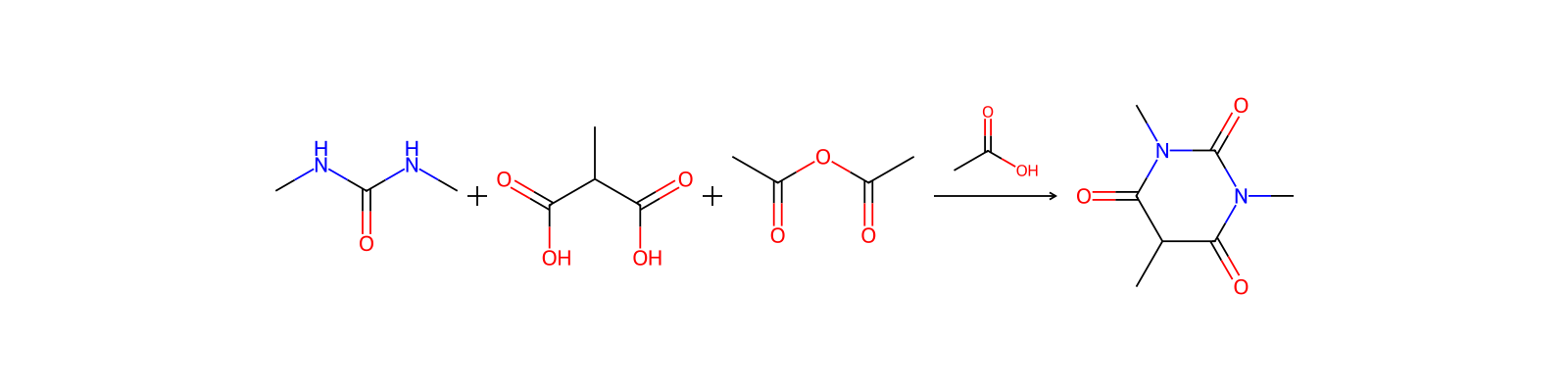
HRID 75652 reaction equation
HRID 75652As reactant
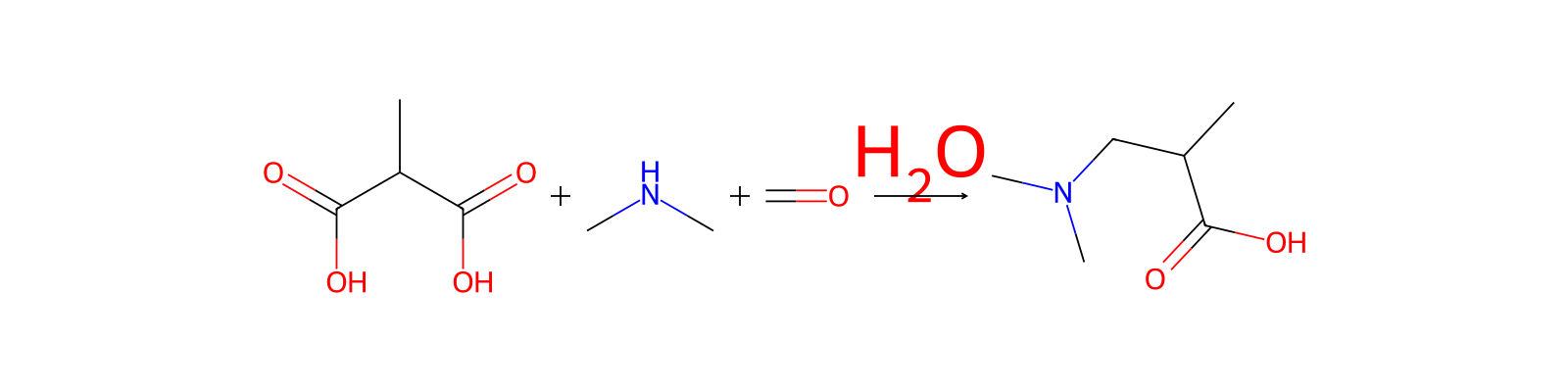
HRID 75660 reaction equation
HRID 75660As reactant
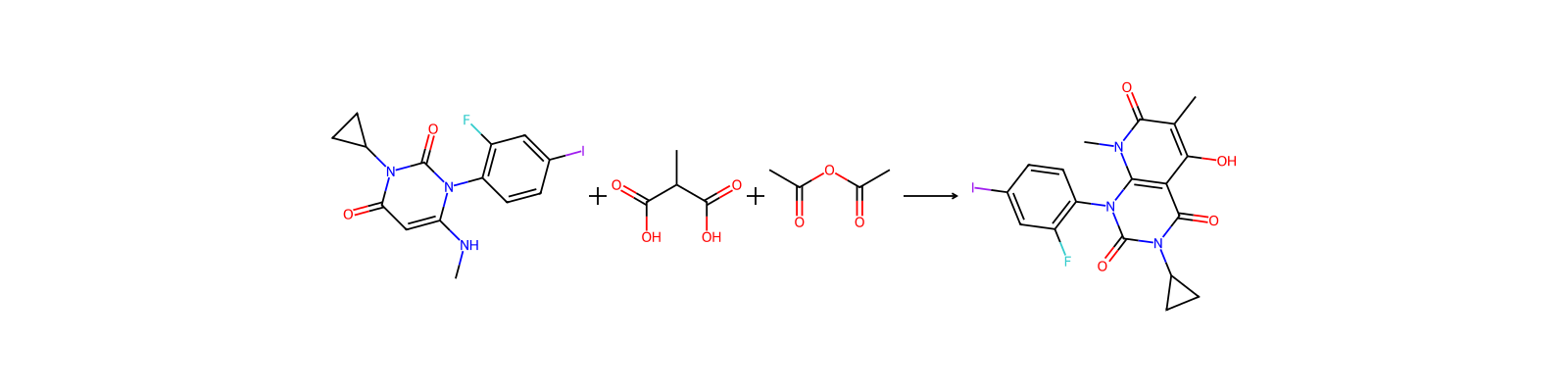
HRID 75668 reaction equation
HRID 75668As reactant
HRID 463294 reaction equation
HRID 463294As reactant
HRID 973782 reaction equation
HRID 973782As reactant
HRID 980119 reaction equation
HRID 980119As reactant
HRID 981891 reaction equation
HRID 981891As reactant
HRID 1274509 reaction equation
HRID 1274509As reactant
PreviousPage 1 of 4

Compound notes

On this pageBasic informationOverviewNames & identifiersPropertiesSafety & regulationChemistry & industryRelated reactionsCompound notes