
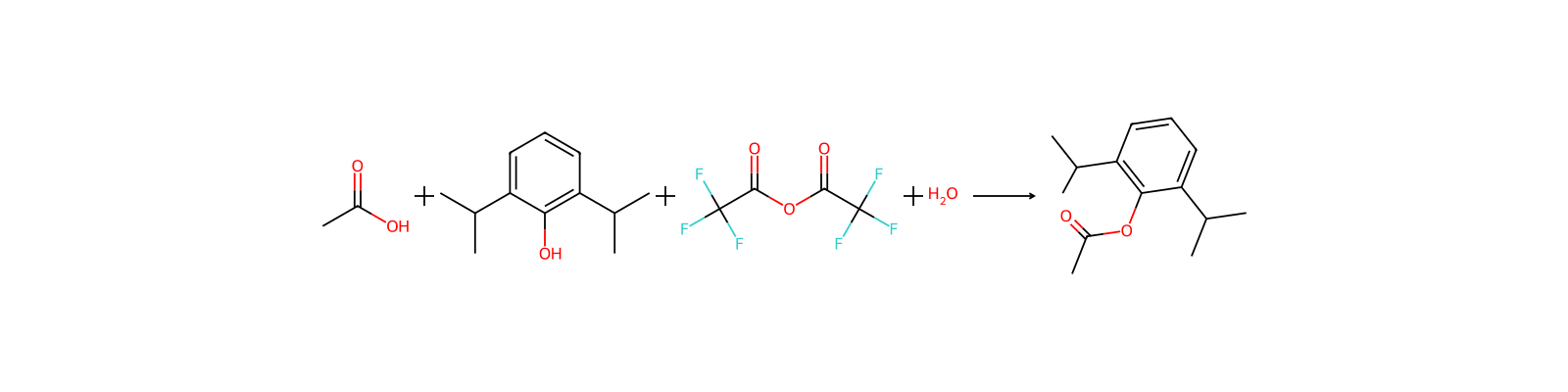
HRID 5642As reactant
Completing data — refresh the page later to see the latest

2078-54-8CC(C)c1cccc(C(C)C)c1OOLBCVFGFOZPWHH-UHFFFAOYSA-NPropofol is a phenol resulting from the formal substitution of the hydrogen at the 2 position of 1,3-diisopropylbenzene by a hydroxy group. It has a role as an anticonvulsant, a sedative, an intravenous anaesthetic, a radical scavenger and an antiemetic.
2078-54-8DTXSID6023523CHEMBL526CHEBI:44915DEA NFLIS-Drug Category -> Depressants and Tranquilizers
Pharmaceuticals -> Listed in ZINC15
Pharmaceuticals
Pharmaceuticals -> Used in Switzerland
Pharmaceuticals -> Anesthetics
Pharmaceuticals -> Synthetic Cannabinoids or Psychoactive Compounds
log Kow = 3.79
4
3.63
Insoluble in water. Soluble in alcohol and toluene.
1.58e-01 g/L
Breast Feeding; Lactation; Anesthetics, Intravenous; Hypnotics and Sedatives
FDA approved drugs -> Active ingredient
FDA approved drugs -> Active ingredient
Pharmaceuticals
Safety information is for reference only and does not replace the supplier’s Safety Data Sheet (SDS), applicable regulations, or professional assessment.
Warning
H302 (100%): Harmful if swallowed [Warning Acute toxicity, oral]
P261, P264, P264+P265, P270, P271, P280, P301+P317, P302+P352, P304+P340, P305+P351+P338, P319, P321, P330, P332+P317, P337+P317, P362+P364, P403+P233, P405, and P501 (click each P-code to see the statement)
Aggregated GHS information provided per 1494 reports by companies from 19 notifications to the ECHA C&L Inventory. Each notification may be associated with multiple companies.
Chemical: Phenol, 2,6-bis(1-methylethyl)-
Phenol, 2,6-bis(1-methylethyl)- is listed on the EPA's Chemical Data Reporting (CDR) system. Manufacturers and importers of Phenol, 2,6-bis(1-methylethyl)- are required to report information about their production and use of this chemical to the EPA under the Toxic Substances Control Act (TSCA). (40 eCFR Part 711)
Propofol: Does not have an individual approval but may be used under an appropriate group standard
The Approved Drug Products with Therapeutic Equivalence Evaluations List identifies currently marketed prescription drug products, incl propofol, approved on the basis of safety and effectiveness by FDA under sections 505 of the Federal Food, Drug, and Cosmetic Act.
Propofol injection. (a) Specifications. The drug is a sterile, nonpyrogenic, oil-in-water emulsion containing 10 milligrams of propofol per milliliter. ... (1) Dogs. (i) The drug is indicated for use as an anesthetic as follows: As a single injection to provide general anesthesia for procedures lasting up to 5 minutes; for induction and maintenance of general anesthesia using incremental doses to effect; for induction of general anesthesia where maintenance is provided by inhalant anesthetics. ... (2) Cats. (i) The drug is indicated for use as an anesthetic as follows: As a single injection to provide general anesthesia for short procedures, for induction and maintenance of general anesthesia using incremental doses to effect, and for induction of general anesthesia where maintenance is provided by inhalant anesthetics.
N01AX10
N - Nervous system
QN - Nervous system
N01AX10
Propofol is a sedative-hypnotic agent for use in the induction and maintenance of anesthesia or sedation. Intravenous injection of a therapeutic dose of propofol produces hypnosis rapidly with minimal excitation, usually within 40 seconds from the start of an injection (the time for one arm-brain circulation).
Initial distribution phase t<sub>1/2α</sub>=1.8-9.5 minutes. Second redistirubtion phase t<sub>1/2β</sub>=21-70 minutes. Terminal elimination phase t<sub>1/2γ</sub>=1.5-31 hours.
Terminal elimination half-life is 3 to 12 hours; prolonged administration may result in longer duration.
...The first-stage elimination half-life (t1/2 beta) of propofol /SRP: administered mixed with lidocaine/ in children was shorter (mean 9.3 +/- 3.8 (s.d.) min) than the values found in adults. This pharmacokinetic alteration may have clinical significance following repeated administration or continuous infusion of propofol.
An intravenous dose of 14C-propofol (0.47 mg/kg) /was/ administered to six male volunteers... . ...The half-lives of the first and second exponential phases, mean values 5 min and 97 min respectively, varied widely among subjects.
Hepatically metabolized mainly by glucuronidation at the C1-hydroxyl. Hydroxylation of the benzene ring to 4-hydroxypropofol may also occur via CYP2B6 and 2C9 with subsequent conjugation to sulfuric and/or glucuronic acid. Hydroxypropofol has approximately 1/3 of hypnotic activity of propofol.
Hepatic; rapidly undergoes glucuronide conjugation to inactive metabolites. An unidentified route of extrahepatic metabolism may also exist, suggested by the fact that propofol clearance exceeds estimated hepatic blood flow.


General anaesthetics and oxygen > Injectable medicines
242 °C
254.00 to 256.00 °C. @ 764.00 mm Hg
18 °C
18 °C
Liquid
Liquid
SRP: At the time of review, criteria for land treatment or burial (sanitary landfill) disposal practices are subject to significant revision. Prior to implementing land disposal of waste residue (including waste sludge), consult with environmental regulatory agencies for guidance on acceptable disposal practices.
If overdosage occurs, Propofol administration should be discontinued immediately. Overdosage is likely to cause cardiorespiratory depression. Respiratory depression should be treated by artificial ventilation with oxygen. Cardiovascular depression may require repositioning of the patient by raising the patient's legs, increasing the flow rate of intravenous fluids, and administering pressor agents and/or anticholinergic agents. (L1712)
Mild myoclonic movements are common, as with other intravenous hypnotic agents. Another recently described rare, but serious, side effect is propofol infusion syndrome. This potentially lethal metabolic derangement has been reported in critically-ill patients after a prolonged infusion of high-dose propofol in combination with catecholamines and/or corticosteroids. Overdose of these agents is likely to cause cardiorespiratory depression. (L1002, L1160) They cause slurred speech, disorientation and "drunken" behavior. They are physically and psychologically addictive. May cause a potentially dangerous rash that may develop into Stevens Johnson syndrome, an extremely rare but potentially fatal skin disease.
Liver test abnormalities are not common among patients during or after propofol anesthesia when given for a few hours. Indeed, propofol can be used safely in patients with cirrhosis and may be the preferred anesthetic agent in patients with minimal hepatic encephalopathy. However, isolated case reports of hepatitis arising within days or weeks after propofol anesthesia for minor procedures have been published. The pattern of serum enzyme elevations was usually hepatocellular and some instances were accompanied by jaundice and prolongation of prothrombin time activity (Case 1). Immunoallergic features and autoantibodies during the liver injury were absent. In most published instances, other diagnoses such as ischemic hepatitis and hepatitis C were not completely excluded.
TERRESTRIAL FATE: Based on a classification scheme(1), an estimated Koc value of 2700(SRC), determined from a log Kow of 3.79(2) and a regression-derived equation(3), indicates that propofol is expected to have slight mobility in soil(SRC). Volatilization of propofol from moist soil surfaces is expected to be an important fate process(SRC) given an estimated Henry's Law constant of 2.1X10⁻⁶ atm-cu m/mole(SRC), using a fragment constant estimation method(4). Propofol is not expected to volatilize from dry soil surfaces(SRC) based upon an estimated vapor pressure of 3.1X10⁻³ mm Hg(SRC), determined from a fragment constant method(5). Propofol may biodegrade in soil based on the biodegradability of the structurally similar compound, 2,6-dimethylphenol, which achieved 30-100 percent and 94 percent biodegradation in activated sludge screening tests after 14 days and 5 days, respectively(6,7).
AQUATIC FATE: Based on a classification scheme(1), an estimated Koc value of 2700(SRC), determined from a log Kow of 3.79(2) and a regression-derived equation(3), indicates that propofol is expected to adsorb to suspended solids and sediment(SRC). Volatilization from water surfaces is expected(3) based upon an estimated Henry's Law constant of 2.1X10⁻⁶ atm-cu m/mole(SRC), developed using a fragment constant estimation method(4). Using this Henry's Law constant and an estimation method(3), volatilization half-lives for a model river and model lake are 23 days and 170 days, respectively(SRC). However, volatilization from water surfaces is expected to be attenuated by adsorption to suspended solids and sediment in the water column. The volatilization half-life from a model pond is about 6.5 years when adsorption is considered(5). According to a classification scheme(6), an estimated BCF of 170(SRC), from an estimated log Kow(2) and a regression-derived equation(7), suggests the potential for bioconcentration in aquatic organisms is high(SRC). Propofol may biodegrade in the aquatic environment based on the biodegradability of the structurally similar compound, 2,6-dimethylphenol, which achieved 30-100 percent and 94 percent biodegradation in activated sludge screening tests after 14 days and 5 days, respectively(8,9).
ATMOSPHERIC FATE: According to a model of gas/particle partitioning of semivolatile organic compounds in the atmosphere(1), propofol, which has an estimated vapor pressure of 3.1X10⁻³ mm Hg at 25 °C(SRC), determined from a fragment constant method(2), is expected to exist solely as a vapor in the ambient atmosphere. Vapor-phase propofol is degraded in the atmosphere by reaction with photochemically-produced hydroxyl radicals(SRC); the half-life for this reaction in air is estimated to be 7.3 hrs(SRC), calculated from its rate constant of 5.3X10⁻¹¹ cu cm/molecule-sec at 25 °C(SRC) that was derived using a structure estimation method(3).
Rapid - time to onset of unconsciousness is 15-30 seconds, due to rapid distribution from plasma to the CNS. Distribution is so rapid that peak plasma concentrations cannot be readily measured. Duration of action is 5-10 minutes. Parenteral (intravenous injection) (L1002); inhalation (L1002) ; dermal (L1002)
/Propofol/ ... injectable emulsion is not recommended for use in nursing mothers because /propofol/ ... injectable emulsion has been reported to be excreted in human milk and the effects of oral absorption of small amounts of propofol are not known.
Propofol Infusion Syndrome (PRIS): This is a rare but serious side effect of prolonged infusion of propofol (usually > 4mg/kg/hour for more than 24 hours). The syndrome presents as metabolic acidosis, hyperkalemia, hyperlipidemia, and rhabdomyolysis and may proceed to renal and cardiac failure and, ultimately, death.
The action of propofol involves a positive modulation of the inhibitory function of the neurotransmitter gama-aminobutyric acid (GABA) through GABA-A receptors.
Aside from the hypotension (mainly through vasodilatation) and transient apnea following induction doses, one of propofol's most frequent side effects is pain on injection, especially in smaller veins. A more serious but rare side effect is dystonia.
Propofol was detected in a 1,500 liter advanced waste treatment finished water sample taken in Pomona, California on September 25, 1974(1). Propofol was detected with one occurrence in over 4000 wastewater survey sample extracts during a chemical analysis program prescribed by the USEPA(2).
The Koc of propofol is estimated as 2700(SRC), using a log Kow of 3.79(1) and a regression-derived equation(2). According to a classification scheme(3), this estimated Koc value suggests that propofol is expected to have slight mobility in soil.
The Approved Drug Products with Therapeutic Equivalence Evaluations List identifies currently marketed prescription drug products, incl propofol, approved on the basis of safety and effectiveness by FDA under sections 505 of the Federal Food, Drug, and Cosmetic Act.
Propofol injection. (a) Specifications. The drug is a sterile, nonpyrogenic, oil-in-water emulsion containing 10 milligrams of propofol per milliliter. ... (1) Dogs. (i) The drug is indicated for use as an anesthetic as follows: As a single injection to provide general anesthesia for procedures lasting up to 5 minutes; for induction and maintenance of general anesthesia using incremental doses to effect; for induction of general anesthesia where maintenance is provided by inhalant anesthetics. ... (2) Cats. (i) The drug is indicated for use as an anesthetic as follows: As a single injection to provide general anesthesia for short procedures, for induction and maintenance of general anesthesia using incremental doses to effect, and for induction of general anesthesia where maintenance is provided by inhalant anesthetics.
To determine the cytochrome P450 (CYP) isoforms involved in the oxidation of propofol by human liver microsomes. The rate constant calculated from the disappearance of propofol in an incubation mixture with human liver microsomes and recombinant human CYP isoforms was used as a measure of the rate of metabolism of propofol. The correlation of these rate constants with rates of metabolism of CYP isoform-selective substrates by liver microsomes, the effect of CYP isoform-selective chemical inhibitors and monoclonal antibodies on propofol metabolism by liver microsomes, and its metabolism by recombinant human CYP isoforms were examined. The mean rate constant of propofol metabolism by liver microsomes obtained from 6 individuals was 4.2 (95% confidence intervals 2.7, 5.7) nmol/min/mg protein. The rate constants of propofol by microsomes were significantly correlated with S-mephenytoin N-demethylation, a marker of CYP2B6 (r=0.93, P<0.0001), but not with the metabolic activities of other CYP isoform-selective substrates. Of the chemical inhibitors of CYP isoforms tested, orphenadrine, a CYP2B6 inhibitor, reduced the rate constant of propofol by liver microsomes by 38% (P<0.05), while other CYP isoform-selective inhibitors had no effects. Of the recombinant CYP isoforms screened, CYP2B6 produced the highest rate constant for propofol metabolism (197 nmol/min/nmol P450). An antibody against CYP2B6 inhibited the disappearance of propofol in liver microsomes by 74% /and SRP: reduced in vitro metabolism by blocking CYP 2B6/. Antibodies raised against other CYP isoforms had no effect on the metabolism of propofol. CYP2B6 is predominantly involved in the oxidation of propofol by human liver microsomes.
Propofol has known human metabolites that include (2S,3S,4S,5R)-6-[2,6-Di(propan-2-yl)phenoxy]-3,4,5-trihydroxyoxane-2-carboxylic acid and 4-hydroxy-propofol.
Propofol is rapidly distributed into peripheral tissues after absorption. It is highly protein bound in vivo and is metabolised by conjugation in the liver. Propofol is metabolized mainly by glucuronidation by uridine diphosphate-glucuronosyltransferases (UGTs) and by hydroxylation by CYP2B6 and CYP2C enzymes. The enzymes SULT1A1 and NQO1 participate in later steps in propofol metabolism. An unidentified route of extrahepatic metabolism may also exist, suggested by the fact that propofol clearance exceeds estimated hepatic blood flow. (L1002, A600, A304). Propofol is hepatically metabolized mainly by glucuronidation at the C1-hydroxyl. Hydroxylation of the benzene ring to 4-hydroxypropofol may also occur via CYP2B6 and 2C9 with subsequent conjugation to sulfuric and/or glucuronic acid. Hydroxypropofol has approximately 1/3 of hypnotic activity of propofol. Route of Elimination: It is chiefly eliminated by hepatic conjugation to inactive metabolites which are excreted by the kidney. Half Life: Initial distribution phase t<sub>1/2α</sub>=1.8-9.5 minutes. Second redistirubtion phase t<sub>1/2β</sub>=21-70 minutes. Terminal elimination phase t<sub>1/2γ</sub>=1.5-31 hours.
YI7VU623SF
PROPOFOL
Physiologic Effects [PE] - General Anesthesia
Established Pharmacologic Class [EPC] - General Anesthetic
Propofol is a General Anesthetic. The physiologic effect of propofol is by means of General Anesthesia.
PROPOFOL
Drugs used to induce drowsiness or sleep or to reduce psychological excitement or anxiety.
Ultrashort-acting anesthetics that are used for induction. Loss of consciousness is rapid and induction is pleasant, but there is no muscle relaxation and reflexes frequently are not reduced adequately. Repeated administration results in accumulation and prolongs the recovery time. Since these agents have little if any analgesic activity, they are seldom used alone except in brief minor procedures. (From AMA Drug Evaluations Annual, 1994, p174)
Rapid - time to onset of unconsciousness is 15-30 seconds, due to rapid distribution from plasma to the CNS. Distribution is so rapid that peak plasma concentrations cannot be readily measured. Duration of action is 5-10 minutes.
It is chiefly eliminated by hepatic conjugation to inactive metabolites which are excreted by the kidney.
60 L/kg [healthy adults]
23 - 50 mL/kg/min
The initial apparent volume of distribution is 13 to 76 L/kg.
Propofol is rapidly and extensively distributed in the body. It crosses the blood-brain barrier quickly, and its short duration of action is due to rapid redistribution from the CNS to other tissues, high metabolic clearance and high lipophilicity.
Medication
Use (kg; approx.) in Germany (2009): >5000
Its widespread use as an anesthetic induction agent has largely replaced that of sodium pentothal. It is also commonly used in veterinary medicine. (L1002). Used for induction and/or maintenance of anaesthesia and for management of refractory status epilepticus.
All Other Basic Organic Chemical Manufacturing
Phenol, 2,6-bis(1-methylethyl)-: ACTIVE
DescriptionPropofol is an injectable, short-acting general anesthetic with a low incidence of side effects.
HistoryPropofol, anesthetic drug used to induce and maintain general anesthesia and to sedate patients for certain medical procedures. Propofol was first tested clinically in 1977. When administered by intravenous injection, it quickly induced anesthesia, with fast and smooth recovery afterward. Animal studies, however, revealed the potential for severe allergic reactions. With subsequent reformulation of propofol into an oil-based emulsion, giving it a milky appearance, this challenge was overcome, and propofol gained widespread use as a key anesthetic agent.
Uses2,6-DIPP is the active ingredient for intravenous anesthetic formulations, also has applications as an intermediate for polymers
UsesA anesthetic used in veterinary medicine
UsesPropofol is an anesthetic used in veterinary medicine.
General DescriptionPropofol is an injectable sedative–hypnotic used for the inductionand maintenance of anesthesia or sedation. Propofolis only slightly soluble in water with an octanol/water partitioncoefficient of 6,761:1; thus, it is formulated as an oil-inwateremulsion. The fat component of the emulsion consistsof soybean oil, glycerol, and egg lecithin. The pKa of thepropanol hydroxyl is 11 and the injectable emulsion has apH of 7 to 8.5. Formulations contain either disodium ethylenediaminetetraaceticacid (EDTA) (0.005%) or sodiummetabisulfite to retard the growth of microorganisms. EDTAis a metal chelator and patients on propofol containingEDTA for extended periods of time excrete more zinc andiron in their urine. The clinical consequence of this is notknown but the manufacturer recommends that a drug holidayor zinc supplementation be considered after 5 days of therapy.
DefinitionChEBI: Propofol is a phenol resulting from the formal substitution of the hydrogen at the 2 position of 1,3-diisopropylbenzene by a hydroxy group. It has a role as an intravenous anaesthetic, a sedative, a radical scavenger, an antiemetic and an anticonvulsant.