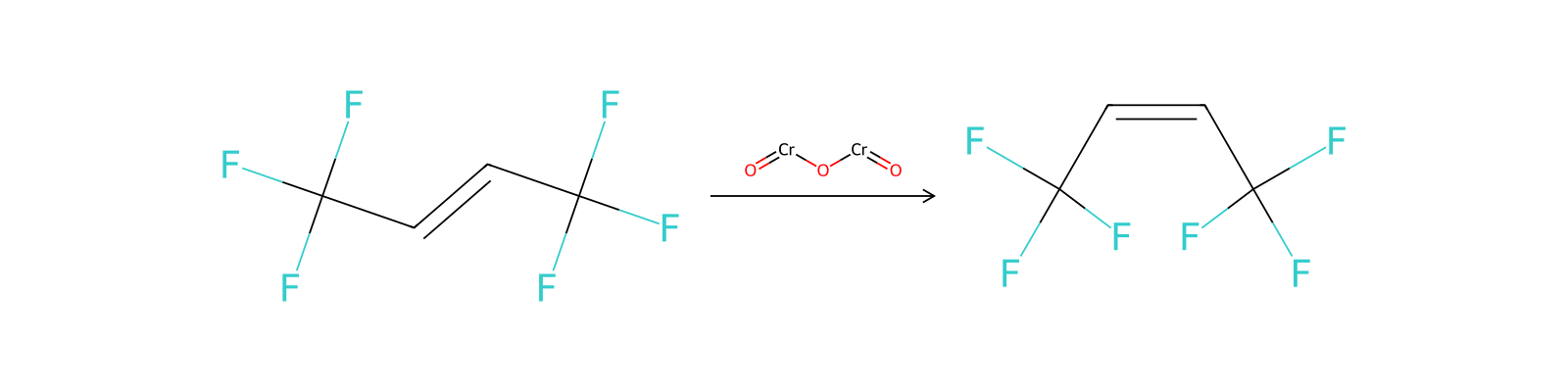
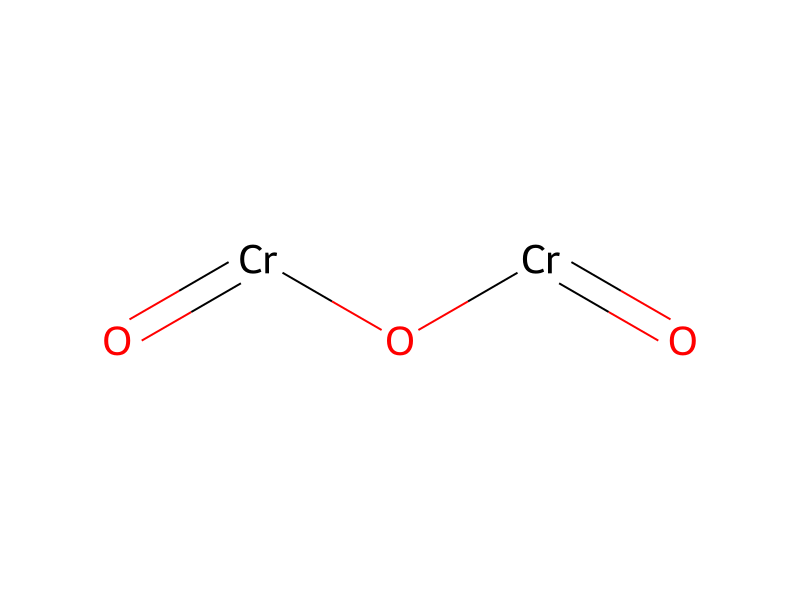
Basic information
- Standard SMILES
[O]=[Cr][O][Cr]=[O]- InChIKey
QDOXWKRWXJOMAK-UHFFFAOYSA-N- Molecular formula
- Cr2O3
- Average molar mass
- 151.99 g/mol
- Monoisotopic mass
- 151.86575886
Overview
Dichromium trioxide is a chromium oxide.
Names & identifiers
- Preferred name
- Chromia
- IUPAC
- oxo(oxochromiooxy)chromium
- English name
- Chromium Oxide Pigment
- Molecular formula
- Cr2O3
- Molecular weight
- 151.9904
Names & synonyms
Chromium(III) oxide1308-38-9ChromiaDichromium trioxideCHROMIC OXIDEChrome oxideChrome GreenGreen chromium oxideGreen cinnabarChrome ochreChromium Oxide GreenAnadonis Green
Show more names
Casalis GreenGreen rougeChrome OcherLeaf greenChromium(3+) oxideLevanox green gachromium (III) oxideOxide of chromium
Database identifiers
- CAS
1308-38-9、196696-68-1- PubChem CID
- 517277
- DTXSID
DTXSID4043721- ChEBI
CHEBI:48242- EC Number
- 215-160-9、606-354-8
Properties
Computed structural properties
- Topological polar surface area
- 43.4 Ų
- Hydrogen bond donors
- 0
- Hydrogen bond acceptors
- 3
- Rotatable bonds
- 0
- Heavy atoms
- 5
- Formal charge
- 0
- Complexity
- 34.2
Experimental & physicochemical properties
Chemical ClassesMetals -> Chromium Compounds, Inorganic
Polymers
Plastics -> Polyolefin-I; PUR; Polyolefin-II; PVC (soft); ABS; PVC (rigid); PET; PMMA; PA; PC; (E)PS
Plastics -> Pigments agents
CosmeticsCosmetic colorant; Hair dyeing
pHTrivalent chromium compounds are amphoteric
SpringerMaterials Propertiesphonon wavenumber
Food Additives
Drugs, Cosmetics, Devices -> FDA Regulatory Status of Color Additives
Cosmetics -> FDA Regulatory Status of Color Additives
Density
5.22 at 25 °C
5.22 g/cm³
5.22 @25 °C
Color/Form
Light to dark green, fine, hexagonal crystals
Green powder
Bright-green, extremely hard crystals
Solubility
In water, 3.13 ug/L at 20 °C, pH 6; 2.96 ug/L at 20 °C, pH 8
Practically insoluble in water
Practically insoluble in alcohol, acetone; slightly soluble in acids, alkalies
Insoluble in acids, and alkalies
Solubility in water: none
Boiling Point
4000 °C
4000 °C
Melting Point
2435 °C
2435 °C
2320 °C
Food Contact Substances
FCS -> FDA Cumulative Estimated Daily Intake (CEDI)
FCS -> FDA Inventory of Food Contact Substances Listed in 21 CFR
Safety & regulation
GHS classification
GHS Classification
This chemical does not meet GHS hazard criteria for 57.8% (1112 of 1924) of all reports.
Danger
H302 (24%): Harmful if swallowed [Warning Acute toxicity, oral]
P203, P261, P264, P264+P265, P270, P272, P280, P301+P317, P302+P352, P305+P351+P338, P318, P321, P330, P333+P317, P337+P317, P362+P364, P405, and P501 (click each P-code to see the statement)
Aggregated GHS information provided per 1924 reports by companies from 27 notifications to the ECHA C&L Inventory. Each notification may be associated with multiple companies.
Danger
Hazard information
Regulatory Information
Chemical: Chromium(III) oxide (Cr2O3)
Chromium oxide (Cr2O3) is listed on the EPA's Chemical Data Reporting (CDR) system. Manufacturers and importers of Chromium oxide (Cr2O3) are required to report information about their production and use of this chemical to the EPA under the Toxic Substances Control Act (TSCA). (40 eCFR Part 711)
Status: Active Update: 30-03-2023 https://echa.europa.eu/registration-dossier/-/registered-dossier/15477
Chromium oxide (Cr2O3): Does not have an individual approval but may be used under an appropriate group standard
The New Jersey Worker and Community Right to Know Act requires public and private employers to provide information about hazardous substances at their workplaces. (N.J.S.A. 34:5A-1 et. seq.)
Other Safety InformationIMAP assessments - Chromium(III) oxide (Cr2O3): Human health tier I assessment
Fire HazardsNot combustible.
Hazards Summary
CrIII compounds do not cause chrome ulcerations but may cause allergic dermatitis in workers with prior sensitization to CrVI compounds. [ILO Encyclo] CrIII is an essential trace mineral in the human diet. [ATSDR Case Studies] An eye and respiratory tract irritant; [ICSC] May cause GI irritation if ingested; [MSDSonline] See Chromium.
FDA Requirements
Certification of this color additive when used in coloring externally applied drugs, including those intended for use in the area of the eye, in amounts consistent with good manufacturing practice, is not necessary for the protection of the public health, and therefore batches thereof are exempt from the certification pursuant to section 721(c) of the act.
Certification of this color additive when used in coloring externally applied cosmetics, including cosmetics intended for use in the area of the eye, in amounts consistent with good manufacturing practice, is not necessary for the protection of the public health, and therefore batches thereof are exempt from the certification pursuant to section 721(c) of the act.
Certification of this color additive, when used as a color additive in contact lenses in amounts not to exceed the minimum reasonably required to accomplish the intended coloring effect, is not necessary for the protection of the public health, and therefore batches thereof are exempt from the certification pursuant to section 721(c) of the act.
RCRA Requirements
D007; A solid waste containing chromium may or may not become characterized as a hazardous waste when subjected to the Toxicity Characteristic Leaching Procedure listed in 40 CFR 261.24, and if so characterized, must be managed as a hazardous waste. /Chromium/
OSHA StandardsPermissible Exposure Limit: Table Z-1 8-hr Time Weighted Avg: 0.5 mg/cu m. /Chromium(III) compounds, as Cr/
EPA Hazardous Waste Number
D007; A waste containing chromium may or may not be characterized as a hazardous waste following testing by the Toxicity Characteristic Leaching Procedure as prescribed by the Resource Conservation and Recovery Act (RCRA) regulations. /Chromium/
NIOSH RecommendationsRecommended Exposure Limit: 10-hour Time-Weighted Average: 0.5 mg/cu m. /Chromium(III) compounds (as Cr)/
Clean Water Act RequirementsToxic pollutant designated pursuant to section 307(a)(1) of the Federal Water Pollution Control Act and is subject to effluent limitations. /Chromium and compounds/
Hazard Classes and Categories
Acute Tox. 4 (24%)
Respiratory sensitization - Category 1
Respiratory sensitization - Category 1
State Drinking Water Guidelines(MN) MINNESOTA 20000 ug/L /Chromium III ion/
Safety & protection
Fire FightingIn case of fire in the surroundings, use appropriate extinguishing media.
First Aid Measures
Fresh air, rest.
Rinse skin with plenty of water or shower.
First rinse with plenty of water for several minutes (remove contact lenses if easily possible), then refer for medical attention.
Rinse mouth.
Firefighting HazardsChromium oxides
Fire Fighting Procedures
Wear self-contained breathing apparatus for firefighting if necessary
Use water spray, alcohol-resistant foam, dry chemical or carbon dioxide
Respiratory protection from chromium metal and insoluble chromium salts while fighting fires: self-contained breathing apparatus with a full facepiece operated in pressure-demand or other positive pressure mode. /Chromium metal and insoluble chromium salts/
Storage ConditionsKeep container tightly closed in a dry and well-ventilated place. Hygroscopic Handle and store under inert gas. Keep in a dry place. Storage class (TRGS 510): Non Combustible Solids
Cleanup Methods
ACCIDENTAL RELEASE MEASURES; Personal precautions, protective equipment and emergency procedures: Use personal protective equipment. Avoid dust formation. Avoid breathing vapors, mist or gas. Ensure adequate ventilation. Avoid breathing dust. Environmental precautions: Do not let product enter drains. Methods and materials for containment and cleaning up: Pick up and arrange disposal without creating dust. Sweep up and shovel. Keep in suitable, closed containers for disposal.
If chromium metal or insoluble chromium salts are spilled, the following steps should be taken: 1. Remove all ignition sources where metallic chromium has been spilled. 2. Ventilate area of spill. 3) Collect spilled material in the most convenient and safe manner and deposit in sealed containers for reclamation or for disposal in a secured sanitary landfill. Liquid containing chromium metal or insoluble chromium salts should be absorbed in vermiculite, dry sand, earth, or a similar material. /Chromium metal and insoluble chromium salts/
Disposal Methods
Wastewater treatment sludge from the production of chrome green pigments is a poor candidate for incineration. /Chrome green pigments/
Product: Offer surplus and non-recyclable solutions to a licensed disposal company. Contaminated packaging: Dispose of as unused product.
Generators of waste (equal to or greater than 100 kg/mo) containing this contaminant, EPA hazardous waste number D007, must conform with USEPA regulations in storage, transportation, treatment and disposal of waste. /Chromium/
SRP: Wastewater from contaminant suppression, cleaning of protective clothing/equipment, or contaminated sites should be contained and evaluated for subject chemical or decomposition product concentrations. Concentrations shall be lower than applicable environmental discharge or disposal criteria. Alternatively, pretreatment and/or discharge to a permitted wastewater treatment facility is acceptable only after review by the governing authority and assurance that "pass through" violations will not occur. Due consideration shall be given to remediation worker exposure (inhalation, dermal and ingestion) as well as fate during treatment, transfer and disposal. If it is not practicable to manage the chemical in this fashion, it must be evaluated in accordance with EPA 40 CFR Part 261, specifically Subpart B, in order to determine the appropriate local, state and federal requirements for disposal.
For more Disposal Methods (Complete) data for Chromium (III) oxide (9 total), please visit the HSDB record page.
Spillage DisposalPersonal protection: particulate filter respirator adapted to the airborne concentration of the substance. Sweep spilled substance into covered containers. If appropriate, moisten first to prevent dusting.
Preventive Measures
SRP: The scientific literature for the use of contact lenses by industrial workers is inconsistent. The benefits or detrimental effects of wearing contact lenses depend not only upon the substance, but also on factors including the form of the substance, characteristics and duration of the exposure, the uses of other eye protection equipment, and the hygiene of the lenses. However, there may be individual substances whose irritating or corrosive properties are such that the wearing of contact lenses would be harmful to the eye. In those specific cases, contact lenses should not be worn. In any event, the usual eye protection equipment should be worn even when contact lenses are in place.
Further processing of solid materials may result in the formation of combustible dusts. The potential for combustible dust formation should be taken into consideration before additional processing occurs. Provide appropriate exhaust ventilation at places where dust is formed.
Gloves must be inspected prior to use. Use proper glove removal technique (without touching glove's outer surface) to avoid skin contact with this product. Dispose of contaminated gloves after use in accordance with applicable laws and good laboratory practices. Wash and dry hands.
Handle in accordance with good industrial hygiene and safety practice. Wash hands before breaks and at the end of workday.
For more Preventive Measures (Complete) data for Chromium (III) oxide (12 total), please visit the HSDB record page.
Eye PreventionWear safety goggles.
Inhalation RiskA harmful concentration of airborne particles can be reached quickly when dispersed.
Skin PreventionProtective gloves.
Toxicology
TreatmentThere is no know antidote for chromium poisoning. Exposure is usually handled with symptomatic treatment. (L16)
Interactions
In inhalation chambers, male Wistar rats of the strain TNO-W74 were continuously exposed to submicron aerosols of sodium dichromate and to a pyrolyzed Cr(VI)/Cr(III) (3:2) oxide mixture. The sodium dichromate (Na2Cr2O7) aerosol had the chromium concentrations of 25, 50 and 100 micrograms/cu m, the chromium oxide mixture (Cr5O12) had the chromium concentration of 100 micrograms/cu m. After 18 months of inhalation the rats were held under conventional conditions for a further year. The experimental groups consisted of 20 rats and the control group of 40 rats. More than 90% of the rats in each group reached 2 years. At the end of the study the mortality rates amounted to 35%, 45% and 25% in the 3 sodium dichromate aerosol groups, respectively, and 50% in the chromium oxide mixture aerosol group, which was not significantly different from that of the controls (42.5%), living under the same conditions in filtered fresh air. In all sodium dichromate exposed groups significant effects were neither found clinically nor from hematology and clinical chemistry compared to the controls. In the chromium oxide mixture group, however, there was a number of significant findings. Elevated white and red blood cell counts and serum cholesterol as well as decreased serum total immunoglobulin levels at different stages of the study were observed together with few local lung effects determined histopathologically in this group. We assume that these effects are mainly due to the increased chromium lung burden of the rats. At the end of the study the lung chromium retention was about 10 times higher for the rats exposed to chromium oxide versus sodium dichromate at an aerosol Cr-concentration of 100 micrograms/cu m, while the kidney chromium retention was measured to be nearly equal in both groups. Three primary lung tumors (2 adenomas and 1 adenocarcinoma) and 1 malign tumor of the pharynx were found at the highest Cr-concentration (100 micrograms/cu m) of the sodium dichromate aerosol, 1 primary adenoma of the lung was in the chromium oxide mixture group exposed also to a Cr-concentration of 100 micrograms/cu m. No primary lung tumors were observed in the other experimental and control groups. These results indicate a weak carcinogenicity at 100 micrograms/cu m for the rats continuously exposed to submicron Na2Cr2O7 and Cr5O12 aerosols. Thus, there may be a small carcinogenic risk from occupational relevant chromium air levels. /Pyrolzed Cr(VI)/Cr(III) oxide mixture/
Health EffectsChromium in its trivalent state is not very toxic. It may be oxidized to hexavalent chromium, a known carcinogen. Hexavalent chromium has also been shown to affect reproduction and development. (A12)
Adverse EffectsACGIH Carcinogen - Not Classifiable.
Exposure RoutesOral (L16) ; inhalation (L16) ; dermal (L16)
Toxicity Summary
IDENTIFICATION AND USE: Chromic oxide (Cr(2)O(3)) is a green powder. It is not registered for current use in the U.S., but approved pesticide uses may change periodically and so federal, state and local authorities must be consulted for currently approved uses. It is used in abrasives and electric semiconductors; in alloys; in printing fabrics and banknotes. It is also used in dyeing polymers; colorant for latex paints, in manufacturing of chromium metal and aluminum-chromium master alloys. It's other uses include catalyst in organic synthesis, green granules in asphalt roofing, component of refractory brick. Chromic oxide is a color additive in drug use. HUMAN EXPOSURE AND TOXICITY: Fine chromic oxide particles were insoluble in the culture medium; on the contrary, Cr(2)O(3) nanoparticles released soluble hexavalent chromium into the culture medium. Human lung carcinoma A549 cells and human keratinocyte HaCaT cells showed an increase in intracellular reactive oxygen species (ROS) level and activation of antioxidant defense systems on exposure to Cr(2)O(3) nanoparticles. The cellular influences of Cr(2)O(3) nanoparticles matched those of hexavalent chromium. Human lung epithelial cells exposure to chromic oxide nanoparticles led to DNA damage, which was detected by comet assay and cytokinesis block micronucleus assay. The cell exposure lead to mitochondria-mediated apoptosis. ANIMAL STUDIES: In rats in a 13-week nose-only inhalation study that included a 13-week recovery period, chromic oxide caused pathological changes in the bronchial and mediastinal lymphatic tissue and lungs, consisting of the presence of pigment-laden macrophages, lymphoid and septal hyperplasia, and interstitial inflammation similar to that observed with other inert dusts. In experiments with rats 4/20 animals developed lung sarcomas 16-19 months after a single intraperitoneal injection of 20 mg chromic oxide. No effects on reproduction were reported in nine pairs of rats fed up to 5% chromium(III) oxide in a supplemented bread, 5 days/week for 60 days before grossly observable malformations or adverse effects occurred in the pups. Exposure to chromic oxide increased sister chromatid exchanges in Chinese hamster V79 cells. Exposure for 18 hr to Cr(2)O(3) induced in Chinese hamster cells a statistically significant increase in the mutation frequency of up to 10-fold over the control. ECOTOXICITY STUDIES: In seeds of Triticum aestivum exposure to 25-100 ug/mL Cr(2)O(3) nanoparticles inhibited the seed germination and seedling growth in concentration dependent manner.
Trivalent chromium may also form complexes with peptides, proteins, and DNA, resulting in DNA-protein crosslinks, DNA strand breaks, DNA-DNA interstrand crosslinks, chromium-DNA adducts, chromosomal aberrations and alterations in cellular signaling pathways. It has been shown to induce carcinogenesis by overstimulating cellular regulatory pathways and increasing peroxide levels by activating certain mitogen-activated protein kinases. It can also cause transcriptional repression by cross-linking histone deacetylase 1-DNA methyltransferase 1 complexes to CYP1A1 promoter chromatin, inhibiting histone modification. Chromium may increase its own toxicity by modifying metal regulatory transcription factor 1, causing the inhibition of zinc-induced metallothionein transcription. (A12, L16, A34, A35, A36)
Average Daily Intake
According to the 2012 TSCA Inventory Update Reporting data, 17 reporting facilities estimate the number of persons reasonably likely to be exposed during the manufacturing, processing, or use of chromium (III) oxide may be as low as <10 workers up to the range of 100-499 workers per plant; the data may be greatly underestimated due to confidential business information (CBI) or unknown values(1).
NIOSH (NOES Survey 1981-1983) has statistically estimated that 88,897 workers (11,984 of these are female) were potentially exposed to chromium (III) oxide in the US(1). Occupational exposure to chromium (III) oxide may occur through inhalation and dermal contact with this compound at workplaces where chromium (III) oxide is produced or used(SRC).
Dental technicians working in areas of cast prothetics containing chromium and no effective ventilation were exposed to chromium (III) oxide levels 0.15-9.6 mg/cu m(1).
Ecotoxicity Excerpts
/PLANTS/ In this study, seeds of Triticum aestivum L. (Poaceae) were exposed to 0-100 ug/mL chromium oxide nanoparticles (Cr2O3, Nps) to study the phytotoxic effects on seed germination and seedling growth. It has been observed that 25-100 ug/mL Cr2O3, Nps inhibited the seed germination and seedling growth in concentration dependent manner. The present study suggests that release of Cr2O3, Nps in environment may adversely affect the wheat production.
Signs and Symptoms
Cough.
Redness.
Chromium in its trivalent state is not very toxic, but it may be oxidized to hexavalent chromium. Breathing hexavalent chromium can cause irritation to the lining of the nose, nose ulcers, runny nose, and breathing problems, such as asthma, cough, shortness of breath, or wheezing. Ingestion of hexavalent chromium causes irritation and ulcers in the stomach and small intestine, as well as anemia. Skin contact can cause skin ulcers. (L16)
TSCA Test Submissions
Chromic Oxide (CAS #1308-38-9) was one of two materials evaluated for subchronic toxicity. The test material was administered via nose-only inhalation to Fischer 344 rats (15/sex/group) at exposure concentrations of 4.4, 15, and 44 mg/cu m, with one control group. Exposures were conducted for 6 hr/day, for 13 weeks, except weekends and holidays. After 13 weeks of exposure, 10 animals/sex/group were sacrificed and given a complete necropsy and histologic examination along with hematologic, serum biochemistry, urologic, ophthalmologic and sperm characterizations. The remaining animals underwent a 13-week post exposure recovery, followed by a complete necropsy and limited histologic examination. During weeks 7 and 8, additional Fischer rats (5/sex/group) were exposed for 5 consecutive days at each exposure level, then evaluated for bronchoalveolar fluid (BALF) parameters. There were no exposure-related effects in clinical signs, ophthalmologic, body weight-gain, or sperm characteristic evaluations. None of the hematologic, serum biochemical, or urinalysis parameters were significantly different from controls. The BALF parameters were not significantly different, however, yellow crystalline material was observed in the mononuclear cells of all treated groups. Gross examination at terminal sacrifice revealed treatment- and concentration-related green discoloration in the lungs and mediastinal lymph nodes which, in the recovery group, occurred with slightly decreased incidence and severity. The mean, absolute and relative lung weights of male rats in the highest exposure group were significantly different from controls (p</= 0.01), although no other organs showed treatment-related differences. Black pigment was observed in the peribronchial lymphoid tissue, macrophages, and mediastinal lymph nodes in all treatment groups and corresponded with trace to moderate microscopic changes in the lung and mediastinal lymph nodes. These changes included interstitial inflammation, septal cell hyperplasia, and lymphoid hyperplasia at the two highest exposures; lymphoid hyperplasia only at the lowest exposure concentration.
Natural Pollution Sources
Chromium (III) oxide occurs in chromium-rich tremolite skarns, metaquartzites, and chlorite veins (Outokumpu, Finland); on greywacke pebbles in a glacial boulder clay deposit (Callowhill Upper, Ireland); as pebbles in streams (Merume River, Guyana); a very rare component in chondrite meteorites(1).
Human Toxicity Excerpts
/HUMAN EXPOSURE STUDIES/ The International Agency for Research on Cancer considers the carcinogenicity of welding fume of priority for re-evaluation. Genotoxic effects in experimental animals are still inconclusive. Here, we investigated the association of personal exposure to metals in respirable welding fumes during a working shift with oxidatively damaged guanosine in DNA of white blood cells (WBC) and in postshift urine samples from 238 welders. Medians of 8-oxo-7,8-dihydro-2'-deoxyguanosine (8-oxodGuo) were 2.35/10(6) dGuo in DNA of WBC and 4.33 ug/g creatinine in urine. The median of 8-oxo-7,8-dihydroguanosine (8-oxoGuo) was 7.03 ug/g creatinine in urine. The extent of both urinary parameters was higher in welders applying techniques with high particle emission rates to stainless steel than in tungsten inert gas welders (8-oxodGuo: 9.96 vs. 4.49 ug/L, 8-oxoGuo: 15.7 vs. 7.7 ug/L), but this apparent difference diminished after creatinine adjustment. We applied random intercept models to estimate the influence of airborne and systemic exposure to metals on oxidatively damaged guanosine in WBC and urine together with covariates. We observed a highly significant nonlinear association of urinary 8-oxoGuo with serum ferritin (P < 0.0001) and higher 8-oxoGuo concentrations for respirable iron >1,000 ug/cu m compared to < or = 57 ug/cu m. Similar effects were found for manganese. Airborne chromium but not nickel was associated with all oxidatively modified guanosine measures, whereas urinary chromium as well as nickel showed associations with urinary modified guanosines. In summary, oxidatively damaged urinary guanosine was associated with airborne and systemic exposure to metals in welders and showed a strong relation to body iron stores. /Chromium oxide/
/ALTERNATIVE and IN VITRO TESTS/ Chromium oxide (Cr2O3 ) nanoparticles (NPs) are being increasingly used as a catalyst for aromatic compound manufacture, abrading agents and as pigments (e.g.,Viridian). Owing to increased applications, it is important to study the biological effects of Cr2O3 NPs on human health. The lung is one of the main exposure routes to nanomaterials; therefore, the present study was designed to determine the genotoxic and apoptotic effect of Cr2O3 NPs in human lung epithelial cells (A549). The study also elucidated the molecular mechanism of its toxicity. Cr2O3 NPs led to DNA damage, which was deduced by comet assay and cytokinesis block micronucleus assay. The damage could be mediated by the increased levels of reactive oxygen species. Further, the oxygen species led to a decrease in mitochondrial membrane potential and an increase in the ratio of BAX/Bcl-2 leading to mitochondria-mediated apoptosis induced by Cr2O3 NPs, which ultimately leads to cell death. Hence, there is a need of regulations to be imposed in NP usage. The study provided insight into the caspase-dependent mechanistic pathway of apoptosis.
/ALTERNATIVE and IN VITRO TESTS/ Chromium(III) oxide (Cr(2)O(3)) is used for industrial applications such as catalysts and pigments. In the classical form, namely the fine particle, Cr(2)O(3) is insoluble and chemically stable. It is classified as a low-toxicity chromium compound. Recently, industrial application of nanoparticles (a new form composed of small particles with a diameter of < or =100 nm, in at least one dimension) has been increasing. Cellular effects induced by Cr(2)O(3) nanoparticles are not known. To shed light upon this, the release of soluble chromium from Cr(2)O(3) nano- and fine-particles in culture medium was compared. Fine Cr(2)O(3) particles were insoluble in the culture medium; on the contrary, Cr(2)O(3) nanoparticles released soluble hexavalent chromium into the culture medium. Cr(2)O(3) nanoparticles showed severe cytotoxicity. The effect of Cr(2)O(3) nanoparticles on cell viability was higher than that of fine particles. Cr(2)O(3) nanoparticles showed cytotoxicity equal to that of hexavalent chromium (K(2)Cr(2)O(7)). Human lung carcinoma A549 cells and human keratinocyte HaCaT cells showed an increase in intracellular reactive oxygen species (ROS) level and activation of antioxidant defense systems on exposure to Cr(2)O(3) nanoparticles. Exposure of Cr(2)O(3) nanoparticles led to caspase-3 activation, showing that the decrease in cell viability by exposure to Cr(2)O(3) nanoparticles was caused by apoptosis. Cellular responses were stronger in the Cr(2)O(3) nanoparticles-exposed cells than in fine Cr(2)O(3) - and CrCl(3) -exposed cells. Cellular uptake of Cr(2)O(3) particles were observed in nano- and fine-particles. The cellular influence of the extracellular soluble trivalent chromium was lower than that of Cr(2)O(3) nanoparticles. Cr(2)O(3) nanoparticles showed cytotoxicity by hexavalent chromium released at outside and inside of cells. The cellular influences of Cr(2)O(3) nanoparticles matched those of hexavalent chromium. In conclusion, Cr(2)O(3) nanoparticles have a high cytotoxic potential.
Regulatory information
FDA Requirements
Certification of this color additive when used in coloring externally applied drugs, including those intended for use in the area of the eye, in amounts consistent with good manufacturing practice, is not necessary for the protection of the public health, and therefore batches thereof are exempt from the certification pursuant to section 721(c) of the act.
Certification of this color additive when used in coloring externally applied cosmetics, including cosmetics intended for use in the area of the eye, in amounts consistent with good manufacturing practice, is not necessary for the protection of the public health, and therefore batches thereof are exempt from the certification pursuant to section 721(c) of the act.
Certification of this color additive, when used as a color additive in contact lenses in amounts not to exceed the minimum reasonably required to accomplish the intended coloring effect, is not necessary for the protection of the public health, and therefore batches thereof are exempt from the certification pursuant to section 721(c) of the act.
RCRA Requirements
D007; A solid waste containing chromium may or may not become characterized as a hazardous waste when subjected to the Toxicity Characteristic Leaching Procedure listed in 40 CFR 261.24, and if so characterized, must be managed as a hazardous waste. /Chromium/
Clean Water Act RequirementsToxic pollutant designated pursuant to section 307(a)(1) of the Federal Water Pollution Control Act and is subject to effluent limitations. /Chromium and compounds/
State Drinking Water Guidelines(MN) MINNESOTA 20000 ug/L /Chromium III ion/
Federal Drinking Water StandardsMaximum contaminant level for inorganic contaminants: Contaminant: Chromium; MCL 0.1 mg/L. /Chromium/
Federal Drinking Water GuidelinesMaximum contaminant level goal for inorganic contaminants: Contaminant: Chromium; MCLG 0.1 mg/L. /Chromium/
Chemistry & industry
Pharmacology
Metabolism/Metabolites
Chromium is absorbed from oral, inhalation, or dermal exposure and distributes to nearly all tissues, with the highest concentrations found in kidney and liver. Bone is also a major storage site and may contribute to long-term retention. Hexavalent chromium's similarity to sulfate and chromate allow it to be transported into cells via sulfate transport mechanisms. Inside the cell, hexavalent chromium is reduced first to pentavalent chromium, then to trivalent chromium by many substances including ascorbate, glutathione, and nicotinamide adenine dinucleotide. Chromium is almost entirely excreted with the urine. (A12, L16)
Absorption, Distribution and Excretion
The intestinal absorption of trivalent and hexavalent chromium (Cr) given orally (experiment I) or infused in the intestine (experiment II) was investigated in rats. The nonabsorbable form of chromium ((51)Cr2O3) and water-soluble and more absorbable Na2(51)CrO4 (the hexavalent form of Cr) were compared. Total retention of chromium given orally ranged around 15 percent of the dose, regardless of the chromium compounds applied. The absorption rate of chromic oxide, which is considered a nonabsorbable compound, was 14.4 as a percentage of chromium intake. This result indicates that some loss of chromium has to be taken into account in metabolic trials made by the indicator method. In isolated rat intestine, from the injected Cr 2.5% of chromic oxide and 43.2% of sodium chromate were absorbed during an hour (experiment II). The absorbed chromium was transferred to the liver where the liver tissue retained 10.9% of chromic oxide and 51.1% of sodium chromate. Radioactivity of v. cava caudalis following intestinal injection of Na2CrO4 was thirtyfold greater than after Cr2O3 dosing. This phenomenon can be explained by the lower blood clearance of chromate. Different absorption rate of chromate depending on the route of administration could be due to the fact that the hexavalent form given orally was reduced to Cr3+ in the acidic environment of the stomach. When Na2CrO4 was infused directly in the intestine of rats, such reduction could not occur. This means that the acidic gastric juice might play a role in inhibiting the intestinal absorption of Na2CrO4 when this compound is given orally.
In this study, Escherichia coli DH5alpha (ATCC 35218) were exposed to 0-100 ug/mL chromium oxide nanoparticles (Cr2O3, Nps) for 15-120 min to study the internalization of Nps by flowcytometry. A concentration-duration dependent increased side scatter (SSC) confirmed the internalization of Cr2O3 NPs by the E. coli. This study suggests that the uptake of Nps by bacterial cells can be rapidly monitored with flow cytometry for toxicity and risk assessment.
The aim of this study was to find out how marker characteristics could affect digestive transit time in Gallus gallus. One soluble marker, Cr-EDTA, and two insoluble markers, Cr2O3 and chromium-mordanted plant cells of two sizes, were used. Three- to six-week-old chickens were killed in series after the oral administration of the markers at intervals of 0, 0.5, 1, 2, 3, 5, 7, and 9 hr. The amount of chromium in each digestive segment was determined by atomic absorption. There were some differences in the initial distribution of markers; whereas almost the total amount of the chromium-mordanted rice husk of the largest size was found in the crop at time 0, less than half of the Cr-EDTA was found. Marker emptying out of the crop was fast and not related to either the type or size. In contrast, the emptying rate of the gizzard depended on marker particle size. As far as the ceca were concerned, the ileocecal junction allowed the passage of soluble Cr-EDTA whereas solid markers were impeded (Cr2O3) or not allowed to pass through at all (vegetable fiber of any size). It can be concluded that marker selection is of major importance to transit time studies in chickens, since its characteristics can determine transit time in an absolute way.
Small intestinal digestibility can be measured by comparing feed with effluent collected from an ileal T-cannula. Nevertheless, a nondigestible, nonabsorbable marker, such as chromic oxide (Cr2O3), must be included in the diet because simple T-cannula do not divert chyme completely. This study was conducted to evaluate the excretion pattern of Cr2O3 in cannulated dogs because the kinetics of Cr2O3 has not been previously investigated in this nonruminant species. Chromic oxide was added to four diets fed to eight cannulated mixed-breed dogs in a Latin-square design. The four diets contained reciprocal proportions of protein from texturized vegetable protein (0% to 57%) and from beef (100% to 43%), so protein and carbohydrate digestibility varied among diets. All feces were collected during wk 2 and all ileal effluent during wk 3 of each diet period. Ileal recovery of Cr2O3 was almost complete (94%) and was greater than fecal recovery (87%) (P < or =0.03). Recovery was not different among diet groups. Ileal DM digestibility was approximately 2 percentage units lower on d 1 (P < or = 0.007) than on d 2 to 4. Nevertheless, ileal DM digestibility varied little on these subsequent days so single-day collections should be accurate. Chromic oxide concentration in chyme varied widely during each collection but increased at the start and declined towards the end of each collection. Spot sampling may therefore result in inaccurate estimates of nutrient digestibility.
Uses & manufacturing
Uses
Used in abrasives, refractory materials, semiconductors, pigments, alloys, textile printing inks, and catalysts; [Merck Index] Used as a pigment in polymers and latex paints; [HSDB]
Semiconductor Manufacturing [Category: Industry]
For chromic oxide (USEPA/OPP Pesticide Code: 021103) there are 0 labels match. /SRP: Not registered for current use in the U.S., but approved pesticide uses may change periodically and so federal, state and local authorities must be consulted for currently approved uses./
In abrasives, refractory materials, electric semiconductors; as pigment, particularly in coloring glass; in alloys; in printing fabrics and banknotes; catalyst for organic and inorganic reactions.
Used in dyeing polymers, ... colorant for latex paints.
In metallurgy in the manufacture of chromium metal and aluminum-chromium master alloys.
U.S. Exports(1975) 1.63X10+8 G-INCL ANHYDRIDES, HYDROXIDES
U.S. Imports
(1975) 3.45X10+8 G (ANHYD CHROME OXIDE GREEN)
(1984) 1.83X10+9 G /HYDRATED & CHROMIUM OXIDE GREEN/
U.S. Production
2023: 25,000,000 - <40,000,000 lb
(1972) 5.58X10+9 GRAMS
(1975) 5.09X10+9 GRAMS (CHROME OXIDE GREEN)
(1984) 7.47X10+9 G /CHROME OXIDE GREEN/
Non-confidential 2012 Chemical Data Reporting (CDR) information on the production and use of chemicals manufactured or imported into the United States. Chemical: Chromium oxide. National Production Volume: 27,072,114 lb/yr.
Consumer UsesOther
Industry UsesAbrasives
Methods of Manufacturing
The industrial production of chromium(III) oxide involves the reduction of solid sodium dichromate, generally with sulfur. The finely divided components are thoroughly mixed, fed into a brick-lined furnace, and brought to dark-red heat. The reaction proceeds exothermically. After the reaction mass has cooled, it is broken up and the sodium sulfate produced is leached out with water. The remaining solid is separated, rinsed, dried, and ground.
Prepared by reaction of sodium dichromate or chromate with sulfur.
Anhydrous chromic oxide is produced commercially by heating chromic hydroxide, by heating dry ammonium dichromate, or by heating sodium dichromate with sulfur and washing out the sodium sulfate. The hydrated material is made commercially by calcining sodium dichromate with boric acid and hydrolyzing chromic borate.
(1) By heating chromium hydroxide, (2) by heating dry ammonium dichromate, (3) by heating sodium dichromate with sulfur and washing out the sodium sulfate.
Sodium dichromate + ammonium chloride/ammonium sulfate (reduction); sodium dichromate + sulfur + metallurigal coke/hardwood/molasses
Formulations/Preparations
Chromic oxide is available in several grades depending on its use in metallurgical and refractory industries. A typical analysis of a metallurgical grade is 99.4% chromium (as chromic oxide) and less than 0.1% moisture. A typical analysis of a refractory grade is 98.5-99.4% chromium (as chromic oxide), 0.1% alkali metals (as sodium oxide), 0.1% other metal oxides (mainly aluminium, iron and magnesium), and average particle size, 0.5-3.5 um. ... Chromic oxide pigment (dark chromium oxide) typically contains >99.0% chromium as chromic oxide.
Six grades from 3-6 mm to -325 mesh, 99 to 99.999% purity /available from Cerac, Inc/
Metallurgical grade; powder grade
Chromite ore
Chromium oxide nanoparticles
Household ProductsInformation on 71 consumer products that contain Dichromium trioxide in the following categories is provided:
Use Classification
Plastics -> Polymer Type -> Polyolefin-I; PUR; Polyolefin-II; PVC (soft); ABS; PVC (rigid); PET; PMMA; PA; PC; (E)PS
Cosmetics -> Cosmetic colorant; Hair dyeing
Plastics -> Pigments agents
General Manufacturing Information
Wholesale and Retail Trade
Chromium oxide (Cr2O3): ACTIVE
Stabilization of collagen for various applications employs chemicals such as aldehydes, metal ions, polyphenols, etc. Stability against enzymatic, thermal and mechanical degradation is required for a range of biomedical applications. The premise of this research is to explore the use of nanoparticles with suitable functionalization/encapsulation to crosslink with collagen, such that the three dimensional architecture had the desired stability. Collagen solution prepared as per standard protocols is treated with chromium(III) oxide nanoparticules encapsulated within a polymeric matrix (polystyrene-block-polyacrylic acid /PAA/ copolymer). Selectivity towards encapsulation was ensured by the reaction in dimethyl sulfoxide, where the PS groups popped out and encapsulated the Cr(2)O(3). Subsequently when immersed in aqueous solution, PAA units popped up to react with functional groups of collagen. The interaction with collagen was monitored through techniques such as CD, FTIR, viscosity measurements, stress analysis. CD studies and FTIR showed no degradation of collagen. Thermal stability was enhanced upon interaction of nanostructures with collagen. Self-assembly of collagen was delayed but not inhibited, indicating a complete binding of the metal oxide encapsulated polymer to collagen. Metal oxide nanoparticles encapsulated within a polymeric matrix could provide thermal and mechanical stability to collagen. The formed fibrils of collagen could serve as ideal material for various smart applications such as slow/sustained drug release. The study is also relevant to the leather industry in that the nanostructures can diffuse through the highly networked collagen fibre bundles in skin matrix easily, thus overcoming the rate limiting step of diffusion.
Suppliers1 total
超彩实业有限公司0574-83851061 · [email protected]
Additional notes
DefinitionChEBI: Dichromium trioxide is a chromium oxide.
Related reactions
6 records


Linked notes
Loading…