HomeMCPWorkbenchSkills
HomeWorkbenchNotificationsMe
llms.txt · MCP GuidePrivacy Policy · Terms of Service · Supportv1.8.3
  1. Home
  2. /Compound

Trimethylboroxine

HCID 574072
New reaction
Print
Basic informationNames & identifiersPropertiesSafety & regulationChemistry & industryRelated reactionsCompound notes
Substructure searchFind similar structures

Basic information

CAS
823-96-1
Standard SMILES
CB1OB(C)OB(C)O1
InChIKey
GBBSAMQTQCPOBF-UHFFFAOYSA-N
Molecular formula
C3H9B3O3
Average molar mass
125.5 g/mol
Monoisotopic mass
126.0830846

Names & identifiers

Preferred name
Trimethylboroxine
IUPAC
2,4,6-trimethyl-1,3,5,2,4,6-trioxatriborinane
English name
Trimethylboroxine
Molecular formula
C3H9B3O3
Molecular weight
125.53

Names & synonyms

Trimethylboroxine823-96-1TrimethylboroxinDTXSID90341570RefChem:899827DTXCID10292651617-330-12,4,6-trimethyl-1,3,5,2,4,6-trioxatriborinaneBoroxin, trimethyl-trimethyl-1,3,5,2,4,6-trioxatriborinaneMethaneboronic anhydridetrimethyboroxine
Show more names
Trimethylcyclotriboroxane2,4,6-Trimethylboroxin2,4,6-TrMETHYLBOROXINtrimethylboroxin,TRIMEETHYLBOROXINEMethylboric anhydrideTrimethylcyclotriborane
2,4,6-trimethylboroxinetrimethylboroxaineMFCD000133542,4,6-Trimethylboroxin #Trimethylboroxine 50% w/w soln. in THF2,4,6-trimethyl-cyclotriboroxaneTrimethylboroxin (50% Solution in THF)2,4,6-Trimethyl-1,3,5,2,4,6-trioxatriborinane; 2,4,6-Trimethylboroxine; Methaneboronic anhydride

Database identifiers

CAS
823-96-1
PubChem CID
574072
DTXSID
DTXSID90341570
EC Number
617-330-1
Nikkaji
J375.125B

Properties

Computed structural properties

Topological polar surface area
27.7 Ų
Hydrogen bond donors
0
Hydrogen bond acceptors
3
Rotatable bonds
0
Heavy atoms
9
Formal charge
0
Complexity
69.3

Physicochemical properties

Melting point
38 °C · −38 °C (lit.)
Boiling point
78 · 78-80 °C (lit.)
Density
0.89 · 0.89
refractive index
20 · n 20/D 1.362 (lit.)
Flash point
-20 °C · -20 °C
storage temp.
Flammables area
solubility
Chloroform (Sparingly), Dichloromethane (Slightly), THF (Soluble)
form
clear liquid
color
Colorless to Almost colorless
Water Solubility
Not miscible in water.
Sensitive
Moisture Sensitive & Hygroscopic
BRN
1757008 · 1757008
InChI
1S/C3H9B3O3/c1-4-7-5(2)9-6(3)8-4/h1-3H3
InChIKey
GBBSAMQTQCPOBF-UHFFFAOYSA-N
SMILES
Cb1ob(C)ob(C)o1
CAS DataBase Reference
823 · 823-96-1(CAS DataBase Reference)

Safety & regulation

Safety information is for reference only and does not replace the supplier’s Safety Data Sheet (SDS), applicable regulations, or professional assessment.

GHS classification

GHS Classification · 4 items

Danger

H225 (30.3%): Highly Flammable liquid and vapor [Danger Flammable liquids]

P210, P233, P240, P241, P242, P243, P260, P261, P264, P264+P265, P271, P280, P301+P330+P331, P302+P352, P302+P361+P354, P303+P361+P353, P304+P340, P305+P354+P338, P316, P317, P319, P321, P332+P317, P362+P364, P363, P370+P378, P403+P233, P403+P235, P405, and P501 (click each P-code to see the statement)

Aggregated GHS information provided per 152 reports by companies from 6 notifications to the ECHA C&L Inventory. Each notification may be associated with multiple companies.

Hazard information

Hazard Classes and CategoriesFlam. Liq. 2 (30.3%)

Safety data

F
2-10-21
PPE
Faceshields, Gloves, Goggles, type ABEK (EN14387) respirator filter
wgk
3
tsca
Yes
ridadr
UN 2924 3/PG 2
hs_code
29319090
risk_code
11-34-41-37/38-19
Signal word
Danger
Symbol(GHS)
GHS02,GHS05,GHS07,GHS08
hazard_code
F,C,Xi
safety_code
9-16-26-33-36/37/39-45-46-37/39-3
hazard_class
3.1
Storage Class
3 - Flammable liquids
packing_group

Chemistry & industry

Applications · 3 items

UsesTrimethylboroxine (TMB) is a cyclic anhydride of methyl-boronic acid. It can be used as a:Methylating agent for the methylation of various aromatic halides and C(sp3)H bonds using palladium catalyst.Reagent in the preparation of polymer supported CBS (Corey, Bakshi, and Shibata) catalysts.

UsesTrimethylboroxine is used as a derivatizing agent for GLC analysis. It is used in a diverse array of areas, including as a polymerization additive. It is also used in the preparation of CBS catalysts for asymmetric reductions.

UsesTrimethylboroxine (TMB) is a cyclic anhydride of methyl-boronic acid. It can be been used:As a derivatizing agent for gas chromatographic/mass spectrometric analysis.In the preparation of methylaluminoxane (MAO) which is used in the polymerization of olefins.As an electrolyte additive to enhance the interface stability of electrode/electrolyte.In methylation of aryl halides by palladium-catalyzed Suzuki-Miyaura coupling reaction.In the preparation of CBS (Corey, Bakshi and Shibata) catalysts for asymmetric reductions of ketones to alcohols.

Preparation methods · 1 item

PreparationTrimethylboroxine is prepared by heating B(CH3)3 and B2O3 together in a sealed tube. The B2O3 powder is made by dehydrating H3BO3 under vacuum over P2O5 , at 220℃. The very hygro-scopic oxide is placed with strict exclusion of moisture in a 200-ml. thick-wall Pyrex tube provided with a ground joint, and a melting-point capillary is fastened to the tube just below the joint. The tube is connected to a vacuum pump and immersed in liquid nitrogen, and when a high vacuum has been established, a quantity of B(CH3)3 equivalent to 4.25 g. (0.061 mole) of B2O3 is condensed in the tube. The tube is sealed off, heated to 600℃ and kept at this temperature for six hours; in the process the contents turn into a clear, colorless liquid. When the tube has cooled down, the tip is broken under a nitrogen blanket and sealed to a tube leading to the vacuum pump. The tube is evacuated and the contents of the tube are transferred into a -78℃ trap. The crude product is purified by removing volatile contaminants at -45℃ and then distilling the product from a -10℃ trap into a receiver held at -78℃.

Related reactions

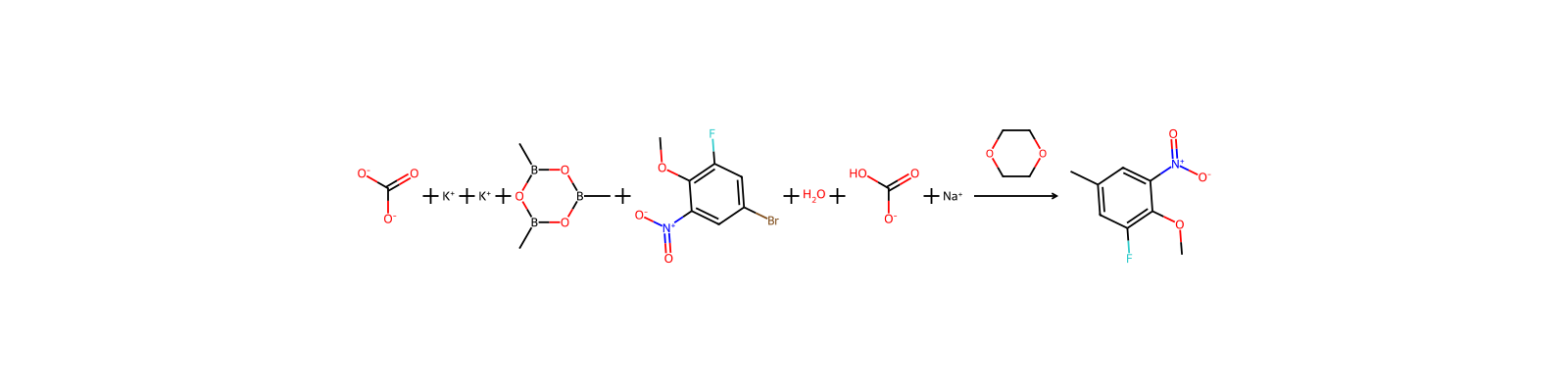
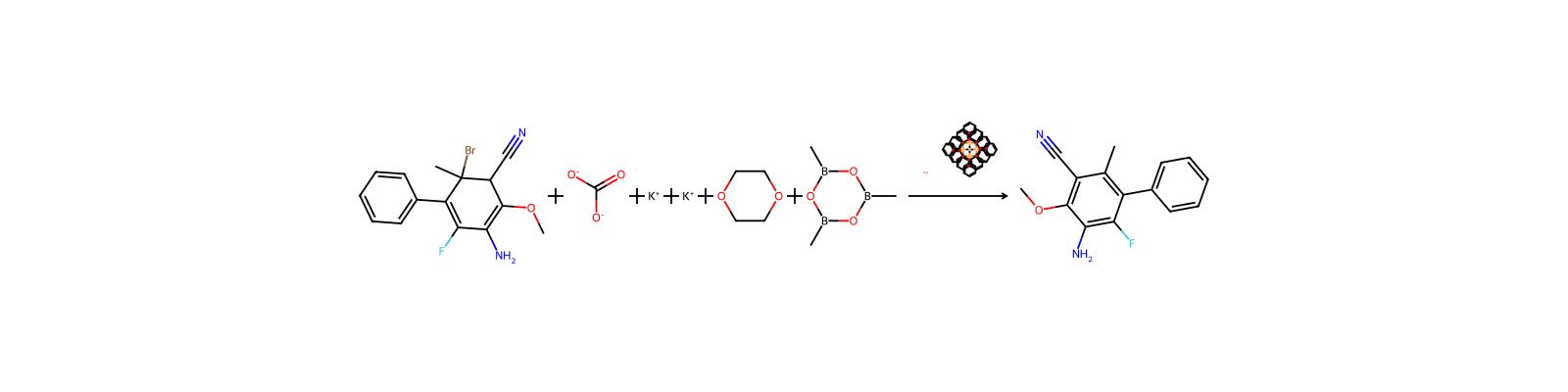
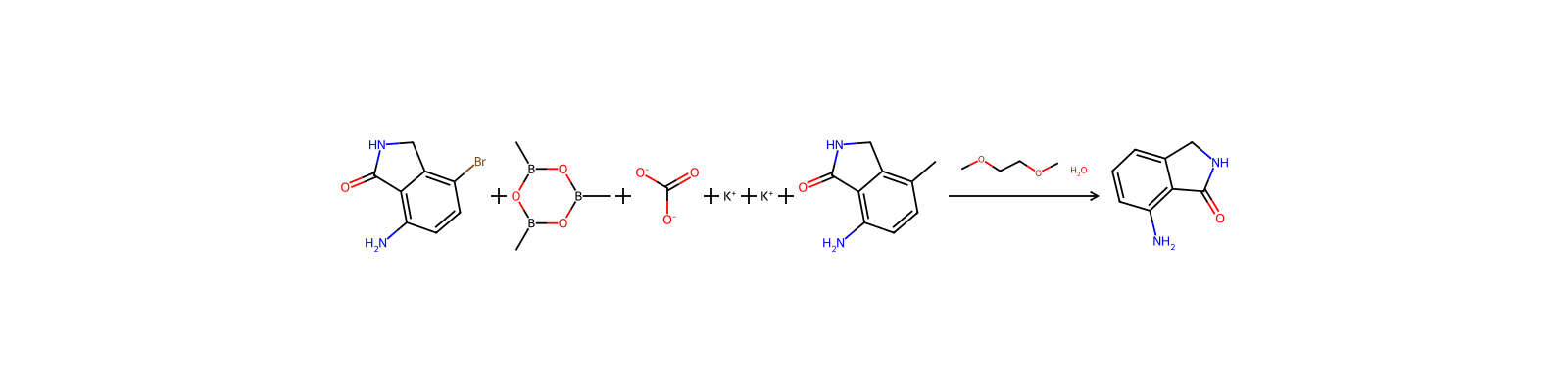
535 records
New reaction record
HRID 11915 reaction equation
HRID 11915As reactant
HRID 14103 reaction equation
HRID 14103As reactant
HRID 14122 reaction equation
HRID 14122As reactant
HRID 17285 reaction equation
HRID 17285As reactant
HRID 17525 reaction equation
HRID 17525As reactant
HRID 20945 reaction equation
HRID 20945As reactant
HRID 21189 reaction equation
HRID 21189As reactant
HRID 21194 reaction equation
HRID 21194As reactant
PreviousPage 1 of 67

Compound notes

On this pageBasic informationNames & identifiersPropertiesSafety & regulationChemistry & industryRelated reactionsCompound notes
Comptox DTXSID
90341570 · DTXSID90341570
UNSPSC Code
12352103 · 12352103
NACRES
22 · NA.22
Symbol(GHS)
2 · GHS02,GHS05,GHS07,GHS08
Signal word
Danger
Hazard statements
225 · H225-H314-H335-H351
Precautionary statements
201 · P201-P210-P233-P261-P280-P370+P378
PPE
Faceshields, Gloves, Goggles, type ABEK (EN14387) respirator filter
Hazard Codes
F,C,Xi
Risk Statements
11 · 11-34-41-37/38-19
Safety Statements
9 · 9-16-26-33-36/37/39-45-46-37/39-3
RIDADR
2924 · UN 2924 3/PG 2
WGK Germany
3 · 3
F
2 · 2-10-21
TSCA
Yes
HazardClass
3.1 · 3.1
PackingGroup
II
HS Code
29319090 · 29319090
Storage Class
3 · 3 - Flammable liquids
Hazard Classifications
2 Skin · Flam. Liq. 2Skin Corr. 1B
Limited Quantities
1 L · 1.0 L (0.3 gallon) (liquid)
Excepted Quantities
Max Inner Pack (30g or 30ml) and Max Outer Pack (500g or 500ml)
II
Hazard statements
H225-H314-H335-H351
Limited Quantities
1.0 L (0.3 gallon) (liquid)
Excepted Quantities
Max Inner Pack (30g or 30ml) and Max Outer Pack (500g or 500ml)
Hazard Classifications
Flam. Liq. 2Skin Corr. 1B
Precautionary statements
P201-P210-P233-P261-P280-P370+P378

Upstream & downstream products

Downstream products

(S)-3,3-Diphenyl-1-methylpyrrolidino[1,2-c]-1,3,2-oxazaborole2-Methylimidazole2-(2-Methylpropyl)pyridine4-Chloro-6-methyl-nicotinic acid methyl ester4-Hydroxy-1-methyl-7-phenoxy-3-isoquinolinecarboxylic acid methyl ester2-n-Propylpyridine2-Amino-4,6-dimethylpyrimidine2,5-Dimethyl-3-nitropyridine