
Norethisterone Acetate
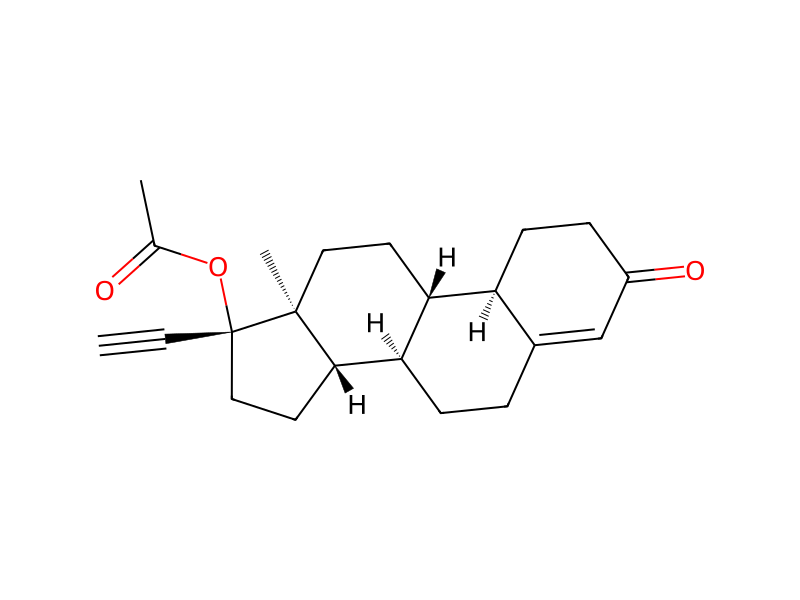
Basic information
- CAS
51-98-9- Standard SMILES
C#C[C@]1(OC(C)=O)CC[C@H]2[C@@H]3CCC4=CC(=O)CC[C@@H]4[C@H]3CC[C@@]21C- InChIKey
IMONTRJLAWHYGT-ZCPXKWAGSA-N- Molecular formula
- C22H28O3
- Average molar mass
- 340.5 g/mol
- Monoisotopic mass
- 340.20384475
Overview
Norethisterone Acetate (Norethindrone Acetate) can cause developmental toxicity according to state or federal government labeling requirements.
Names & identifiers
- Preferred name
- Norethisterone Acetate
- IUPAC
- [(8R,9S,10R,13S,14S,17R)-17-ethynyl-13-methyl-3-oxo-1,2,6,7,8,9,10,11,12,14,15,16-dodecahydrocyclopenta[a]phenanthren-17-yl] acetate
- English name
- 19-Norethindrone acetate
- Molecular formula
- C22H28O3
- Molecular weight
- 340.46
Names & synonyms
Norethindrone acetateNorethisterone acetate51-98-919-Norethindrone acetateNorlutin acetateENTANorethisteron acetate19-Norethisterone acetateNorethindrone 17-acetate19-Norethynyltestosterone acetate(17-alpha)-Norethindrone acetateNorethynyltestosterone
Show more names
Aygestinsh42017-EntSH 420SH-420COrlutateprogylut
17alpha-Ethynyl-19-nortestosterone acetateDTXSID4023381Norethisterone 17-acetate17-alpha-Ethinyl-19-nortestosterone acetate17-alpha-Ethynyl-19-nortestosterone acetate9S44LIC7OJNorethindrone acetate [USP]NSC-22844
Database identifiers
- CAS
51-98-9- PubChem CID
- 5832
- DTXSID
DTXSID4023381- ChEMBL
Properties
Computed structural properties
- XLogP
- 3.5
- Topological polar surface area
- 43.4 Ų
- Hydrogen bond donors
- 0
- Hydrogen bond acceptors
- 3
- Rotatable bonds
- 3
- Heavy atoms
- 25
- Formal charge
- 0
- Complexity
- 695
Experimental & physicochemical properties
Human Drugs
FDA approved drugs -> Active ingredient
FDA approved drugs -> Active ingredient
Pharmaceuticals
Endocrine DisruptorsPotential endocrine disrupting compound
Collision Cross Section186.3 Ų [M+H]+ [CCS Type: TW; Method: calibrated with polyalanine and drug standards]
Physicochemical properties
- Melting point
- 161 · 161-162°
- Boiling point
- 416.25 °C · 416.25°C (rough estimate)
- Density
- 1.1236 · 1.1236 (rough estimate)
- refractive index
- -34 ° · -34 ° (C=1, Dioxane)
- storage temp.
- 2 · 2-8°C
- solubility
- Practically insoluble in water, freely soluble in methylene chloride, soluble in alcohol.
- form
- Solid
- color
- 2 CO/hexane · Crystals from Me2CO/hexane
Safety & regulation
Safety information is for reference only and does not replace the supplier’s Safety Data Sheet (SDS), applicable regulations, or professional assessment.
GHS classification
GHS Classification
Danger
H302 (16.5%): Harmful if swallowed [Warning Acute toxicity, oral]
P203, P260, P261, P263, P264, P270, P271, P273, P280, P301+P317, P302+P352, P304+P340, P317, P318, P321, P330, P362+P364, P391, P405, and P501 (click each P-code to see the statement)
Aggregated GHS information provided per 115 reports by companies from 10 notifications to the ECHA C&L Inventory. Each notification may be associated with multiple companies.
Hazard information
Regulatory InformationHazard Traits - Developmental Toxicity
Other Safety InformationIMAP assessments - 19-Norpregn-4-en-20-yn-3-one, 17-(acetyloxy)-, (17.alpha.)-: Human health tier I assessment
Hazard Classes and CategoriesAcute Tox. 4 (16.5%)
Toxicology
Treatment
The treatment of choice for S. aureus infection is penicillin, but in most countries, penicillin-resistance is extremely common and first-line therapy is most commonly a penicillinase-resistant penicillin (for example, oxacillin or flucloxacillin). Combination therapy with gentamicin may be used to treat serious infections like endocarditis, but its use is controversial because of the high risk of damage to the kidneys. The duration of treatment depends on the site of infection and on severity. (L1773)
Health EffectsEnterotoxins are cytotoxic. (L1780)
Exposure RoutesIngestion (L1816) ; inhalation (L1816) ; dermal (L1816)
Chemistry & industry
Pharmacology
Metabolism/Metabolites
Free toxin may be removed by opsonization via the reticuloendothelial system (primarily the liver and kidneys) or it may be degraded through cellular internalization via the lysosomes. Lysosomes are membrane-enclosed organelles that contain an array of digestive enzymes, including several proteases.
FDA Pharmacological Classification
NORETHINDRONE ACETATE
Progestin [EPC]; Progesterone Congeners [CS]
MeSH Pharmacological Classification
Chemical substances or agents with contraceptive activity in females. Use for female contraceptive agents in general or for which there is no specific heading.
Contraceptive agents that act on the ENDOCRINE SYSTEM.
Uses & manufacturing
UsesEnterotoxin type A is one of many enterotoxins produced by Staphylococcus aureus. (L1780)
Use ClassificationPharmaceuticals
Applications
UsesProgesteron. Norethindrone and acetate in combination with estrogen as contraceptive (oral). It is reasonably anticipated to be a human carcinogen.
UsesOral contraceptive (in combination with estrogen)
General DescriptionPharmaceutical secondary standards for application in quality control provide pharma laboratories and manufacturers with a convenient and cost-effective alternative to the preparation of in-house working standards
Upstream & downstream products
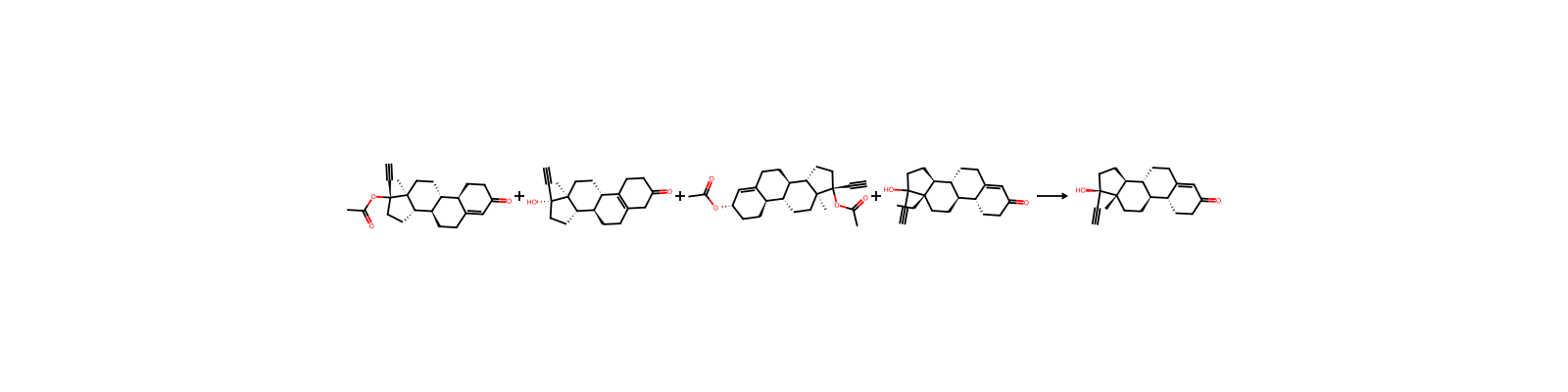
Related reactions
4 records


Compound notes
Loading…