
Thiophene-2,5-dicarbaldehyde

Basic information
- CAS
932-95-6- Standard SMILES
O=Cc1ccc(C=O)s1- InChIKey
OTMRXENQDSQACG-UHFFFAOYSA-N- Molecular formula
- C6H4O2S
- Average molar mass
- 140.16 g/mol
- Monoisotopic mass
- 139.99320037
Names & identifiers
- Preferred name
- Thiophene-2,5-dicarbaldehyde
- IUPAC
- thiophene-2,5-dicarbaldehyde
- English name
- 2,5-Thiophenedicarboxaldehyde
- Molecular formula
- C6H4O2S
- Molecular weight
- 140.16
Names & synonyms
2,5-ThiophenedicarboxaldehydeThiophene-2,5-dicarbaldehyde932-95-6DTXSID503431512,5-THIOPHENENEDICARBOXALDEHYDERefChem:897896DTXCID10294231627-004-02,5-ThiophenedicarbaldehydeMFCD002165922,5-Diformylthiophene2,5-Thiophenedial
Show more names
S0509TIMTEC-BB SBB000080Thiophene-2,5-dialdehyde2,Chemicalbook5-Diformylthiophene2,5-Thiophenedicarboxaldehyde 99%
Thiophene-2,5-dicarboxaldehydeSCHEMBL1788302,5-thiophene dicarboxaldehyde2,5-Thiophenedicarboxaldehyde, 99%CS-W016463AC-51932,5-DiformylthiophenThiophene-2,5-dicarbal
Database identifiers
- CAS
932-95-6- PubChem CID
- 587784
- DTXSID
DTXSID50343151- ChEMBL
CHEMBL2229528- EC Number
- 627-004-0
- Nikkaji
- J472.325B
Properties
Computed structural properties
- XLogP
- 1.2
- Topological polar surface area
- 62.4 Ų
- Hydrogen bond donors
- 0
- Hydrogen bond acceptors
- 3
- Rotatable bonds
- 2
- Heavy atoms
- 9
- Formal charge
- 0
- Complexity
- 110
Physicochemical properties
- Melting point
- 115 · 115-117 °C (lit.)
- Boiling point
- 226.66 °C · 226.66°C (rough estimate)
- Density
- 1.327 · 1.327 (estimate)
- refractive index
- 1.53 · 1.5300 (estimate)
- storage temp.
- 2 · under inert gas (nitrogen or Argon) at 2–8 °C
- form
- solid
- Appearance
- Yellow to brown Solid
- InChI
- InChI=1S/C6H4O2S/c7-3-5-1-2-6(4-8)9-5/h1-4H
- InChIKey
- OTMRXENQDSQACG-UHFFFAOYSA-N
- SMILES
- C1(C=O)SC(C=O)=CC=1
- NIST Chemistry Reference
- 2 · 2,5-Thiophenedicarboxaldehyde(932-95-6)
- UNSPSC Code
- 12352100 · 12352100
- NACRES
- 22 · NA.22
- Symbol(GHS)
- 7 · GHS07
- Signal word
- Warning
- Hazard statements
Safety & regulation
Safety information is for reference only and does not replace the supplier’s Safety Data Sheet (SDS), applicable regulations, or professional assessment.
GHS classification
GHS Classification
Warning
H315 (100%): Causes skin irritation [Warning Skin corrosion/irritation]
P261, P264, P264+P265, P271, P280, P302+P352, P304+P340, P305+P351+P338, P319, P321, P332+P317, P337+P317, P362+P364, P403+P233, P405, and P501 (click each P-code to see the statement)
Aggregated GHS information provided per 41 reports by companies from 4 notifications to the ECHA C&L Inventory. Each notification may be associated with multiple companies.
Hazard information
Hazard Classes and CategoriesSkin Irrit. 2 (100%)
Safety data
- PPE
- dust mask type N95 (US), Eyeshields, Gloves
- wgk
- 3
- hs_code
- 29349990
- risk_code
- 36/37/38
- Signal word
- Warning
- Symbol(GHS)
- GHS07
- hazard_code
- Xi
- safety_code
- 26-36
- Storage Class
- 11 - Combustible Solids
- target organs
- Respiratory system
- Hazard statements
- H315-H319-H335
- Hazard Classifications
- Eye Irrit. 2Skin Irrit. 2STOT SE 3
- Precautionary statements
- P261-P264-P271-P280-P302+P352-P305+P351+P338
Chemistry & industry
Applications
Uses2,5-Thiophenedicarboxaldehyde acts as a reagent in the synthesis of N,N''-bis-(mercaptophenylimine)thiophenedicarboxaldehyde Schiff base, and also functions as an intermediate in many organic synthesis.
Uses2,5-Thiophenedicarboxaldehyde may be employed in the following studies:Asymmetric synthesis of bis-homoallylic alcohols.Synthesis of new symmetrical arylene bisimide derivatives. As dialdehyde monomer in the synthesis of silicon-containing poly(p-phenylenevinylene)-related copolymers having uniform p-conjugated segment regulated by organosilicon units.Synthesis of 2,5-bis[2-(5-N-isopropylamidino)benzimidazoyl]thiophene hydrochloride.
General Description2,5-Thiophenedicarboxaldehyde can be prepared from 2,5-bis(chloromethyl)thiophene by the application of Krhnke′s method.
Upstream & downstream products
Upstream raw materials
Downstream products
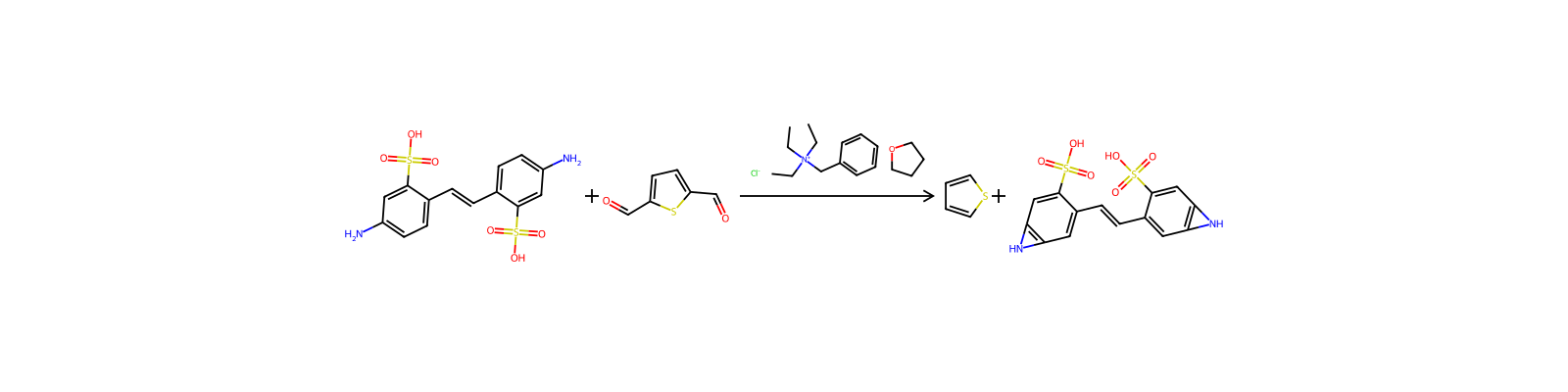
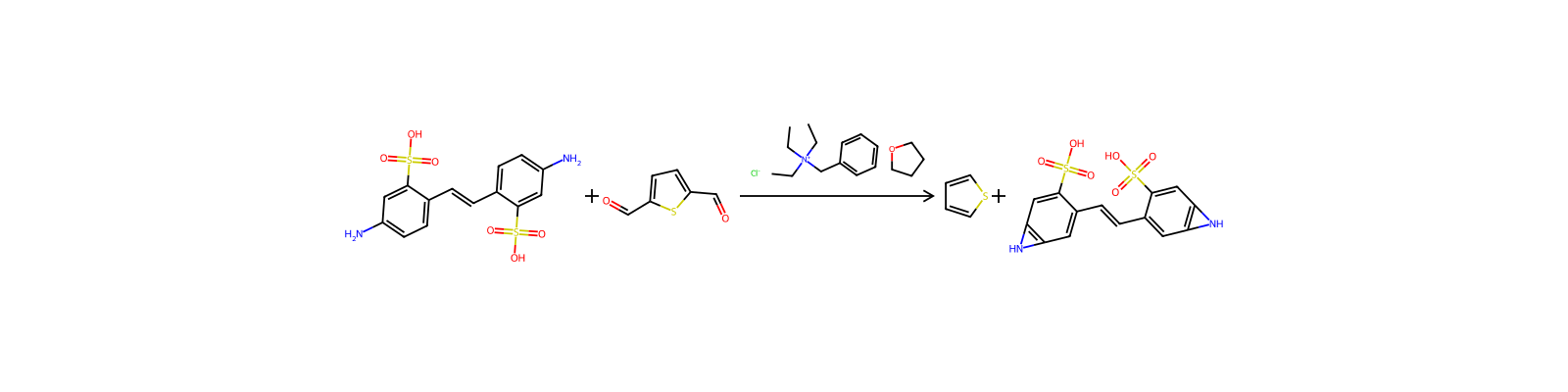
Related reactions
4 records

Compound notes
Loading…