
5'-Atp

Basic information
- CAS
56-65-5- Standard SMILES
Nc1ncnc2c1ncn2[C@@H]1O[C@H](COP(=O)(O)OP(=O)(O)OP(=O)(O)O)[C@@H](O)[C@H]1O- InChIKey
ZKHQWZAMYRWXGA-KQYNXXCUSA-N- Molecular formula
- C10H16N5O13P3
- Average molar mass
- 507.18 g/mol
- Monoisotopic mass
- 506.99574658
Overview
ATP is an adenosine 5'-phosphate in which the 5'-phosphate is a triphosphate group. It is involved in the transportation of chemical energy during metabolic pathways. It has a role as a cofactor, a micronutrient, a nutraceutical and a fundamental metabolite. It is a purine ribonucleoside 5'-triphosphate and an adenosine 5'-phosphate. It is a conjugate acid of an ATP(3-).
Names & identifiers
- Preferred name
- 5'-Atp
- IUPAC
- [[(2R,3S,4R,5R)-5-(6-aminopurin-9-yl)-3,4-dihydroxyoxolan-2-yl]methoxy-hydroxyphosphoryl] phosphono hydrogen phosphate
- English name
- Adenosine triphosphate
- Molecular formula
- C10H16N5O13P3
- Molecular weight
- 507.18
Names & synonyms
Adenosine triphosphate56-65-5TriphosphadenMyotriphosTriadenylGlucobasinAdetolAdynolAtipiAdephosAdenosine 5'-(tetrahydrogen triphosphate)Adenylpyrophosphoric acid
Show more names
ADENOSINE 5'-TRIPHOSPHATEATP-H((2R,3S,4R,5R)-5-(6-Amino-9H-purin-9-yl)-3,4-dihydroxytetrahydrofuran-2-yl)methyl tetrahydrogen triphosphateATP Sodium5’-atpATP.H2
5'-AtpAdenosine 5'-triphosphoric acidTriphosphoric acid adenosine esterDTXSID6022559adenosine 5' triphosphateadenylpyrophosphate8L70Q75FXECHEBI:15422
Database identifiers
- CAS
56-65-5- PubChem CID
- 5957
- DTXSID
DTXSID6022559- ChEMBL
CHEMBL14249
Properties
Computed structural properties
- XLogP
- -5.7
- Topological polar surface area
- 279 Ų
- Hydrogen bond donors
- 7
- Hydrogen bond acceptors
- 17
- Rotatable bonds
- 8
- Heavy atoms
- 31
- Formal charge
- 0
- Complexity
- 800
Experimental & physicochemical properties
DrugsPharmaceuticals -> Listed in ZINC15
Cosmetics
Cosmetic ingredients (Adenosine Triphosphate) -> CIR (Cosmetic Ingredient Review)
Skin conditioning
Solubility1000.0 mg/mL; 862 mg/mL (magnesium salt)
Physical DescriptionSolid
Collision Cross Section
198.86 Ų [M-H]- [CCS Type: DT; Method: stepped-field]
185.74 Ų [M-H]- [CCS Type: DT; Method: single field calibrated with Agilent tune mix (Agilent)]
196.9 Ų [M+H]+ [CCS Type: DT; Method: single field calibrated with ESI Low Concentration Tuning Mix (Agilent)]
188.3 Ų [M-H]-
Physicochemical properties
- Melting point
- 144 °C · 144°C (rough estimate)
- Boiling point
- 951.4 · 951.4±75.0 °C(Predicted)
- alpha
- 22 · D22 -26.7° (c = 3.095)
- Density
Safety & regulation
Safety information is for reference only and does not replace the supplier’s Safety Data Sheet (SDS), applicable regulations, or professional assessment.
GHS classification
GHS Classification
This chemical does not meet GHS hazard criteria for 100% (2 of 2) of all reports.
Not Classified
Aggregated GHS information provided per 2 reports by companies from 1 notifications to the ECHA C&L Inventory.
Hazard information
Regulatory Information
Chemical: Adenosine 5'-(tetrahydrogen triphosphate)
Adenosine triphosphate: Does not have an individual approval but may be used under an appropriate group standard
Other Safety InformationIMAP assessments - Adenosine 5'-(tetrahydrogen triphosphate): Environment tier I assessment
Hazard Classes and CategoriesNot Classified
Toxicology
Toxicity Summary
Safe in the present practices of use and concentration. Ingredient, concentration, and use information are available in documents discoverable at https://cir-reports.cir-safety.org
ATP is able to store and transport chemical energy within cells. ATP also plays an important role in the synthesis of nucleic acids. ATP can be produced by various cellular processes, most typically in mitochondria by oxidative phosphorylation under the catalytic influence of ATP synthase. The total quantity of ATP in the human body is about 0.1 mole. The energy used by human cells requires the hydrolysis of 200 to 300 moles of ATP daily. This means that each ATP molecule is recycled 2000 to 3000 times during a single day. ATP cannot be stored, hence its consumption must closely follow its synthesis.
Carcinogen Classification
Chemistry & industry
Pharmacology
Pharmacodynamics
Adenosine triphosphate (ATP) is the nucleotide known in biochemistry as the "molecular currency" of intracellular energy transfer; that is, ATP is able to store and transport chemical energy within cells. ATP also plays an important role in the synthesis of nucleic acids. The total quantity of ATP in the human body is about 0.1 mole. The energy used by human cells requires the hydrolysis of 200 to 300 moles of ATP daily. This means that each ATP molecule is recycled 2000 to 3000 times during a single day. ATP cannot be stored, hence its consumption must closely follow its synthesis.
Mechanism of Action
ATP is able to store and transport chemical energy within cells. ATP also plays an important role in the synthesis of nucleic acids. ATP can be produced by various cellular processes, most typically in mitochondria by oxidative phosphorylation under the catalytic influence of ATP synthase. The total quantity of ATP in the human body is about 0.1 mole. The energy used by human cells requires the hydrolysis of 200 to 300 moles of ATP daily. This means that each ATP molecule is recycled 2000 to 3000 times during a single day. ATP cannot be stored, hence its consumption must closely follow its synthesis.
Metabolism/Metabolites
Metabolism of organophosphates occurs principally by oxidation, by hydrolysis via esterases and by reaction with glutathione. Demethylation and glucuronidation may also occur. Oxidation of organophosphorus pesticides may result in moderately toxic products. In general, phosphorothioates are not directly toxic but require oxidative metabolism to the proximal toxin. The glutathione transferase reactions produce products that are, in most cases, of low toxicity. Paraoxonase (PON1) is a key enzyme in the metabolism of organophosphates. PON1 can inactivate some organophosphates through hydrolysis. PON1 hydrolyzes the active metabolites in several organophosphates insecticides as well as, nerve agents such as soman, sarin, and VX. The presence of PON1 polymorphisms causes there to be different enzyme levels and catalytic efficiency of this esterase, which in turn suggests that different individuals may be more susceptible to the toxic effect of organophosphate exposure.
Tissue LocationsAdipose Tissue
Related reactions
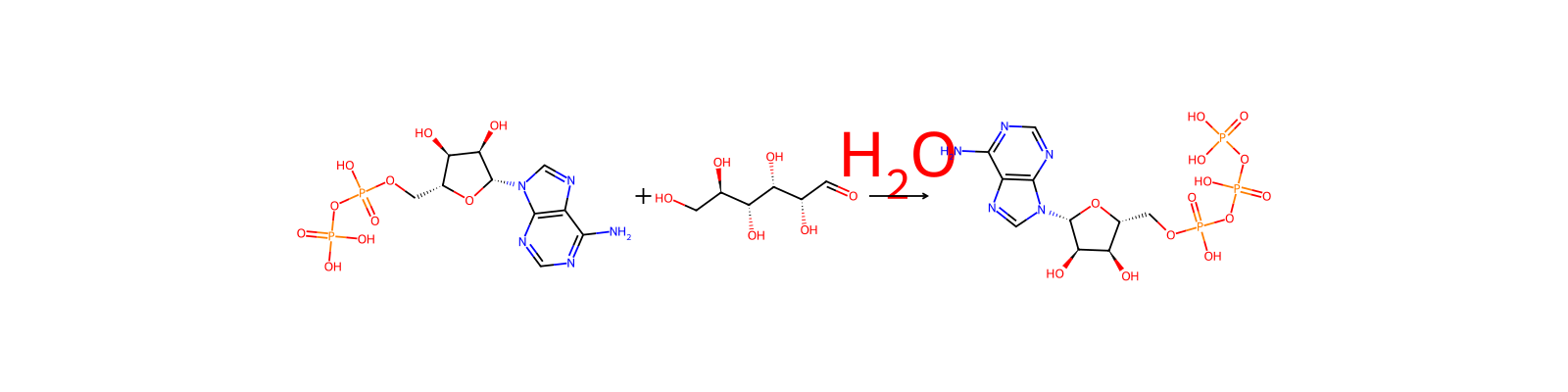
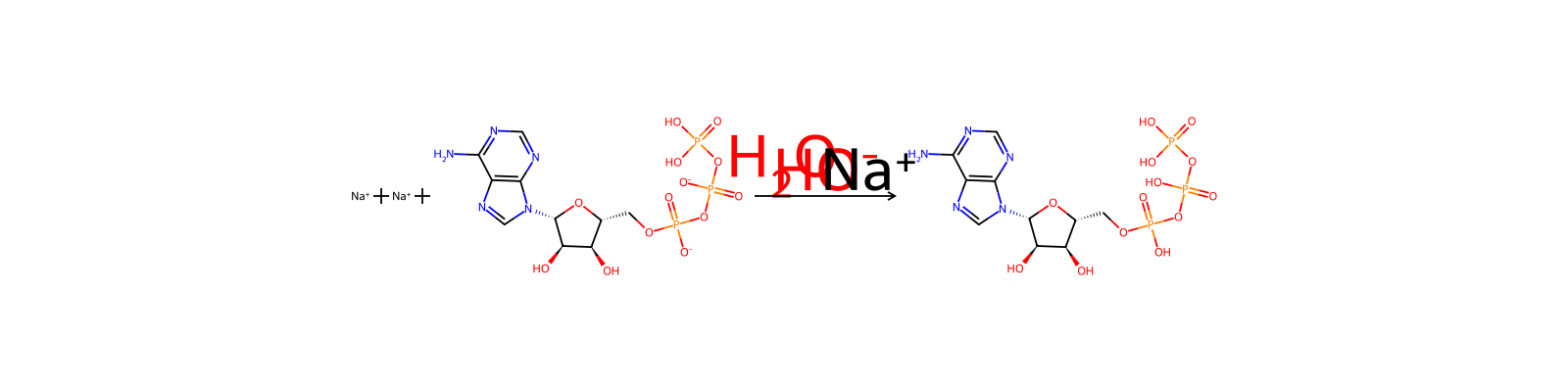
131 records





Compound notes
Loading…