
Phenacyl bromide
Basic information
- CAS
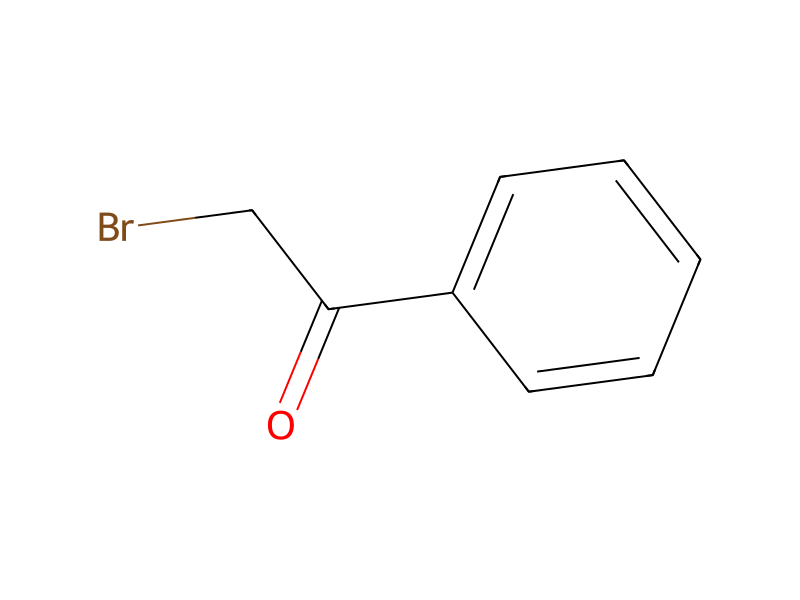
70-11-1- Standard SMILES
O=C(CBr)c1ccccc1- InChIKey
LIGACIXOYTUXAW-UHFFFAOYSA-N- Molecular formula
- C8H7BrO
- Average molar mass
- 199.04 g/mol
- Monoisotopic mass
- 197.96802694
Overview
Phenacyl bromide appears as a crystalline solid or a liquid with a sharp odor. Toxic by inhalation, ingestion and skin absorption. A severe eye irritant (a lachrymator). Used to make other chemicals.
Names & identifiers
- Preferred name
- Phenacyl bromide
- IUPAC
- 2-bromo-1-phenylethanone
- English name
- 2-Bromoacetophenone
- Molecular formula
- C8H7BrO
- Molecular weight
- 199.04
Names & synonyms
2-BromoacetophenonePhenacyl bromide70-11-12-Bromo-1-phenylethanoneBromoacetophenone2-Bromo-1-Phenylethan-1-OneBromomethyl phenyl ketoneEthanone, 2-bromo-1-phenyl-omega-BromoacetophenoneALPHA-BROMOACETOPHENONEAcetophenone, 2-bromo-Stauffer 4644
Show more names
α-BromoacetophenoneA-BROMOACETOPHENONE1-Phenyl-2-broMoethanone2-Bromoacetophenone ,99%NSC 9807AKOS BBS-00004003Bromoacetylbenzene-Bromoacetophenone
phenacylbromideBenzoylmethyl bromideomega-BromacetophenoneDTXSID2049426UN2645STAUFFER-4644phenyl bromomethyl ketoneNSC-9807
Database identifiers
- CAS
70-11-1- PubChem CID
- 6259
- DTXSID
DTXSID2049426- ChEMBL
CHEMBL102953- ChEBI
CHEBI:51846- UNII
- 754Y0U325I
- EC Number
- 200-724-9
- Nikkaji
- J4.874G
Properties
Computed structural properties
- XLogP
- 2.5
- Topological polar surface area
- 17.1 Ų
- Hydrogen bond donors
- 0
- Hydrogen bond acceptors
- 1
- Rotatable bonds
- 2
- Heavy atoms
- 10
- Formal charge
- 0
- Complexity
- 116
Experimental & physicochemical properties
Chemical ClassesOther Classes -> Aromatic Ketones, Halogenated
SpringerMaterials PropertiesChemical shift
LogP2.19
Vapor Pressure0.01 [mmHg]
Physical Description
Phenacyl bromide appears as a crystalline solid or a liquid with a sharp odor. Toxic by inhalation, ingestion and skin absorption. A severe eye irritant (a lachrymator). Used to make other chemicals.
Solid; [Merck Index] Beige crystalline solid; [Aldrich MSDS]
Physicochemical properties
- Melting point
- 48 · 48-51 °C (lit.)
- Boiling point
- 135 °C/18 · 135 °C/18 mmHg (lit.)
- Density
- 1.476 · 1.476
- refractive index
- 1.57 · 1.5700 (estimate)
- Flash point
- 230 °F · >230 °F
Safety & regulation
Safety information is for reference only and does not replace the supplier’s Safety Data Sheet (SDS), applicable regulations, or professional assessment.
GHS classification
GHS Classification
Danger
H301 (20.6%): Toxic if swallowed [Danger Acute toxicity, oral]
P260, P261, P262, P264, P264+P265, P270, P271, P280, P284, P301+P316, P301+P330+P331, P302+P352, P302+P361+P354, P304+P340, P305+P351+P338, P305+P354+P338, P316, P319, P320, P321, P330, P332+P317, P337+P317, P361+P364, P362+P364, P363, P403+P233, P405, and P501 (click each P-code to see the statement)
Aggregated GHS information provided per 63 reports by companies from 8 notifications to the ECHA C&L Inventory. Each notification may be associated with multiple companies.
Hazard information
Regulatory Information
Chemical: Ethanone, 2-bromo-1-phenyl-
2-Bromoacetophenone: Does not have an individual approval but may be used under an appropriate group standard
DOT LabelPoison
Fire Hazards
Excerpt from ERG Guide 153 [Substances - Toxic and/or Corrosive (Combustible)]:
· Combustible material: may burn but does not ignite readily.
Health Hazards
Excerpt from ERG Guide 153 [Substances - Toxic and/or Corrosive (Combustible)]:
· TOXIC and/or CORROSIVE; inhalation, ingestion or skin contact with material may cause severe injury or death.
Hazards Summary
A lachrymator; A severe skin, eye, and mucous membrane irritant; [Merck Index] Slowly reacts with moisture producing hydrogen bromide; A lachrymator; Toxic by ingestion, inhalation, and skin absorption; [CAMEO] Causes burns and lachrymation; Inhalation may cause corrosive injuries to upper respiratory tract and lungs; [Aldrich MSDS] See alpha-Chloroacetophenone.
Chemistry & industry
Pharmacology
Metabolism/Metabolites
Bromine is mainly absorbed via inhalation, but may also enter the body through dermal contact. Bromine salts can be ingested. Due to its reactivity, bromine quickly forms bromide and may be deposited in the tissues, displacing other halogens. (L626)
Uses & manufacturing
Uses
Used to make other chemicals; [CAMEO]
Phenacyl bromide is an industrial and laboratory chemical.
General Manufacturing InformationEthanone, 2-bromo-1-phenyl-: ACTIVE
Applications
Uses2-Bromoacetophenone is a brominated acteophenone derivative. 2-Bromoacetophenone has been shown to completely and irreversibly inactivate human liver aldehyde dehydrogenase (EC 1.2.1.3) isoenzymes E1 and E2. 2-Bromoacetophenone and its derivatives display some inhibitory activity on neutral protein tyrosine.inhibitors
UsesIt is used in preparation of crystalline esters from acids. 2-Bromoacetophenone is a complete and irreversible inactivator of human liver aldehyde dehydrogenase isoenzymes E1 and E2.
General DescriptionA crystalline solid or a liquid with a sharp odor. Toxic by inhalation, ingestion and skin absorption. A severe eye irritant (a lachrymator). Used to make other chemicals.
Upstream & downstream products
Upstream raw materials
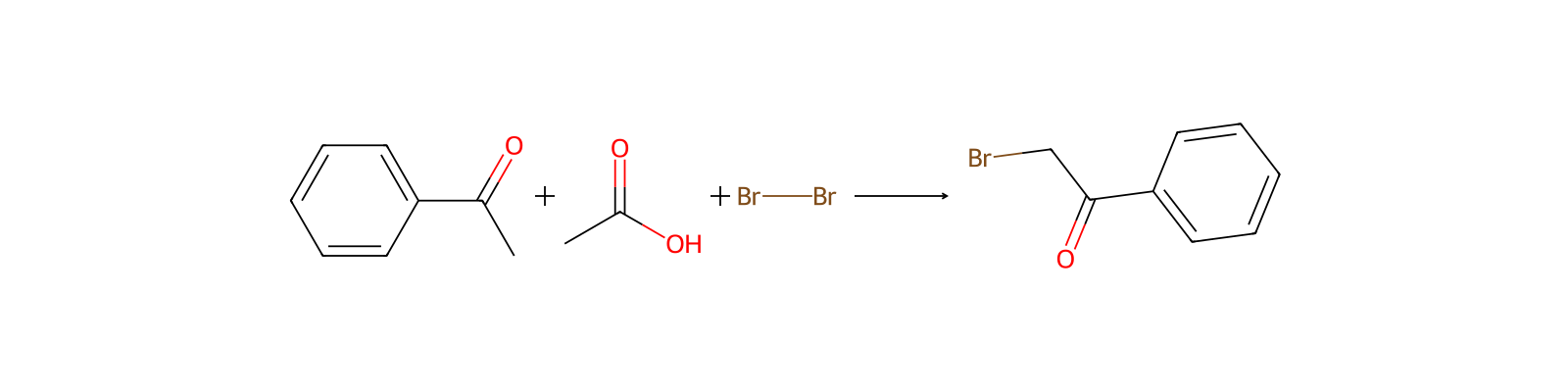
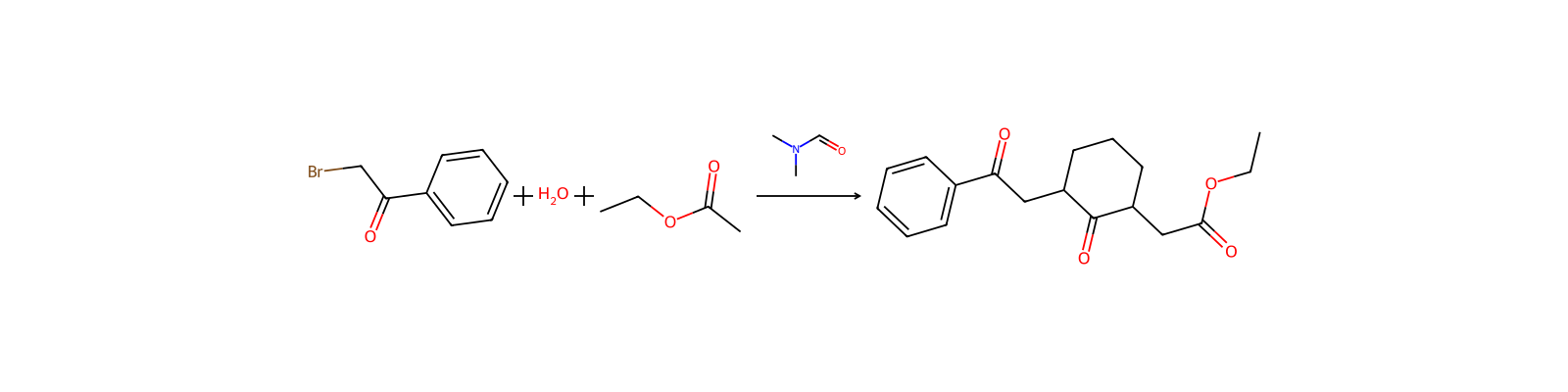
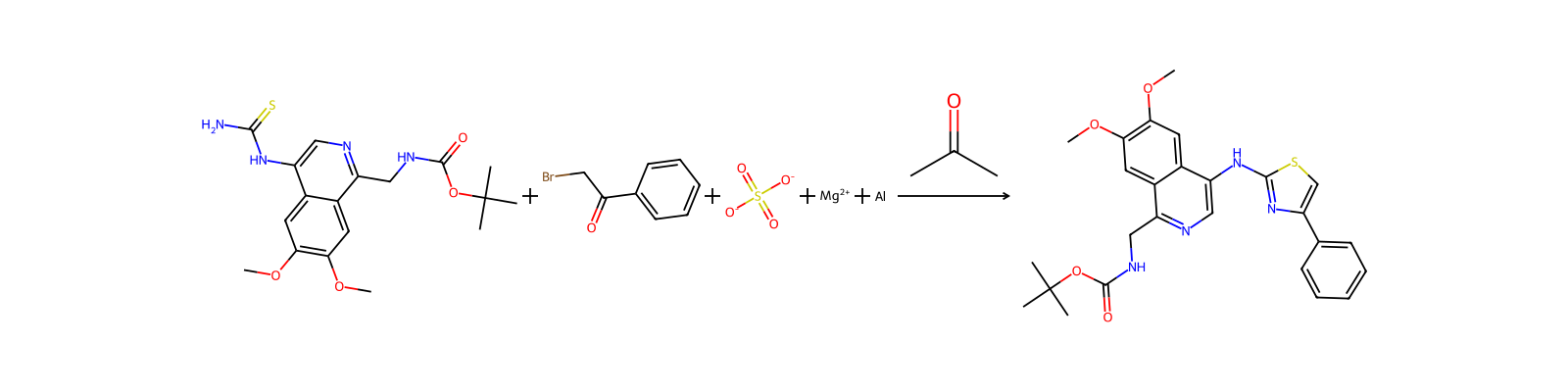
Related reactions
1,060 records




Compound notes
Loading…