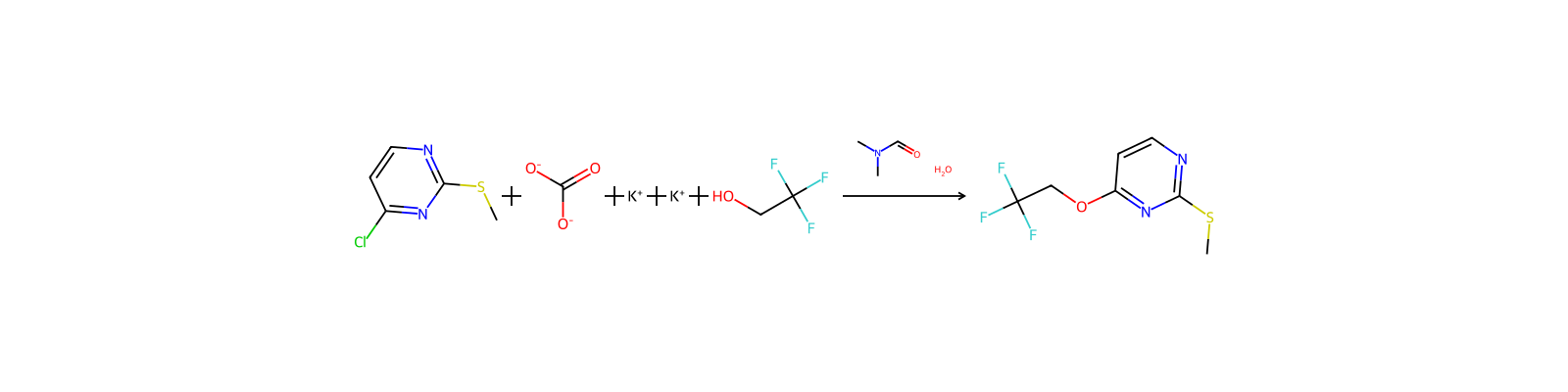
2,2,2-Trifluoroethanol
Completing data — refresh the page later to see the latest

Basic information
- CAS
75-89-8- Standard SMILES
OCC(F)(F)F- InChIKey
RHQDFWAXVIIEBN-UHFFFAOYSA-N- Molecular formula
- C2H3F3O
- Average molar mass
- 100.04 g/mol
- Monoisotopic mass
- 100.01359938
Overview
2,2,2-trifluoroethanol is a fluoroalcohol. It is functionally related to an ethanol.
Names & identifiers
- Preferred name
- 2,2,2-Trifluoroethanol
- IUPAC
- 2,2,2-trifluoroethanol
- English name
- 2,2,2-Trifluoroethanol
- Molecular formula
- C2H3F3O
- Molecular weight
- 100.04
Names & synonyms
2,2,2-TRIFLUOROETHANOL75-89-8TrifluoroethanolEthanol, 2,2,2-trifluoro-2,2,2-Trifluoroethyl alcoholTrifluoroethyl alcoholFluorinol 85DTXSID0021751beta,beta,beta-Trifluoroethyl alcohol8T8I76KYF1NSC-451DTXCID401751
Show more names
TFEA2,2,2-Trifluorethanol2,2,2-TrifluoroethanTrifluoro Ethanol(L)2,2,2-TRIFLUROETHANOLTFETOH
CHEBI:42330Alcohol, TrifluoroethylRefChem:191590200-913-62,2,2-Trifluoroethan-1-OlTFECF3CH2OHNSC 451
Database identifiers
- CAS
75-89-8- PubChem CID
- 6409
- DTXSID
DTXSID0021751- ChEMBL
CHEMBL116675- ChEBI
CHEBI:42330- UNII
- 8T8I76KYF1
- EC Number
- 200-913-6
- Nikkaji
- J2.396E
Properties
Computed structural propertiesFilling in
- XLogP
- 0.4
- Topological polar surface area
- 20.2 Ų
- Hydrogen bond donors
- 1
- Hydrogen bond acceptors
- 4
- Rotatable bonds
- 0
- Heavy atoms
- 6
- Formal charge
- 0
- Complexity
- 38.5
Experimental & physicochemical properties
Chemical ClassesOther Classes -> Halogenated Alcohols
PFAS
PFAS -> PFAS identified in REACH Regulation EC No. 1272/2008
PFAS -> F-telomer alcohols (FTOH)
PFAS -> Suspected persistent, mobile, toxic (PMT) PFAS or PFAS-like compounds
DrugsPharmaceuticals -> Listed in ZINC15
SpringerMaterials PropertiesSchoenflies notation
LogP0.32
Density1.288 @25 °C
Melting Point-44 °C
Vapor Pressure71.3 [mmHg]
Physical Description
Liquid
Colorless liquid with an ethanol-like odor; bp = 74.1 deg C; [Merck Index]
Physicochemical properties
- Melting point
- 44 °C · −44 °C(lit.)
- Boiling point
- 77 · 77-80 °C(lit.)
- Density
- 1.391 g/mL · 1.391 g/mL at 20 °C
- vapor density
- 3.5 · 3.5 (vs air)
- vapor pressure
- 70 mm · 70 mm Hg ( 25 °C)
- refractive index
- 20 · n20/D 1.3(lit.)
- Flash point
- 85 °F · 85 °F
- storage temp.
- 30 °C · Store below +30°C.
- solubility
- soluble in Chloroform, Methanol
- pka
- 12.4 · 12.4(at 25℃)
- form
- Liquid
- color
- Clear colorless
- Specific Gravity
- 1.373 · 1.373
- Odor
- Alcoholic odour
- PH Range
- 5 · 5-7 (10% aq soln)
- PH
- 7 · 7
- biological source
- goat
- Viscosity
- 1.75 cP · 1.75 cP @ 20°C
- explosive limit
- 8.4 · 8.4-28.8%(V)
- Water Solubility
- Miscible with water, ethers, ketones, alcohols and chloroform.
- λmax
- 260 nm · λ: 260 nm Amax: ≤0.03λ: 280 nm Amax: ≤0.02
- Merck
- 14 · 14,9682
- BRN
- 1733203 · 1733203
- Henry's Law Constant
- 4.7 · 4.7×10-1 mol/(m3Pa) at 25℃, Burkholder et al. (2019)
- Dielectric constant
- 8.55 · 8.5500000000000007
- Stability
- Stable. Flammable - note wide explosion limits. Moisture sensitive. Incompatible with strong oxidizing agents, strong acids, sodium, potassium.
- Major Application
- sample preparation
- InChI
- 1S/C2H3F3O/c3-2(4,5)1-6/h6H,1H2
- InChIKey
- RHQDFWAXVIIEBN-UHFFFAOYSA-N
- SMILES
- OCC(F)(F)F
- CAS DataBase Reference
- 75 · 75-89-8(CAS DataBase Reference)
- FDA UNII
- 8 T8I76KYF1 · 8T8I76KYF1
- NIST Chemistry Reference
- 2 · Ethanol, 2,2,2-trifluoro-(75-89-8)
- EPA Substance Registry System
- 2 · 2,2,2-Trifluoroethanol (75-89-8)
- UNSPSC Code
- 12352203 · 12352203
- NACRES
- 41 · NA.41
- Symbol(GHS)
- 2 · GHS02,GHS05,GHS06,GHS08
- Signal word
- Danger
- Hazard statements
- 301 · H301+H331-H318-H360-H373-H226
- Precautionary statements
- 501 · P501-P260-P270-P202-P240-P210-P233-P201-P243-P241-P242-P271-P264-P280-P370+P378-P308+P313-P303+P361+P353-P301+P310+P330-P304+P340+P311-P305+P351+P338+P310-P403+P233-P403+P235-P405
- target organs
- Blood
- PPE
- Eyeshields, Faceshields, Gloves, type ABEK (EN14387) respirator filter
- Hazard Codes
- Xn,T,F
- Risk Statements
- 10 · 10-20/21/22-37/38-41-62-38-36/37/38
- Safety Statements
- 26 · 26-36-39-45-36/37/39-16
- RIDADR
- 1986 · UN 1986 3/PG 3
- WGK Germany
- 1 · 1
- RTECS
- 5250000 · KM5250000
- Autoignition Temperature
- 896 °F · ~896 °F
- Hazard Note
- Flammable/Toxic
- TSCA
- TSCA listed
- HazardClass
- 3 · 3
- PackingGroup
- III
- HS Code
- 29055910 · 29055910
- Storage Class
- 3 · 3 - Flammable liquids
- Hazard Classifications
- 3 InhalationAcute · Acute Tox. 3 InhalationAcute Tox. 3 OralEye Dam. 1Flam. Liq. 3Repr. 1BSTOT RE 2 Inhalation
- Toxicity
- 50 orally · LD50 orally in Rabbit: 240 mg/kg LD50 dermal Rat 1680 mg/kg
- REACH Registrations
- Active
- Limited Quantities
- 5 L · 5.0 L (1.3 gallons) (liquid)
- Excepted Quantities
- Max Inner Pack (30g or 30ml) and Max Outer Pack (1Kg or 1L)
Safety & regulation
Safety information is for reference only and does not replace the supplier’s Safety Data Sheet (SDS), applicable regulations, or professional assessment.
GHS classification
GHS Classification
This chemical does not meet GHS hazard criteria for 0.6% (1 of 169) of reports.
Danger
H226 (99.4%): Flammable liquid and vapor [Warning Flammable liquids]
P203, P210, P233, P240, P241, P242, P243, P260, P261, P264, P264+P265, P270, P271, P280, P301+P316, P302+P352, P303+P361+P353, P304+P340, P305+P354+P338, P316, P317, P318, P319, P321, P330, P332+P317, P362+P364, P370+P378, P403+P233, P403+P235, P405, and P501 (click each P-code to see the statement)
Aggregated GHS information provided per 169 reports by companies from 27 notifications to the ECHA C&L Inventory. Each notification may be associated with multiple companies.
Warning
Hazard information
Regulatory Information
Chemical: Ethanol, 2,2,2-trifluoro-
Ethanol, 2,2,2-trifluoro- is listed on the EPA's Chemical Data Reporting (CDR) system. Manufacturers and importers of Ethanol, 2,2,2-trifluoro- are required to report information about their production and use of this chemical to the EPA under the Toxic Substances Control Act (TSCA). (40 eCFR Part 711)
Status: Active Update: 10-06-2022 https://echa.europa.eu/registration-dossier/-/registered-dossier/13741
2,2,2-Trifluoroethanol: Does not have an individual approval but may be used under an appropriate group standard
Hazards Summary
A skin irritant; Corrosive to eyes; [eChemPortal: ERMA] An irritant; Causes CNS depression in high-dose animal studies; [MSDSonline] In a 4-week inhalation study of rats exposed at 50 ppm, decreased testicular weight and hypospermatogenesis were observed. No adverse effects were observed in rats exposed to 10 ppm. A cluster of 5 exposed workers were reported to have smaller testicles. [AIHA]
Hazard Classes and Categories
Flam. Liq. 3 (99.4%)
Flammable liquids - Category 3
Safety & protection
Protective Action Criteria (PAC)
0.90 [ppm]
5.8 [ppm]
35 [ppm]
Toxicology
Adverse EffectsNeurotoxin - Acute solvent syndrome
Toxicity DataLC50 (rat) = 470 ppm/6h
Safety data
- PPE
- Eyeshields, Faceshields, Gloves, type ABEK (EN14387) respirator filter
- wgk
- 1
- tsca
- TSCA listed
- rtecs
- KM5250000
- ridadr
- UN 1986 3/PG 3
- hs_code
- 29055910
- Toxicity
- LD50 orally in Rabbit: 240 mg/kg LD50 dermal Rat 1680 mg/kg
- risk_code
- 10-20/21/22-37/38-41-62-38-36/37/38
- Signal word
- Danger
- Symbol(GHS)
- GHS02,GHS05,GHS06,GHS08
- hazard_code
- Xn,T,F
- hazard_note
- Flammable/Toxic
- safety_code
- 26-36-39-45-36/37/39-16
- hazard_class
- 3
- Storage Class
- 3 - Flammable liquids
- packing_group
- III
- target organs
- Blood
- Hazard statements
- H301+H331-H318-H360-H373-H226
- Limited Quantities
- 5.0 L (1.3 gallons) (liquid)
- Excepted Quantities
- Max Inner Pack (30g or 30ml) and Max Outer Pack (1Kg or 1L)
- REACH Registrations
- Active
- Hazard Classifications
- Acute Tox. 3 InhalationAcute Tox. 3 OralEye Dam. 1Flam. Liq. 3Repr. 1BSTOT RE 2 Inhalation
- Autoignition Temperature
- ~896 °F
- Precautionary statements
- P501-P260-P270-P202-P240-P210-P233-P201-P243-P241-P242-P271-P264-P280-P370+P378-P308+P313-P303+P361+P353-P301+P310+P330-P304+P340+P311-P305+P351+P338+P310-P403+P233-P403+P235-P405
Chemistry & industry
Uses & manufacturing
Uses
Used in organic synthesis (anesthetics, pharmaceuticals, and agrochemicals), in polymerizations, as a cleaning solvent, as a working fluid in Rankine-cycle engines, as an eluent in HPLC separations, and as an alternative to CFCs; [Merck Index]
Metal Degreasing [Category: Clean]
U.S. Production2023: 75,000 - <500,000 lb
Industry UsesSolvent
Use ClassificationPFAS -> F-telomer alcohols (FTOH)
General Manufacturing Information
Pharmaceutical and Medicine Manufacturing
Ethanol, 2,2,2-trifluoro-: ACTIVE
Applications
Description2,2,2-trifluoroethanol or trifluoroethanol is called TFEA or TEF, it is important intermediate of the fluorine-containing aliphatic, it is colorless, it is miscible liquids with water, it has similar odor with ethanol. Due to the strong electron-withdrawing effect of trifluoromethyl, acid of trifluoromethyl is stronger than ethanol, it can generate hydrogen-bonded stable complex (such as: tetrahydrofuran, pyridine) with heterocyclic compound. Due to this unique physical and chemical properties and special molecular structure, it has different performance with other alcohols, it can participate in a variety of organic reactions, it can be oxidized to acetaldehyde trifluoromethyl or trifluoroacetic acid, it can also provide trifluoromethyl, it can participate in the Still-Gennari improvements of Horner-Wadsworth-Emmons reaction. It has wide range of uses in medicine, pesticides, dyes, energy, and other aspects of organic synthesis. The main use of trifluoroethanol is as anesthetic, at the earliest, fluorine acetylene ether which synthesized by trifluoroethanol and acetylene takes place of bigger side effects of bromine-fluoro alkanes as anesthetic, and then trichloroethanol is used as raw material to develop non-flammable, low toxicity isoflurane alkanes and high performance of the new anesthetic of chlorofluoroalkane. Trifluoroethanol can be introduced into drug structure as trifluoromethyl of functional group, it can generate significant physiological activity, increase fat-soluble of molecules, improve efficacy or reduce side effects of the organism, its synthetic drugs have central nervous system stimulants fluticasone Seoul, substituted pyridines stomach cytoplasmic proton pump inhibitor Lansoprazole and Pariprazole, antiarrhythmic drugs flecainide with amines and analgesic drugs benzodiazepines and dysuria treatment KMD-3212 and so on.
Uses(1) It can be used as import agent of trifluoroethyl and trifluoroacetic ethoxycarbonyl agent, synthetic narcotics fluoride ether (Fluroxene), isoflurane (Isoflurane) and to chlorine halothane (Desflurane), central nervous system stimulants fluticasone Seoul (Flowotyl), proton pump inhibitor lansoprazole (Lansoprazol, pp inhibitors), anti-arrhythmic drugs flecainide with amine (Flecamide), analgesics, benzodiazepines (Quazepam), difficulty urinating therapeutic drug KMD-3213, herbicide trifluoromethyl thiomethyl (Triflusulfuronmethyl). (2) It can be used for chemical reagents. (3) It can be used as solvent, it can be used as import agent of trifluoroethyl and trifluoroacetic ethoxycarbonyl agent, it can be also used as pharmaceutical, pesticide intermediates. (4) It can be used as solvent, it is also used as medicine, pesticide intermediates.
UsesTrifluoroethanol serves as a solvent and a raw material in organic chemistry and biology. TFE is a solvent of choice for hydrogen peroxide-mediated oxidations of sulfides. Trifluoroethanol acts as a protein denaturant. It is used in the manufacture of certain pharmaceuticals and drug substances. The drug fluromer, which is 2,2,2-trifluoro-1-vinyloxyethane, is the vinyl ether of trifluorethanol. It is an effective solvent for peptides and proteins, and used for NMR-based protein folding studies, and in the manufacture of nylon. As a source of the trifluoromethyl group, it is employed in several organic reactions, for example in Still-Gennari modification of Horner-Wadsworth-Emmons reaction (HWE) reaction.
Uses2,2,2-Trifluoroethanol (Trifluoroethyl alcohol, TFE) is used to study the conformational states of proteins and the folding refolding processes of proteins.
UsesIn synthesis of medical anaesthetics, pharmaceuticals, and agrochemicals; in polymerizations. Protein denaturant; stabilizes peptide structures. Cleaning solvent; eluent in HPLC separations; working fluid in Rankine heat cycle systems. Environmentally friendly alternative to CFCs.
Preparation methods
PreparationSince Swarts first synthesized 2,2,2-Trifluoroethanol from trifluoroacetic anhydride using a catalytic reduction method in 1933, a series of synthetic methods have been developed. Based on the reaction type, these methods can be classified into three categories: oxidation, reduction, and hydrolysis. Based on the raw materials, they can be categorized into the trifluoroacetic acid method, the trifluoroacetyl chloride method, the trifluoroacetic anhydride method, the trifluoroacetate ester method, the trifluoroacetaldehyde method, the vinylidene fluoride method, the trifluoroethane (HFC-143a) method, and the trifluorochloroethane (HCFC-133a) method, among others.
Upstream & downstream products
Upstream raw materials
Downstream products
Additional notes
DefinitionChEBI: 2,2,2-trifluoroethanol is a fluoroalcohol. It is functionally related to an ethanol.
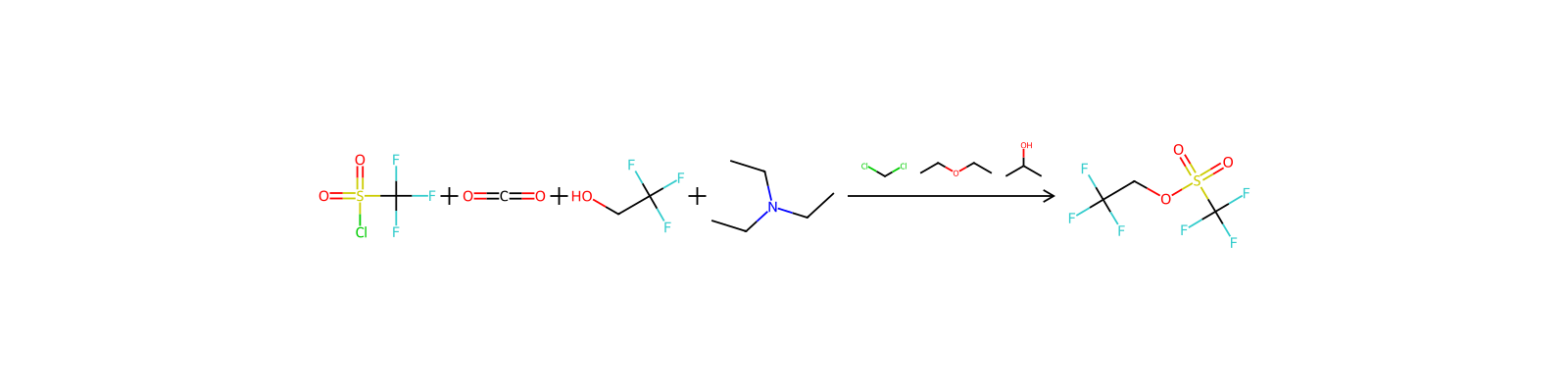
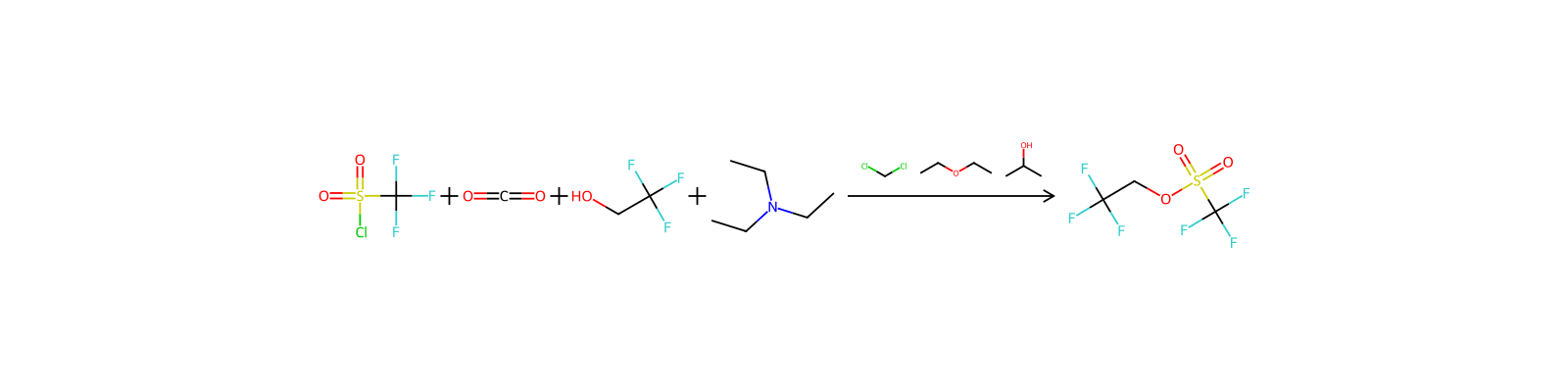
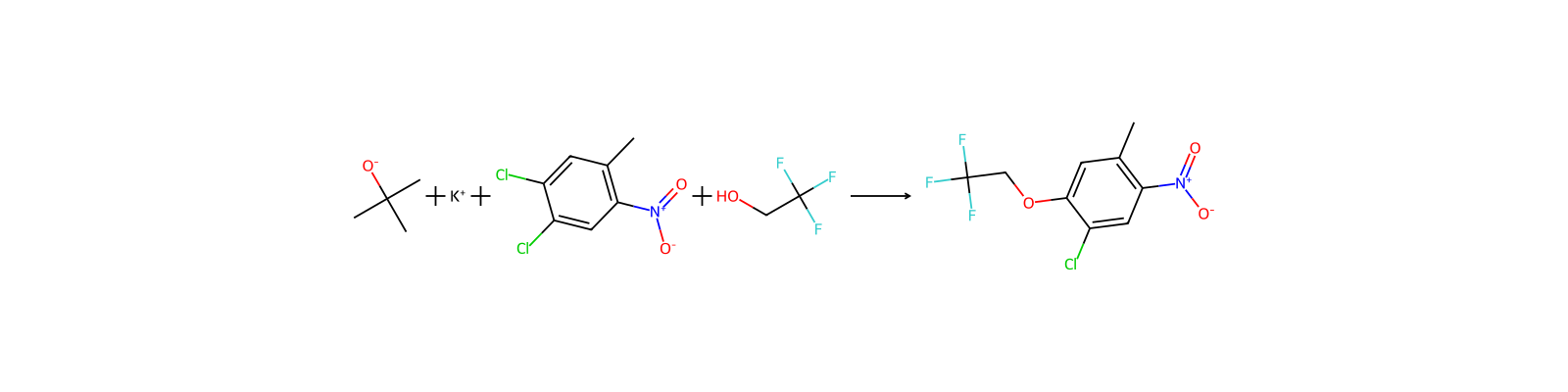
Related reactions
2,268 records


Compound notes
Loading…