
HRID 234742As reactant

665-66-7Cl.NC12CC3CC(CC(C3)C1)C2WOLHOYHSEKDWQH-UHFFFAOYSA-NAmantadine Hydrochloride can cause developmental toxicity according to state or federal government labeling requirements.
665-66-7DTXSID50874031CHEMBL1569Breast Feeding; Lactation; Milk, Human; Anti-Infective Agents; Antiparkinson Agents; Antiviral Agents; Dopamine Agents
FDA approved drugs -> Active ingredient
FDA approved drugs -> Active ingredient
Safety information is for reference only and does not replace the supplier’s Safety Data Sheet (SDS), applicable regulations, or professional assessment.
Danger
H302 (99.5%): Harmful if swallowed [Warning Acute toxicity, oral]
P203, P260, P261, P264, P264+P265, P270, P271, P273, P280, P301+P317, P301+P330+P331, P302+P361+P354, P304+P340, P305+P354+P338, P316, P317, P318, P319, P321, P330, P363, P403+P233, P405, and P501 (click each P-code to see the statement)
Aggregated GHS information provided per 210 reports by companies from 11 notifications to the ECHA C&L Inventory. Each notification may be associated with multiple companies.
Chemical: Tricyclo[3.3.1.13,7]decan-1-amine, hydrochloride
Hazard Traits - Developmental Toxicity
Tricyclo[3.3.1.13,7]decan-1-amine, hydrochloride (1:1) is listed on the EPA's Chemical Data Reporting (CDR) system. Manufacturers and importers of Tricyclo[3.3.1.13,7]decan-1-amine, hydrochloride (1:1) are required to report information about their production and use of this chemical to the EPA under the Toxic Substances Control Act (TSCA). (40 eCFR Part 711)
REACH registered substance: Amantadine hydrochloride (EC: 211-560-2)
1-Adamantane ammonium chloride: Does not have an individual approval but may be used under an appropriate group standard
There is no specific antidote for an overdose of Amantadine. However, slowly administered intravenous physostigmine in 1 and 2 mg doses in an adult2 at 1- to 2-hour intervals and 0.5 mg doses in a child3 at 5- to 10-minute intervals up to a maximum of 2 mg/hour have been reported to be effective in the control of central nervous system toxicity caused by amantadine hydrochloride. For acute overdosing, general supportive measures should be employed along with immediate gastric lavage or induction of emesis. Fluids should be forced, and if necessary, given intravenously. The pH of the urine has been reported to influence the excretion rate of Amantadine. (L1744)
No appreciable metabolism, although negligible amounts of an acetyl metabolite have been identified. Amantadine is well absorbed orally from the gastrointestinal tract. The mechanism of its antiparkinsonic effect is not fully understood, but it appears to be releasing dopamine from the nerve endings of the brain cells, together with stimulation of norepinephrine response. The antiviral mechanism seems to be unrelated. The drug interferes with a viral protein, M2 (an ion channel), which is needed for the viral particle to become "uncoated" once it is taken inside the cell by endocytosis. Metabolites are excreted in the urine (A308). Route of Elimination: It is primarily excreted unchanged in the urine by glomerular filtration and tubular secretion. Half Life: Mean half-lives ranged from 10 to 14 hours, however renal function impairment causes a severe increase in half life to 7 to 10 days.
AMANTADINE HCL
M2 Protein Inhibitors [MoA]; Influenza A M2 Protein Inhibitor [EPC]
AMANTADINE HYDROCHLORIDE
Influenza A M2 Protein Inhibitor [EPC]; M2 Protein Inhibitors [MoA]
Agents used in the treatment of Parkinson's disease. The most commonly used drugs act on the dopaminergic system in the striatum and basal ganglia or are centrally acting muscarinic antagonists.
Agents used in the prophylaxis or therapy of VIRUS DISEASES. Some of the ways they may act include preventing viral replication by inhibiting viral DNA polymerase; binding to specific cell-surface receptors and inhibiting viral penetration or uncoating; inhibiting viral protein synthesis; or blocking late stages of virus assembly.
Any drugs that are used for their effects on dopamine receptors, on the life cycle of dopamine, or on the survival of dopaminergic neurons.
A subclass of analgesic agents that typically do not bind to OPIOID RECEPTORS and are not addictive. Many non-narcotic analgesics are offered as NONPRESCRIPTION DRUGS.






Acute overdosage of amantadine has resulted in cardiac dysfunction (e.g., arrhythmia, tachycardia, hypertension); pulmonary edema and respiratory distress (including adult respiratory distress syndrome); renal dysfunction (e.g., increased BUN, decreased creatinine clearance, renal insufficiency); or CNS toxicity (e.g., insomnia, anxiety, psychotic reactions, lethargy, somnolence, coma). Hyperthermia also has occurred with amantadine overdosage. In addition, seizures may be exacerbated in patients with a history of a seizure disorder (A620).
The mechanism of its antiparkinsonic effect is not fully understood, but it appears to be releasing dopamine from the nerve endings of the brain cells, together with stimulation of norepinephrine response. It also has NMDA receptor antagonistic effects. The antiviral mechanism seems to be unrelated. The drug interferes with a viral protein, M2 (an ion channel), which is needed for the viral particle to become "uncoated" once it is taken inside the cell by endocytosis.
Deaths have been reported from overdose with amantadine. The lowest reported acute lethal dose was 2 grams. Drug overdose has resulted in cardiac, respiratory, renal or central nervous system toxicity. Cardiac dysfunction includes arrhythmia, tachycardia and hypertension. Pulmonary edema and respiratory distress (including ARDS) have been reported. Renal dysfunction including increased BUN, decreased creatinine clearance and renal insufficiency can occur. Central nervous system effects that have been reported include insomnia, anxiety, aggressive behavior, hypertonia, hyperkinesia, tremor, confusion, disorientation, depersonalization, fear, delirium, hallucination, psychotic reactions, lethargy, somnolence and coma. Seizures may be exacerbated in patients with prior history of seizure disorders. Hyperthermia has also been observed in cases where a drug overdose has occurred.
Drug Induced Liver Injury Rank (DILIrank 2.0)
Amantadine hydrochloride
Ambiguous-DILI-concern
3
Warnings & precautions
DOI:10.1016/j.drudis.2016.02.015
All Other Basic Organic Chemical Manufacturing
Tricyclo[3.3.1.13,7]decan-1-amine, hydrochloride (1:1): ACTIVE
Uses1-Adamantanamine hydrochloride is used in the prophylactic or symptomatic treatment of influenza A. It is also used as an antiparkinsonian agent, to treat extra pyramidal reactions, and for postherpetic neuralgia. It is also used an NMDA-receptor antagoinst.
Usesantiviral, antiparkinsonian; treatment of drug-induced extrapyrimidal reactions
Usesselective FP prostanoid receptor agonist, F-series prostaglandin analog. 200 times as potent as Latanoprost -20oC
UsesNMDA-receptor antagonist. Antiviral; antiparkinsonian
General DescriptionPharmaceutical secondary standards for application in quality control provide pharma laboratories and manufacturers with a convenient and cost-effective alternative to the preparation of in-house working standards
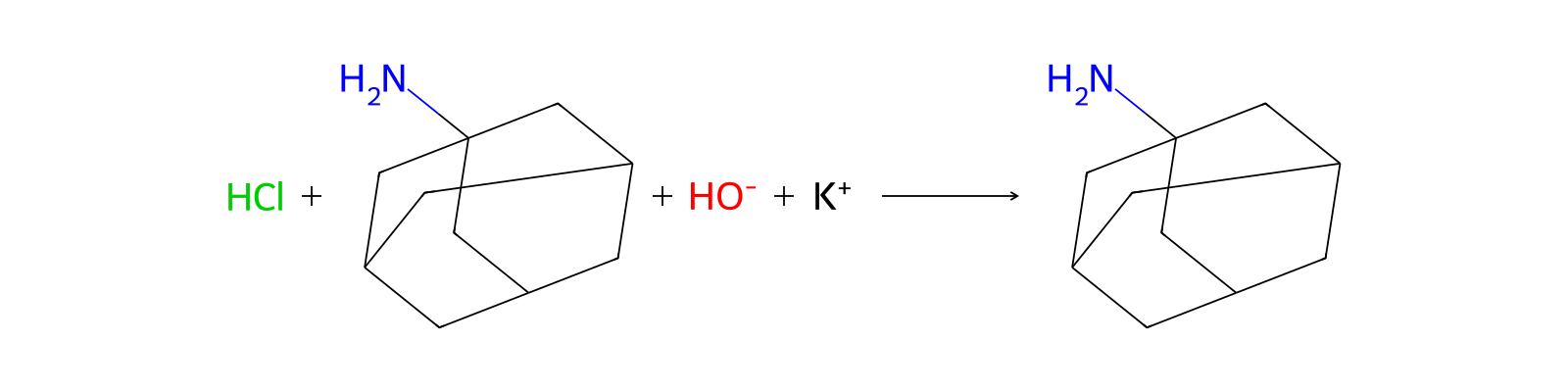
DefinitionChEBI: A hydrochloride obtained by combining amantadine and hydrochloric acid in equimolar amounts.