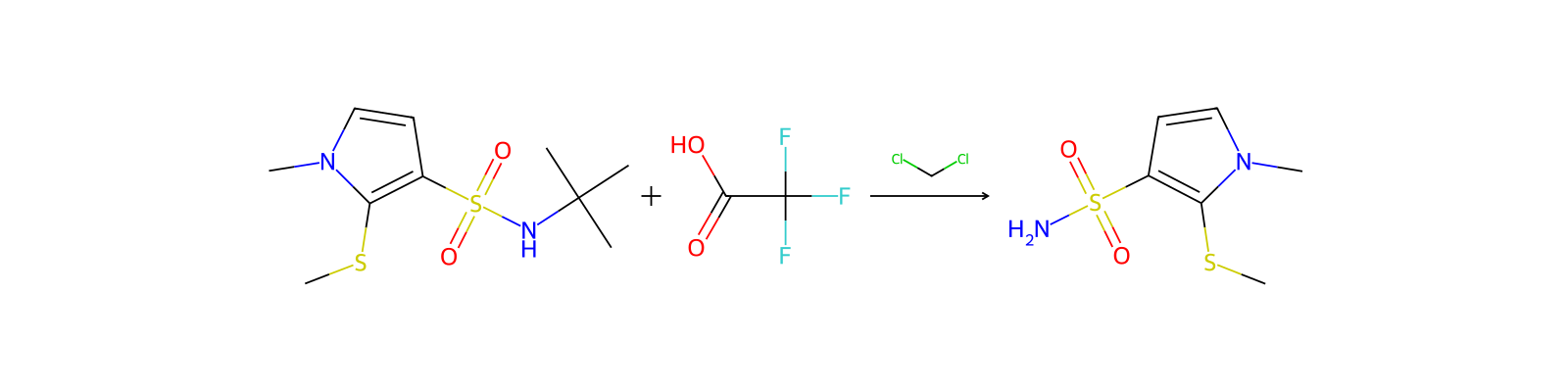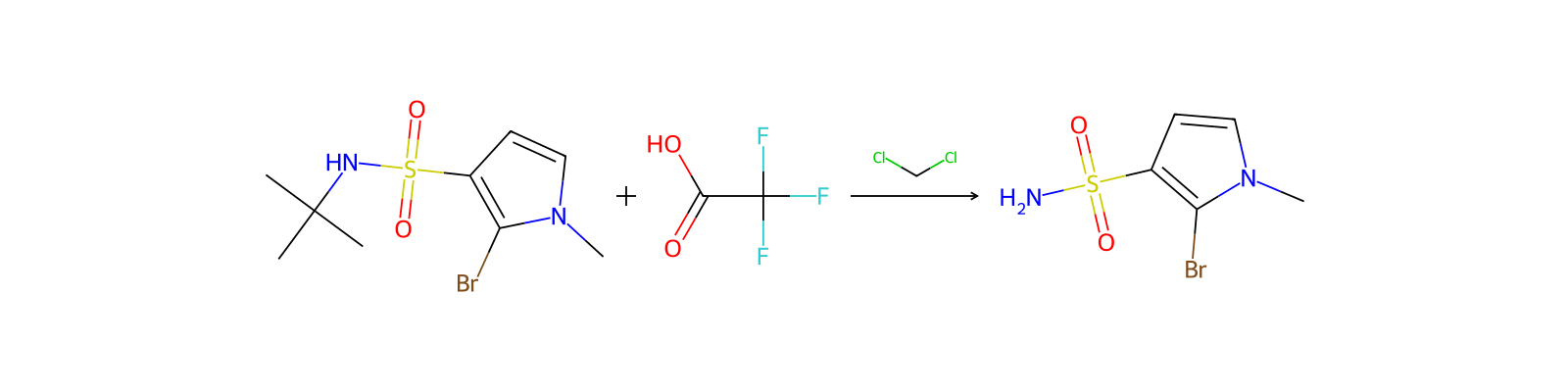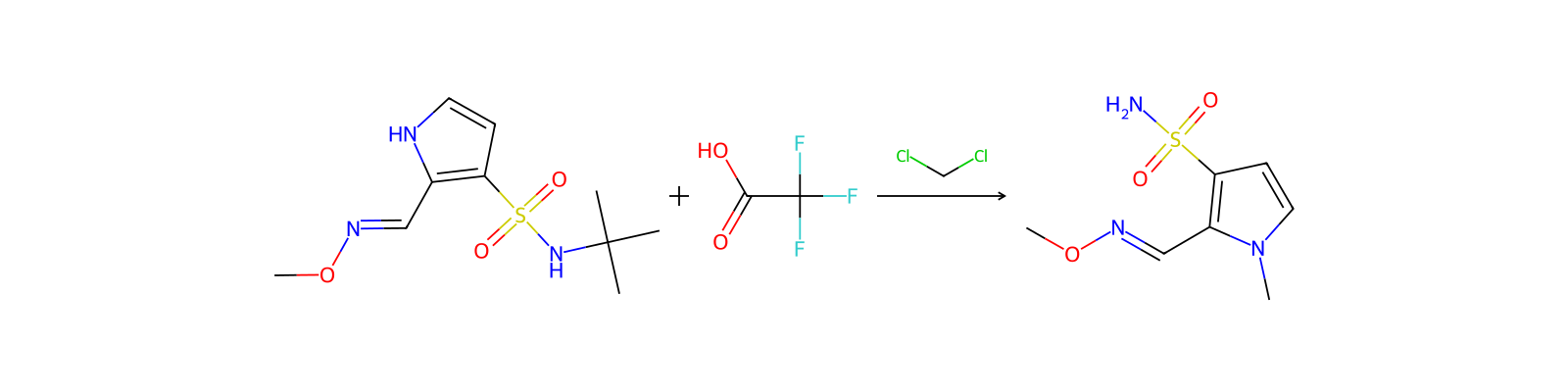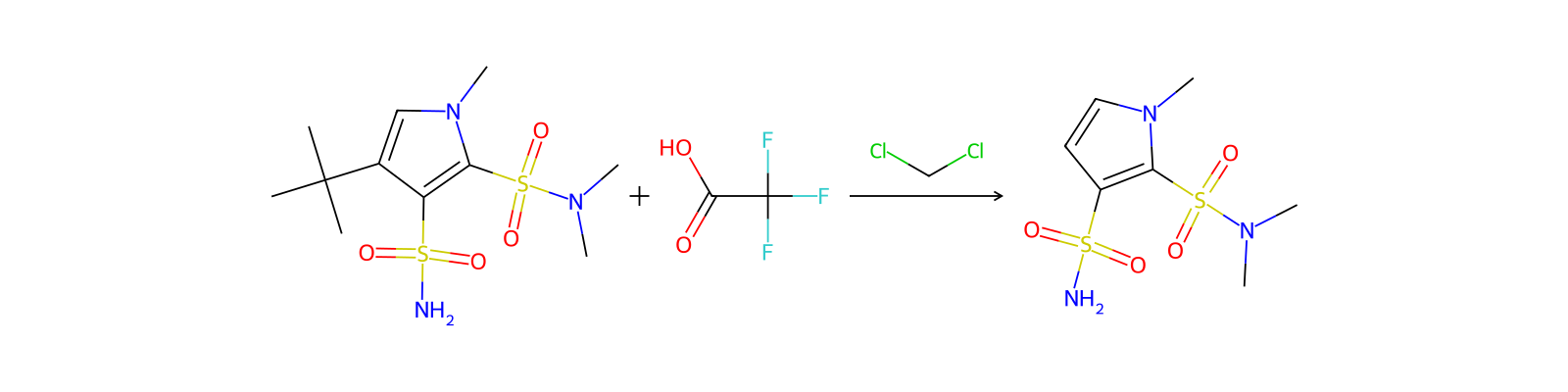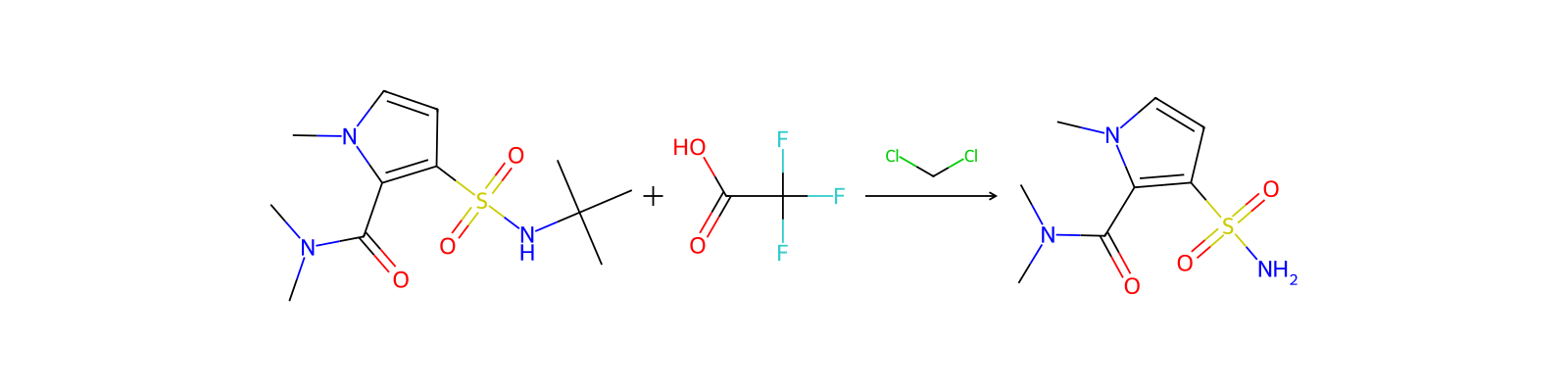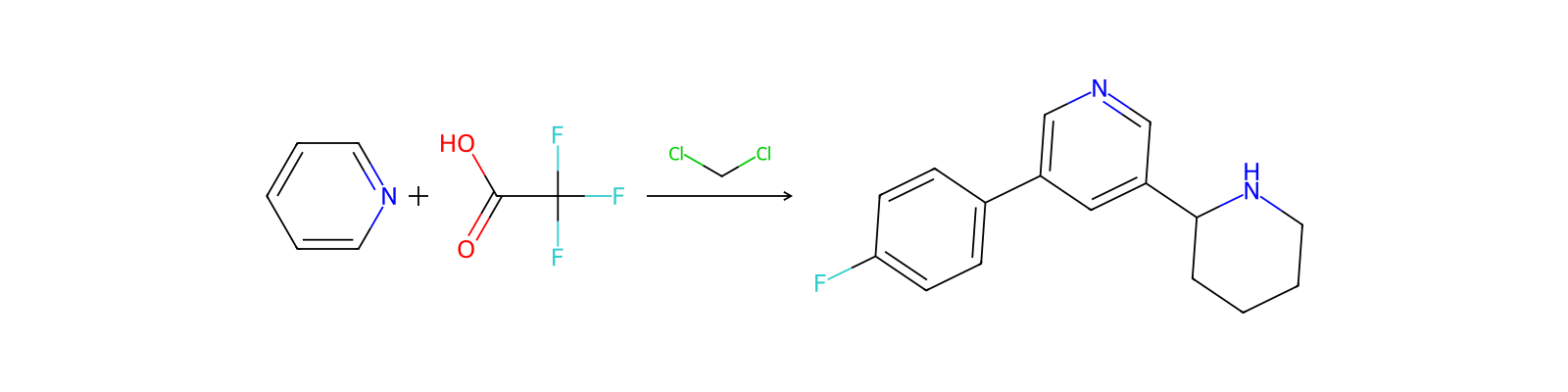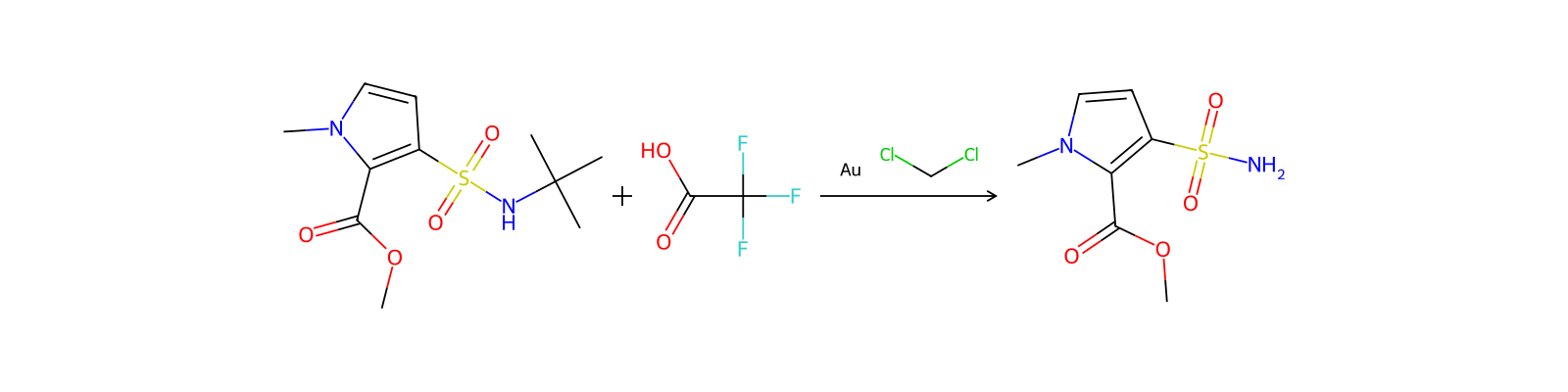
HRID 815As reactant

76-05-1O=C(O)C(F)(F)FDTQVDTLACAAQTR-UHFFFAOYSA-NTrifluoroacetic acid appears as a colorless fuming liquid with a pungent odor. Soluble in water and denser than water. Corrosive to skin, eyes and mucous membranes. Used to make other chemicals and as a solvent.
76-05-1DTXSID9041578CHEMBL506259CHEBI:45892Other Classes -> Organic Acids
Corrosives
Ionic Liquids
Ionic Liquids -> Fluorinated Ionic Liquids
PFAS -> Perfluorocarboxylic acids
PFAS -> PFAS identified in REACH Regulation EC No. 1272/2008
PFAS
PFAS -> Suspected persistent, mobile, toxic (PMT) PFAS or PFAS-like compounds
PFAS -> Other/unspecified
PFAS -> PFAS with analytical method available
Sharp biting odor
Strong pungent odor
1.531 at 20 °C
Relative density (water = 1): 1.5
1.535 @25 °C
Liquid
Colorless, fuming liquid; hygroscopic
Safety information is for reference only and does not replace the supplier’s Safety Data Sheet (SDS), applicable regulations, or professional assessment.
Danger
H314: Causes severe skin burns and eye damage [Danger Skin corrosion/irritation]
P260, P261, P264, P271, P273, P280, P301+P330+P331, P302+P361+P354, P304+P340, P305+P354+P338, P316, P317, P321, P363, P405, and P501 (click each P-code to see the statement)
Danger
H290 (23.5%): May be corrosive to metals [Warning Corrosive to Metals]
P234, P260, P261, P264, P264+P265, P270, P271, P273, P280, P301+P317, P301+P330+P331, P302+P361+P354, P304+P340, P305+P354+P338, P316, P317, P321, P330, P363, P390, P405, P406, and P501 (click each P-code to see the statement)
Chemical: Acetic acid, trifluoro-
Commission Regulation No 844/2012
Acetic acid, 2,2,2-trifluoro- is listed on the EPA's Chemical Data Reporting (CDR) system. Manufacturers and importers of Acetic acid, 2,2,2-trifluoro- are required to report information about their production and use of this chemical to the EPA under the Toxic Substances Control Act (TSCA). (40 eCFR Part 711)
REACH registered substance: Trifluoroacetic acid (EC: 200-929-3)
Trifluoroacetic acid: HSNO Approval: HSR004741 Approved with controls
The New Jersey Worker and Community Right to Know Act requires public and private employers to provide information about hazardous substances at their workplaces. (N.J.S.A. 34:5A-1 et. seq.)
Excerpt from ERG Guide 154 [Substances - Toxic and/or Corrosive (Non-Combustible)]:
· Non-combustible, substance itself does not burn but may decompose upon heating to produce corrosive and/or toxic fumes.
Not combustible. Gives off irritating or toxic fumes (or gases) in a fire.
To elucidate the possible role of biotransformation in 1,1,1,3,3-pentafluoropropane (HFC-245fa)-induced cardiotoxicity, the biotransformation of HFC-245fa was investigated in rats after inhalation exposure ... Male and female rats were exposed by inhalation to 50,000, 10,000, and 2,000 ppm 1,1,1,3,3-pentafluoropropane for 6 hr, urine was collected for 72 hr ... Trifluoroacetic acid and inorganic fluoride were identified as major urinary metabolites of 1,1,1,3,3-pentafluoropropane ... .
Trifluoroacetic acid is a known human metabolite of (R)-halothane.
Used in synthesis of organic chemicals; [Merck Index] Used as a laboratory reagent, solvent, and catalyst; [HSDB]
Strong nonoxidizing acid, laboratory reagent, solvent, catalyst
In organic synthesis; dissolves protein when mixed with liquid SO2.
2023: 1,000,000 - <8,500,000 lb
Production volumes for non-confidential chemicals reported under the Inventory Update Rule. [Table#7185]
This chemical is listed as an Extended High Production Volume (EHPV). Chemicals listed as EHPV were produced in or imported into the U.S. in >1 million pounds according to the 2002 Toxic Substances Control Act (TSCA) Inventory Update. The EHPV program is a voluntary initiative that allows companies to demonstrate that adequate screening data exist for organic HPV chemicals.
Trifluoroacetic acid has been prepared by the electrochemical fluorination of acetyl chloride or acetic anhydride in anhydrous hydrogen fluoride using the Simons process ... followed by hydrolysis of the resulting trifluoroacetyl fluoride.
Miscible with ether, acetone, ethanol, benzene, carbon tetrachloride, hexane.
In water, miscible at 20 °C
1000 mg/mL at 20 °C
Solubility in water, g/100ml at 20 °C: 100 (very good)
72.4 °C
Enthalpy of vaporization: 33 kJ/mol at boiling point
72.4 °C
72 °C
71.1 °C @760 [mm Hg]
-15.4 °C
-15.4 °C
-15 °C
-15.25 °C
Excerpt from ERG Guide 154 [Substances - Toxic and/or Corrosive (Non-Combustible)]:
· TOXIC and/or CORROSIVE; inhalation, ingestion or skin contact with material may cause severe injury or death.
Corrosive to skin; [Quick CPC] Corrosive to skin, eyes, and respiratory tract; Inhalation may cause pulmonary edema; [ICSC] A metabolite of halothane (anesthetic) and trifluoroethanol; Unlike trifluoroethanol, trifluoroacetic acid did not produce testicular toxicity in rats at similar doses; [REPROTOX] Causes dyspnea in inhalation lethal-concentration studies of mice and rats; Causes other liver changes in 10-day oral studies of mice; [RTECS] Harmful by inhalation; Causes severe burns; May cause liver damage; Inhalation of high concentration may cause chemical pneumonitis; [Aldrich MSDS] See Fluoroacetic acid.
TRIFLUOROACETIC ACID is a strong acid; attacks many metals [Handling Chemicals Safely 1980. p. 935]. A 30% solution of hydrogen peroxide in trifluoroacetic acid is often used to destructively oxidize aromatic rings in preference to the side chains. Explosions have occurred, if the excess peroxide is not catalytically destroyed, prior to removal of solvent, [Tetrahedron Lett., 1977, 1703-1704]. The reduction of amides of trifluoroacetic acid with lithium aluminum hydride are dangerous at all phases of the process, explosions have occurred, [Chem. Eng. News, 1955, 33, 1368].
Decomposes on contact with hot surfaces or flames. This produces toxic fumes. The substance is a medium strong acid. Reacts violently with strong bases, reducing agents and oxidants. This produces toxic and corrosive fumes including hydrogen fluoride. Attacks many metals. This produces flammable/explosive gas (hydrogen - see ICSC 0001). Attacks some forms of rubber.
Excerpt from ERG Guide 154 [Substances - Toxic and/or Corrosive (Non-Combustible)]:
In case of fire in the surroundings, use appropriate extinguishing media. In case of fire: keep drums, etc., cool by spraying with water.
Fresh air, rest. Half-upright position. Refer immediately for medical attention.
Remove contaminated clothes. Rinse skin with plenty of water or shower. Refer immediately for medical attention.
Rinse with plenty of water for several minutes (remove contact lenses if easily possible). Refer immediately for medical attention.
Rinse mouth. Do NOT induce vomiting. Refer immediately for medical attention.
· CALL 911. Then call emergency response telephone number on shipping paper. If shipping paper not available or no answer, refer to appropriate telephone number listed on the inside back cover.
· ELIMINATE all ignition sources (no smoking, flares, sparks or flames) from immediate area.
Excerpt from ERG Guide 154 [Substances - Toxic and/or Corrosive (Non-Combustible)]:
General First Aid:
SRP: The most favorable course of action is to use an alternative chemical product with less inherent propensity for occupational exposure or environmental contamination. Recycle any unused portion of the material for its approved use or return it to the manufacturer or supplier. Ultimate disposal of the chemical must consider: the material's impact on air quality; potential migration in soil or water; effects on animal, aquatic, and plant life; and conformance with environmental and public health regulations.
Personal protection: gas-tight chemical protection suit including self-contained breathing apparatus. Do NOT let this chemical enter the environment. Collect leaking liquid in sealable plastic containers. Absorb remaining liquid in sand or inert absorbent. Carefully collect remainder. Then store and dispose of according to local regulations.
Excerpt from ERG Guide 154 [Substances - Toxic and/or Corrosive (Non-Combustible)]:
Immediate precautionary measure
TERRESTRIAL FATE: Based on a classification scheme(1), an estimated Koc value of 3(SRC), determined from a structure estimation method(2), indicates that trifluoroacetic acid is expected to have very high mobility in soil(SRC). The pKa of trifluoroacetic acid is 0.52(3), indicating that this compound will primarily exist in the anion form in the environment and anions generally do not adsorb more strongly to soils containing organic carbon and clay than their neutral counterparts(4). Volatilization of trifluoroacetic acid from moist soil surfaces is not expected to be an important fate process as anions do not volatilize(SRC). Trifluoroacetic acid is expected to volatilize from dry soil surfaces(SRC) based upon an estimated vapor pressure of 110 mm Hg(5). Certain oxic conditions do suggest that biodegradation is possible in soil; however, one of the products of degradation is fluoroform, a potential ozone-depleting compound with much longer atmospheric persistence than the parent compound(6).
TERRESTRIAL FATE: In a throughput study at the Hubbard Brook Experimental Forest in New Hampshire, the fate of trifluoroacetic acid within northern hardwood forest soils is suggested as follows: loss via soil water flow, 40-80%; soil retention, 5-30%; and plant uptake, 50-35%. These results indicate that transport of this compound is controlled primarily by hydrologic processes in upland forest ecosystems(1).
AQUATIC FATE: Based on a classification scheme(1), an estimated Koc value of 3(SRC), determined from a structure estimation method(2), indicates that trifluoroacetic acid is not expected to adsorb to suspended solids and sediment(SRC). A pKa of 0.52(3) indicates trifluoroacetic acid will exist almost entirely in the anion form at pH values of 5 to 9 and therefore volatilization from water surfaces is not expected to be an important fate process(4). According to a classification scheme(5), an estimated BCF of 3(SRC), from an estimated log Kow of 0.50(6) and a regression-derived equation(7), suggests the potential for bioconcentration in aquatic organisms is low(SRC). Trifluoroacetic acid was not biodegraded during a year-long study using laboratory aquatic microcosms and ecosystem sediment-water systems(8). Certain oxic conditions do suggest that biodegradation is possible in soil; trifluoroacetic acid degraded 9, 2.4, 1.9 and 25.5%, respectively, O2 as electron acceptor(9).
AQUATIC FATE: Trifluoroacetic acid is extremely persistent in water, showing no degradation during a year-long study using field aquatic microcosms and ecosystem sediment-water systems(1). Observations of the field ponds showed a reduction of trifluoroacetic acid over the winter months with levels rising again toward spring. Reaction with hydroxyl radicals in water is slow, with an estimated half-life of over 100 years(1). Trifluoroacetic acid was added to aquatic microcosms at concentrations of 10, 100, 300 and 1000 ug/L; a concentration of 20 ug/mL was added to laboratory sediment microcosms(1).
ATMOSPHERIC FATE: According to a model of gas/particle partitioning of semivolatile organic compounds in the atmosphere(1), trifluoroacetic acid, which has an estimated vapor pressure of 110 mm Hg at 25 °C(2), is expected to exist solely as a vapor in the ambient atmosphere. Vapor-phase trifluoroacetic acid is degraded in the atmosphere by reaction with photochemically-produced hydroxyl radicals(SRC); the half-life for this reaction in air is estimated to be 31 days(SRC), calculated from its rate constant of 5.2X10⁻¹³ cu cm/molecule-sec at 25 °C(SRC) that was derived using a structure estimation method(3). Trifluoroacetic acid does not contain chromophores that absorb at wavelengths >290 nm and therefore is not expected to be susceptible to direct photolysis by sunlight(4).
Cough. Sore throat. Burning sensation. Laboured breathing.
Redness. Pain. Serious skin burns.
Redness. Pain. Severe deep burns.
Burning sensation in the throat and chest. Abdominal pain. Shock or collapse.
Data suggest that the total trifluoroacetic acid in air and precipitation exceeds the formation potential of currently known sources. Trifluoroacetic acid in atmosphere and rain is regionally associated with industrial or population density and that other unresolved sources must contribute to the present concentrations(1).
Using a structure estimation method based on molecular connectivity indices(1), the Koc of trifluoroacetic acid can be estimated to be 3(SRC). According to a classification scheme(2), this estimated Koc value suggests that trifluoroacetic acid is expected to have very high mobility in soil. The pKa of trifluoroacetic acid is 0.52(3), indicating that this compound will primarily exist in the anion form in the environment and anions generally do not adsorb more strongly to soils containing organic carbon and clay than their neutral counterparts(4). In a throughput study at the Hubbard Brook Experimental Forest in New Hampshire, calculated outflows of trifluoroacetic acid from the organic layers were 57% of the total added concentration of 0.81 g/sq m(5). Thirty-five soils ranging from acrtic (Toolik Lake) and boreal (Bonanza Creek) sites in Alaska to a tropical rain forest in Puerto Rico (Luquillo) as well as soils from Lake Agissaz Peatlands, MN, near Found Lake, WI, Lysina and Pluhuv Bor, Czech Republic, Manaus, Balem, a Brazilian carton in Brazil, and the Hubbard Brook Experimental Forest, NH, were utilized to ascertain the fate of trifluoroacetic acid(6). Retention ranged from 25 to 260 umol/kg (60-0% of added trifluoroacetic acid) with 43 of 54 soils not retaining this compound strongly; soils with high organic matter and some mineral soils with high iron and aluminum content exhibited strong retention (20-60% of added trifluoroacetic acid); generally though, mineral soils exhibited less retention (0-15% of added trifluoroacetic acid)(6). The retention of trifluoroacetic acid increased with decreasing pH(6).
Trifluoroacetic acid adsorption parameters(1). [Table#7184]
/ALTERNATIVE and IN VITRO TESTS/ To elucidate the possible role of biotransformation in 1,1,1,3,3-pentafluoropropane (HFC-245fa)-induced cardiotoxicity, the biotransformation of HFC-245fa was investigated in rats after inhalation exposure and in rat and human liver microsomes. ... In rat and human liver microsomes, HFC-245fa was biotransformed by a cytochrome P450-dependent reaction to trifluoroacetic acid and 3,3,3-trifluoropropanoic acid. ... In human liver microsomes, rates of trifluoroacetic acid formation ranged from 0 to 11.6 pmol/mg of protein/min.
AEROBIC: Trifluoroacetic acid was not biodegraded during a year-long study using laboratory aquatic microcosms and ecosystem sediment-water systems(1). Trifluoroacetic acid was not biodegraded by soil microorganisms, specifically Nocardia 398 and Pseudomonas 409, following 20 days incubation at a compound concentration of 0.1% in a 1 liter basal salts medium(2). Certain oxic conditions do suggest that biodegradation is possible in soil; trifluoroacetic acid at concns (incubation time, days) of 0.925 (27), 0.463 (27), 0.463 (15), and 0.185 (15) degraded 9, 2.4, 1.9 and 25.5%, respectively, with O2 as electron acceptor(3). One of the products of degradation is fluoroform, a potential ozone-depleting compound with much longer atmospheric persistence than the parent compound(3).
ANAEROBIC: Trifluoroacetic acid, concentration load ranging from 15 to 65 mg/L as fluoride, was found to be cometabolically degradable at low loading conditions using an engineered anaerobic reactor, set at a flow-rate of 9.5 L/day and a hydraulic retention time of 20 days pH of 7.2 and maintained at 35 °C, and following 90 weeks incubation(1). Using sediments from a San Francisco Bay salt marsh and a freshwater lake, 2-C14-labelled trifluoroacetic acid at starting concentrations in uM (incubation time, days) of 0.925 (27), 0.463 (27), 0.463 (15) and 0.185 (15), resulted in 0% conversion after 15 days with NO3 electron acceptor; starting concentrations in uM of 1.850 (12), 0.925 (18) and 0.463 (18) degraded 0, 0.1 and 12.2%, respectively, with SO4 as electron acceptor(2). Under anoxic conditions, one of the observed intermediates was monofluoroacetate, sold commercially as the poison "1080", which is highly toxic to microorganisms and mammals(3).
An estimated BCF of 3 was calculated in fish for trifluoroacetic acid(SRC), using an estimated log Kow of 0.50(1) and a regression-derived equation(2). According to a classification scheme(3), this BCF suggests the potential for bioconcentration in aquatic organisms is low(SRC).
Preparation: ... A. L. Henne, US 2371757 (1945 to du Pont)
PFAS -> Ultra Short Chain PFcarboxylic acids
Environmental transformation -> Pesticide transformation products (metabolite, successor)
Miscellaneous Manufacturing
Acetic acid, 2,2,2-trifluoro-: ACTIVE
UsesTrifluoroacetic acid is an important building block in the synthesis of pharmaceuticals, agrochemicals and performance products. It is a precursor to many fluorinated compounds, and widely used in peptide synthesis and other organic transformations involving deprotection of t-BOC group. The combination of properties like solubility in most of the solvents, volatility, catalytic property, and strong acidity with non-oxidizing nature makes it a widely used reagent in organic synthesis. Trifluoroacetic acid can use as an ion pairing agent in liquid chromatography, as a solvent in NMR spectroscopy and as a calibrant in mass spectrometry. It is used as a catalyst in esterification reaction and condensation reaction and a protective agent for hydroxyl and amino.
General DescriptionTrifluoroacetic acid appears as a colorless fuming liquid with a pungent odor. Soluble in water and denser than water. Corrosive to skin, eyes and mucous membranes. Used to make other chemicals and as a solvent.
DefinitionChEBI: Trifluoroacetic acid is a monocarboxylic acid that is the trifluoro derivative of acetic acid. It has a role as a reagent and a human xenobiotic metabolite. It derives from an acetic acid. It is a conjugate acid of a trifluoroacetate.