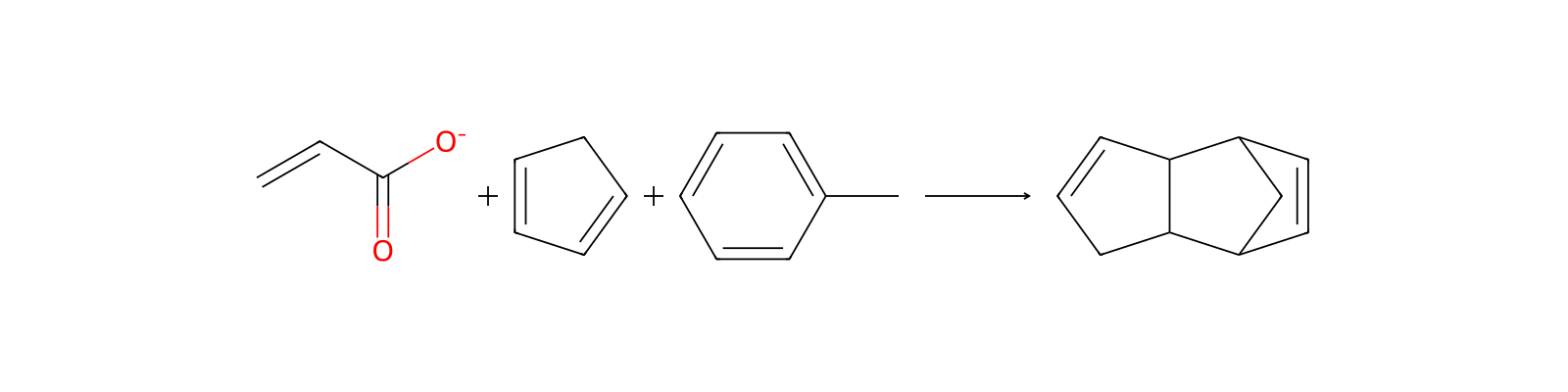

Basic information
- Standard SMILES
C1=CC2C3C=CC(C3)C2C1- InChIKey
HECLRDQVFMWTQS-UHFFFAOYSA-N- Molecular formula
- C10H12
- Average molar mass
- 132.2 g/mol
- Monoisotopic mass
- 132.09390038
Overview
Dicyclopentadiene appears as a liquid with an acrid odor. Flash point 90 °F. The vapors are irritating to the eyes and respiratory system. Subject to polymerization if subjected to heat for prolonged periods or if contaminated. If the polymerization takes place inside a container, the container may violently rupture. Insoluble in water. Density 8.2 lb / gal. Used in paints, varnishes, as an intermediate in insecticides, as a flame retardant in plastics.
Names & identifiers
- Preferred name
- Dicyclopentadiene
- IUPAC
- tricyclo[5.2.1.02,6]deca-3,8-diene
- English name
- endo-Dicyclopentadiene
- Molecular formula
- C10H12
- Molecular weight
- 132.2
Names & synonyms
DICYCLOPENTADIENE77-73-6Cyclopentadiene dimerBicyclopentadieneBiscyclopentadieneDicyklopentadienDimer cyklopentadienuDCPD4,7-Methano-1H-indene, 3a,4,7,7a-tetrahydro-Prometa XP 1004,7-Methanoindene, 3a,4,7,7a-tetrahydro-DTXSID5025023
Show more names
endo-Dicyclopentadieneendo-tricyclo[5.2.1.02,6]deca-3,8-dieneendo-3a,4,7,7a-tetrahydro-4,7-methanoindene(1S,2R,6S,7R)-Tricyclo[5.2.1.02,6]deca-3,8-diene(1β,2β,6β,7β)-Tricyclo[5.2.1.02,6]deca-3,8-diene(1α,2α,6α,7α)-Tricyclo[5.2.1.02,6]decane-3,8-diene(3aR)-4α,7α-Methano-3aα,4,7,7aα-tetrahydro-1H-indene(3aR,4S,7R,7aS)-rel-3a,4,7,7a-Tetrahydro-1H-4,7-methanoindene4,7-Methano-1H-indene, 3a,4,7,7a-tetrahydro-, (3aR,4S,7R,7aS)-rel-(3aalpha,4alpha,7alpha,7aalpha)-3a,4,7,7a-tetrahydro-4,7-methano-1H-indene
3a,4,7,7a-Tetrahydro-4,7-methanoindeneTricyclo(5.2.1.0)-3,8-decadieneDTXCID305023NSC-7352ULTRENE 99DCPD 1031,3-Dicyclopentadiene dimerRefChem:133257
Database identifiers
- CAS
1755-01-7、25038-78-2、77-73-6- PubChem CID
- 6492
- DTXSID
DTXSID5025023- ChEMBL
CHEMBL1570502- ChEBI
CHEBI:34695- EC Number
- 201-052-9、217-145-2
- Nikkaji
- J9.241J
Properties
Computed structural properties
- XLogP
- 2.5
- Topological polar surface area
- 0 Ų
- Hydrogen bond donors
- 0
- Hydrogen bond acceptors
- 0
- Rotatable bonds
- 0
- Heavy atoms
- 10
- Formal charge
- 0
- Complexity
- 212
Experimental & physicochemical properties
Chemical Classes
Other Classes -> Aliphatics, Unsaturated
Flammable agents - 3rd degree
SpringerMaterials PropertiesDensity
Pesticides
Plant Growth Regulators
Active substance -> EU Pesticides database: Not approved
LogP
log Kow = 2.78
2.78
Odor
Disagreeable camphor-like odor
Disagreeable odor similar to that of camphor
Sweet, sharp odor, unpleasant
Density
0.978 at 68 °F (USCG, 1999) - Less dense than water; will float
0.9302 g/cu cm at 35 °C
Bulk density = 8.2 lb/gal at 60 °F
Liquid density: 0.978 at 20 °C
0.98 g/cm³
Relative density of the vapour/air-mixture at 20 °C (air = 1): 1.01
Color/FormColorless crystalline solid [Note: A liquid above 90 degrees F]
Solubility
Insoluble (NTP, 1992)
In water, 0.020 g/L at 25 °C
Very soluble in ethyl ether, ethanol
Readily sol in acetone, dichloromethane, ethyl acetate, n-hexane, and toluene.
Solubility in water, g/100ml at 25 °C: 0.002
0.02%
CorrosivityNon-corrosive
Flash Point
90 °F (NTP, 1992)
32 °C
24 °C (75 °F)
90 °F (32 °C) (Open cup)
32 °C o.c.
90 °F (open cup)
Boiling Point
342 °F at 760 mmHg (NTP, 1992)
172 °C
342 °F
166.6 °C @760 [mm Hg]
342 °F
Decomposition
... /Dicyclopentadiene/ decomposes on heating above 170 °C.
When heated to decomposition it emits acrid smoke and fumes.
170-172 °C
Physicochemical properties
- Melting point
- 32 °C · 32°C
- Boiling point
- 179.15 °C · 179.15°C (rough estimate)
- Density
- 0.9302 · 0.9302
- refractive index
- 1.505 · 1.5050
- FDA UNII
- 88 Z4HUV8LI · 88Z4HUV8LI
- Symbol(GHS)
- 7 · GHS07
- Signal word
- Warning
- Hazard statements
- 302 · H302-H315-H319-H335
- Precautionary statements
- 280 · P280-P305+P351+P338
Safety & regulation
GHS classification
GHS Classification
Danger
H225: Highly Flammable liquid and vapor [Danger Flammable liquids]
P210, P233, P240, P241, P242, P243, P261, P264, P264+P265, P270, P271, P273, P280, P301+P317, P302+P352, P303+P361+P353, P304+P340, P305+P351+P338, P317, P319, P321, P330, P332+P317, P337+P317, P362+P364, P370+P378, P391, P403+P233, P403+P235, P405, and P501 (click each P-code to see the statement)
Danger
H225 (74%): Highly Flammable liquid and vapor [Danger Flammable liquids]
P203, P210, P233, P240, P241, P242, P243, P260, P261, P264, P264+P265, P270, P271, P272, P273, P280, P284, P301+P316, P301+P317, P302+P352, P303+P361+P353, P304+P340, P305+P351+P338, P316, P317, P318, P319, P320, P321, P330, P331, P332+P317, P333+P317, P337+P317, P362+P364, P370+P378, P391, P403+P233, P403+P235, P405, and P501 (click each P-code to see the statement)
Hazard information
Regulatory Information
Chemical: 4,7-Methano-1H-indene, 3a,4,7,7a-tetrahydro-
4,7-Methano-1H-indene, 3a,4,7,7a-tetrahydro- is listed on the EPA's Chemical Data Reporting (CDR) system. Manufacturers and importers of 4,7-Methano-1H-indene, 3a,4,7,7a-tetrahydro- are required to report information about their production and use of this chemical to the EPA under the Toxic Substances Control Act (TSCA). (40 eCFR Part 711)
2002/2076
Status: Active Update: 17-05-2023 https://echa.europa.eu/registration-dossier/-/registered-dossier/15412
4,7-Methano-1H-indene, 3a,4,7,7a-tetrahydro-: HSNO Approval: HSR001123 Approved with controls
The New Jersey Worker and Community Right to Know Act requires public and private employers to provide information about hazardous substances at their workplaces. (N.J.S.A. 34:5A-1 et. seq.)
DOT LabelFlammable Liquid
Fire Hazards
FLAMMABLE. Flashback along vapor trail may occur. Vapor may explode if ignited in an enclosed area. (USCG, 1999)
· HIGHLY FLAMMABLE: Will be easily ignited by heat, sparks or flames.
Flammable. Above 32 °C explosive vapour/air mixtures may be formed.
Fire Potential
Flammable; fire hazard
Dangerous fire hazard when exposed to heat or flame...
Health Hazards
LIQUID OR SOLID: Irritating to skin and eyes. (USCG, 1999)
· May cause toxic effects if inhaled or absorbed through skin.
Hazards Summary
Exposed workers experienced headaches. The proposed TLVs arre expected to protect against CNS effects (tremors, loss of coordination, and unsteady gait) seen at 33 ppm in mice exposed for 9 days in one unpublished study. [ACGIH] A skin, eye, and respiratory tract irritant; [ICSC] In animal experiments, calves are intoxicated at a dose of 250 mg/kg. [HSDB] See Cyclopentadiene.
DOT ID and Guide
2048 130P
2048 130
Reactive GroupConjugated Dienes
EC ClassificationSymbol: F, Xn, N; R: 11-20/22-36/37/38-51/53; S: (2)-36/37-61
UN ClassificationUN Hazard Class: 3; UN Pack Group: III
Special Reports
EPA/Office of Pollution Prevention and Toxics; High Production Volume (HPV) Challenge Program's Robust Summaries and Test Plans. Resin Oils and Cyclodiene Dimer Concentrates.[Available from, as of February 22, 2016:: http://cfpub.epa.gov/hpv-s/]
TSCA Requirements
Section 8(a) of TSCA requires manufacturers of this chemical substance to report preliminary assessment information concerned with production, exposure, and use to EPA as cited in the preamble in 51 FR 41329. Effective date: 8/8/95; Reporting date: 10/3/95.
Pursuant to section 8(d) of TSCA, EPA promulgated a model Health and Safety Data Reporting Rule. The section 8(d) model rule requires manufacturers, importers, and processors of listed chemical substances and mixtures to submit to EPA copies and lists of unpublished health and safety studies. Dicyclopentadiene is included on this list. Effective date: 8/4/95; Sunset date: 6/30/98.
Manufacturers and processors of dicyclopentadiene are required to conduct in vitro percutaneous absorption rate studies under TSCA section 4.
Safety & protection
Fire Fighting
Excerpt from ERG Guide 130 [Flammable Liquids (Water-Immiscible / Noxious); polymerization hazard]:
Use water in large amounts, foam, carbon dioxide, powder. In case of fire: keep drums, etc., cool by spraying with water.
First Aid Measures
Fresh air, rest.
Remove contaminated clothes. Rinse and then wash skin with water and soap.
First rinse with plenty of water for several minutes (remove contact lenses if easily possible), then refer for medical attention.
Rinse mouth. Refer for medical attention .
Accidental Release Measures
· CALL 911. Then call emergency response telephone number on shipping paper. If shipping paper not available or no answer, refer to appropriate telephone number listed on the inside back cover.
· ELIMINATE all ignition sources (no smoking, flares, sparks or flames) from immediate area.
First Aid
EYES: First check the victim for contact lenses and remove if present. Flush victim's eyes with water or normal saline solution for 20 to 30 minutes while simultaneously calling a hospital or poison control center. Do not put any ointments, oils, or medication in the victim's eyes without specific instructions from a physician. IMMEDIATELY transport the victim after flushing eyes to a hospital even if no symptoms (such as redness or irritation) develop.
General First Aid:
(General first aid procedures)
Safe StorageStore only if stabilized. Store in an area without drain or sewer access. Fireproof. Cool. Keep in the dark. Separated from strong oxidants.
Firefighting HazardsPoisonous gases are produced in fire.
Exposure Control and Personal Protection
· Wear positive pressure self-contained breathing apparatus (SCBA).
0.5 [ppm]
Fire Fighting Procedures
Suitable extinguishing media: Use water spray, alcohol-resistant foam, dry chemical or carbon dioxide.
Advice for firefighters: Wear self-contained breathing apparatus for firefighting if necessary.
Use water spray to cool unopened containers.
Evacuation: If fire becomes uncontrollable or container is exposed to direct flame - consider evacuation of one-third (1/3) mile radius.
For more Fire Fighting Procedures (Complete) data for DICYCLOPENTADIENE (8 total), please visit the HSDB record page.
Storage Conditions
Keep container tightly closed in a dry and well-ventilated place. Containers which are opened must be carefully resealed and kept upright to prevent leakage.
Store in a flammable liquid storage area or approved cabinet away from ignition sources and corrosive and reactive materials. May form peroxides in storage. ... Before entering a confined space where this chemical may be present, check to make sure that an explosive concentration does not exist. Store in tightly closed containers in a cool, well-ventilated area away from oxidizing materials, strong acids, and strong bases. Sources of ignition, such as smoking and open flames, are prohibited where this chemical is used, handled, or stored in a manner that could create a potential fire or explosion hazard. Metal containers involving the transfer of 5 gallons or more of this chemical should be grounded and bonded. Drums must be equipped with self-closing valves, pressure vacuum bungs, and flame arresters. Use only nonsparking tools and equipment, especially when opening and closing containers of this chemical.
/Dicyclopentadiene/ must be inhibited and maintained under an inert atmosphere to prevent polymerization.
Store only if stabilized. Store in an area without drain or sewer access. Fireproof. Cool. Keep in the dark. Separated from strong oxidants ...
Cleanup Methods
ACCIDENTAL RELEASE MEASURES: Personal precautions, protective equipment and emergency procedures: Wear respiratory protection. Avoid breathing vapors, mist or gas. Ensure adequate ventilation. Remove all sources of ignition. Evacuate personnel to safe areas. Beware of vapors accumulating to form explosive concentrations. Vapors can accumulate in low areas; Environmental precautions: Prevent further leakage or spillage if safe to do so. Do not let product enter drains. Discharge into the environment must be avoided; Methods and materials for containment and cleaning up: Contain spillage, and then collect with an electrically protected vacuum cleaner or by wet-brushing and place in container for disposal according to local regulations.
Powders and dusts: Evacuate persons not wearing protective equipment from area of spill or leak until cleanup is complete. Remove all ignition sources. Collect powdered material in the most convenient and safe manner and deposit in sealed containers. Ventilate area after cleanup is complete. It may be necessary to contain and dispose of this chemical as a hazardous waste. If material or contaminated runoff enters waterways, notify downstream users of potentially contaminated waters. ... Liquid: Evacuate and restrict persons not wearing protective equipment from area of spill or leak until cleanup is complete. Remove all ignition sources. Establish forced ventilation to keep levels below explosive limit. Absorb liquids in vermiculite, dry sand, earth, peat, carbon, or a similar material and deposit in sealed containers. Keep this chemical out of a confined space, such as a sewer, because of the possibility of an explosion, unless the sewer is designed to prevent the buildup of explosive concentrations. It may be necessary to contain and dispose of this chemical as a hazardous waste. If material or contaminated runoff enters waterways, notify downstream users of potentially contaminated waters.
Remove all ignition sources. Personal protection: A/P2 filter respirator for organic vapor and harmful dust. Do NOT let this chemical enter the environment. Sweep spilled substance into sealable containers, then remove to safe place.
Collect with a brush onto a paper sheet. Place in an iron pan in hood. Burn the paper.
Nonfire Spill ResponseExcerpt from ERG Guide 130 [Flammable Liquids (Water-Immiscible / Noxious); polymerization hazard]:
Disposal Methods
SRP: Recycle any unused portion of the material for its approved use or return it to the manufacturer or supplier. Ultimate disposal of the chemical must consider: the material's impact on air quality; potential migration in air, soil or water; effects on animal, aquatic and plant life; and conformance with environmental and public health regulations. If it is possible or reasonable use an alternative chemical product with less inherent propensity for occupational harm/injury/toxicity or environmental contamination.
Product: Burn in a chemical incinerator equipped with an afterburner and scrubber but exert extra care in igniting as this material is highly flammable. Offer surplus and non-recyclable solutions to a licensed disposal company. Contact a licensed professional waste disposal service to dispose of this material; Contaminated packaging: Dispose of as unused product.
SRP: Wastewater from contaminant suppression, cleaning of protective clothing/equipment, or contaminated sites should be contained and evaluated for subject chemical or decomposition product concentrations. Concentrations shall be lower than applicable environmental discharge or disposal criteria. Alternatively, pretreatment and/or discharge to a permitted wastewater treatment facility is acceptable only after review by the governing authority and assurance that "pass through" violations will not occur. Due consideration shall be given to remediation worker exposure (inhalation, dermal and ingestion) as well as fate during treatment, transfer and disposal. If it is not practicable to manage the chemical in this fashion, it must be evaluated in accordance with EPA 40 CFR Part 261, specifically Subpart B, in order to determine the appropriate local, state and federal requirements for disposal.
Dissolve or mix the material with a combustible solvent and burn in a chemical incinerator equipped with an afterburner and scrubber. All federal, state, and local environmental regulations must be observed.
For more Disposal Methods (Complete) data for DICYCLOPENTADIENE (6 total), please visit the HSDB record page.
Toxicology
Interactions
A retrospective epidemiological study in The Netherlands showed a statistical association between chlorination by-products in drinking water and cancer of the esophagus and stomach for males. A pilot-plant study with alternative disinfectants was carried out with stored water of the Rivers Rhine and Meuse. It was demonstrated that the increase of direct acting mutagens after treatment with chlorine dioxide is similar to the effect of chlorination. Ozonation of Rhine water reduced the mutagenic activity for Salmonella typhimurium TA 98 both with and without metabolic activation. UV alone hardly affects the mutagenicity of the stored river water for S. typhimurium TA 98. In all studies, practically no mutagenic activity for S. typh. TA 100 was found. Although remarkable changes in the concentration of individual organic compounds are reported, the identity of the mutagens detected is yet unclear. Compounds of possible interest due to their removal by ozonation are 1,3,3-trimethyloxindole, dicyclopentadiene and several alkylquinolines. Compounds which might be responsible for the increased mutagenicity after chlorination are two brominated acetonitriles and tri(2-chlorethyl) phosphate. Furthermore, the concentration procedure with adsorption on XAD resin and the subsequent elution step may have affected the results. It is proposed to focus further research more on the less volatile by-products of disinfection than on the trihalomethanes.
An added stabilizer or inhibitor can influence the toxicological properties of /dicyclopentadiene/, consult an expert.
Target OrgansEyes, skin, respiratory system, central nervous system, kidneys
Ecotoxicity Values
LC50; Species: Cyprinus carpio (carp); Concentration: 62.2 mg/L for 96 hr /Conditions of bioassay not specified/
EC50; Species: Tetrahymena pyriformis (ciliate protozoan); Concentration: 5.3 mg/L for 24 hr; Effect: inhibition of cell multiplication /Conditions of bioassay not specified in source examined/
EC50; Species: Daphnia pulex (Water flea); Conditions: freshwater; static; Concentration: 4200 ug/L for 48 hr; Effect: intoxication, immobile /formulated product/
EC50; Species: Daphnia magna (Water flea); Concentration: 8.6 mg/L/24 hr; Conditions: not specified; Effect: immobilization.
For more Ecotoxicity Values (Complete) data for DICYCLOPENTADIENE (47 total), please visit the HSDB record page.
Environmental Fate
TERRESTRIAL FATE: Based on a classification scheme(1), an estimated Koc value of 1500(SRC), determined from a structure estimation method(2), indicates that dicyclopentadiene is expected to have moderate mobility in soil(SRC). Volatilization of dicyclopentadiene from moist soil surfaces is expected to be an important fate process(SRC) given an estimated Henry's Law constant of 0.02 atm-cu m/mole(SRC), derived from its vapor pressure, 2.30 mm Hg(3), and water solubility, 20 mg/L(4). Dicyclopentadiene is expected to volatilize from dry soil surfaces(SRC) based upon its vapor pressure. Two field studies in Alberta, Canada reported soil biodegradation rates of 37-57% in 266 days and not appreciable to 60% in 116 days(5). A 0% of theoretical BOD as reported using activated sludge in a 2-week Japanese MITI test(6). Although biodegradation of dicyclopentadiene does occur, it is not an important environmental fate process in soil(SRC).
AQUATIC FATE: Based on a classification scheme(1), an estimated Koc value of 1500(SRC), determined from a structure estimation method(2), indicates that dicyclopentadiene is expected to adsorb to suspended solids and sediment(SRC). Volatilization from water surfaces is expected(3) based upon an estimated Henry's Law constant of 0.02 atm-cu m/mole(SRC), derived from its vapor pressure, 2.30 mm Hg(4), and water solubility, 20 mg/L(5). Using this Henry's Law constant and an estimation method(3), volatilization half-lives for a model river and model lake are 3.4 hours and 4.6 days, respectively(SRC). According to a classification scheme(6), a measured BCF range of 58.9-384 in carp (Cyprinus carpio)(7) indicates that bioconcentration in aquatic organisms is moderate to high(SRC). A 0% of theoretical BOD using activated sludge in a 2-week Japanese MITI test(7) indicates that biodegradation is not an important environmental fate process in water(SRC). Photolysis of dicyclopentadiene in natural groudwater by sunlight was found to reduce the concentration by 50% in about 32 day(8). Dicyclopentadiene is an olefin and olefins in surface waters exposed to sunlight react with photo-oxidants (such as hydroxyl radicals, peroxy radicals and singlet oxygen) with a half-life on the order of 25 days(9).
ATMOSPHERIC FATE: According to a model of gas/particle partitioning of semivolatile organic compounds in the atmosphere(1), dicyclopentadiene, which has a vapor pressure of 2.30 mm Hg at 25 °C(2), is expected to exist solely as a vapor in the ambient atmosphere. Vapor-phase dicyclopentadiene is degraded in the atmosphere by reaction with photochemically-produced hydroxyl radicals(SRC); the half-life for this reaction in air is estimated to be 3.2 hours(SRC), calculated from its rate constant of 1.2X10⁻¹⁰ cu cm/molecule-sec at 25 °C(SRC) that was derived using a structure estimation method(3). Dicyclopentadiene is also degraded in the atmosphere by reaction with ozone and nitrate radicals(4). The half-life for the reaction with ozone is estimated to be 11 minutes(SRC), calculated from its rate constant of 1.46X10⁻¹⁵ cu cm/molecule-sec at 25 °C(4). The half-life for the reaction with nitrate radicals is estimated to be 39 minutes(SRC), calculated from its rate constant of 1.2X10⁻¹² cu cm/molecule-sec at 25 °C(4). Dicyclopentadiene absorbs strongly at wavelengths >290 nm(5) and, therefore, may be susceptible to direct photolysis by sunlight(5).
Adverse EffectsNeurotoxin - Acute solvent syndrome
Exposure Routes
The substance can be absorbed into the body by inhalation and by ingestion.
inhalation, ingestion, skin and/or eye contact
Toxicity Summary
IDENTIFICATION AND USE: Dicyclopentadiene (DCPD) is a colorless crystalline solid (a liquid above 90 degrees F). DCPD is used in the manufacture of cyclopentadiene as a pesticide intermediate; in the production of ferrocene compounds; in paints, varnishes, and resin manufacture; in production of elastomers, resin systems, and polymers. It is also used as a repellent for animals such as hares, rabbits, and deer, in winter or in summer. Applied in the form of impregnated strip on deciduous and coniferous trees, or by spraying around ornamental plants and shrubs. HUMAN EXPOSURE AND TOXICITY: Signs of exposure after inhalation--cough, sore throat, and headache; skin exposure--redness and pain; eyes exposure--redness and pain; Ingestion--abdominal pain, and nausea. Human sensory responses to DCPD were studied in three human volunteers. The odor threshold was reported to be as low as 0.003 ppm. In two of the subjects exposed to 1 and 5.5 ppm for 30 minutes, one subject experienced mild eye and throat irritation after 7 minutes at 1 ppm, and the other subject reported olfactory fatigue after 24 minutes. Eye irritation was reported after 10 minutes, but no olfactory fatigue was reported by either test subject at 5.5 ppm. Accidental exposures of workers, in which headaches were experienced during first 2 months but were not experienced during next 3 months, indicate a certain degree of inurement. ANIMAL STUDIES: In rabbits it was slightly irritating to skin and eyes. Three of four rats survived ten 6-hour daily exposures at 250 ppm, and all survived 15 such exposures at 100 ppm. On daily, repeated exposures to DCPD for 10 days, rats succumbed at the 332 ppm level, but not at the 146 and 72 ppm levels. All dying rats succumbed with convulsions and hemorrhage of the lungs with blood in the intestines; with the females, hemorrhage of the thymus. Mice exposed under the same schedule died at both 146 and 72 ppm. After exposures of 7 hours/day for 89 exposure days, kidney damage was seen in rats exposed at 74 and 35 ppm DCPD. Some lung involvement was seen as chronic pneumonia and bronchiectasis, but no dose related effect was seen in other organs examined. Dogs exposed under the same schedule (89 exposure days) at 32, 23, and 9 ppm DCPD showed only minimal changes in the biochemical tests used, and no changes that were dose-related in 28 organs examined. Hyaline droplets in the proximal convoluted tubular epithelial cells of the kidney were seen in male rats exposed to 5 and 50ppm DCPD and tubular proteinosis was seen by week 13 in all male rats exposed to 50ppm DCPD. Mice were exposed to DCPD by inhalation for 7 hours per day, 5 days per week for 10 days at 47, 72, and 146 ppm. All mice exhibited convulsive deaths on the first day of exposure. Death at 72 ppm occurred in five of six mice of each sex during the 10 days of exposure and was not associated with the convulsions or gross lesions observed in rats. No deaths occurred at 47 ppm and no other effects of treatment were observed. In other study four groups, each consisting of 45 male and 45 female B6C3F1 mice, were exposed to DCPD vapor by inhalation 6 hr/day, 5 days/week, for 13 weeks (64 exposures) at targeted concentrations of 0, 1.0, 5.0, or 50 ppm. Ten male and nine female mice in the highest exposure group died during the study, while no more than two mice died in any other group. 20 female pregnant rats were admin DCPD orally at 0, 80, 250, 750 mg/kg/day for days 6 to 15 gestation. On day 19, the dams were sacrificed and examined; each uterus was examined for implantation sites, placement in uterine horns, number of live and dead fetuses and resorptions. Fetuses were examined for soft tissue changes and skeletal abnormalities. No compound-related gross pathological effects or changes in reproductive performance were seen in the dams. There were no visceral or skeletal malformations or changes in sex ratio in the fetuses. DCPD was not mutagenic in the Salmonella assay at doses of 0, 3, 10, 33, 100, and 333 ug/plate in Salmonella typhimurium strains (TA98, TA100, TA1535, and TA1537) with or without metabolic activation. DCPD did not induce structural chromosomal aberration or polyploidy in CHL/IU cells; negative finding were confirmed in the in vitro micronucleus test.
Signs and Symptoms
Cough. Sore throat. Headache.
Redness. Pain.
Redness. Pain.
Abdominal pain. Nausea.
irritation eyes, skin, nose, throat; incoordination, headache; sneezing, cough; skin blisters; In Animals: kidney, lung damage
Ongoing Test Status
EPA has released the Interactive Chemical Safety for Sustainability (iCSS) Dashboard. The iCSS Dashboard provides an interactive tool to explore rapid, automated (or in vitro high-throughput) chemical screening data generated by the Toxicity Forecaster (ToxCast) project and the federal Toxicity Testing in the 21st century (Tox21) collaboration. /The title compound was tested by ToxCast and/or Tox21 assays/[USEPA; ICSS Dashboard Application; Available from, as of December 17, 2015: http://actor.epa.gov/dashboard/]
Effluent Concentrations
Dicyclopentadiene has been found in two of sixty-three industrial effluent samples obtained from a wide range of chemical manufacturers from 1976-1978 in areas across the USA at a concentration of <10 ug/L(1). Dicyclopentadiene was found in one of three publically owned treatment facilities in NJ at a concentration of 9 ppb(2).
ICSC Environmental DataThe substance is toxic to aquatic organisms.
Soil Adsorption/Mobility
Using a structure estimation method based on molecular connectivity indices(1), the Koc of dicyclopentadiene can be estimated to be 1500(SRC). According to a classification scheme(2), this estimated Koc value suggests that dicyclopentadiene is expected to have low mobility in soil.
Regulatory information
TSCA Requirements
Section 8(a) of TSCA requires manufacturers of this chemical substance to report preliminary assessment information concerned with production, exposure, and use to EPA as cited in the preamble in 51 FR 41329. Effective date: 8/8/95; Reporting date: 10/3/95.
Pursuant to section 8(d) of TSCA, EPA promulgated a model Health and Safety Data Reporting Rule. The section 8(d) model rule requires manufacturers, importers, and processors of listed chemical substances and mixtures to submit to EPA copies and lists of unpublished health and safety studies. Dicyclopentadiene is included on this list. Effective date: 8/4/95; Sunset date: 6/30/98.
Manufacturers and processors of dicyclopentadiene are required to conduct in vitro percutaneous absorption rate studies under TSCA section 4.
Safety data
- Signal word
- Warning
- Symbol(GHS)
- GHS07
- Hazard statements
- H302-H315-H319-H335
- Precautionary statements
- P280-P305+P351+P338
Chemistry & industry
Pharmacology
Metabolism/Metabolites
When given by oral admin to lactating cows, metabolites were present in urine mainly in form of glucuronide conjugates. It is suggested that epoxidation of double bonds occurred, followed by hydrolysis of epoxides to diols & conjugation with glucuronic acid.
... Urinary metabolites of dicyclopentadiene were not identified specifically, but analysis by thin layer chromatography indicated that the urine of mice and rats each had seven components. Six components were found in the urine of dogs. The Rf values of these components were similar; therefore, common metabolites were indicated in all three species. Only 1-3% of the radioactivity was attributed to nonmetabolized (14)carbon-dicyclopentadiene in all three species. When the urine from all species was subjected to enzymatic hydrolysis by glusulase (beta glucuronidase and sulfatase) and extracted, was recovered in the extract, indicating the presence of urine conjugates.
Absorption, Distribution and Excretion
In general, although some dicyclopentadiene can be exhaled unchanged, most of that absorbed is hydroxylated in the liver, undergoes glucuronide conjugation, and is excreted in the urine.
/MILK/ When given by oral administration to lactating cows urine and feces contained 86% of administered dose with only trace amounts being secreted in milk. Some may have been eliminated in gaseous form. Compound was extensively absorbed from GI tract.
Dicyclopentadiene is predicted to be rapidly absorbed and distributed following any route of administration. It is extensively absorbed from the GI tract.
The substance can be absorbed into the body by inhalation and by ingestion.
Tetramethylenephosphonate derivatives of norborane (TPNB) and dicyclopentadiene (TPDCPD) were shown to readily form stable chelates with (99m)Tc that had high and selective bone uptake. The skeletal uptake and blood clearance properties of (99m)Tc-TPNB were similar to (99m)Tc-MDP in both rats and rabbits. This suggests additional studies to further evaluate (99m)Tc-TPNB or perhaps other large-organic based multidentate phosphonate ligands as potential bone imaging agents is warranted.
Uses & manufacturing
Uses
Used as a chemical intermediate for insecticides and other products; [ACGIH] Used as a monomer and curing agent in polymer production; [HSDB]
... used in the manufacture of cyclopentadiene as a pesticide intermediate; in the production of ferrocene compounds; in paints, varnishes, and resin manufacture; in production of elastomers, resin systems, and polymers.
... used as a chemical intermediate for insecticides. It is also used in the production of elastomers, metallocenes, paints, and varnishes and in flame retardants for plastics.
Used as a repellent for animals such as hares, rabbits, and deer, in winter or in summer. Applied in the form of impregnated strip on deciduous and coniferous trees, or by spraying around ornamental plants and shrubs.
Dicyclopentadiene has attracted attention as a building block for the production of modified hydrocarbon resins, which show increased reactivity in copolymerizations with drying oils and produce paint resins with improved drying rate, gloss, and hardness. Modifications of unsaturated polyester resins with dicyclopentadiene have also been reported. Hydrogenation of dicyclopentadiene and subsequent acid-catalyzed isomerization of the ensuing saturated product has opened a facile synthetic route to adamantane.
There are two general categories of industrial end uses of cyclopentadiene and dicyclopentadiene: (1) commodity resins and polymers, which include hydrocarbon resins, unsaturated polyester resins, and ethylene propylene diene rubbers (EPDM); (2) specialty polymers and fine chemicals, which include cyclic olefin copolymers, flame retardants, agrochemicals, specialty norbornenes, flavor and fragrance intermediates.
U.S. Exports(1984) 1.49X10+10 g
U.S. Imports(1986) 4.08X10+7 lb
U.S. Production
2023: 100,000,000 - <250,000,000 lb
(1972) 4.14X10+10 G
(1984) 4.59X10+10 g
This chemical is listed as a High Production Volume (HPV) (65FR81686). Chemicals listed as HPV were produced in or imported into the U.S. in >1 million pounds in 1990 and/or 1994. The HPV list is based on the 1990 Inventory Update Rule. (IUR) (40 CFR part 710 subpart B; 51FR21438).
Production volumes for non-confidential chemicals reported under the Inventory Update Rule. [Table#1050]
Non-confidential 2012 Chemical Data Reporting (CDR) information on the production and use of chemicals manufactured or imported into the United States. Chemical: 4,7-Methano-1H-indene, 3a,4,7,7a-tetrahydro-. National Production Volume: 307,866,601 lb/yr.
Consumption Patterns
30% AS A CHEM INTERMED CYCLODIENE PESTICIDES (INCL ENDRIN, ALDRIN, & DIELDRIN); 30% AS A MONOMER FOR ETHYLENE-PROPYLENE TERPOLYMER ELASTOMERS; 30% AS A FIRE RETARDANT & CURING AGENT IN OTHER ELASTOMERS; 10% IN MISC APPLICATIONS (INCL AS A DRYER & HARDENER IN LINSEED & SOYBEAN OIL) (1973)
Hydrocarbon resin systems, 50%; Unsaturated polyester resins, 27%; ethylene-propylene dienemonomer elastomers, 13%; Miscellaneous, including chemical synthesis, flame retardants, pesticides, and agricultural chemicals, 10% (1984)
CHEMICAL PROFILE: Dicyclopentadiene. Hydrocarbon resin systems, 40%; unsaturated polyester resins, 35%; EPDM elastomers, 15%; miscellaneous, including pesticides, flame retardants and chemical synthesis, 10%.
CHEMICAL PROFILE: Dicyclopentadiene. Demand: 1986: 110 million lb; 1987: 115 million lb; 1991 /projected/: 140 million lb. (Includes imports, which were 40 million lb in 1986.)
About 50% of the DCPD produced is used in hydrocarbon resins.
Consumer UsesMonomers
Industry UsesMonomers
Methods of Manufacturing
... cyclopentadiene is dimerized to give dicyclopentadiene by heat soaking the entire C5 fraction, either at normal pressure and 30 - 100 °C over 5 - 24 hr or at elevated pressure and 140 - 150 °C. In the second step, the remaining components of the original C5 fraction, which have boiling points of 28 - 50 °C, are distilled overhead, and crude dicyclopentadiene (bp 172.8 °C) is obtained in 85 - 90% purity at the bottom of the column.
Steam crackers for the production of ethylene are the primary source of cyclopentadiene and dicyclopentadiene, although a small amount is still recovered from coal tar distillation. The amount of CPD /cyclopentadiene/ produced depends on the feedstock to the cracker. The yield from a naphtha cracker is 6 to 8 times of that from a gas cracker, which uses ethane and propane feed mixture. The cracked gas leaving the furnace section of a steam cracker contains many chemical components. They are separated by a series of fractionation columns. The bottom stream from the debutanizer column, known as the pyrolysis gasoline in the industry, contains the C5 and heavier fraction of the cracked gas. Typically, cyclopentadiene plus dicyclopentadiene constitute 15-25 wt% of the pyrolysis gasoline. Because CPD dimerizes readily, it is usually recovered in the form of the DCPD. ... When the pyrolysis gasoline is processed immediately, the amount of DCPD present is small. ... The C5 fraction of the pyrolysis gasoline is first separated as the overhead of a depentanizer. The C5 stream is heat-soaked in a dimerizer at about 100 degC. The CPD in the C5 stream is converted to DCPD. The separation of the low-boiling C5 components from the DCPD is achieved by a second fractionation in which the DCPD is recovered as the bottom product. The DCPD is mainly in the endo form and has a purity of 82-90%.
If the pyrolysis gasoline is placed in storage before it is processed or if the process is supplemented with purchased pyrolysis gasoline, a significant amount of the CPD /cyclopentadiene/ in the pyrolysis gasoline is already in the form of DCPD, since cyclopentadiene dimerizes to DCPD at a rate of 9 mol %/h at 35 °C. ... The pyrolysis gasoline is first heat-soaked in a dimerizer to convert remaining CPD to DCPD. The effluent from the dimerizer is fractionated in one or more columns where the C5-C9 components are separated from the C10 and heavier fraction. ... The C10 and heavier stream, which contains 50-70% DCPD, is distilled to yield a DCPD overhead product. The purity of the DCPD is 82-95%.
High-purity DCPD in the range of 98-99% is produced by thermal cracking of the lower-purity DCPD. Pure CPD /cyclopentadiene/ is separated from the crude DCPD by distillation and is redimerized in controlled conditions to avoid oligomer formation. Unreacted CPD is stripped from the high-purity DCPD by mild fractionation.
Formulations/Preparations
65%, 85%, 95% grades
Suspension concentrate
General Manufacturing Information
Plastics Product Manufacturing
4,7-Methano-1H-indene, 3a,4,7,7a-tetrahydro-: ACTIVE
Cyclopentadiene polymerizes to dicyclopentadiene on standing. ... It is more convenient form in which to handle cyclopentadiene, and is easily depolymerized by distilling at atmospheric pressure.
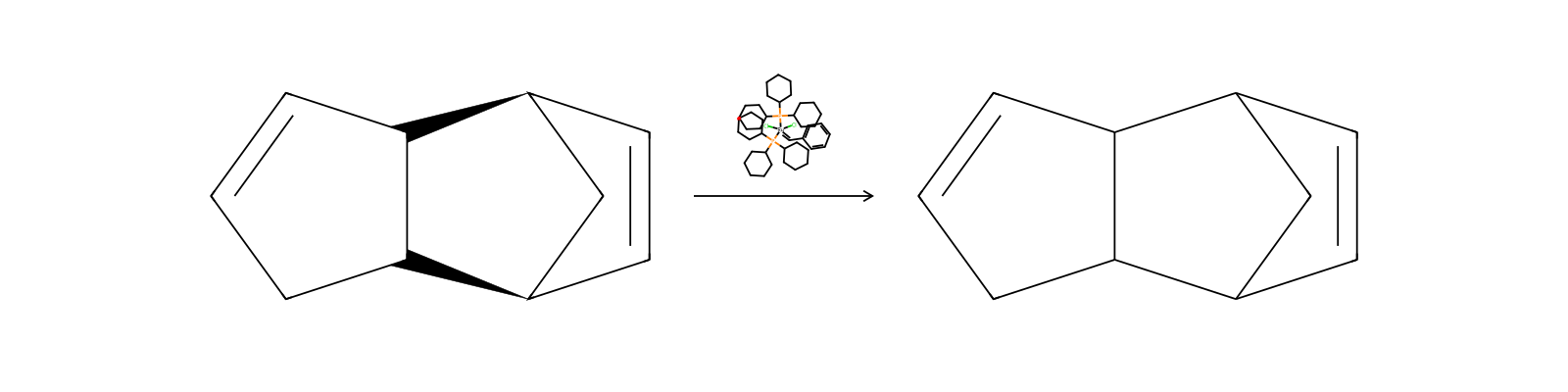
DCPD, 3a,4,7,7a-tetrahydo-4,7-methano-1H-indene, can exist in two stereoisomers, the endo and exo forms. ... commercially available DCPD is mostly the endo isomer.
Upstream & downstream products
Downstream products
Suppliers3 total
普善实业(陕西)有限公司029-81310890 18165209495 · [email protected]
陕西缔都医药化工有限公司029-029-81120477 17792793610 · [email protected]
Alchem Pharmtech,Inc.8485655694 · [email protected]
Related reactions
142 records


Linked notes
Loading…