
HRID 145174As reactant
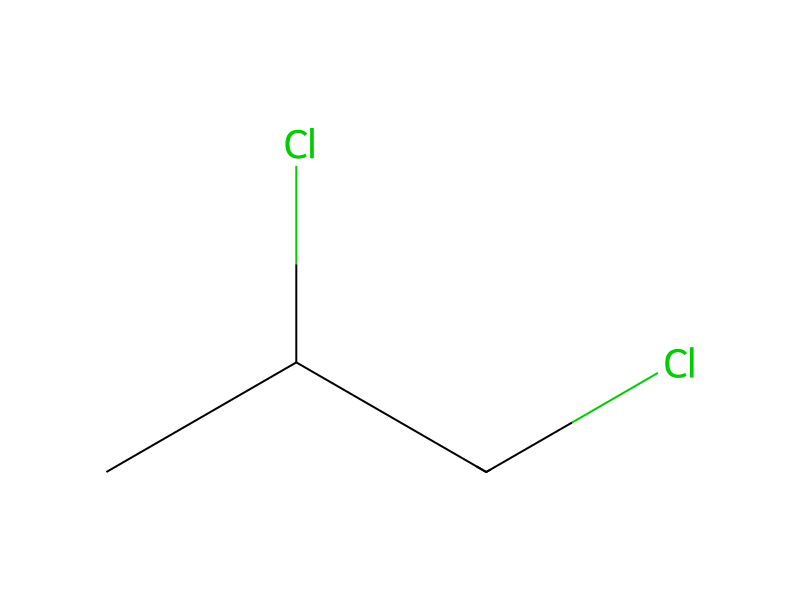
78-87-5CC(Cl)CClKNKRKFALVUDBJE-UHFFFAOYSA-N1,2-Dichloropropane is a colorless, flammable liquid with a chloroform-like odor. It is moderately soluble in water and readily evaporates into air. It does not occur naturally in the environment. 1,2-Dichloropropane production in the United States has declined over the past 20 years. It was used in the past as a soil fumigant, chemical intermediate and industrial solvent and was found in paint strippers, varnishes, and furniture finish removers. Most of these uses were discontinued. Today, almost all of the 1,2-dichloropropane is used as a chemical intermediate to make perchloroethylene and several other related chlorinated chemicals.
78-87-5DTXSID0020448CHEMBL44641CHEBI:82163Hazardous Air Pollutants (HAPs)
Flammable agents - 3rd degree
Pesticide -> EPA IRIS
Agrochemicals -> Pesticide active substances
Active substance -> EU Pesticides database: Not approved
Volatile Organic Compound (VOC) (Pesticide/Volatile Organic Compound (VOC))
log Kow = 1.98
2.02 (calculated)
1.98
Sweet
Chloroform-like odor.
1.158 at 68 °F (USCG, 1999) - Denser than water; will sink
1.159 @ 25 °C/25 °C
Relative density (water = 1): 1.16
1.16
1.159 @25 °C
1.16
Safety information is for reference only and does not replace the supplier’s Safety Data Sheet (SDS), applicable regulations, or professional assessment.
Danger
H225: Highly Flammable liquid and vapor [Danger Flammable liquids]
P203, P210, P233, P240, P241, P242, P243, P261, P264, P270, P271, P280, P301+P317, P303+P361+P353, P304+P340, P317, P318, P330, P370+P378, P403+P235, P405, and P501 (click each P-code to see the statement)
Danger
H225 (100%): Highly Flammable liquid and vapor [Danger Flammable liquids]
P203, P210, P233, P240, P241, P242, P243, P261, P264, P270, P271, P280, P301+P317, P303+P361+P353, P304+P340, P316, P317, P318, P321, P330, P370+P378, P403+P233, P403+P235, P405, and P501 (click each P-code to see the statement)
Chemical: Propane, 1,2-dichloro-
Hazard Traits - Carcinogenicity; Neurotoxicity; Respiratory Toxicity
Propane, 1,2-dichloro- is listed on the EPA's Chemical Data Reporting (CDR) system. Manufacturers and importers of Propane, 1,2-dichloro- are required to report information about their production and use of this chemical to the EPA under the Toxic Substances Control Act (TSCA). (40 eCFR Part 711)
T - indicates a substance that is the subject of a final TSCA section 4 test rule.
2002/2076
REACH registered substance: 1,2-dichloropropane (EC: 201-152-2)
Special Hazards of Combustion Products: Toxic and irritating gases may be generated. (USCG, 1999)
· HIGHLY FLAMMABLE: Will be easily ignited by heat, sparks or flames.
Highly flammable. Heating will cause rise in pressure with risk of bursting. Gives off irritating or toxic fumes (or gases) in a fire. Vapour/air mixtures are explosive.
... 1,2-DICHLOROPROPANE ... IS PARTLY METABOLIZED TO CO2, /UNCHANGED/ 1,2-DICHLOROPROPANE AS WELL AS CO2 METABOLIZED 1,2-DICHLOROPROPANE ARE EXCRETED /IN EXPIRED AIR/.
It has been shown that rat liver microsomes in vitro are capable of metabolizing 1,2-dichloropropane.
The metabolism of 1,2-dichloropropane and its proposed intermediate metabolite 1-chloro-2-hydroxypropane were studied. Sprague-Dawley rats received labeled dichloropropane in ip doses of 100 mg/kg, or by continuous oral dosing at 20 mg/kg per day for four days, while labeled 1-chloro-2-hydroxypropane was administered via ip injections at doses of 100 mg/kg. Urine was collected without fecal contamination for analysis via thin layer chromatography. During in vitro studies, a reaction was carried out in an oxidizing system using 1,2-dichloropropane as the substrate. ... The major urinary metabolite of 1,2-dichloropropane was N-acetyl-S-(hydroxypropyl)cysteine, with 2 minor metabolites, beta-chlorolactate and N-acetyl-S-(2,3-dihydroxypropyl)cysteine. Aside from N-acetyl-S-(2-hydroxypropyl)cysteine, a known urinary metabolite of 1-chloro-2-hydroxypropane, beta-chloroacetaldehyde and beta-chlorolactate were also identified as urinary 1-chloro-2-hydroxypropane metabolites ... /It was/ concluded that 1,2-dichloropropane oxidation to 1-chloro-2-hydroxypropane, ultimately resulting in the production of N-acetyl-S-(2-hydroxypropyl)cysteine, is suggested as the pathway of 1,2-dichloropropane metabolism in rats. The major detoxicating pathway of 1-chloro-2-hydroxypropane is epoxidation to 1,2-epoxypropane, which can either conjugate with glutathione or be hydrolyzed to propane-1,2-diol.
1,1-Dichloropropane & 1,2-dichloropropane are enzymatically dechlorinated by an enzyme located in hepatic microsomes. This system requires reduced nicotinamide adenine dinucleotide phosphate & oxygen, & is inducible by phenobarbital & benzpyrene, but not by methylcholanthrene. The optimum pH of the system is 8.2.
For more Metabolism/Metabolites (Complete) data for 1,2-DICHLOROPROPANE (6 total), please visit the HSDB record page.
Rats receiving single oral doses of 1,2-dichloro(1-(14)C)propane excreted about 50% in the urine & 5% in feces in 24 hr. There was little further excretion over the next 72 hr. A total of 19% of the dose was excreted as (14)CO2 & 23% as other volatile substances. At 96 hr, 5% remained in the carcass.


less than 0.1 mg/mL at 70.7 °F (NTP, 1992)
Sol in alcohol, ether, benzene and chloroform
Miscible with org solvents
In water, 2,800 mg/l @ 25 °C
Solubility in water, g/100ml at 20 °C: 0.26
0.3%
60 °F (NTP, 1992)
16 °C
60 °F (16 °C) (Closed cup)
16 °C c.c.
60 °F
60 °F
203 to 205 °F at 760 mmHg (NTP, 1992)
96.4 °C; (-3.7 °C at 10 mm Hg)
96 °C
206 °F
96.4 °C @760 [mm Hg]
206 °F
DESPITE LOW FLASH POINT IT DOES NOT CATCH FIRE READILY IN INDUSTRIAL APPLICATIONS.
A flammable liquid and bery dangerous fire hazard when exposed to heat or flame.
Contact with skin or eyes may cause irriation. (USCG, 1999)
· May cause toxic effects if inhaled or absorbed through skin.
1,2-Dichloropropane is a colorless, flammable liquid with a chloroform-like odor. It is moderately soluble in water and readily evaporates into air. It does not occur naturally in the environment. 1,2-Dichloropropane production in the United States has declined over the past 20 years. It was used in the past as a soil fumigant, chemical intermediate and industrial solvent and was found in paint strippers, varnishes, and furniture finish removers. Most of these uses were discontinued. Today, almost all of the 1,2-dichloropropane is used as a chemical intermediate to make perchloroethylene and several other related chlorinated chemicals.
Propylene dichloride is used as a chemical intermediate in several industries. Acute (short-term) inhalation exposure to high levels of propylene dichloride by humans results in effects on the lungs, gastrointestinal system, blood, liver, kidneys, central nervous system, and eyes. Limited information is available on the chronic (long-term), reproductive, developmental, and carcinogenic effects of propylene dichloride in humans. Animal studies have reported effects on the respiratory system and blood from chronic inhalation exposure. Animal studies have reported developmental effects from propylene dichloride exposure by gavage (experimentally placing the chemical in the stomach). Animal studies have reported an increased incidence of mammary gland tumors in female rats and liver tumors in male and female mice given propylene dichloride by gavage. EPA has provisionally classified propylene dichloride as a Group B2, probable human carcinogen.
Acute inhalation studies of rats: respiratory injury, anesthesia and hepatic necrosis; In occupational exposure, the liver and kidneys are the target organs. A dermal sensitizer; [ACGIH] In high-dose reproductive studies of male rats, 1,2-dichloropropane causes testicular damage. [Frazier, p. 248-9] Propylene dichloride is in the list of Some volatile substances which may be abused by inhalation published on the web site of the U.N. International Drug Control Programme, indicating its potential to cause narcosis in workers. [Reference #1] A skin, eye, and respiratory tract irritant; Inhalation of high concentrations can cause CNS depression; May cause kidney and liver injury; [ICSC] There is sufficient evidence in humans for the carcinogenicity of 1,2-dichloropropane. 1,2-Dichloropropane causes cancer of the biliary tract (confirmed as cholangiocarcinoma). . . . However, a minority of the Working Group concluded that the association between 1,2-dichloropropane and cancer of the biliary tract was credible, but the role of exposure to other agents, principally dichloromethane, could not be separated with complete confidence, and noted that most of the evidence came from studies in a single plant. [IARC 2016]
1279 130
1279 130
DHHS/ATSDR; Toxicological Profile for 1,2-Dichloropropane (1989) ATSDR/TP-89/12
DHHS/NTP; Toxicology & Carcinogenesis Studies of 1,2-Dichloropropane in F344/N Rats and B6C3F1 Mice Technical Report Series No. 263 (1986) NIH Publication No. 86-2519
WHO: Environmental Health Criteria 146: 1,3-Dichloropropene, 1,2-Dichloropropane and Mixtures (1993)
Excerpt from ERG Guide 130 [Flammable Liquids (Water-Immiscible / Noxious)]:
Use powder, foam, carbon dioxide. In case of fire: keep drums, etc., cool by spraying with water.
Fresh air, rest. Refer for medical attention.
Rinse and then wash skin with water and soap. Refer for medical attention .
First rinse with plenty of water for several minutes (remove contact lenses if easily possible), then refer for medical attention.
Rinse mouth. Refer for medical attention . Do NOT induce vomiting.
· CALL 911. Then call emergency response telephone number on shipping paper. If shipping paper not available or no answer, refer to appropriate telephone number listed on the inside back cover.
· ELIMINATE all ignition sources (no smoking, flares, sparks or flames) from immediate area.
EYES: First check the victim for contact lenses and remove if present. Flush victim's eyes with water or normal saline solution for 20 to 30 minutes while simultaneously calling a hospital or poison control center. Do not put any ointments, oils, or medication in the victim's eyes without specific instructions from a physician. IMMEDIATELY transport the victim after flushing eyes to a hospital even if no symptoms (such as redness or irritation) develop.
General First Aid:
(General first aid procedures)
1. Remove all ignition sources. 2. Ventilate area of spill or leak. 3. For small quantities, absorb on paper towels. Evaporate in a safe place (such as a fume hood). Allow sufficient time for evaporating vapors to completely clear the hood ductwork. Burn the paper in a suitable location away from combustible materials. Large quantities can be collected & atomized in a suitable combustion chamber equipped with an appropriate effluent gas cleaning device. Propylene dichloride should not be allowed to enter a confined space, such as a sewer, because of the possibility of an explosion.
1,2-Dichloropropane ... could be removed by several mechanisms, the most important being stripping, biodegradation, and a combination of each.
Generators of waste (equal to or greater than 100 kg/mo) containing this contaminant, EPA hazardous waste number U083, must conform with USEPA regulations in storage, transportation, treatment and disposal of waste.
1,2-Dichloropropane is a waste chemical stream constituent which may be subjected to ultimate disposal by controlled incineration. Incineration, preferably after mixing with another combustible fuel, care must be exercised to assure complete combustion to prevent the formation of phosgene. An acid scrubber is necessary to remove the halo acids produced.
A potential candidate for liquid injection incineration at a temperature range of 650 to 1,600 °C and a residence time of 0.1 to 2 seconds. A potential candidate for rotary kiln incineration at a temperature range of 820 to 1,600 °C and residence times of seconds for liquids and gases, and hours for solids. A potential candidate for fluidized bed incineration at a temperature range of 450 to 980 °C and residence times of seconds for liquids and gases, and longer for solids.
Propylene dichloride may be disposed of by atomizing in a suitable combustion chamber equipped with an appropriate gas cleaning device.
For more Disposal Methods (Complete) data for 1,2-DICHLOROPROPANE (6 total), please visit the HSDB record page.
Remove all ignition sources. Personal protection: self-contained breathing apparatus. Ventilation. Do NOT wash away into sewer. Collect leaking and spilled liquid in sealable containers as far as possible. Absorb remaining liquid in sand or inert absorbent. Then store and dispose of according to local regulations.
Employees should be provided with & required to use impervious clothing, gloves, face shields (8 inch min), & other appropriate protective clothing necessary to prevent repeated or prolonged skin contact ... . Clothing wet with liquid ... should be placed in closed containers for storage until it can be discarded or until provision is made for the removal of propylene dichloride from the clothing. ... Any clothing which becomes wet with liquid .... should be removed immediately & not reworn until propylene dichloride is removed ... . Employees should be provided with & required to use splash-proof safety goggles where liquid ... may contact the eyes.
SRP: Contaminated protective clothing should be segregated in such a manner so that there is no direct personal contact by personnel who handle, dispose, or clean the clothing. Quality assurance to ascertain the completeness of the cleaning procedures should be implemented before the decontaminated protective clothing is returned for reuse by the workers. Contaminated clothing should not be taken home at end of shift, but should remain at employee's place of work for cleaning.
The worker should immediately wash the skin when it becomes contaminated.
Work clothing that becomes wet should be immediately removed due to its flammability hazard.
SRP: The scientific literature for the use of contact lenses in industry is conflicting. The benefit or detrimental effects of wearing contact lenses depend not only upon the substance, but also on factors including the form of the substance, characteristics and duration of the exposure, the uses of other eye protection equipment, and the hygiene of the lenses. However, there may be individual substances whose irritating or corrosive properties are such that the wearing of contact lenses would be harmful to the eye. In those specific cases, contact lenses should not be worn. In any event, the usual eye protection equipment should be worn even when contact lenses are in place.
Excerpt from ERG Guide 130 [Flammable Liquids (Water-Immiscible / Noxious)]:
Immediate precautionary measure
ATSDR Toxicological Profile for 1,2-Dichloropropane - Succinctly characterizes the toxicologic and adverse health effects information.
Ranking: 99 (total points: 1139.58)
MALE RATS EXPOSED 4 HR TO VARIOUS CONCN TO TETRACHLOROETHYLENE SINGLY & IN COMBINATION WITH 1,2-DICHLOROPROPANE SHOWED MARKEDLY ELEVATED GLUTAMIC OXALACETIC TRANSAMINASE, GLUTAMIC PYRUVIC TRANSAMINASE & ORNITHINE CARBAMYL TRANSFERASE.
Weanling Wistar rats, fed for several weeks on low protein choline-deficient diets, were more susceptible to the effects of inhalation of 4660 mg 1,2-dichloropropane/cu m than rats on a control diet. This increased susceptibility could be corrected by dietary supplements of 1-methionine or 1-cysteine plus choline chloride.
Developmental (effects while organs are developing), Hematological (Blood Forming), Hepatic (Liver), Neurological (Nervous System), Respiratory (From the Nose to the Lungs)
Respiratory
Eyes, skin, respiratory system, liver, kidneys, central nervous system
TLm Shrimp > 100 ppm/48 hr /Conditions of bioassay not specified/
LC50 Poecilia reticulata (guppy) 116 ppm/7 days /Conditions of bioassay not specified/
LC50 Lepomis macrochirus 320 ppm/96 hr; In fresh water at 23 °C, mild aeration applied after 24 hr
LC50 Menidia beryllina 240 ppm/96 hr; In synthetic seawater at 23 °C, mild aeration applied after 24 hr
For more Ecotoxicity Values (Complete) data for 1,2-DICHLOROPROPANE (8 total), please visit the HSDB record page.
TERRESTRIAL FATE: Based on a classification scheme(1), a Koc value of 47(2), indicates that 1,2-dichloropropane is expected to have very high mobility in soil(SRC). Volatilization of 1,2-dichloropropane from moist soil surfaces is expected to be an important fate process(SRC) given a Henry's Law constant of 2.82X10⁻³ atm-cu m/mole(3). The potential for volatilization of 1,2-dichloropropane from dry soil surfaces may exist(SRC) based upon a vapor pressure of 53.3 mm Hg(4). Biodegradation is not expected to be an important environmental fate process in soil given a BOD of 0% theoretical using the MITI test(5). In a closed system using fresh soil at 15 °C, a mean half-life of 52 days was measured for 1,2-dichloropropane(6).
AQUATIC FATE: Based on a classification scheme(1), a Koc value of 47(2), indicates that 1,2-dichloropropane is not expected to adsorb to suspended solids and sediment(SRC). Volatilization from water surfaces is expected(3), based upon a Henry's Law constant of 2.82X10⁻³ atm-cu m/mole(4). Using this Henry's Law constant and an estimation method(3), volatilization half-lives for a model river and model lake are 3 hrs and 4 days, respectively(SRC). The hydrolytic half-life of 1,2-dichloropropane is expected to be 6 months to several years(5). According to a classification scheme(6), a BCF range of 0.5-6.9(7), suggests bioconcentration in aquatic organisms is low(SRC). Biodegradation is not expected to be an important environmental fate process in water given a 0% theoretical BOD using the MITI test(7).
ATMOSPHERIC FATE: According to a model of gas/particle partitioning of semivolatile organic compounds in the atmosphere(1), 1,2-dichloropropane, which has a vapor pressure of 53.3 mm Hg at 25 deg(2), is expected to exist solely as a vapor in the ambient atmosphere. Vapor-phase 1,2-dichloropropane is degraded in the atmosphere by reaction with photochemically-produced hydroxyl radicals(SRC); the half-life for this reaction in air is estimated to be 36 days(SRC), calculated from its rate constant of 4.42X10⁻¹³ cu cm/molecule-sec at 25 °C(SRC) determined using a structure estimation method(3). Vapor-phase photolysis under simulated sunlight did not occur after prolonged exposure(4).
The substance can be absorbed into the body by inhalation and by ingestion.
inhalation, skin absorption, ingestion, skin and/or eye contact
IDENTIFICATION: 1,2-Dichloropropane is a liquid. It is soluble in water, ethanol, and ethyl ether. When heated, it emits highly toxic fumes of phosgene. 1,2-dichloropropane is used in furniture finish, dry cleaning fluid, and paint remover, gum processing, metal degreasing, oil processing, and as a rubber- and wax-making agent, and a chemical intermediate int he production of tetrachloroethylene and carbon tetrachloride. HUMAN EXPOSURE: Exposure of the general population to 1,2-dichloropropane via air and water is unlikely, except in areas where there is extensive use of 1,2-dichloropropane and "MIX D/D" in agriculture. The risk to the general population is negligible. Several cases of acute poisoning have been reported due to accidental or intentional (suicide) over-exposure to 1,2-dichloropropane. Effects have been mainly on the central nervous system, liver, and kidneys. Hemolytic anemia and disseminated intravascular coagulation have also been reported. In one case, delirium progressed to irreversible shock, cardiac failure, and death. Occupational exposures can be via both skin and inhalation. Several cases of dermatitis and skin sensitization have been reported in workers using solvent mixtures containing 1,2-dichloropropane. ANIMAL STUDIES: The acute oral toxicity of 1,2-dichloropropane in experimental animals is low. Short-term, oral toxicity studies of 1,2-dichloropropane in mice and rats showed growth inhibition, clinical toxic signs associated with central nervous system depression, and/or increased mortality at dose levels of 250 mg/kg body weight per day or higher. Studies did not indicate any teratogenic activity of 1,2-dichloropropane at oral dose levels up to 125 mg/kg body weight in the rat and 150 mg/kg body weight in the rabbit. In a carcinogenicity study on mice administered 125 or 250 mg 1,2-dichloropropane/kg body weight by gavage, a dose-related increase in the incidence of liver adenomas was observed. 1,2-Dichloropropane administered orally to rats is rapidly eliminated. Urine is the major route of elimination. Unchanged 1,2-dichloropropane is not found in urine. Three major urinary metabolites have been identified. 1,2-Dichloropropane can also be oxidized to lactate with resultant carbon dioxide or acetyl co-enzyme A production.
Cough. Sore throat. Headache. Drowsiness. Dizziness.
Dry skin. Redness. Pain.
Redness. Pain.
Nausea. Headache. Drowsiness. Abdominal pain. Vomiting. Diarrhoea.
irritation eyes, skin, respiratory system; drowsiness, dizziness; liver, kidney damage; In Animals: central nervous system depression; [potential occupational carcinogen]
The following link will take the user to the National Toxicology Program (NTP) Test Agent Search Results page, which tabulates all of the "Standard Toxicology & Carcinogenesis Studies", "Developmental Studies", and "Genetic Toxicity Studies" performed with this chemical. Clicking on the "Testing Status" link will take the user to the status (i.e., in review, in progress, in preparation, on test, completed, etc.) and results of all the studies that the NTP has done on this chemical. [http://ntp-apps.niehs.nih.gov/ntp_tox/index.cfm?fuseaction=ntpsearch.searchresults&searchterm=78-87-5]
Municipal landfill leachate tested in MN resulted in 3 of 6 samples testing positive for 1,2-dichloroethane at a concn range of 2.0-81 ppb as was 1 of 5 samples in WI, concn of 54 ppb(1). National Urban Runoff Program in which 86 samples from 19 cities throughout the US were analyzed: detected only in Eugene OR at 3 ppb, 1% frequency of detection nationwide(2). Industries (mean concn) whose effluents contain 1,2-dichloropropane include photographic equipment/supplies (10 ppb) organic chemical manufacturing/plastics (25 ppb), and paint and ink formulation (210 ppb)(3). 1,2-Dichloropropane was not detected, detection limit of 1 ug/l, in leachate from samples of reclaimed asphalt pavement from asphalt plants throughout Florida(4). 1,2-Dichloropropane was detected not quantified in emissions from wax paste for furniture, floors, and linoleum and from liquid floor wax(5).
U083; As stipulated in 40 CFR 261.33, when propylene dichloride, as a commercial chemical product or manufacturing chemical intermediate or an off-specification commercial chemical product or a manufacturing chemical intermediate, becomes a waste, it must be managed according to Federal and/or State hazardous waste regulations. Also defined as a hazardous waste is any residue, contaminated soil, water, or other debris resulting from the cleanup of a spill, into water or on dry land, of this waste. Generators of small quantities of this waste may qualify for partial exclusion from hazardous waste regulations (40 CFR 261.5).
Pursuant to section 8(d) of TSCA, EPA promulgated a model Health and Safety Data Reporting Rule. The section 8(d) model rule requires manufacturers, importers, and processors of listed chemical substances and mixtures to submit to EPA copies and lists of unpublished health and safety studies. 1,2-Dichloropropane is included on this list.
Section 8(a) of TSCA requires manufacturers of this chemical substance to report preliminary assessment information concerned with production, use, and exposure to EPA as cited in the preamble of the 51 FR 41329.
Manufacturers and processors of 1,2-dichloropropane are required to conduct (1) Health effects testing incl (a) neurotoxicity testing, (b) mutagenic effects studies, (c) developmental toxicity testing, and (d) pharmacokinetic studies; (2) Environmental effects testing incl (a) mysid acute and chronic toxicity tests, (b) algal acute toxicity testing and (c) daphnid chronic toxicity testing under TSCA section 4.
Propylene dichloride is exempted from the requirement of a tolerance when used as a solvent for formulations used before crop emerges from soil in accordance with good agricultural practice as inert (or occasionally active) ingredients in pesticide formulations applied to growing crops only.
This action promulgates standards of performance for equipment leaks of Volatile Organic Compounds (VOC) in the Synthetic Organic Chemical Manufacturing Industry (SOCMI). The intended effect of these standards is to require all newly constructed, modified, and reconstructed SOCMI process units to use the best demonstrated system of continuous emission reduction for equipment leaks of VOC, considering costs, non air quality health and environmental impact and energy requirements. Propylene dichloride is produced, as an intermediate or a final product, by process units covered under this subpart.
Listed as a hazardous air pollutant (HAP) generally known or suspected to cause serious health problems. The Clean Air Act, as amended in 1990, directs EPA to set standards requiring major sources to sharply reduce routine emissions of toxic pollutants. EPA is required to establish and phase in specific performance based standards for all air emission sources that emit one or more of the listed pollutants. 1,2-Dichloropropane is included on this list.
Persons in charge of vessels or facilities are required to notify the National Response Center (NRC) immediately, when there is a release of this designated hazardous substance, in an amount equal to or greater than its reportable quantity of 1,000 lb or 454 kg. The toll free number of the NRC is (800) 424-8802; In the Washington D.C. metropolitan area (202) 426-2675. The rule for determining when notification is required is stated in 40 CFR 302.4 (section IV. D.3.b).
1,2-Dichloropropane is designated as a hazardous substance under section 311(b)(2)(A) of the Federal Water Pollution Control Act and further regulated by the Clean Water Act Amendments of 1977 and 1978. These regulations apply to discharges of this substance. This designation includes any isomers and hydrates, as well as any solutions and mixtures containing this substance.
(AZ) ARIZONA 0.56 ug/l
(CT) CONNECTICUT 5 ug/l
(MN) MINNESOTA 5 ug/l
Male & female Fischer 344 rats were either exposed to atmospheres of 5, 50 or 100 ppm (23, 230 or 460 mg/cu m) of singly labeled 1,2-dichloro((14)C))propane for a 6 hr period or dosed orally once with 1 or 100 mg/kg bw or on 7 consecutive days with 1 mg/kg bw. During inhalation exposure, maximum blood concns were reached after 2 hr, the values being approx 0.06, 0.9 & 4.0 ug/g blood, respectively. Once exposure stopped, 1,2-dichloropropane was rapidly eliminated from blood. Analysis of expired air provided evidence for saturation of metab, the proportion of expired 1,2-dichloro((14)C)propane increasing with dose. For both gavage & inhalation admin, the principal routes of elimination were urine (37-65%) & expired air (18-40%), most of the radioactivity being eliminated within 24 hr, irrespective of the route or sex. Tissues, feces & the cage wash accounted for <11%, about 10% & about 4% of the dose, respectively.
Groups of 5 male Wistar rats (200 g) were admin ip, 0, 10, 25, 50, 100, 250, or 500 mg 1,2-dichloropropane (97%)/kg bw in 0.5 ml corn oil for 5 days (once daily) or for 4 wk (5 days/wk). Urinary mercapturic acid excretion was monitored. A significant incr in mercapturic acid excretion was observed at all dose levels, with no further incr during the treatment: at lower doses, a return to baseline values occurred within 48 hr of the end of the treatment. Mercapturic acid excretion at the end of wk 2, 3, & 4 was significantly lower than that observed at the end of the first wk.
Propylene dichloride is used as a chemical intermediate in the production of chlorinated organic chemicals, as an industrial solvent, in ion exchange manufacture, in toluene diisocyanate production, in photographic film manufacture, for paper coating, and for petroleum catalyst regeneration.
Propylene dichloride is used as a solvent for many different purposes. [ACGIH] Used as a solvent in plastics, resins, fats & oils, metal degreasing, rubber processing, and dry cleaning; Used in past as a soil fumigant; [HSDB] Production of 1,2-dichloropropane in the USA decreased in the early 1980s since it was no longer used in paint strippers, furniture finishes, or as an insecticide. [IARC]
No longer available for agricultural use (insecticide and soil fumigant) and no longer available to consumers in paint strippers, varnish, and furniture finish; [ACGIH]
Metal Degreasing [Category: Clean]
For 1,2-Dichloropropane (USEPA/OPP Pesticide Code: 029002) there are 0 labels match. /SRP: Not registered for current use in the U.S., but approved pesticide uses may change periodically and so federal, state and local authorities must be consulted for currently approved uses./
Livestock (in DD mixt); solvent in plastics, resins, and metals indust, int in rubber processing
2023: 100,000,000 - <250,000,000 lb
(1972) 1.85X10+10 G (SALES)
(1975) 3.82X10+10 G
(1980) 3.50X10+10 g
(1988) NO DATA PROVIDED
(For agricultural uses) 50% used alone as an insecticide for stored grain; 48% in DD mixture as an insecticide on crops; 2% in DD mixture as an insecticide for livestock and in other agricultural applications (DD mixture consists of 1,3-dichloropropene, 3,3-dichloropropene, 1,2-dichloropropane, 2,3-dichloropropene, and related C3 chlorinated hydrocarbons) (1975) /SRP: D-D no longer in production/
Chlorination of propylene
From propyl chloride and antimony pentachloride
Action of chlorine on propylene
USEPA/OPP Pesticide Code 029002; Trade Names: Mixture, component of; Nemex, component of; Vidden D, component of; Vorlex, component of (with 029001 and 068103).
DOWFUME EB-5 (7.2% ETHYLENE DIBROMIDE, 29.5% PROPYLENE DICHLORIDE, 63.6% CARBON TETRACHLORIDE). EMULSIONS UP TO 100% ACTIVE INGREDIENT.
DICHLOROPROPANE, DISTILLED-MIN 99.5%
Telone 2 contains about 92% 1,3-dichloropropene and 3 to 5% 1,2-dichloropropane.
For more Formulations/Preparations (Complete) data for 1,2-DICHLOROPROPANE (8 total), please visit the HSDB record page.
All Other Basic Organic Chemical Manufacturing
Propane, 1,2-dichloro-: ACTIVE
Production of 1,2-dichloropropane and of DD mixture has been discontinued by the Dow Chemical Co
DescriptionDichloropropane is a colorless stable liquid.Sweet, chloroform-like odor. The odor threshold in air is0.25 ppm. Molecular weight=112.99; Specific gravity(H2O:1)=1.16; Boiling point=96℃; Freezing/Meltingpoint=-100℃; Vapor pressure=40 mmHg at 20℃;Flash point=16℃ (cc); Autoignition temperature=557℃.Explosive limits: LEL=3.4%; UEL=14.5%. HazardIdentification (based on NFPA-704 M Rating System):Health 2, Flammability 3, Reactivity 0. Very slightly soluble in water; solubility=0.3% at 20℃.
Uses1,2-Dichloropropane is used as a soil fumigant, often as a mixture with 1,3-dichloropropene to control nematodes and soil pests.
UsesSoil fumigant for nematodes.
Uses1,2-Dichloropropane is a byproduct in the production of epichlorohydrin (E582310), an important industrial chemical, is a bifunctional alkylating agent with the potential to form DNA cross-links.
UsesSolvent for oils, fats, resins, waxes, rubber; in ion exchange manufacture; in photographic film production; paper coating; petroleum catalyst regeneration. Has been used as a soil fumigant.
General DescriptionColorless watery liquid with a sweet odor. Sinks in water. Produces an irritating vapor.
DefinitionChEBI: Rac-1,2-dichloropropane is a racemate comprising equimolar amounts of (R)- and (S)-1,2-dichloropropane. It is used as a fumigant to control nematodes in soil and insects in stored grain. It has a role as a fumigant insecticide, an agrochemical, a carcinogenic agent and a polar aprotic solvent. It contains a (R)-1,2-dichloropropane and a (S)-1,2-dichloropropane.