HomeMCPWorkbenchSkills
HomeWorkbenchNotificationsMe
llms.txt · MCP GuidePrivacy Policy · Terms of Service · Supportv1.8.0
  1. Home
  2. /Compound

Dimethylcarbamoyl Chloride
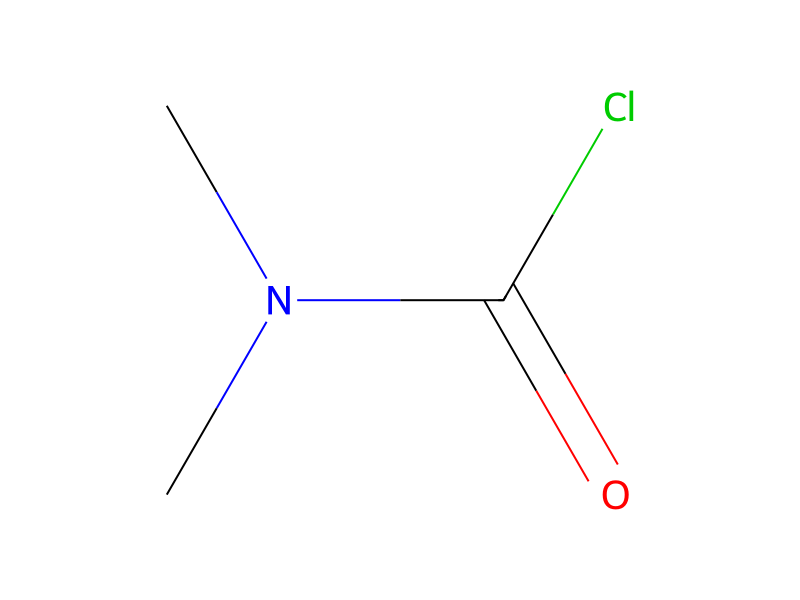
HCID 6598
New noteNew reactionRequest quotes
Print preview
Basic informationOverviewNames & identifiersPropertiesSafety & regulationChemistry & industryRelated reactionsCompound notes
Substructure searchFind similar structures

Basic information

CAS
79-44-7
Standard SMILES
CN(C)C(=O)Cl
InChIKey
YIIMEMSDCNDGTB-UHFFFAOYSA-N
Molecular formula
C3H6ClNO
Average molar mass
107.54 g/mol
Monoisotopic mass
107.0137915

Overview

Dimethylcarbamoyl Chloride can cause cancer according to an independent committee of scientific and health experts.

Names & identifiers

Preferred name
Dimethylcarbamoyl Chloride
IUPAC
N,N-dimethylcarbamoyl chloride
English name
Dimethylcarbamoyl chloride
Molecular formula
C3H6ClNO
Molecular weight
107.54

Names & synonyms

DIMETHYLCARBAMOYL CHLORIDE79-44-7Dimethylcarbamyl chlorideN,N-Dimethylcarbamoyl chlorideDimethylcarbamic chlorideCarbamic chloride, dimethyl-Dimethylcarbamic acid chlorideDMCCCarbamoyl chloride, dimethyl-Dimethylchloroformamide(Dimethylamino)carbonyl chlorideN,N-Dimethylcarbamyl chloride
Show more names
DMCLDimethylcarbamoylcarbamyLDimethylazanecarbonyl chloridedimethylcarbamicchloride
Dimethyl carbamoyl chlorideChloroformic acid dimethylamideDimethylcarbamidoyl chlorideN,N-Dimethylcarbamic acid chlorideDTXSID1020512N,N-Dimethylcarbamidoyl chlorideRCRA waste number U097Dimethylkarbamoylchlorid

Database identifiers

CAS
79-44-7
PubChem CID
6598
DTXSID
DTXSID1020512
ChEMBL
CHEMBL1527556
ChEBI
CHEBI:82280
UNII
5D54S95GT6
EC Number
201-208-6
Nikkaji
J3.844J

Properties

Computed structural properties

XLogP
0.8
Topological polar surface area
20.3 Ų
Hydrogen bond donors
0
Hydrogen bond acceptors
1
Rotatable bonds
0
Heavy atoms
6
Formal charge
0
Complexity
61.8

Experimental & physicochemical properties

Chemical Classes · 3 items

Hazardous Air Pollutants (HAPs)

Toxic Gases & Vapors -> Acid Halides

Carcinogens

SpringerMaterials Properties15N nuclear magnetic resonance spectrum
Density · 5 items

1.168 at 68 °F (USCG, 1999) - Denser than water; will sink

1.168 g/cu cm @ 25 °C

1.17

1.168 @25 °C

1.17

Color/FormClear, colorless liquid.
Solubility · 2 items

Decomposes (NTP, 1992)

Reacts

Flash Point · 4 items

155 °F (NTP, 1992)

Flash point: not available

155 °F

155 °F

Boiling Point · 5 items

329 to 333 °F at 760 mmHg (NTP, 1992)

167 °C

329 °F

167 °C @760 [mm Hg]

329 °F

Decomposition · 2 items

Safety & regulation

Safety information is for reference only and does not replace the supplier’s Safety Data Sheet (SDS), applicable regulations, or professional assessment.

GHS classification

GHS Classification · 6 items

Danger

H302: Harmful if swallowed [Warning Acute toxicity, oral]

P203, P261, P264, P264+P265, P270, P271, P280, P301+P317, P302+P352, P304+P340, P305+P351+P338, P316, P318, P319, P321, P330, P332+P317, P337+P317, P362+P364, P403+P233, P405, and P501 (click each P-code to see the statement)

Danger

H302 (100%): Harmful if swallowed [Warning Acute toxicity, oral]

P203, P260, P261, P264, P264+P265, P270, P271, P273, P280, P284, P301+P317, P302+P352, P304+P340, P305+P351+P338, P316, P318, P319, P320, P321, P330, P332+P317, P337+P317, P362+P364, P391, P403+P233, P405, and P501 (click each P-code to see the statement)

Hazard information

Regulatory Information · 5 items

Chemical: Carbamic chloride, dimethyl-

Hazard Traits - Carcinogenicity; Dermatotoxicity; Hepatotoxicity and Digestive System Toxicity; Ocular Toxicity; Respiratory Toxicity

REACH registered substance: Dimethylcarbamoyl chloride (EC: 201-208-6)

Dimethylcarbamyl chloride: Does not have an individual approval but may be used under an appropriate group standard

The New Jersey Worker and Community Right to Know Act requires public and private employers to provide information about hazardous substances at their workplaces. (N.J.S.A. 34:5A-1 et. seq.)

Other Safety InformationIMAP assessments - Carbamic chloride, dimethyl-: Human health tier II assessment
DOT LabelCorrosive
Fire Hazards · 2 items

Special Hazards of Combustion Products: Toxic fumes of NO x and HCl (USCG, 1999)

· Combustible material: may burn but does not ignite readily.

Health Hazards · 2 items

Chemistry & industry

Uses & manufacturing

Uses · 5 items

Dimethylcarbamoyl chloride is used as a chemical intermediate in the production of pharmaceuticals and pesticides and in dye synthesis.

Used to manufacture carbamate pesticides, dyes, and drugs; Exposed workers include pesticide formulators, dye makers, and pharmaceutical workers. [ACGIH]

CHEM INT FOR PARASYMPATHOMIMETIC AGENTS; CHEM INT FOR PESTICIDES. /FORMER USE/

... Chemical intermediate in the production of ... rocket fuel. /Former use/

Chemical intermediate in production of dyes, pharmaceuticals, pesticides. /Former use/

U.S. Production · 2 items

(1978) NOT PRODUCED COMMERCIALLY IN USA

(1982) NOT PRODUCED COMMERCIALLY IN USA

Methods of Manufacturing · 2 items

REACTION OF PHOSGENE WITH DIMETHYLAMINE.

Dimethylamine + phosgene (phosgenation)

General Manufacturing Information · 2 items

Carbamic chloride, N,N-dimethyl-: ACTIVE

Dimethylcarbamoyl chloride /was/ produced since 1961.

Applications · 3 items

UsesDimethylcarbamoyl chloride has been used primarily as a chemical intermediate in the production of dyes, pharmaceuticals, pesticides, and rocket fuel (IARC 1999, HSDB 2009).

UsesDimethylcarbamyl chloride is used to make dyes and pharmaceuticals.

General DescriptionDimethylcarbamoyl chloride appears as a colorless to yellow liquid with a pungent odor. Burns to skin, eyes and mucous membranes. A lachrymator. Used to make dyes and pharmaceuticals.

Upstream & downstream products

Upstream raw materials

DimethylamineE

Related reactions

1,314 records
New reaction record
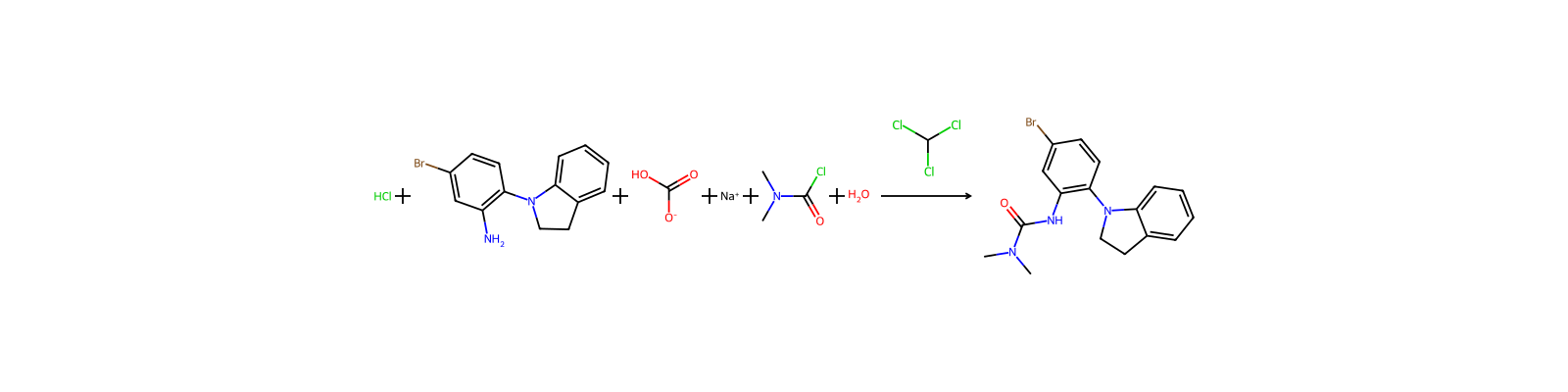
HRID 825 reaction equation
HRID 825As reactantuspto-grants-1998_03
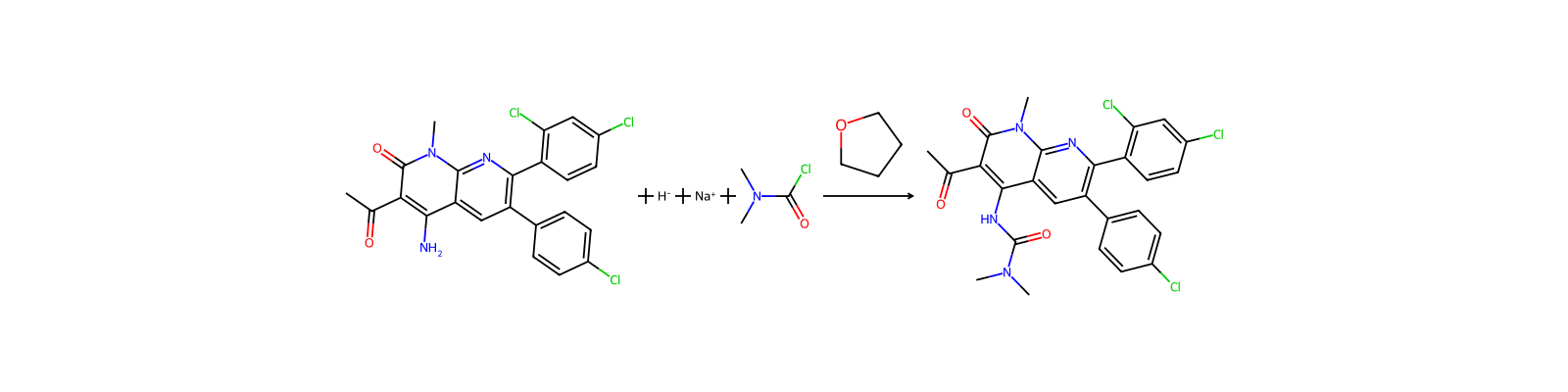
HRID 4021 reaction equation
HRID 4021As reactantuspto-grants-1988_02
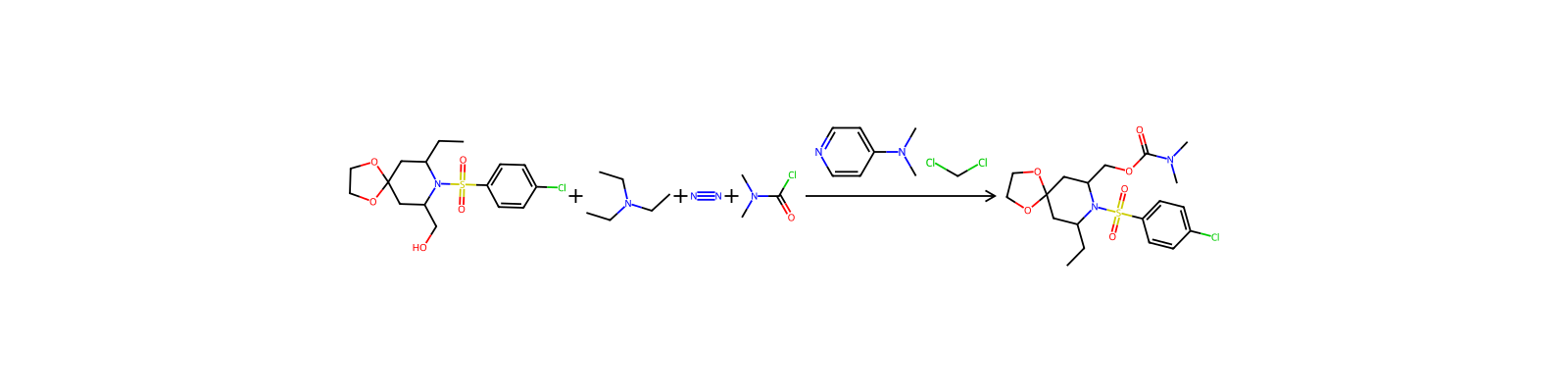
HRID 4079 reaction equation
HRID 4079As reactantuspto-grants-1988_02
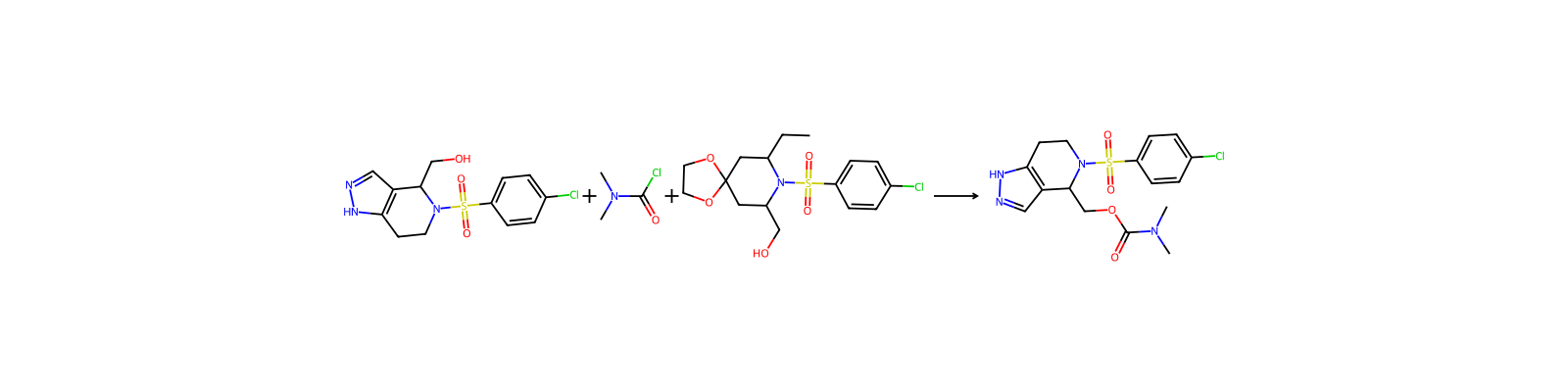
HRID 13809 reaction equation
HRID 13809As reactantuspto-grants-2010_06
HRID 15746 reaction equation
HRID 15746As reactantuspto-grants-2010_06
HRID 15765 reaction equation
HRID 15765As reactantuspto-grants-2010_06
HRID 16120 reaction equation
HRID 16120As reactantuspto-grants-2010_06
HRID 21180 reaction equation
HRID 21180As reactantuspto-grants-2010_06
Page 1 of 165

Compound notes

Loading…

On this pageBasic informationOverviewNames & identifiersPropertiesSafety & regulationChemistry & industryRelated reactionsCompound notes
More actions
New noteNew reactionRequest quotes

WHEN HEATED TO DECOMPOSITION IT EMITS VERY TOXIC FUMES OF /HYDROGEN CHLORIDE AND NITROGEN OXIDES/.

Decomposes in water.

Melting Point · 5 items

-27 °F (NTP, 1992)

-33 °C

-27 °F

-33 °C

-27 °F

Vapor Density · 3 items

3.73 (NTP, 1992) - Heavier than air; will sink (Relative to Air)

3.73 (Air = 1)

3.73

Vapor Pressure · 3 items

1.95 [mmHg]

1.95 mm Hg @ 25 °C

1.95 [mm Hg] @25 °C

Refractive IndexIndex of refraction: 1.4529 @ 20 °C/D

Physicochemical properties

Melting point
33 °C · −33 °C(lit.)
Boiling point
167 · 167-168 °C775 mm Hg(lit.)
Density
1.168 g/mL · 1.168 g/mL at 25 °C(lit.)
refractive index
20 · n20/D 1.453
Flash point
155 °F · 155 °F
solubility
Chloroform (Soluble), DMSO (Sparingly)
form
Liquid
pka
-1.85 · -1.85±0.70(Predicted)
color
Colorless to Yellow
Specific Gravity
1.172 · 1.172
Water Solubility
Decomposes
Sensitive
Moisture Sensitive
BRN
878197 · 878197
Exposure limits
0.005 ppm · ACGIH: TWA 0.005 ppm (Skin)
Stability
Moisture Sensitive
InChI
1S/C3H6ClNO/c1-5(2)3(4)6/h1-2H3
InChIKey
YIIMEMSDCNDGTB-UHFFFAOYSA-N
SMILES
CN(C)C(Cl)=O
CAS DataBase Reference
79 · 79-44-7(CAS DataBase Reference)
EWG's Food Scores
5 · 5
FDA UNII
5 D54S95GT6 · 5D54S95GT6
Proposition 65 List
Dimethylcarbamoyl Chloride
IARC
2 A · 2A (Vol. 12, Sup 7, 71) 1999
NIST Chemistry Reference
Carbamic chloride, dimethyl-(79-44-7)
EPA Substance Registry System
Dimethylcarbamoyl chloride (79-44-7)
UNSPSC Code
12352100 · 12352100
NACRES
22 · NA.22
Symbol(GHS)
6 · GHS06,GHS08
Signal word
Danger
Hazard statements
330 · H330-H302-H315-H319-H341-H350-H335-H401-H227
Precautionary statements
501 · P501-P273-P270-P202-P260-P210-P201-P271-P264-P280-P284-P302+P352-P370+P378-P308+P313-P337+P313-P305+P351+P338-P362+P364-P332+P313-P301+P312+P330-P304+P340+P310-P403+P233-P403+P235-P405
target organs
Respiratory system
PPE
Faceshields, Gloves, Goggles, type ABEK (EN14387) respirator filter
Hazard Codes
T
Risk Statements
45 · 45-22-23-36/37/38
Safety Statements
53 · 53-45-99
RIDADR
2262 · UN 2262
WGK Germany
3 · 3
RTECS
4200000 · FD4200000
F
9 · 9
TSCA
TSCA listed
HazardClass
8 · 8
PackingGroup
II
HS Code
29241990 · 29241990
Storage Class
6.1 C · 6.1C - Combustible acute toxic Cat.3toxic compounds or compounds which causing chronic effects
Hazard Classifications
3 InhalationAcute · Acute Tox. 3 InhalationAcute Tox. 4 OralCarc. 1BEye Irrit. 2Skin Irrit. 2STOT SE 3
Hazardous Substances Data
79 · 79-44-7(Hazardous Substances Data)
Toxicity
165 · A designated animal carcinogen (IARC) and hazardous waste (EPA); a suspected carcinogen in humans. It is a liquid boiling at 165_x0003_C that is used primarily in the manufacture of drugs and pesticides. Dimethyl carbamoyl chloride is extremely toxic.
REACH Registrations
Active
Limited Quantities
1 L · 1.0 L (0.3 gallons) (liquid) or 1 Kg (2.2 lbs) (solid)
Excepted Quantities
Max Inner Pack (30g or 30ml) and Max Outer Pack (500g or 500ml)

Material is extremely destructive to the mucous membranes, upper respiratory tract, eyes, and skin. Symptoms of exposure include burning sensation, coughing, wheezing, laryngitis, shortness of breath, headache, nausea, and vomiting. (USCG, 1999)

· TOXIC and/or CORROSIVE; inhalation, ingestion or contact (skin, eyes) with vapors, dusts or substance may cause severe injury, burns or death.

Hazards Summary · 2 items

Dimethylcarbamoyl chloride is used as an intermediate in the production of pharmaceuticals, pesticides, and dyes. Acute (short-term) inhalation exposure to dimethylcarbamoyl chloride has been observed to result in damaged mucous membranes of the nose, throat, and lungs, and cause difficulty in breathing in rats. No information is available on the chronic (long-term), reproductive, developmental, or carcinogenic health effects of dimethylcarbamoyl chloride in humans. Nasal tract carcinomas have been observed in rats and male hamsters following inhalation exposure. EPA has not classified dimethylcarbamoyl chloride for potential carcinogenicity.

Liquid causes second or third degree burns after short contact. [CHRIS] A lachrymator; Inhalation exposure to HCl may cause chemical pneumonitis; [HSDB] DMCC reacts with tissue at the point of contact. DMCC hydrolyzes to dimethylamine, CO2, and HCl. Animals in feeding studies develop liver hemorrhages. Sprague-Dawley rats were exposed by inhalation 6 hours/day, 5 days/week for 6 weeks at 0.5, 1.0, or 2.0 ppm DMCC in an exposure chamber and held without further exposure for up to 2 years. A dose-response relationship for both the development of morphological lesions and for tumor incidences of the nasal cavity and nasopharyngeal areas was seen, ranging from 89% tumor incidence at 2 ppm to 4% incidence at 0.5 ppm. No tumors in these regions were reported in the controls. [ACGIH]

DOT ID and Guide · 2 items

2262 156

2262 156

Reactive GroupAcyl Halides, Sulfonyl Halides, and Chloroformates
Special Reports · 1 item

National Toxicology Program. Eleventh Report on Carcinogens (2005). The Report on Carcinogens is an informational scientific and public health document that identifies and discusses substances (including agents, mixtures, or exposure circumstances) that may pose a carcinogenic hazard to human health. Dimethylcarbamoyl Chloride (79-44-7) is listed as reasonably anticipated to be a human carcinogen.[Available from, as of July 31, 2009: http://ntp.niehs.nih.gov/ntp/roc/eleventh/profiles/s076dime.pdf]

RCRA Requirements · 1 item

U097; As stipulated in 40 CFR 261.33, when dimethylcarbamoyl chloride, as a commercial chemical product or manufacturing chemical intermediate or an off-specification commercial chemical product or a manufacturing chemical intermediate, becomes a waste, it must be managed according to Federal and/or State hazardous waste regulations. Also defined as a hazardous waste is any residue, contaminated soil, water, or other debris resulting from the cleanup of a spill, into water or on dry land, of this waste. Generators of small quantities of this waste may qualify for partial exclusion from hazardous waste regulations (40 CFR 261.5).

Reactivity AlertsWater-Reactive
Reactivity Profile · 1 item

DIMETHYLCARBAMOYL CHLORIDE is water reactive. Incompatible with strong oxidizing agents, alcohols, bases (including amines). May react vigorously or explosively if mixed with diisopropyl ether or other ethers in the presence of trace amounts of metal salts [J. Haz. Mat., 1981, 4, 291]. Gives toxic fumes of NOx and HCl when burned (USCG, 1999).

Safety & protection

Fire FightingExcerpt from ERG Guide 156 [Substances - Toxic and/or Corrosive (Combustible / Water-Sensitive)]:
Accidental Release Measures · 2 items

· CALL 911. Then call emergency response telephone number on shipping paper. If shipping paper not available or no answer, refer to appropriate telephone number listed on the inside back cover.

· ELIMINATE all ignition sources (no smoking, flares, sparks or flames) from immediate area.

First Aid · 3 items

EYES: First check the victim for contact lenses and remove if present. Flush victim's eyes with water or normal saline solution for 20 to 30 minutes while simultaneously calling a hospital or poison control center. Do not put any ointments, oils, or medication in the victim's eyes without specific instructions from a physician. IMMEDIATELY transport the victim after flushing eyes to a hospital even if no symptoms (such as redness or irritation) develop.

General First Aid:

(General first aid procedures)

Exposure Control and Personal Protection· Wear positive pressure self-contained breathing apparatus (SCBA).
Storage Conditions · 1 item

PRECAUTIONS FOR "CARCINOGENS": Storage site should be as close as practical to lab in which carcinogens are to be used, so that only small quantities required for ... expt need to be carried. Carcinogens should be kept in only one section of cupboard, an explosion-proof refrigerator or freezer (depending on chemicophysical properties ...) that bears appropriate label. An inventory ... should be kept, showing quantity of carcinogen & date it was acquired ... Facilities for dispensing ... should be contiguous to storage area. /Chemical Carcinogens/

Cleanup Methods · 1 item

PRECAUTIONS FOR "CARCINOGENS": A high-efficiency particulate arrestor (HEPA) or charcoal filters can be used to minimize amt of carcinogen in exhausted air ventilated safety cabinets, lab hoods, glove boxes or animal rooms ... Filter housing that is designed so that used filters can be transferred into plastic bag without contaminating maintenance staff is avail commercially. Filters should be placed in plastic bags immediately after removal ... The plastic bag should be sealed immediately ... The sealed bag should be labelled properly ... Waste liquids ... should be placed or collected in proper containers for disposal. The lid should be secured & the bottles properly labelled. Once filled, bottles should be placed in plastic bag, so that outer surface ... is not contaminated ... The plastic bag should also be sealed & labelled. ... Broken glassware ... should be decontaminated by solvent extraction, by chemical destruction, or in specially designed incinerators. /Chemical Carcinogens/

Nonfire Spill ResponseExcerpt from ERG Guide 156 [Substances - Toxic and/or Corrosive (Combustible / Water-Sensitive)]:
Disposal Methods · 5 items

Generators of waste (equal to or greater than 100 kg/mo) containing this contaminant, EPA hazardous waste number U097, must conform with USEPA regulations in storage, transportation, treatment and disposal of waste.

A potential candidate for rotary kiln incineration at a temperature range of 820 to 1,600 °C and residence times of seconds for liquids and gases, and hours for solids. A potential candidate for fluidized bed incineration at a temperature range of 450 to 980 °C and residence times of seconds for liquids and gases, and longer for solids.

PRECAUTIONS FOR "CARCINOGENS": There is no universal method of disposal that has been proved satisfactory for all carcinogenic compounds & specific methods of chem destruction ... published have not been tested on all kinds of carcinogen-containing waste. ... Summary of avail methods & recommendations ... /given/ must be treated as guide only. /Chemical Carcinogens/

PRECAUTIONS FOR "CARCINOGENS": ... Incineration may be only feasible method for disposal of contaminated laboratory waste from biological expt. However, not all incinerators are suitable for this purpose. The most efficient type ... is probably the gas-fired type, in which a first-stage combustion with a less than stoichiometric air:fuel ratio is followed by a second stage with excess air. Some ... are designed to accept ... aqueous & organic-solvent solutions, otherwise it is necessary ... to absorb soln onto suitable combustible material, such as sawdust. Alternatively, chem destruction may be used, esp when small quantities ... are to be destroyed in laboratory. /Chemical Carcinogens/

For more Disposal Methods (Complete) data for DIMETHYLCARBAMOYL CHLORIDE (7 total), please visit the HSDB record page.

Preventive Measures · 5 items

THE PROCESSES SHOULD ... TAKE PLACE IN WELL VENTILATED PREMISES UNDER A SLIGHT NEGATIVE PRESSURE TO AVOID ANY DIFFUSION OF POLLUTANTS. THE PROCESS PLANT SHOULD BE EQUIPPED WITH LOCAL EXHAUST DEVICES, IN PARTICULAR AT FLANGES, VALVES, ETC, WHERE LEAKS ARE MORE LIKELY TO ARISE.

PRECAUTIONS FOR "CARCINOGENS": Smoking, drinking, eating, storage of food or of food & beverage containers or utensils, & the application of cosmetics should be prohibited in any laboratory. All personnel should remove gloves, if worn, after completion of procedures in which carcinogens have been used. They should ... wash ... hands, preferably using dispensers of liq detergent, & rinse ... thoroughly. Consideration should be given to appropriate methods for cleaning the skin, depending on nature of the contaminant. No standard procedure can be recommended, but the use of organic solvents should be avoided. Safety pipettes should be used for all pipetting. /Chemical Carcinogens/

PRECAUTIONS FOR "CARCINOGENS": In animal laboratory, personnel should remove their outdoor clothes & wear protective suits (preferably disposable, one-piece & close-fitting at ankles & wrists), gloves, hair covering & overshoes. ... clothing should be changed daily but ... discarded immediately if obvious contamination occurs ... /also,/ workers should shower immediately. In chemical laboratory, gloves & gowns should always be worn ... however, gloves should not be assumed to provide full protection. Carefully fitted masks or respirators may be necessary when working with particulates or gases, & disposable plastic aprons might provide addnl protection. If gowns are of distinctive color, this is a reminder that they should not be worn outside of lab. /Chemical Carcinogens/

PRECAUTIONS FOR "CARCINOGENS": ... Operations connected with synth & purification ... should be carried out under well-ventilated hood. Analytical procedures ... should be carried out with care & vapors evolved during ... procedures should be removed. ... Expert advice should be obtained before existing fume cupboards are used ... & when new fume cupboards are installed. It is desirable that there be means for decreasing the rate of air extraction, so that carcinogenic powders can be handled without ... powder being blown around the hood. Glove boxes should be kept under negative air pressure. Air changes should be adequate, so that concn of vapors of volatile carcinogens will not occur. /Chemical Carcinogens/

For more Preventive Measures (Complete) data for DIMETHYLCARBAMOYL CHLORIDE (13 total), please visit the HSDB record page.

Isolation and Evacuation · 2 items

Excerpt from ERG Guide 156 [Substances - Toxic and/or Corrosive (Combustible / Water-Sensitive)]:

Immediate precautionary measure

Respirator RecommendationsNIOSH
Threshold Limit Values (TLV) · 5 items

0.005 [ppm]

8 hr Time Weighted Average (TWA): 0.005 ppm, skin.

Excursion Limit Recommendation: Excursions in worker exposure levels may exceed 3 times the TLV-TWA for no more than a total of 30 minutes during a work day, and under no circumstances should they exceed 5 times the TLV-TWA, provided that the TLV-TWA is not exceeded.

A2; Suspected human carcinogen.

0.005 ppm [2006]

Toxicology

Cancer Sites[in animals: nasal cancer]
Target OrgansEyes, skin, respiratory system, liver
Environmental Fate · 3 items

TERRESTRIAL FATE: If dimethylcarbamoyl chloride is released to soil, it will be expected to rapidly hydrolyze if the soil is moist, based upon a half-life of 54 sec at 14 °C(SRC) calculated from a measured hydrolysis rate constant(1). Since it rapidly hydrolyzes, adsorption to and volatilization from moist soil are not expected to be significant processes, although no data specifically regarding the fate of dimethylcarbamoyl chloride in soil were located(SRC). The potential for volatilization of dimethylcarbamoyl chloride from dry soil surfaces may exist(SRC) based upon a vapor pressure of 1.95 mm Hg(2). Biodegradation should not be an important process since hydrolysis is such a rapid process(SRC).

AQUATIC FATE: If dimethylcarbamoyl chloride is released to water, it will be expected to rapidly hydrolyze, based upon a half-life of 54 sec at 14 °C(SRC) calculated from a measured hydrolysis rate constant(1). The products of hydrolysis are dimethylamine, carbon dioxide, and hydrogen chloride(2). Since it rapidly hydrolyzes, bioconcentration, volatilization, and adsorption to sediment and suspended solids are not expected to be significant processes(SRC). No data were located concerning biodegradation, but dimethylcarbamoyl chloride probably abiotically degrades via hydrolysis significantly faster than via biodegradation(SRC).

ATMOSPHERIC FATE: According to a model of gas/particle partitioning of semivolatile organic compounds in the atmosphere(1), dimethylcarbamoyl chloride, which has a vapor pressure of 1.95 mm Hg at 25 °C(2), is expected to exist solely as a vapor in the ambient atmosphere(SRC). Vapor-phase dimethylcarbamoyl chloride is degraded in the atmosphere by reaction with photochemically-produced hydroxyl radicals(SRC); the half-life for this reaction in air is estimated to be 24 hours(SRC), calculated from its rate constant of 16X10-12 cu cm/molecule-sec at 25 °C(SRC) determined using a structure estimation method(3). The hydrolysis half-life for dimethylcarbamoyl chloride is 54 sec(SRC), calculated from its rate constant of 12.76X10⁻³ sec-1(4), which suggests that vapor-phase dimethylcarbamoyl chloride will rapidly hydrolyze in fog and rain(SRC).

Adverse EffectsOccupational hepatotoxin - Secondary hepatotoxins: the potential for toxic effect in the occupational setting is based on cases of poisoning by human ingestion or animal experimentation.
Exposure Routesinhalation, skin absorption, ingestion, skin and/or eye contact
Signs and Symptomsirritation eyes, skin, nose, throat, respiratory system; eye, skin burns; cough, wheezing, larnygitis, dyspnea (breathing difficulty); headache, nausea, vomiting; liver injury; [potential occupational carcinogen]
Ongoing Test Status · 1 item

The following link will take the user to the National Toxicology Program (NTP) Test Agent Search Results page, which tabulates all of the "Standard Toxicology & Carcinogenesis Studies", "Developmental Studies", and "Genetic Toxicity Studies" performed with this chemical. Clicking on the "Testing Status" link will take the user to the status (i.e., in review, in progress, in preparation, on test, completed, etc.) and results of all the studies that the NTP has done on this chemical. [http://ntp-apps.niehs.nih.gov/ntp_tox/index.cfm?fuseaction=ntpsearch.searchresults&searchterm=79-44-7]

Medical Surveillance · 1 item

PRECAUTIONS FOR "CARCINOGENS": Whenever medical surveillance is indicated, in particular when exposure to a carcinogen has occurred, ad hoc decisions should be taken concerning ... /cytogenetic and/or other/ tests that might become useful or mandatory. /Chemical Carcinogens/

Soil Adsorption/MobilitySince dimethylcarbamoyl chloride rapidly hydrolyzes in water and moist soil(1), adsorption to soil is not expected to be an important environmental fate process(SRC).
Natural Pollution SourcesThere are no known natural sources of dimethylcarbamoyl chloride(1).
Human Toxicity Excerpts · 5 items

ONE CASE OF EYE IRRITATION & ONE OF LIVER DISTURBANCES HAVE BEEN OBSERVED IN WORKERS EXPOSED TO DIMETHYLCARBAMOYL CHLORIDE.

NO CHROMOSOMAL ABERRATION WAS REPORTED IN 10 WORKERS EXPOSED TO THIS CMPD FOR 4-17 YEARS.

AN ESTIMATE OF TOTAL NUMBER OF WORKERS AT RISK OF DMCC EXPOSURE, MADE IN 1976, WAS < 200. THIS DID NOT INCLUDE POTENTIAL EXPOSURES TO DMCC FORMED IN SIDE REACTIONS DURING THE SYNTHESIS OF OTHER PRODUCTS. NO CASES OF HUMAN CANCER ATTRIBUTABLE TO DMCC HAVE BEEN REPORTED. DUE TO HIGH TOXICITY, HOWEVER, EXPOSURES HAVE APPARENTLY BEEN WELL CONTROLLED.

NO CANCER DEATHS (OUT OF A TOTAL OF SIX DEATHS) OR X-RAY INDICATIONS OF LUNG CANCER WERE REPORTED IN AN INVESTIGATION OF 39 DMCC PRODUCTION WORKERS...26 PROCESSING WORKERS & 42 EX-WORKERS, AGED 17-65 & EXPOSED FOR PERIODS RANGING FROM 6 MO TO 12 YR.

Chromosomal analysis of peripheral lymphocytes from 10 people who had been occupationally exposed to dimethylcarbamoyl chloride (and diethylcarbamoyl chloride) for periods ranging from 4 to 17 years showed differences in the frequency of chromosomal aberrations (inclusive and exclusive gaps), when compared with a control group of 10 people matched for age, although statistical evaluation revealed no significant increase.

Artificial Pollution SourcesDimethylcarbamoyl chloride's production and former use as a chemical intermediate in the production of dyes, pharmaceuticals, and pesticides(1) may have resulted in its release to the environment through various waste streams(SRC).

Regulatory information

RCRA Requirements · 1 item

U097; As stipulated in 40 CFR 261.33, when dimethylcarbamoyl chloride, as a commercial chemical product or manufacturing chemical intermediate or an off-specification commercial chemical product or a manufacturing chemical intermediate, becomes a waste, it must be managed according to Federal and/or State hazardous waste regulations. Also defined as a hazardous waste is any residue, contaminated soil, water, or other debris resulting from the cleanup of a spill, into water or on dry land, of this waste. Generators of small quantities of this waste may qualify for partial exclusion from hazardous waste regulations (40 CFR 261.5).

Atmospheric Standards · 1 item

Listed as a hazardous air pollutant (HAP) generally known or suspected to cause serious health problems. The Clean Air Act, as amended in 1990, directs EPA to set standards requiring major sources to sharply reduce routine emissions of toxic pollutants. EPA is required to establish and phase in specific performance based standards for all air emission sources that emit one or more of the listed pollutants. Dimethyl carbamoyl chloride is included on this list.

CERCLA Reportable Quantities · 1 item

Persons in charge of vessels or facilities are required to notify the National Response Center (NRC) immediately, when there is a release of this designated hazardous substance, in an amount equal to or greater than its reportable quantity of 1 lb or 0.454 kg. The toll free number of the NRC is (800) 424-8802; In the Washington D.C. metropolitan area (202) 426-2675. The rule for determining when notification is required is stated in 40 CFR 302.4 (section IV. D.3.b).

Safety data

F
9
PPE
Faceshields, Gloves, Goggles, type ABEK (EN14387) respirator filter
wgk
3
tsca
TSCA listed
rtecs
FD4200000
ridadr
UN 2262
hs_code
29241990
Toxicity
A designated animal carcinogen (IARC) and hazardous waste (EPA); a suspected carcinogen in humans. It is a liquid boiling at 165_x0003_C that is used primarily in the manufacture of drugs and pesticides. Dimethyl carbamoyl chloride is extremely toxic.
risk_code
45-22-23-36/37/38
Signal word
Danger
Symbol(GHS)
GHS06,GHS08
hazard_code
T
safety_code
53-45-99
hazard_class
8
Storage Class
6.1C - Combustible acute toxic Cat.3toxic compounds or compounds which causing chronic effects
packing_group
II
target organs
Respiratory system
Hazard statements
H330-H302-H315-H319-H341-H350-H335-H401-H227
Limited Quantities
1.0 L (0.3 gallons) (liquid) or 1 Kg (2.2 lbs) (solid)
Excepted Quantities
Max Inner Pack (30g or 30ml) and Max Outer Pack (500g or 500ml)
REACH Registrations
Active
Hazard Classifications
Acute Tox. 3 InhalationAcute Tox. 4 OralCarc. 1BEye Irrit. 2Skin Irrit. 2STOT SE 3
Precautionary statements
P501-P273-P270-P202-P260-P210-P201-P271-P264-P280-P284-P302+P352-P370+P378-P308+P313-P337+P313-P305+P351+P338-P362+P364-P332+P313-P301+P312+P330-P304+P340+P310-P403+P233-P403+P235-P405
Hazardous Substances Data
79-44-7(Hazardous Substances Data)
Carbon monoxide
Chlorine
METALLURGICAL COKE
Chloramine-T
Dimethylamine

Downstream products

1,4,5,8-Naphthalenetetracarboxylic acid4-Aminomethyl-pyridine-2-carboxylic acid4-(Trimethyl-ureido)-benzenesulfonyl chloride3-(tert-Butoxycarbonylamino-methyl)-pyridine-2-carboxylic acidIsoproturon4-Methyl-pyridine-2-carboxylic acid3-Pyridyl dimethylcarbamateAzidithionN,N,N',N'-TetramethylazodicarboxamideNeostigmine bromide3-Aminomethyl-pyridine-2-carboxylic acid4-[(tert-Butoxycarbonylamino)methyl]-2-cyanopyridine2,2'-Dinaphthyl ketonePiperazine-1-carboxylic acid dimethylamide2-Cyanopyridine-4-carboxaldehydeethyl dimethylcarbamate4-(Boc-aminomethyl)pyridine-2-carboxylic acid3-Aminophenyl N,N-dimethylcarbamate, 97N,N-Dimethyl-2-piperazin-1-yl-acetamide4-(Hydroxymethyl)picolinitrile2-Cyano-4-methylpyridineEthyl 2-cyanopyridine-4-carboxylate4-Chloro-pyridine-2-carbonitrile3-dimethylaminophenyl dimethylcarbamate

Additional notes

DefinitionChEBI: Dimethylcarbamoyl chloride is a halide. It is functionally related to a carbamic acid.