HomeMCPWorkbenchSkills
HomeWorkbenchNotificationsMe
llms.txt · MCP GuidePrivacy Policy · Terms of Service · Supportv1.8.3
  1. Home
  2. /Compound

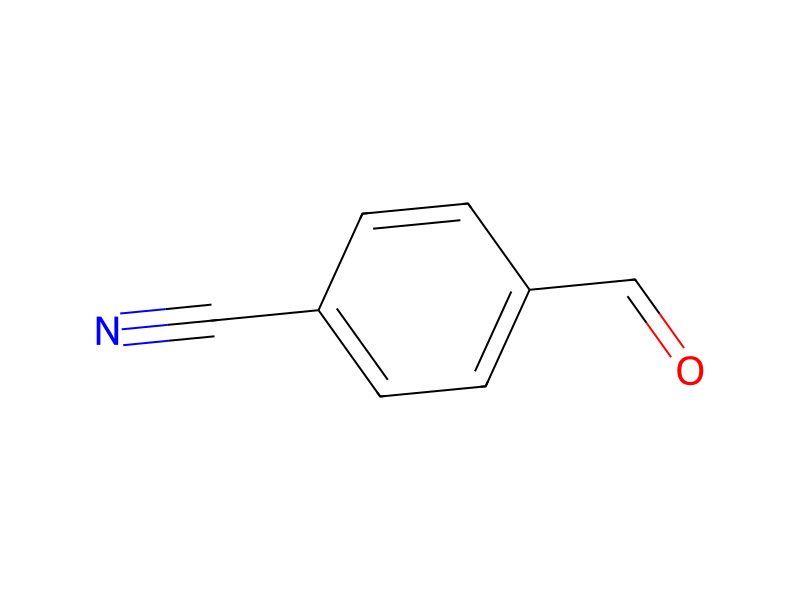
4-Cyanobenzaldehyde

HCID 66042
New reaction
Print
Basic informationOverviewNames & identifiersPropertiesSafety & regulationChemistry & industryRelated reactionsCompound notes
Substructure searchFind similar structures

Basic information

CAS
105-07-7
Standard SMILES
N#Cc1ccc(C=O)cc1
InChIKey
WZWIQYMTQZCSKI-UHFFFAOYSA-N
Molecular formula
C8H5NO
Average molar mass
131.13 g/mol
Monoisotopic mass
131.03711378

Overview

4-cyanobenzaldehyde is a member of benzaldehydes.

Names & identifiers

Preferred name
4-Cyanobenzaldehyde
IUPAC
4-formylbenzonitrile
English name
4-Cyanobenzaldehyde
Molecular formula
C8H5NO
Molecular weight
131.13

Names & synonyms

4-Cyanobenzaldehyde105-07-7p-CyanobenzaldehydeBenzonitrile, 4-formyl-p-FormylbenzonitrileTerephthalaldehydonitrileBenzaldehyde, p-cyano-p-CyanobenzenecarboxaldehydeDWH62Y9TCANSC-5091DTXSID6059312RefChem:98649
Show more names
usafkf-1USAF KP-1WLN: VHR DCN4-CyanobenzaL4-CyanbenzaldehydTIMTEC-BB SBB008634
DTXCID9032909203-267-34-FormylbenzonitrileMFCD00003376Benzonitrile, p-formyl-USAF KF-14-FormYl-BenzonitrileNSC 5091

Database identifiers

CAS
105-07-7
PubChem CID
66042
DTXSID
DTXSID6059312
ChEMBL
CHEMBL1922276
ChEBI
CHEBI:156308
UNII
DWH62Y9TCA
EC Number
203-267-3
Nikkaji
J22.132E

Properties

Computed structural properties

XLogP
1.2
Topological polar surface area
40.9 Ų
Hydrogen bond donors
0
Hydrogen bond acceptors
2
Rotatable bonds
1
Heavy atoms
10
Formal charge
0
Complexity
159

Experimental & physicochemical properties

SpringerMaterials Properties13C nuclear magnetic resonance spectrum

Physicochemical properties

Melting point
100102 °C · 100102°C
Boiling point
133 °C12mm · 133°C12mm Hg
Density
1.1971 · 1.1971 (rough estimate)
refractive index
1.47 · 1.4700 (estimate)
Flash point
133 °C/12mm · 133°C/12mm
storage temp.
30 °C · Store below +30°C.
form
Crystalline Powder
color
White to slightly beige
Water Solubility
It is soluble in water, ethanol, ether and chloroform.
Sensitive
Air Sensitive
BRN
606473 · 606473
InChI
1S/C8H5NO/c9-5-7-1-3-8(6-10)4-2-7/h1-4,6H

Safety & regulation

Safety information is for reference only and does not replace the supplier’s Safety Data Sheet (SDS), applicable regulations, or professional assessment.

GHS classification

GHS Classification · 4 items

Warning

H302 (100%): Harmful if swallowed [Warning Acute toxicity, oral]

P261, P264, P264+P265, P270, P271, P280, P301+P317, P302+P352, P304+P340, P305+P351+P338, P317, P319, P321, P330, P332+P317, P337+P317, P362+P364, P403+P233, P405, and P501 (click each P-code to see the statement)

Aggregated GHS information provided per 47 reports by companies from 6 notifications to the ECHA C&L Inventory. Each notification may be associated with multiple companies.

Hazard information

Regulatory Information · 2 items

Chemical: Benzonitrile, 4-formyl-

Benzonitrile, 4-formyl-: Does not have an individual approval but may be used under an appropriate group standard

Hazard Classes and CategoriesAcute Tox. 4 (100%)

Safety data

PPE
dust mask type N95 (US), Eyeshields, Gloves
wgk
3
tsca
TSCA listed
rtecs
CU5250000
ridadr
3439
hs_code
2926909090
risk_code
20/21/22-36/37/38
Signal word
Warning
Symbol(GHS)
GHS07
hazard_code
Xn,Xi
hazard_note
Irritant
safety_code
36/37-36-26

Chemistry & industry

Uses & manufacturing

General Manufacturing InformationBenzonitrile, 4-formyl-: ACTIVE
Applications · 3 items

Uses4-Cyanobenzaldehyde, is used as an intermediate for organic synthesis.It is also used as an intermediate in the pharmaceutical and research department.

Uses4-Formylbenzonitrile can be used in the synthesis of various boron-dipyrromethenes (BODIPY), porphyrins, corroles and other related macrocycles.

Uses4-Cyanobenzaldehyde is used as a reagent in the synthesis of hydrazone based inhibitors of adipose-triglyceride lipase (ATGL). 4-Cyanobenzaldehyde is also used as a reagent in the synthesis of BAZ2-ICR which is a chemical probe targeting the bromo domains of BAZ2A and BAZ2B.

Preparation methods · 1 item

PreparationSynthesis steps of 4-cyanobenzaldehyde: (1) Take 20 mL of p-dimethylbenzene and place it in a reaction vessel. Heat the reaction vessel to 130-135℃ and add the solvent N,N-dimethylformamide DMF, catalyst and co-catalyst in sequence. The amount of N,N-dimethylformamide DMF added is 20-25 mL, and the amount of catalyst and co-catalyst added is 2.5-3.0 g and 10-15 g, respectively. Control the oxygen flow rate to 900 mL/min and the hydrogen flow rate to 100 mL/min. React for 4-5 h; (2) Cool the above reaction solution to room temperature. The obtained transparent colorless crystals are p-methylbenzonitrile. Wash the obtained crystals 2-3 times with DMF and then filter out the impurities. (2) Remove the DMF solvent to obtain p-methylbenzonitrile with a purity higher than 90%; (3) Place the p-methylbenzonitrile synthesized in step (2) above into a reaction vessel, heat the reaction vessel to 110-115℃, and add the solvent N,N-dimethylformamide DMF, catalyst and co-catalyst in sequence. The amount of N,N-dimethylformamide DMF added is 10-15mL, and the amount of catalyst and co-catalyst added is 1.0-1.5g and 8.0-9.0g, respectively. Control the oxygen flow rate to be 900mL/min and the hydrogen flow rate to be 100mL/min. React for 2-3h, and the resulting white crystalline powder is 4-cyanobenzaldehyde.

Related reactions

457 records
New reaction record
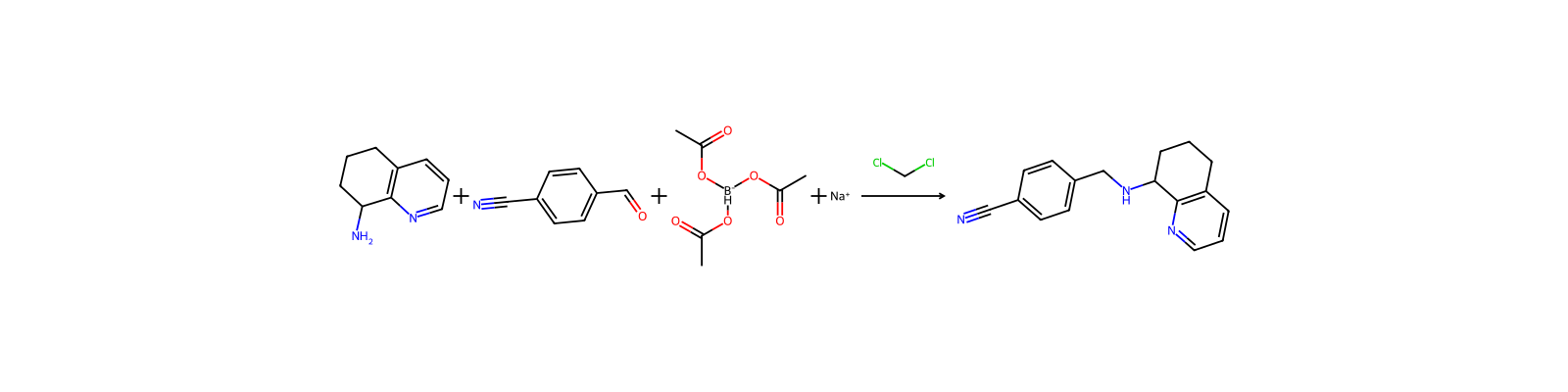
HRID 4489 reaction equation
HRID 4489As reactant
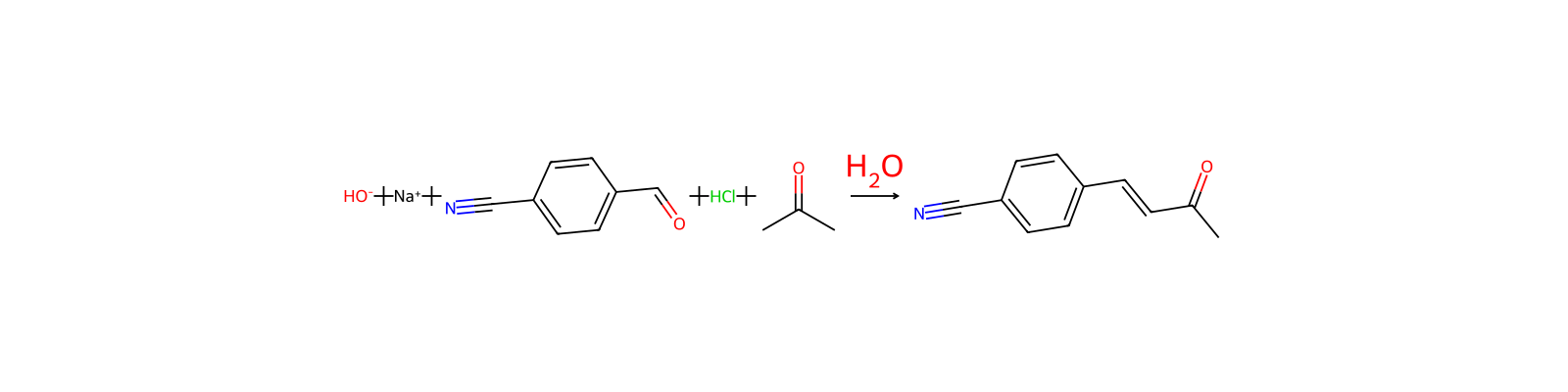
HRID 4874 reaction equation
HRID 4874As reactant
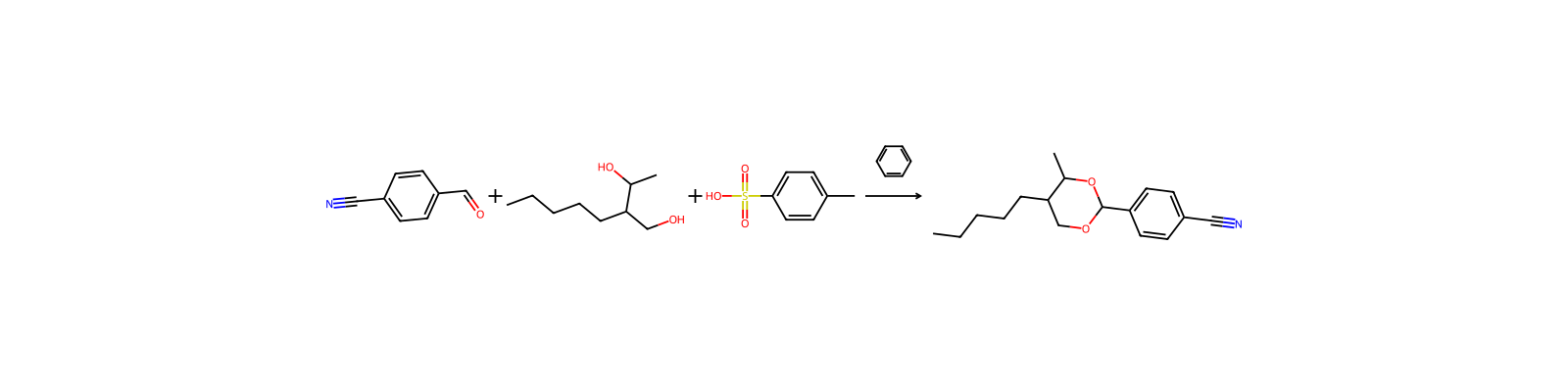
HRID 7141 reaction equation
HRID 7141As reactant
HRID 7200 reaction equation
HRID 7200As reactant
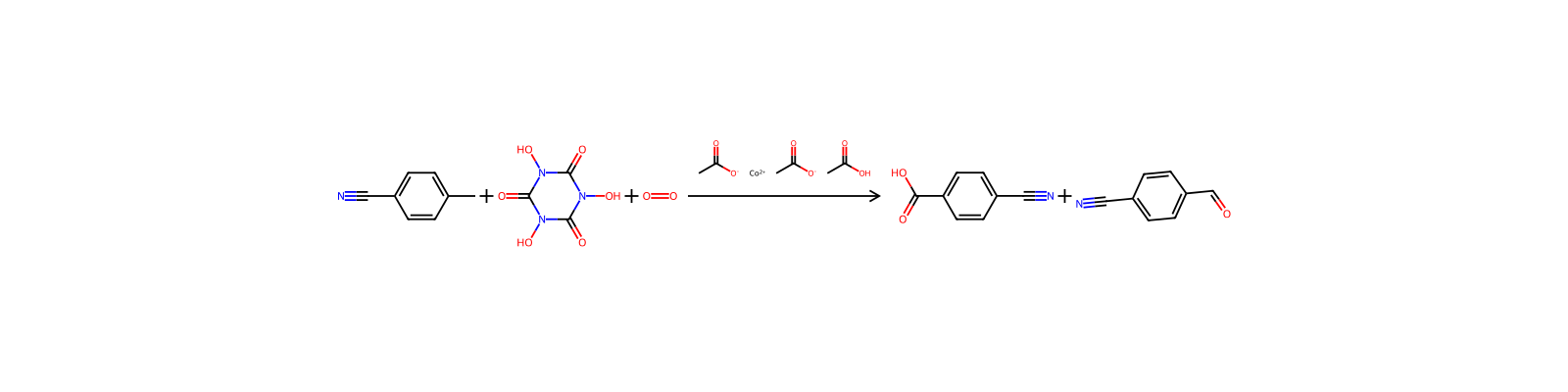
HRID 9748 reaction equation
HRID 9748As product
HRID 25531 reaction equation
HRID 25531As reactant
HRID 32319 reaction equation
HRID 32319As reactant
HRID 38669 reaction equation
HRID 38669As reactant
PreviousPage 1 of 58

Compound notes

On this pageBasic informationOverviewNames & identifiersPropertiesSafety & regulationChemistry & industryRelated reactionsCompound notes
InChIKey
WZWIQYMTQZCSKI-UHFFFAOYSA-N
SMILES
O=Cc1ccc(cc1)C#N
CAS DataBase Reference
105 · 105-07-7(CAS DataBase Reference)
EWG's Food Scores
1 · 1
FDA UNII
62 Y9TCA · DWH62Y9TCA
NIST Chemistry Reference
4 · Benzonitrile, 4-formyl-(105-07-7)
EPA Substance Registry System
4 · Benzonitrile, 4-formyl- (105-07-7)
UNSPSC Code
12352117 · 12352117
NACRES
22 · NA.22
Symbol(GHS)
7 · GHS07
Signal word
Warning
Hazard statements
302 · H302+H312+H332
Precautionary statements
261 · P261-P264-P280-P301+P312-P302+P352+P312-P304+P340+P312
PPE
95 · dust mask type N95 (US), Eyeshields, Gloves
Hazard Codes
Xn,Xi
Risk Statements
20 · 20/21/22-36/37/38
Safety Statements
36 · 36/37-36-26
RIDADR
3439 · 3439
WGK Germany
3 · 3
RTECS
5250000 · CU5250000
Hazard Note
Irritant
TSCA
TSCA listed
HazardClass
6.1 · 6.1
PackingGroup
III
HS Code
2926909090 · 2926909090
Storage Class
11 · 11 - Combustible Solids
Hazard Classifications
4 DermalAcute · Acute Tox. 4 DermalAcute Tox. 4 InhalationAcute Tox. 4 Oral
hazard_class
6.1
Storage Class
11 - Combustible Solids
packing_group
III
Hazard statements
H302+H312+H332
Hazard Classifications
Acute Tox. 4 DermalAcute Tox. 4 InhalationAcute Tox. 4 Oral
Precautionary statements
P261-P264-P280-P301+P312-P302+P352+P312-P304+P340+P312

Upstream & downstream products

Upstream raw materials

Benzoyl peroxideN-BromosuccinimideChloroformCarbon tetrachloridep-TolunitrileHexamethylenetetramine

Downstream products

4-Cyanostyrene4-Cyanobenzophenone3-(4-Cyano-phenyl)-3-oxo-propionic acid ethyl ester(4-Cyanobenzyl)phosphonic acid diethyl ester4-(Difluoromethyl)benzonitriletert-Butyl 4-(bromomethyl)benzylcarbamate4'-Cyano-2,2,2-trifluoroacetophenone(4-Aminomethyl-phenyl)-methanol3,4-Dihydroisoquinoline1,4-Bis(4-cyanostyryl)benzeneBenzamide, 3-(hydroxymethyl)- (9CI)(E)-tert-butyl 3-(4-cyanophenyl)acrylate

Additional notes

DefinitionChEBI: 4-cyanobenzaldehyde is a member of benzaldehydes.