Reaction equation

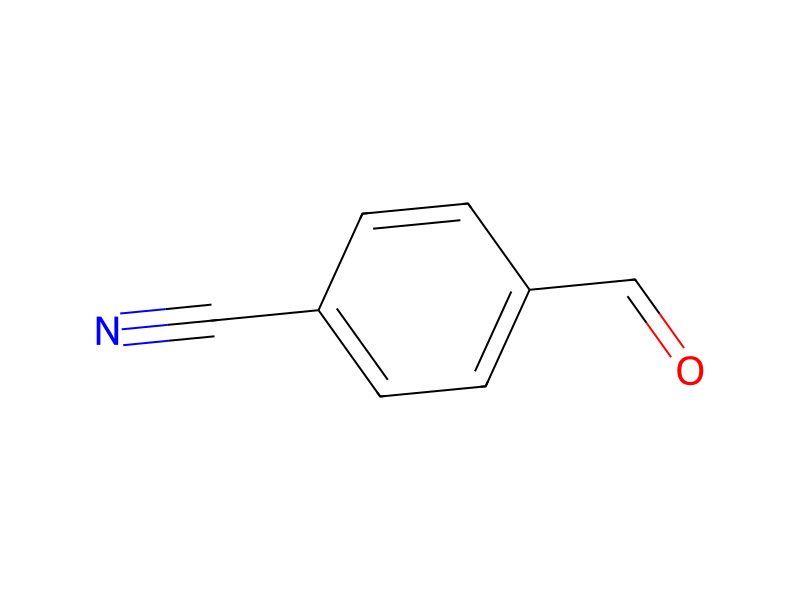
[CH:1]([C:3]1[CH:10]=[CH:9][C:6]([C:7]#[N:8])=[CH:5][CH:4]=1)=O.[C:11]([NH:14][CH2:15][C:16]([OH:18])=[O:17])(=O)[CH3:12].C([O-])(=O)C.[Na+].C(OC(=O)C)(=O)C>CC(C)=O>[CH3:12][C:11]1[O:18][C:16](=[O:17])[C:15](=[CH:1][C:3]2[CH:10]=[CH:9][C:6]([C:7]#[N:8])=[CH:5][CH:4]=2)[N:14]=1Participants
Reactant 4



Product 1

Reagents, catalysts & solvents 1

Conditions
- Temperature
- 50 °C
Procedure
Acetone (80.0 l) was introduced into a mixture of 4-formylbenzonitrile (15.0 kg, 114.5 mol), N-acetylglycine (19.2 kg, 162.4 mol) and anhydrous sodium acetate (9.4 kg, 114.5 mol) followed by introduction, with stirring, of acetic anhydride (35.0 l, 370.5 mol). The reaction mixture was stirred under reflux for 1 h. The resulting thin yellow suspension was cooled to 50° C. and ice-water (200 l) was added as quickly as possible, with stirring and cooling. The mixture was stirred at 20° C. for another 1 h. To isolate the product, the yellow suspension was pressed onto a centrifuge and washed with deionized water (75 l), isopropanol (40 l) and methyl-tert-butylether (75 l). The product was dried under reduced pressure at 40° C. Yield 18.17 kg (85.7 mol, 75.2% of theory). M.p.: 192–193° C.; MS (DCl): m/z=213 [M+H+]; 1H-NMR (DMSO-d6): δ=2.42 (s, 3H), 7.30 (s, 1H), 7.96 (d, 2H), 8.33 (d, 2H).
Workup
- temperatureunder reflux for 1 h
- stirringwith stirring
- temperaturecooling
- stirringThe mixture was stirred at 20° C. for another 1 h
- customTo isolate the product
- washwashed with deionized water (75 l), isopropanol (40 l) and methyl-tert-butylether (75 l)
- customThe product was dried under reduced pressure at 40° C
Sources & evidence
- ORD record
- ord-6c3f31a14b3b47a1ba8904aea201e513
- Source dataset
- uspto-grants-2006_08
- Patent number
- US07084250B2
Linked notes
Loading…