
HRID 12378As reactant
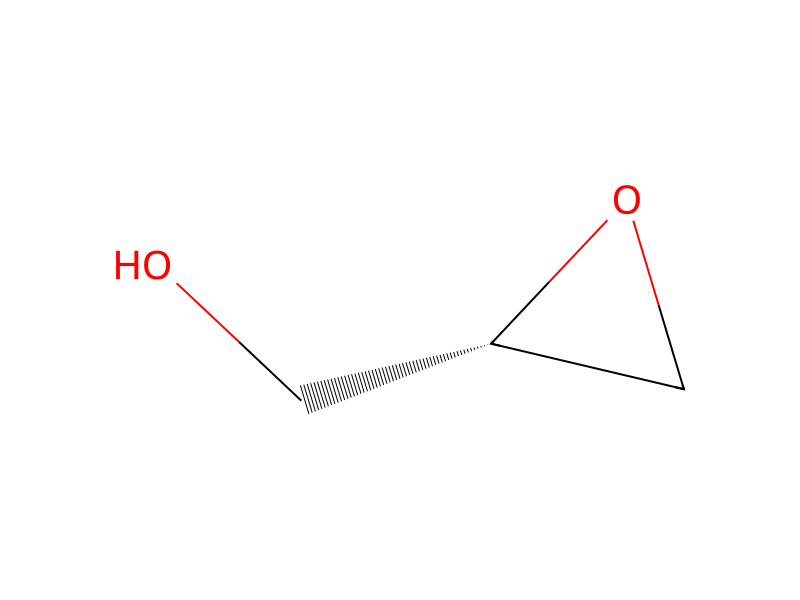
60456-23-7OC[C@H]1CO1CTKINSOISVBQLD-VKHMYHEASA-N(S)-glycidol is a glycidol. It is functionally related to a (S)-1,2-epoxypropane. It is an enantiomer of a (R)-glycidol.
60456-23-7DTXSID101318083CHEBI:38690Safety information is for reference only and does not replace the supplier’s Safety Data Sheet (SDS), applicable regulations, or professional assessment.
Danger
H302 (95.5%): Harmful if swallowed [Warning Acute toxicity, oral]
P203, P261, P264, P264+P265, P270, P271, P280, P301+P317, P302+P352, P304+P340, P305+P354+P338, P316, P317, P318, P319, P321, P330, P332+P317, P362+P364, P403+P233, P405, and P501 (click each P-code to see the statement)
Aggregated GHS information provided per 44 reports by companies from 7 notifications to the ECHA C&L Inventory. Each notification may be associated with multiple companies.
UsesEmployed in the synthesis of chiral (E)-allylic alcohol side-chains for introduction into prostacyclin and prostaglandin frameworks by cross-metathesis.
General DescriptionGlycidol or 2,3-epoxy-1-propanol is a highly reactive epoxy derivative, which is generally used as a monomer in the preparation of many polymers like polyesters,polycarbonates,polyurethanes,and polyamides. It is also used in the preparation of detergents, rubbers, perfumes, fabric dyes, varnishes, cosmetics, and paints.
DefinitionChEBI: (S)-glycidol is a glycidol. It is functionally related to a (S)-1,2-epoxypropane. It is an enantiomer of a (R)-glycidol.


