Basic information
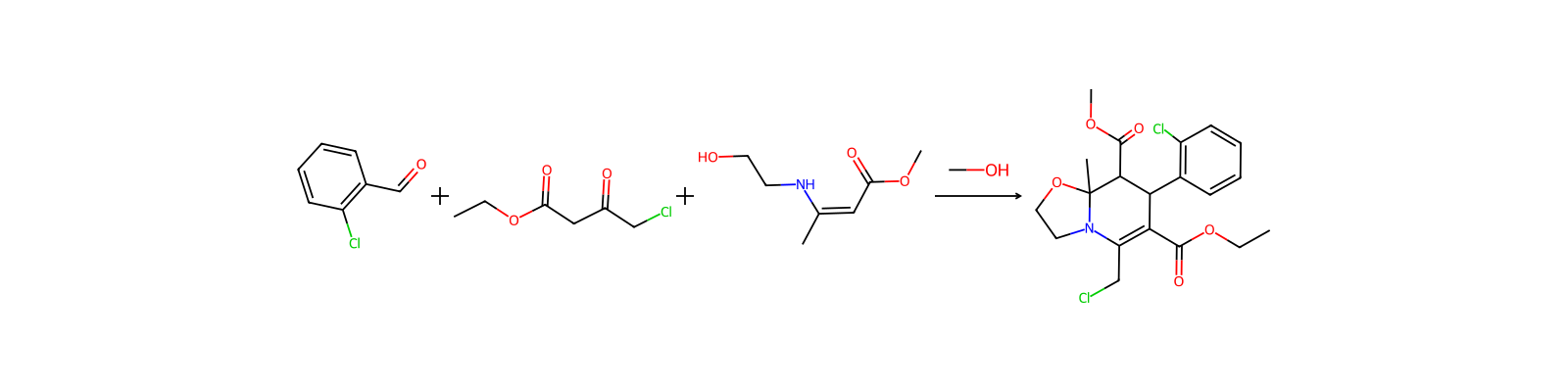
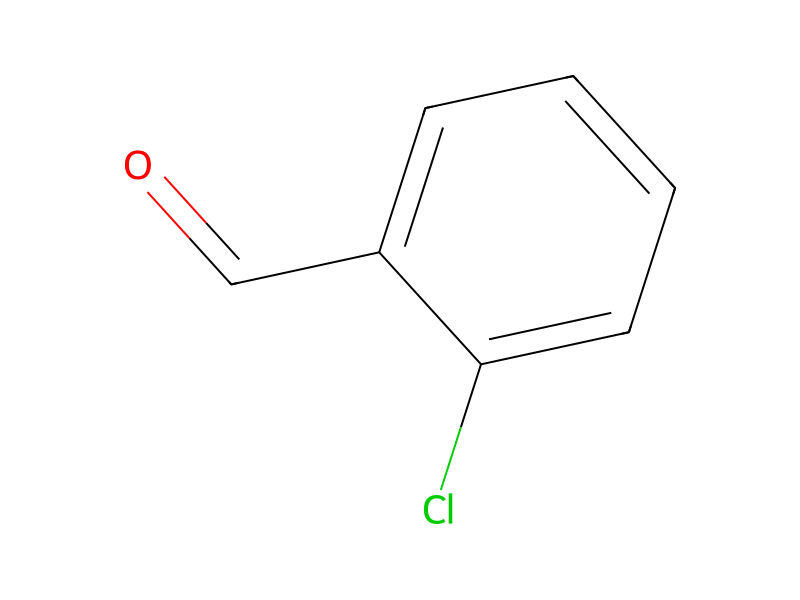
- Standard SMILES
O=Cc1ccccc1Cl- InChIKey
FPYUJUBAXZAQNL-UHFFFAOYSA-N- Molecular formula
- C7H5ClO
- Average molar mass
- 140.56 g/mol
- Monoisotopic mass
- 140.0028925
Names & identifiers
- Preferred name
- 2-Chlorobenzaldehyde
- IUPAC
- 2-chlorobenzaldehyde
- English name
- 2-Chlorobenzaldehyde
- Molecular formula
- C7H5ClO
- Molecular weight
- 140.57
Names & synonyms
2-Chlorobenzaldehyde89-98-5O-CHLOROBENZALDEHYDEBenzaldehyde, 2-chloro-Benzaldehyde, o-chloro-2-Chlorbenzaldehyd2-Clorobenzaldeideo-ChloorbenzaldehydeUSAF M-72-Chloorbenzaldehydeo-ChlorobenzenecarboxaldehydeDTXSID5024764
Show more names
ORTHO CHLORO BENZALDEHYDEOCBAOCADo-Chlorobenzaldehyde 2-Chlorobenzaldehydeusafm-7NSC 15347AKOS BBS-00003191
QHR24X1LXKNSC-15347DTXCID204764RefChem:855216201-956-3Chlorobenzaldehyde2-chloro-benzaldehydeMFCD00003304
Database identifiers
- CAS
35913-09-8、89-98-5- PubChem CID
- 6996
- DTXSID
DTXSID5024764- ChEMBL
CHEMBL1547989- UNII
- QHR24X1LXK
- EC Number
- 201-956-3
- Nikkaji
- J38.179I
Properties
Computed structural properties
- XLogP
- 2.3
- Topological polar surface area
- 17.1 Ų
- Hydrogen bond donors
- 0
- Hydrogen bond acceptors
- 1
- Rotatable bonds
- 1
- Heavy atoms
- 9
- Formal charge
- 0
- Complexity
- 103
Physicochemical properties
- Melting point
- 9 · 9-11 °C (lit.)
- Boiling point
- 209 · 209-215 °C (lit.)
- Density
- 1.248 g/mL · 1.248 g/mL at 25 °C (lit.)
- vapor density
- 4.84 · 4.84 (vs air)
- vapor pressure
- 1.27 mm · 1.27 mm Hg ( 50 °C)
- refractive index
- 20 · n20/D 1.566(lit.)
- Flash point
- 190 °F · 190 °F
- storage temp.
- Store in RT
- solubility
- 1.8 g/l · 1.8g/l
- form
- Liquid
- color
- Clear colorless to light yellow
- PH
- 2.9 · 2.9 (H2O)(saturated aqueous solution)
- Odor
- Penetrating odor
- Water Solubility
- 0.1 · 0.1-0.5 g/100 mL at 24 ºC
- Sensitive
- Air Sensitive
- BRN
- 385877 · 385877
- Stability
- Stable. Combustible. Incompatible with strong oxidizing agents, strong bases, iron, strong reducing agents. Moisture and light-sensitive.
- InChI
- 1S/C7H5ClO/c8-7-4-2-1-3-6(7)5-9/h1-5H
- InChIKey
- FPYUJUBAXZAQNL-UHFFFAOYSA-N
- SMILES
- [H]C(=O)c1ccccc1Cl
- LogP
- 2.44 at · 2.44 at 25℃
- CAS DataBase Reference
- 89 · 89-98-5(CAS DataBase Reference)
- EWG's Food Scores
- 1 · 1
- FDA UNII
- 24 X1LXK · QHR24X1LXK
- NIST Chemistry Reference
- 2 · Benzaldehyde, 2-chloro-(89-98-5)
- EPA Substance Registry System
- 2 · 2-Chlorobenzaldehyde (89-98-5)
- UNSPSC Code
- 12352114 · 12352114
- NACRES
- 22 · NA.22
- Symbol(GHS)
- 5 · GHS05
- Signal word
- Danger
- Hazard statements
- 314 · H314
- Precautionary statements
- 280 · P280-P301+P330+P331-P303+P361+P353-P304+P340+P310-P305+P351+P338-P363
- PPE
- Faceshields, Gloves, Goggles, type ABEK (EN14387) respirator filter
- Hazard Codes
- C,Xi
- Risk Statements
- 34 · 34
- Safety Statements
- 26 · 26-45
- RIDADR
- 3265 · UN 3265 8/PG 3
- WGK Germany
- 1 · 1
- RTECS
- 5075000 · CU5075000
- F
- 8 · 8-9-23
- Autoignition Temperature
- 746 °F · 746 °F
- Hazard Note
- Irritant
- TSCA
- TSCA listed
- HazardClass
- 8 · 8
- PackingGroup
- III
- HS Code
- 29130000 · 29130000
- Storage Class
- 8 A · 8A - Combustible corrosive hazardous materials
- Hazard Classifications
- 1 Skin · Eye Dam. 1Skin Corr. 1BSkin Sens. 1
- Hazardous Substances Data
- 89 · 89-98-5(Hazardous Substances Data)
- Toxicity
- 50 orally · LD50 orally in Rabbit: 2160 mg/kg
- REACH Registrations
- Active
- Limited Quantities
- 5 L · 5.0 L (1.3 gallons) (liquid) or 5.0 kg (11 lbs) (solid)
- Excepted Quantities
- Max Inner Pack (30g or 30ml) and Max Outer Pack (1Kg or 1L)
Safety & regulation
Safety data
- F
- 8-9-23
- PPE
- Faceshields, Gloves, Goggles, type ABEK (EN14387) respirator filter
- wgk
- 1
- tsca
- TSCA listed
- rtecs
- CU5075000
- ridadr
- UN 3265 8/PG 3
- hs_code
- 29130000
- Toxicity
- LD50 orally in Rabbit: 2160 mg/kg
- risk_code
- 34
- Signal word
- Danger
- Symbol(GHS)
- GHS05
- hazard_code
- C,Xi
- hazard_note
- Irritant
- safety_code
- 26-45
- hazard_class
- 8
- Storage Class
- 8A - Combustible corrosive hazardous materials
- packing_group
- III
- Hazard statements
- H314
- Limited Quantities
- 5.0 L (1.3 gallons) (liquid) or 5.0 kg (11 lbs) (solid)
- Excepted Quantities
- Max Inner Pack (30g or 30ml) and Max Outer Pack (1Kg or 1L)
- REACH Registrations
- Active
- Hazard Classifications
- Eye Dam. 1Skin Corr. 1BSkin Sens. 1
- Autoignition Temperature
- 746 °F
- Precautionary statements
- P280-P301+P330+P331-P303+P361+P353-P304+P340+P310-P305+P351+P338-P363
- Hazardous Substances Data
- 89-98-5(Hazardous Substances Data)
Chemistry & industry
Applications
Uses2-Chlorobenzaldehyde has been used in generation of small focused library of diversely functionalized dihydropyrimidine derivatives via one-pot three-component Biginelli cyclocondensation of β-ketoesters, aldehydes and thioureas.
Uses2-Chlorobenzaldehyde can be used to make alcohols, acids, and dyes; used in the rubber, tanning, and paper industries; used as an intermediate for optical brighteners, agricultural chemicals, and pharmaceuticals.It can also be used to prepare triphenyl methane and related dyes, organic intermediate.
General Description2-chlorobenzaldehyde is a clear colorless to yellowish liquid. (NTP, 1992)
Preparation methods
Preparation2-Chlorobenzaldehyde is produced mainly by chlorination of 2-chlorotoluene to form 2-chlorobenzal chloride, which is then subjected to acid hydrolysis. Metal salts, such as iron(III) chloride, are used as catalysts. The hydrolysis can also be accomplished using formic acid without a catalyst.2-Chlorobenzaldehyde can also be produced by oxidation of 2-chlorobenzyl chloride with N-oxides of tertiary amines or with dilute nitric acid.https://pubchem.ncbi.nlm.nih.gov/compound/2-Chlorobenzaldehyde
Upstream & downstream products
Upstream raw materials
Downstream products
Suppliers50 total
国药集团化学试剂有限公司86-21-63210123 · [email protected]
梯希爱(上海)化成工业发展有限公司021-67121386 · [email protected]
衢州润东化工有限公司0570-8789886 18892685668 · [email protected]
山东旭晨化工科技有限公司0533-15715337262 15715337262 · [email protected]
上海阿拉丁生化科技股份有限公司400-6206333 13167063860 · [email protected]
宁太化工(山东)有限公司15314216173
韶远科技(上海)有限公司021-50795510 4000665055 · [email protected]
科瑞迪化学400-821-5857 021-64326257 · [email protected]
上海将来实业股份有限公司400-0066400 13621662912 · [email protected]
Syntechem Co.,Ltd[email protected]
上海迈瑞尔生化科技有限公司4006356688 18621169109 · [email protected]
阿法埃莎(中国)化学有限公司400-6106006 · [email protected]
安耐吉化学&3A(安徽泽升科技股份有限公司)400-0056266 · [email protected]
武汉凯威斯科技有限公司86-027-67849912 · [email protected]
上海瀚鸿科技股份有限公司021-54306202 13764082696 · [email protected]
上海柯维化学技术有限公司021-64609169 18901607656 · [email protected]
上海景颜化工科技有限公司13817811078 · [email protected]
嘉兴市艾森化工有限公司0573-85285100 18627885956 · [email protected]
上海攀鸿化工科技有限公司021-56491756 13512199871 · [email protected]
合肥天健化工有限公司551-65418679 15856988503;15837135945 · [email protected]
山东西亚化学有限公司13355009207 13355009207 · [email protected]
唐山默内德贸易有限公司0315-8309571 15633399667 · [email protected]
玛雅试剂+86 (573) 82222445 (0)18006601000 452520369 · [email protected]
四川库利南科技有限公司400-1166-196 18981987031 · [email protected]
上海耐士化工科技有限公司400-188-0725 +86 21 34310725 13611771617
天津希恩思生化科技有限公司400 638 7771 · [email protected]
武汉科美沃化工有限公司027-85736489 · [email protected]
南京维奥化工有限公司Please Send Email 18652950785 · [email protected]
河南多贝化工有限公司0370-2785118 17550508557 · [email protected]
北京泰亚杰科技有限公司021-33690831-8001 13552411790;18616022633 · [email protected]
泰州志诚化工科技有限公司0523-82837785 13914525028 · [email protected]
艾科试剂4008-755-333 18080918076 · [email protected]
上海思域化工科技有限公司86-21-34053660 · [email protected]
北京世纪裕立化学有限公司010-64446226 13146983882 · [email protected]
赛默飞世尔科技(中国)有限公司800-810-5118 · [email protected]
北京伊诺凯科技有限公司400-810-7969 010-59572699 · [email protected]
上海遐瑞医药科技有限公司+86 21 61551611
TCI AMERICA800-4238616 · [email protected]
TOKYO CHEMICAL INDUSTRY CO., LTD.03-36680489 · [email protected]
TCI Europe320-37350700 · [email protected]
卡迪亚医药科技有限公司0371-86615086 18203638366 0371-86159066 13526786601
上海贤鼎生物科技有限公司4009209199 · [email protected]
深圳振强药物研发有限公司0755-66853366 13670046396 · [email protected]
上海卓锐化工有限公司021-69180038
深圳康特腾科技有限公司86-0755-86635001 · [email protected]
越林试剂021-62960152 · [email protected]
苏州安尼康药物研发有限公司0512-69369885 · [email protected]
山东博洛达生物科技有限公司0531-68659041 · [email protected]
枣阳市赐祥医药科技有限公司0710-15671321689 15671321689 · [email protected]
北京环宇世纪化学科技有限公司hysj_bj.com
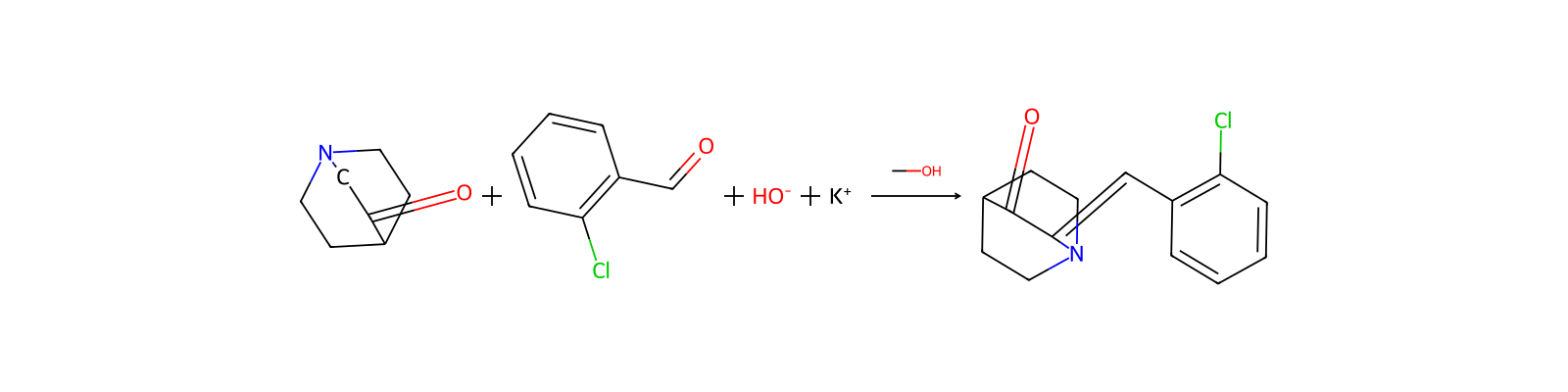
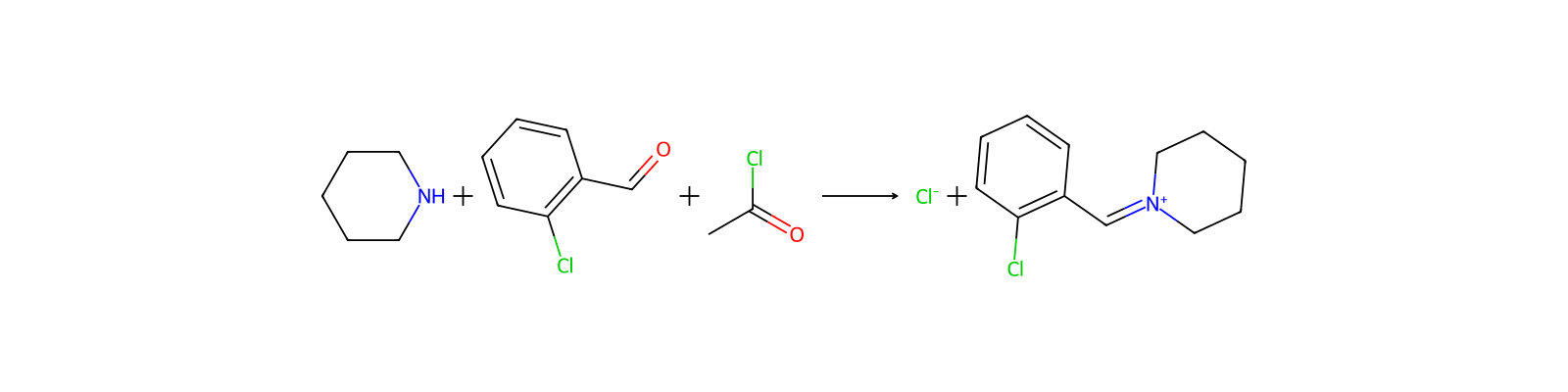
Related reactions
505 records


Linked notes
Loading…